 Ferndale Siding
 Board & Batten Siding for Everson Homes
Everson sits up the Nooksack River valley in the agricultural heart of Whatcom County, a farming and berry-growing community with a different feel than the towns closer to Bellingham Bay. It's also a place where a board and batten exterior looks genuinely at home — the vertical lines and clean shadow gaps of this style pair naturally with the farmhouse and barn-influenced architecture that's common on rural and semi-rural properties throughout this part of the county. We get asked about this look often for Everson homes, and it's a good one when it's built out of the right material.
Board and batten describes a pattern, not a material. It's wide boards or panels installed first, with narrower strips fastened over each seam to create the vertical, shadow-lined look. That pattern can be built out of several different products, and which one sits behind it determines whether the look holds up through a normal Whatcom County winter or starts showing seam trouble within a few years. We install this style exclusively in James Hardie fiber cement, and this page walks through why, along with what a correct installation actually involves for a property in and around Everson.
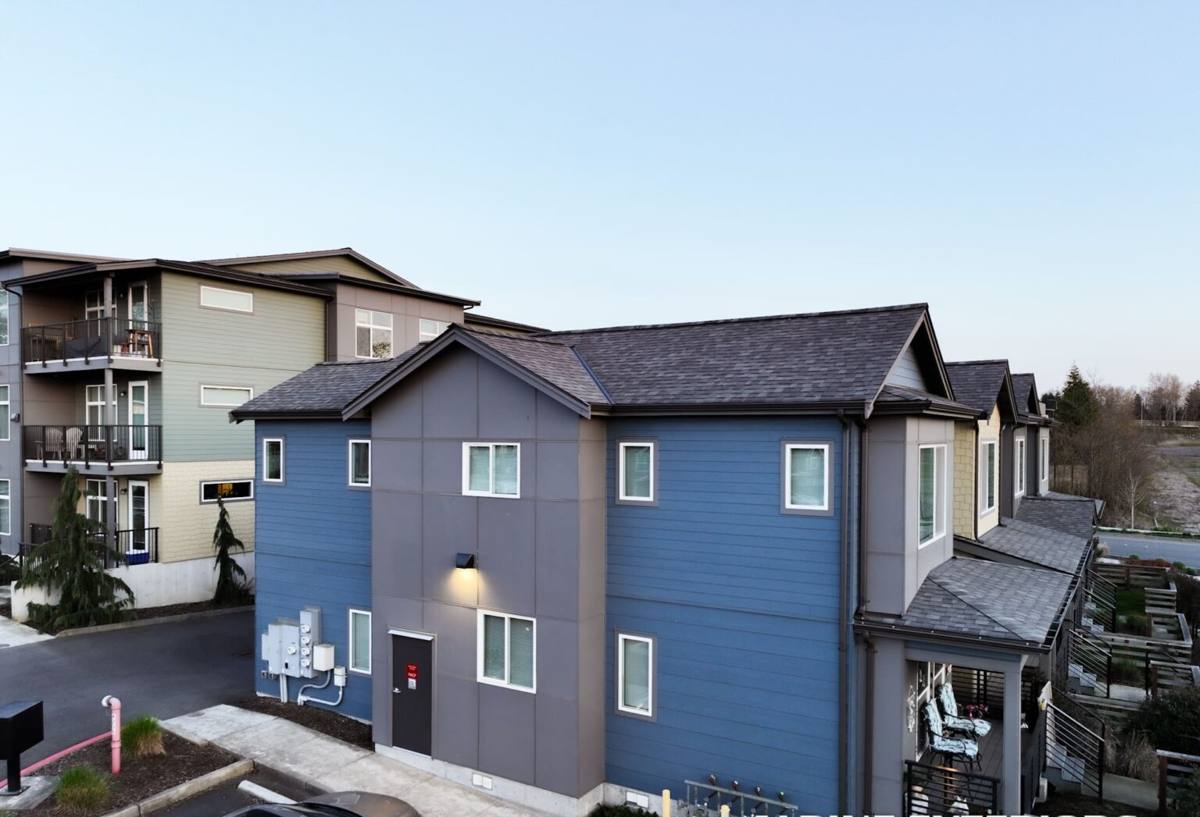
What Everson's Climate Does to a Board & Batten Wall
Driving Rain and Valley Dampness
Everson sits low in the Nooksack River valley, and storms moving through this part of the county tend to push rain sideways rather than let it fall straight down. On a lap siding wall that matters; on a board and batten wall it matters more, because every batten is fastened directly over a seam, and every one of those seams is a place wind-driven rain can work its way behind the cladding if the gapping and flashing underneath aren't done correctly. Valley ground also doesn't shed moisture as fast as a well-drained hillside lot, so water that does get behind a wall assembly here tends to stick around longer before it dries out.
A Long Moss and Mildew Season
Between the tree cover common on rural Everson lots and the sustained regional dampness that defines this part of the Pacific Northwest, moss and mildew season runs long here — often most of the year on shaded or north-facing walls. On a flat lap wall that shows up as staining. On board and batten it tends to collect first in the shadow line under each batten, which is exactly the kind of spot that holds moisture against the wall longer than an open, flat surface would if the material underneath isn't dimensionally stable.
Marine Humidity and Freeze-Thaw Swings
Whatcom County's weather is shaped by moist, salt-tinged air moving in off Puget Sound and the Strait of Georgia, and that marine influence reaches inland through the county's river valleys, including up toward Everson, even though the property itself sits well away from open water. Combine that persistent humidity with the occasional hard frost or cold snap this area sees in winter, and you get a freeze-thaw cycle layered on top of already-wet materials — water that's soaked into a porous board expands when it freezes, which accelerates cracking and seam failure faster than a purely wet-but-mild climate would on its own.
Why the Substrate Decision Comes Before the Style Decision
Board and batten has more seams, more fastener penetrations, and more overlapping contact points per square foot than standard lap siding. That's true no matter what material it's built from. In a dry, mild climate that's a manageable detail. In a damp river valley with a long moss season and real freeze-thaw cycling, it's a much bigger deal, because a substrate that swells, cups, or degrades unevenly at those seams is asking a lot of whatever coating is supposed to keep water out.
Wood-based and wood-composite boards absorb and release moisture as humidity swings, which shows up over time as cupping, swelling at cut edges, and gaps opening at seams that were tight on install day. Vinyl board and batten panels don't absorb water the way wood does, but they flex with temperature swings and can gap or rattle at the seams over time, and their color depends on a through-body tint that still fades under sustained UV and weathering. Fiber cement was engineered specifically to not have either of those weaknesses, which is the core reason we standardized on it for this style rather than treating substrate as a secondary decision behind the look.
How We Build Board & Batten with James Hardie
HardiePanel and HardieTrim System
Our board and batten work is built from James Hardie's HardiePanel vertical siding paired with HardieTrim boards used as battens. Both are engineered fiber cement — Portland cement, sand, and cellulose fiber cured into a dense, dimensionally stable board that doesn't take on and release moisture the way wood or wood-composite products do. That stability is what keeps the boards flat and the seams tight over years of valley humidity instead of gradually gapping or telegraphing movement through the finish.
HZ5 Formulation for Whatcom County
James Hardie manufactures different formulations for different climate zones, and product sold into Western Washington is built to the HZ5 specification — engineered for regions that deal with sustained moisture exposure and real freeze-thaw cycling, rather than a formulation meant for a drier or milder climate. That's a genuine manufacturing difference, not a marketing label, and it's a real match for a river valley property like an Everson home that sees both conditions in the same winter.
ColorPlus Factory Finish
On a style with this many exposed edges and seams, the finish carries as much weight as the substrate. ColorPlus color is baked on in multiple coats under controlled factory conditions rather than brushed on after installation, so it resists fading, chalking, and moisture intrusion at those seams far longer than field-applied paint does — which matters most exactly where board and batten collects the most moisture: the shadow line under each batten.
What Correct Installation Involves
Board and batten is less forgiving of shortcuts than flat lap siding, simply because there are more fastener points and more seams for water to exploit if any one detail is off. On an Everson property, correct installation includes:
- A properly lapped and sealed weather-resistant barrier behind the panels — not house wrap stapled up and left to do the job alone
- Correct panel gapping at every butt joint and termination, per James Hardie's published fastening and clearance specifications
- Battens fastened at the correct spacing and depth, secure without over-driving fasteners through the material
- Proper flashing at every horizontal transition — window heads, roof-to-wall intersections, and anywhere the vertical pattern meets a horizontal element
- Correct clearance at the base of the wall, keeping siding above grade, decking, and any adjacent roofing so it isn't sitting in standing water
- Caulking used only where James Hardie specifies it, never as a substitute for proper flashing and gapping elsewhere
None of these steps are exotic — they're the difference between a board and batten wall that shrugs off a normal Whatcom County winter and one that starts showing trouble at the seams within a few wet seasons, regardless of the material behind the battens.
Repair vs. Full Replacement
Not every issue on an Everson board and batten wall calls for a full tear-off. A section damaged by wind or impact, or an isolated batten that's come loose, can often be repaired and matched into existing Hardie siding without touching the rest of the wall. But if water has clearly been tracking behind the wall for a while, or the home still has an aging wood or composite board and batten system nearing the end of its service life, patching it usually just delays a larger job while hidden rot keeps spreading underneath. We'll walk the wall and tell you honestly which situation you're actually looking at.
Board & Batten Approaches Compared
| Approach | Moisture Behavior | Finish Durability | Fit for This Climate |
|---|---|---|---|
| James Hardie fiber cement (panel + trim) | Dimensionally stable, doesn't swell or cup with humidity | Factory-baked ColorPlus finish, resists fade and moisture at seams | HZ5 formulation built for sustained moisture and freeze-thaw |
| Engineered wood composite | More moisture-sensitive at cut edges and batten seams | Relies on factory or field coatings with a shorter service life | Varies by manufacturer; not climate-zoned like Hardie |
| Primed spruce or cedar boards | Absorbs and releases moisture readily; prone to cupping at seams | Fully dependent on a repainting maintenance cycle | Requires the most upkeep in a long wet-and-moss season |
| Vinyl board and batten panels | Doesn't absorb water but flexes and can gap at seams with temperature swings | Through-body color that can still fade and chalk over time | Wind and impact rating depend heavily on fastening and panel gauge |
This isn't a claim that every alternative fails outright — plenty of homeowners elsewhere are satisfied with them. It's why, for this specific style in this specific climate, we made the professional call to install only Hardie for board and batten work.
Cost Factors for Board & Batten Work in Everson
| Factor | What It Affects | Why It Matters Here |
|---|---|---|
| Accent wall vs. full exterior | Total material and labor scope | Many Everson homes use board and batten on a gable, porch, or feature wall rather than the whole house, which keeps cost reasonable while still adding the architectural detail |
| Tear-off vs. new construction | Labor scope and substrate access | Removing old siding on a rural property often reveals moisture damage that's been building unseen behind an older wood or composite system |
| Substrate condition underneath | Repair costs before new siding goes on | Long-term trapped moisture in a valley climate can rot sheathing and framing, not just the visible siding |
| Batten spacing and design complexity | Fastening labor and material takeoff | Tighter batten spacing and more corners or transitions add labor time regardless of the material chosen |
| Site access | Staging and equipment needs | Rural and agricultural properties around Everson can have longer driveways or different staging needs than an in-town lot |
Exact numbers depend on the specific property, its exposure, and how much of the exterior gets the board and batten treatment, which is why we walk the home in person before giving a real figure rather than quoting off a generic price sheet.
Why a Local Crew Matters for an Everson Property
A crew that works this part of Whatcom County regularly knows how valley dampness, a long moss season, and freeze-thaw swings actually behave on board and batten walls over a full year — not just how the product performs on a spec sheet. That experience shapes real decisions on install day: which wall faces stay wet longest, where extra flashing attention is worth the added time, and how batten spacing should be handled around window heads and roof transitions so water has nowhere to collect. Everson's river valley setting is different enough from the towns nearer the water that a one-size-fits-all approach built for a drier or more sheltered lot doesn't always hold up here, and we treat that difference seriously rather than applying the same install everywhere in the county.
- A walk-through of the home to look at where board and batten makes sense architecturally — accent, gable, or full exterior
- An honest read on whether existing siding needs repair, partial replacement, or a full re-side
- A clear explanation of why we build this style only in James Hardie fiber cement
- A written estimate with no pressure to sign on the spot
If you're considering board and batten for an Everson home, whether as a full exterior or an accent on a gable or porch, we're glad to take a look and talk through what fits the property. Reach out using the form below to schedule a free, no-pressure estimate.