 Ferndale Siding
 Siding Repair for Nooksack Homes
Nooksack sits along the river valley in northern Whatcom County, tucked against the foothills where marine weather off the Sound collides with cooler air pushing down from the Cascades. That mix means homes here take a steady beating from driving rain, long stretches of overcast humidity, and heavy tree cover that keeps north-facing walls damp for days after a storm passes. Add in the salt-tinged air that moves inland off Bellingham Bay during westerly wind events, and you've got a recipe for siding that ages faster than it would in a drier climate. Siding repair in this area isn't just about patching what's visible — it's about understanding why the damage happened in the first place and making sure the fix actually holds up through the next wet season.
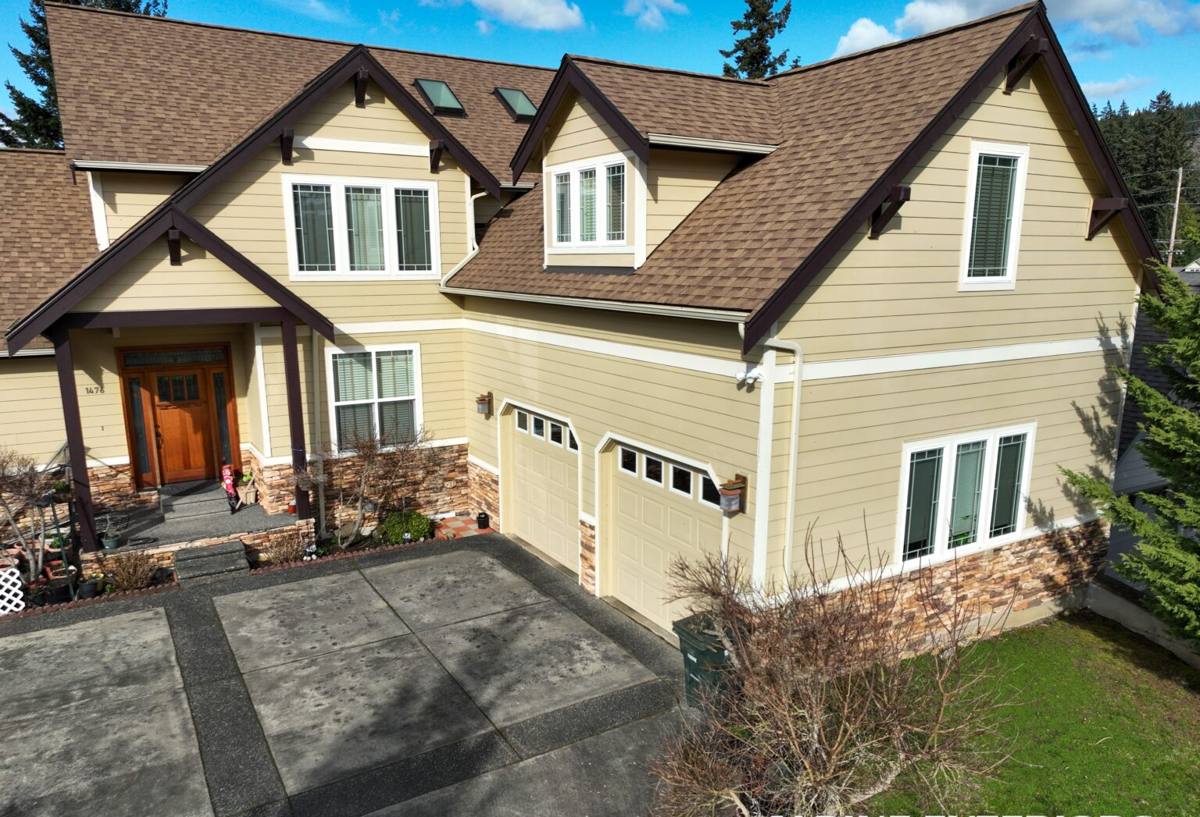
Why Siding Fails Faster Here Than Elsewhere
Most siding failure we see in Whatcom County traces back to moisture that had nowhere to go. Wood-based products swell and shrink as they absorb and release water, which eventually cracks paint, opens seams, and lets moisture behind the panel where it can't dry out. Vinyl doesn't rot, but it warps under sustained heat-cool cycling and its seams are only as good as the caulk holding them — caulk that degrades faster in a climate with this much rain exposure. Add a long moss season, where shaded and north-facing walls stay damp for weeks at a stretch, and you get a slow biological breakdown of paint and substrate that homeowners often mistake for simple dirt.
A house near Nooksack with mature trees or a shaded northern exposure is going to fight moss and mildew every year, whether the siding is new or old. That's not a defect — it's the climate. The difference is in how well the siding and the installation handle that exposure over time.
Common Damage We See on Repair Calls in This Area
- Soft or spongy spots where wood siding has absorbed water behind the paint film
- Cracked or split boards near corners and window trim, where flexing is worst
- Warped or buckled vinyl panels after repeated hot-cold-wet cycles
- Failed caulk joints letting wind-driven rain track behind the siding
- Persistent moss and algae staining on shaded or north-facing walls
- Peeling or bubbling paint, usually a sign of trapped moisture underneath
- Gaps or separation at seams where panels have expanded and contracted out of alignment
Signs It's Time to Call for a Repair
Homeowners often wait too long on siding damage because from the street it just looks cosmetic. But small problems on siding rarely stay small — moisture intrusion compounds. A checklist we use when walking a property:
- Discoloration or dark streaking that doesn't wash off with a hose
- Boards or panels that flex or feel soft when pressed by hand
- Visible gaps at seams, corners, or where siding meets trim and flashing
- Peeling paint or a chalky residue that comes off on your hand
- Increased moss growth compared to previous years, especially on shaded walls
- Interior signs — musty smell, water staining on interior walls near exterior corners
- Higher heating bills, which can indicate moisture-compromised insulation behind the siding
If you're seeing two or more of these, it's worth getting an inspection before the next wet season sets in, not after.
Repair or Replace? How We Make That Call
Not every damaged section needs a full re-side. But there's a point where patching becomes false economy — where the labor and material cost of a proper repair approaches what a partial or full replacement would run, without buying you the same lifespan. Here's how we think through it:
| Factor | Favors Repair | Favors Replacement |
|---|---|---|
| Extent of damage | Isolated to one or two boards/panels | Spread across multiple walls or elevations |
| Underlying material condition | Rest of the siding is sound and well-adhered | Widespread softness, warping, or paint failure |
| Cause of damage | One-time event (impact, isolated flashing failure) | Chronic moisture exposure or systemic installation issues |
| Age of existing siding | Relatively recent installation | Original siding nearing or past expected service life |
| Color/product match | Matching material or paint still available | Discontinued product, visible mismatch likely |
We'll always tell you honestly when a repair is the right call — a full replacement isn't the answer to every problem, and a good contractor should be willing to say so.
What a Correct Repair Actually Involves
A siding repair that's done right goes beyond swapping a damaged board for a new one. It starts with finding out why that section failed. If the cause was a flashing gap, a caulk failure, or a drainage problem behind the wall, replacing the surface material without fixing the underlying issue just guarantees the same failure again in a few years.
Our repair process:
- Inspection — we check not just the visibly damaged area but the surrounding sections, trim, flashing, and house wrap for signs of related moisture intrusion.
- Diagnosis — we identify the actual cause: a failed seal, poor original installation, impact damage, or long-term weather exposure.
- Moisture check — if there's any indication water has gotten behind the siding, we open the area up to check the sheathing and house wrap before closing anything back in.
- Repair or replacement of the affected section — matched as closely as possible in material, profile, and color.
- Correcting the root cause — re-flashing, re-caulking, or adjusting drainage details so the same failure doesn't recur.
- Final inspection — checking that the repaired section is properly sealed and will shed water the way the rest of the wall does.
Why the Original Material Matters When It Comes Time to Repair
The siding material on a home determines how forgiving — or unforgiving — a repair will be down the road. This is part of why we standardized on James Hardie fiber cement for every installation we do, rather than offering vinyl, LP SmartSide, or cedar.
How different materials hold up to repair over time:
| Material | Repair Challenge in This Climate |
|---|---|
| Cedar / primed spruce | Wood absorbs moisture readily; repairs often reveal rot has spread further than the visible damage suggested |
| Vinyl | Panels are brittle in cold weather and can crack during repair; exact color match gets harder as products fade and get discontinued |
| LP SmartSide | Engineered wood strand product still relies on paint film and edge sealing to keep moisture out; damaged edges are a common repair callback |
| James Hardie fiber cement | Non-combustible, dimensionally stable, and resists moisture absorption — repairs are typically isolated rather than a sign of wider failure |
We're not saying every board of cedar or every vinyl installation fails — plenty holds up fine for years. But when we're called out to repair those materials in a climate like Whatcom County's, we're far more likely to find the damage has already spread beneath the surface. Fiber cement's stability under repeated wetting and drying is a big part of why we only install and stand behind Hardie products.
Repairing Existing James Hardie Siding
If your home already has Hardie siding — whether we installed it or a previous contractor did — repairs are usually straightforward. Fiber cement panels can be replaced individually without disturbing the surrounding wall, and because Hardie's HZ5 product line is engineered for the Pacific Northwest's freeze-thaw and moisture cycles, damage is far more often the result of an impact or an installation detail (like a missing flashing or an unsealed cut edge) than the material simply wearing out.
When we repair Hardie siding, we match to the existing ColorPlus finish where possible, or coordinate a field-paint match if the color has weathered or the exact ColorPlus formulation is no longer available. Either way, the goal is a repair that blends in and performs the same as the surrounding wall — not a visible patch.
Why Hiring a Crew That Already Works in Nooksack Matters
Siding repair looks straightforward from the outside, but doing it well depends on understanding how a specific wall is exposed to weather — which elevations take the worst of the wind-driven rain, which walls stay shaded and damp long enough to grow moss every year, and how the local moisture cycle interacts with whatever material is already on the house. A crew that regularly works homes in and around Nooksack and greater Ferndale has already seen how these houses age in this specific climate, rather than applying a generic playbook.
That local familiarity also means faster, more accurate estimates. We're not guessing at how Whatcom County's weather patterns affect a repair — we've seen the same failure points on other homes nearby and know what to check for before we ever pull a board off the wall.
Get an Honest Assessment
If you're dealing with damaged, discolored, or failing siding on a home in Nooksack, we're happy to come take a look and give you a straight answer — whether that's a targeted repair, a partial re-side, or simply confirming the issue is cosmetic and can wait. There's no pressure and no cost to get our take. Reach out below to schedule a free estimate.