 Ferndale Siding
 Decking Built for Where Lummi Nation Actually Sits
Homes in and around Lummi Nation deal with a specific combination of conditions that most decking material simply wasn't designed for: near-constant marine air off Bellingham Bay and the Strait of Georgia, long stretches of driving rain through the fall and winter, and a moss and algae season that can run eight months or more in a shaded, damp Whatcom County yard. A deck out here isn't just outdoor furniture space — it's a structure that has to shed water fast, resist salt-driven corrosion in every fastener and bracket, and stay walkable when it's slick with moisture half the year.
We install composite decking specifically with those conditions in mind, not as a generic "upgrade from wood" pitch. The material choice matters, but so does the substructure underneath it, the hardware holding it together, and how the whole system is built to drain. Get any one of those wrong and you end up with the same rot, staining, and slip problems composite was supposed to solve.
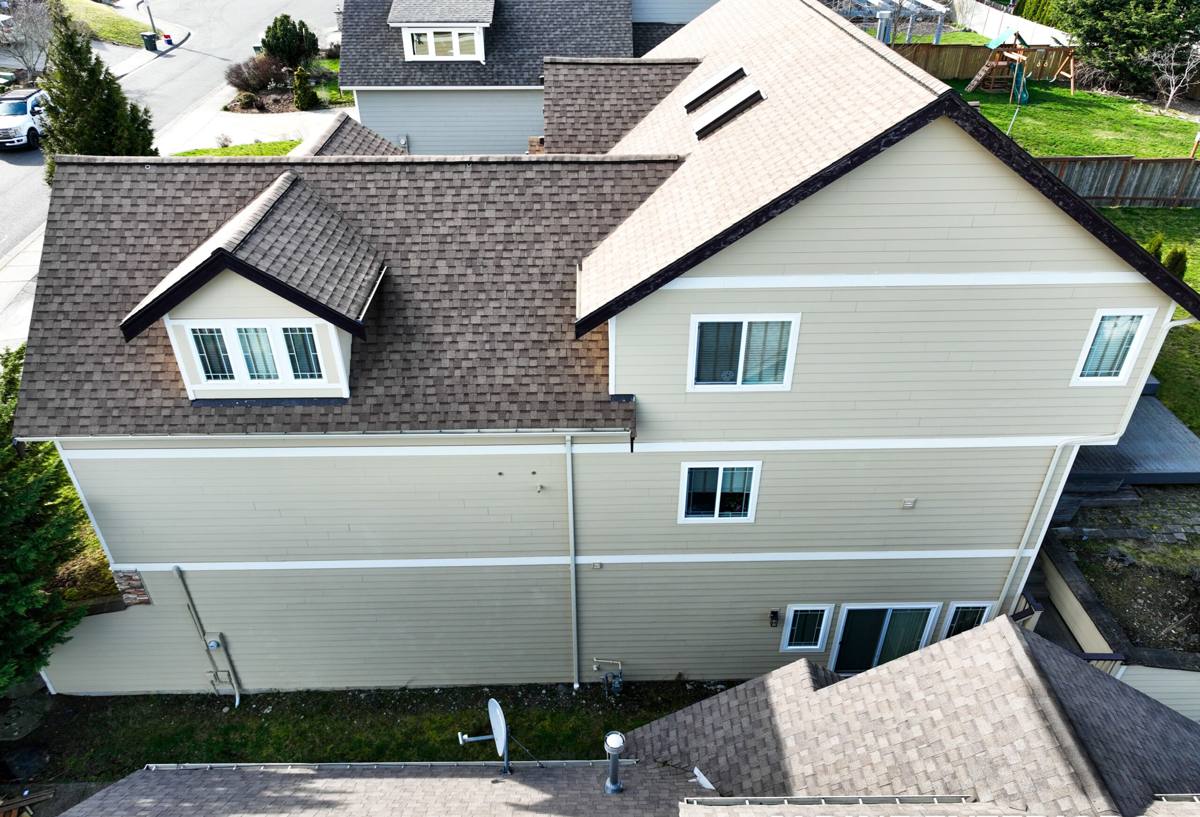
What Salt Air and Constant Moisture Do to a Deck
Coastal and near-coastal exposure in this part of Whatcom County creates a few predictable failure points on outdoor structures:
- Fastener corrosion. Standard or under-rated screws, joist hangers, and post brackets break down faster near salt air, leading to rust streaks, weakened connections, and loose boards.
- Moisture trapped in end grain and fastener holes. Wood decking absorbs water at cut ends and screw penetrations first — that's usually where rot starts, long before the rest of the board looks bad.
- Moss and algae growth on shaded or north-facing sections. Persistent dampness plus limited direct sun gives moss the conditions it needs to establish, and once it's rooted in a porous surface it's hard to fully clear.
- Freeze-thaw stress. Whatcom County doesn't get brutal winters, but the region does get enough freeze-thaw cycling to widen small cracks in wood decking or worn coatings over a few seasons.
None of this is unique to Lummi Nation specifically — it's the reality for any home close to the water in this region. But it does mean the standard "big box store" deck build, designed for a drier inland climate, tends to underperform here.
Why Composite Holds Up Better in This Climate
Composite decking — a blend of wood fiber and recycled plastic, usually with a protective cap layer — doesn't have the open end grain and fastener holes that give moisture a way into the core of a wood board. That single difference is why it resists the rot and splintering that shows up on wood decks in wet, salt-air environments years sooner.
Where composite still needs the right approach
Composite isn't maintenance-free, and it isn't immune to moss or algae — organic growth can still form on any outdoor surface that stays damp and shaded. The difference is that a capped composite board doesn't absorb that moisture into its structure the way wood does, so growth stays on the surface and is far easier to clean off without damaging the board underneath.
| Factor | Wood Decking | Composite Decking |
|---|---|---|
| Moisture absorption | Absorbs at cut ends, screw holes, and surface over time | Minimal — capped boards resist water intrusion into the core |
| Moss/algae cleanup | Can root into grain, harder to fully remove | Sits on the surface, easier to wash off |
| Refinishing | Needs periodic staining or sealing to stay protected | No staining or sealing required |
| Fastener exposure | Surface screws exposed to salt air directly | Hidden-fastener systems available, reducing exposed hardware |
| Upfront cost | Lower material cost | Higher material cost, lower long-term upkeep cost |
What a Correct Composite Deck Build Involves
The composite boards get most of the attention, but the substructure and hardware underneath are what actually determine whether a deck lasts in this climate. A correct install includes:
Substructure and framing
Pressure-treated joists and beams rated for ground contact where applicable, set with proper spacing for the specific composite product being used — composite typically needs tighter joist spacing than wood to prevent flex and long-term sagging.
Corrosion-resistant hardware
Stainless steel or coated fasteners and structural connectors throughout, not just at the visible surface. This is the detail that's easiest to cut corners on because it's invisible once the deck is finished — and the one that matters most near salt air.
Drainage and ventilation underneath
Composite doesn't rot, but the framing underneath it still can if water and debris get trapped with no airflow. We build in proper slope, gapping, and clearance so water moves off the structure instead of pooling against joists or the ledger board.
Ledger board flashing
Where the deck attaches to the house, correct flashing keeps driving rain from working its way behind the siding — one of the more common sources of hidden water damage on attached decks in wet climates.
Handling Moss and Algae by Design, Not Just Cleaning
A lot of moss problems on decks come down to design choices made before a single board was installed. We factor in:
- Board spacing and gapping that lets water drain through instead of sitting on the surface
- Layout choices that account for shade patterns from trees or the house itself, where moss is most likely to take hold
- Textured or streaked board finishes that hide the light surface film that develops between cleanings, so the deck doesn't look dirty the week after it rains
- Realistic guidance on which areas of a given yard will need more frequent rinsing, based on sun exposure and tree cover
No deck material eliminates the need for occasional cleaning in this climate — anyone who tells you otherwise isn't being straight with you. The goal is a deck that's easy to clean and doesn't hide damage underneath surface growth.
Our Process for a Lummi Nation Deck Project
- On-site assessment. We walk the property, check drainage patterns, sun/shade exposure, existing structure condition if this is a replacement, and any access considerations specific to the site.
- Design and material selection. We go over composite board options, color and texture choices, railing systems, and fastener systems based on your layout and budget.
- Permitting. Requirements can differ depending on whether a property falls under county jurisdiction or tribal land, so we confirm the correct permitting path for your specific address before work starts rather than assuming.
- Demo and structural build. Removal of any existing deck, framing, and structural inspection points before decking goes down.
- Decking, railing, and finish work. Board installation, hidden or surface fastening as specified, railing, stairs, and trim.
- Final walkthrough. We go over the finished deck together, including basic care guidance specific to your site's sun and shade exposure.
Cost Factors for a Composite Deck in This Area
Every project is different, but the main variables that move a composite deck's price up or down are consistent:
| Factor | Impact on Cost |
|---|---|
| Deck size and shape | Larger and more complex layouts (multiple levels, angles) increase material and labor |
| Height off grade | Taller decks need more substructure, footings, and railing |
| Board tier | Composite lines range from entry-level capped boards to premium multi-tone finishes |
| Fastener system | Hidden-fastener systems cost more but improve appearance and reduce exposed hardware |
| Site access | Waterfront or sloped lots can add labor time for material staging and equipment |
| Demo requirements | Removing an existing wood deck adds cost versus building on a clear site |
We give a firm, itemized quote after the on-site assessment rather than a rough number over the phone — too many of these factors depend on seeing the actual site.
Why a Crew That Already Works Lummi Nation Matters
A contractor who's worked in and around Lummi Nation has already dealt with the permitting path for this area, has a feel for how exposed a given lot is based on its position relative to the water, and knows which framing and fastener upgrades are worth the extra cost here versus a build further inland. That's not something you get from a crew that mostly builds decks in a drier part of the county and treats every job the same way.
It also matters for follow-up. If a fastener needs attention or a section needs re-leveling a few years down the road, working with a crew that knows the specific site and build makes that conversation a lot simpler than starting from scratch with someone new.
Basic Care Checklist for a Composite Deck Here
- Rinse or sweep debris (leaves, needles, pollen) off the deck regularly, especially in shaded areas
- Clean surface moss or algae film with a soft-bristle brush and mild soap/water — avoid pressure washing directly into board seams at high pressure
- Keep gutters and downspouts near the deck clear so runoff isn't dumping extra water onto the structure
- Check railing and stair connections once a year for any loosening
- Trim back overhanging branches that keep sections of the deck shaded and slow to dry
If you're weighing a new composite deck or replacing an aging wood one, we're happy to come take a look and walk you through what makes sense for your specific lot. Use the form below to request a free, no-pressure estimate.