 Ferndale Siding
 Deck Replacement in Cordata: Built for This Climate, Not Just This House
A deck in the Cordata area doesn't fail the way a deck fails in a dry climate. It doesn't crack from sun exposure or bake apart from heat. It fails from the inside out — from moisture that gets in and never fully leaves. Whatcom County sits close enough to the water that salt air is part of daily life, driving rain comes sideways more often than straight down, and the wet season stretches long enough that moss doesn't just grow on decks here, it colonizes them. Any deck built or replaced in this area has to be designed around that reality from the first framing member, not treated with a coat of stain and hoped for the best.
This page is specifically about deck replacement for homes in and around Cordata, near Ferndale. We're not going to give you the generic national version of this topic. We're going to walk through what actually wears a deck out here, what a replacement done right looks like, and how our process works when we take a deck down to the framing and rebuild it to hold up to another few decades of Whatcom County weather.
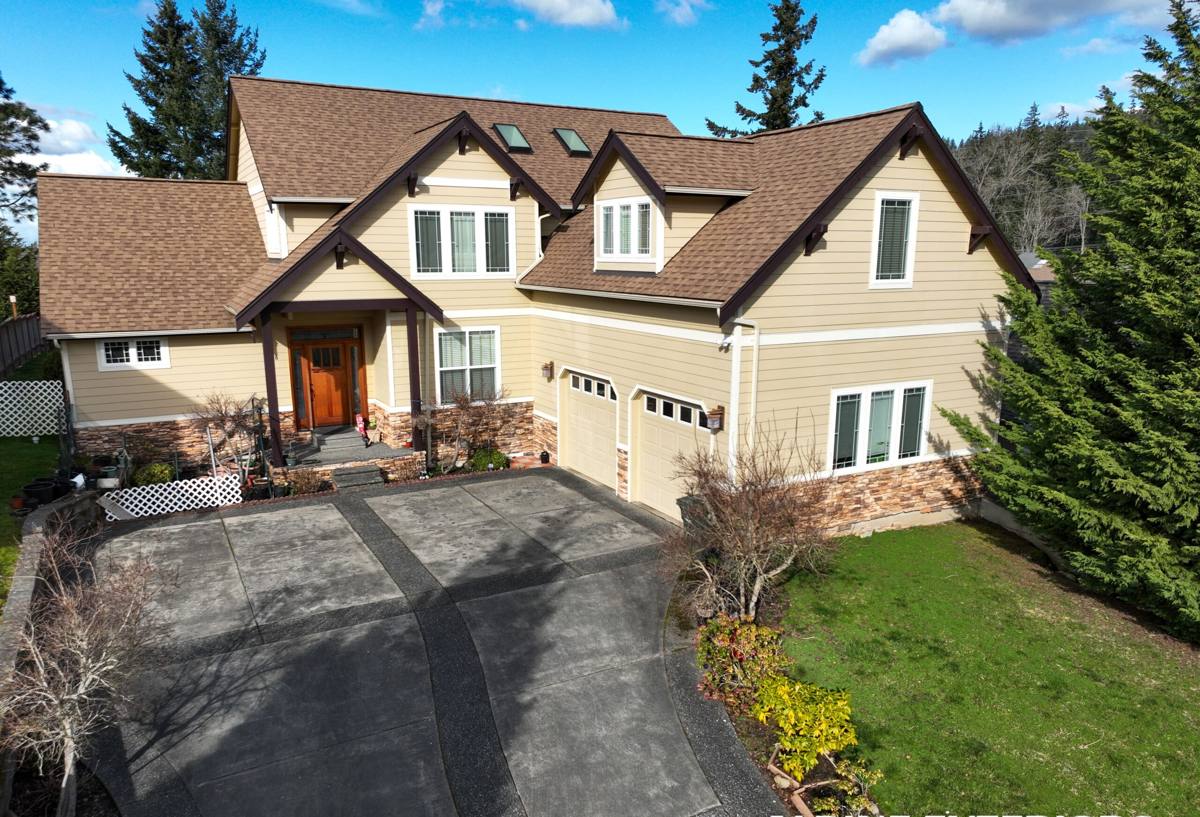
What Salt Air, Rain, and Moss Actually Do to a Deck
Homeowners often assume deck failure is about age. It's really about moisture management, and in this region moisture has more ways to win than in most places.
Salt Air and Fastener Corrosion
Being near Puget Sound and Bellingham Bay means the air carries salt further inland than people expect. Salt-laden air accelerates corrosion on any fastener, bracket, or connector that isn't rated for it. A deck built with standard interior-grade screws or nails can start showing rust streaks and weakened joints years before the wood itself is a problem. Once a fastener corrodes, it loses grip strength, and that's a structural issue, not a cosmetic one.
Driving Rain and Hidden Water Paths
Rain that comes in sideways doesn't just hit the top of a deck — it gets pushed up under boards, into gaps at the ledger board, and behind rim joists. Over years, that water finds the same paths in and out, and if the deck wasn't flashed and sealed correctly at the house connection, it rots the framing where you can't see it until a board goes soft or the whole structure starts to feel spongy underfoot.
Moss and the Long Wet Season
Whatcom County's wet season runs long, and moss doesn't need much encouragement to take hold on horizontal wood surfaces that stay damp. Beyond looking bad, moss holds moisture against the decking surface constantly, which speeds up rot in wood decking and can stain or degrade the surface layer on lower-grade composite products. It also turns a deck into a slip hazard, which matters more on stairs and near door thresholds.
Signs a Cordata Deck Needs Replacement, Not Just Repair
Not every deck problem means a full teardown. But there's a point where patching individual boards is just delaying an inevitable, more expensive project. Here's how we tell the difference during an inspection.
- Soft or spongy spots on the deck surface, especially near the house or around post bases
- Visible rot or discoloration at the ledger board where the deck attaches to the house
- Persistent moss or algae that returns within weeks of cleaning, even in the same spots
- Rust staining around fasteners or visible corrosion on brackets and joist hangers
- Railings or stair stringers that feel loose or flex under normal weight
- Gaps between boards that have widened unevenly, or boards that cup or crown
- A deck older than 15–20 years that was built before current flashing and connector standards were common practice
If you're seeing two or more of these, especially anything involving the ledger board or post bases, it's worth having someone look at the substructure before deciding whether repair is realistic.
What a Correct Deck Replacement Actually Involves
A deck replacement is not just new boards on old framing. Done correctly, it addresses every layer that moisture can attack, starting at the house and working outward.
The Ledger Connection
This is the single most important detail on any deck attached to a house, and it's the point that fails most often in this climate when it wasn't done right the first time. A correct ledger installation includes proper flashing that directs water away from the house sheathing, a gap or drainage plane between the ledger and siding, and corrosion-resistant lag bolts or through-bolts sized to code. We don't caulk over a bad ledger connection and call it fixed — we rebuild it properly, every time.
Framing and Fasteners
Joists, beams, and posts get sized to current code for the deck's dimensions and use, not just matched to whatever was there before. We use joist tape or a comparable flashing membrane on top of joists to keep water from wicking into end grain, and we use fasteners and structural connectors rated for exterior, coastal-adjacent exposure — not standard hardware that will corrode within a handful of wet seasons.
Drainage and Airflow Underneath
A deck that sits low to the ground or has poor airflow underneath stays damp longer after every rain, which speeds up rot and encourages moss to creep up from below. Where the design allows it, we build in proper clearance and grading so water moves away from the structure instead of pooling under it.
Railings and Guardrails
Railing height, baluster spacing, and post attachment all fall under code requirements that exist for safety reasons, not bureaucracy. A replacement is the right time to correct any railing that was undersized, improperly spaced, or attached in a way that's come loose over the years.
Choosing Decking Material for This Climate
There's no single "best" decking material — there's a best fit for your budget, your maintenance tolerance, and how much moss and moisture exposure your specific lot gets. Here's how the common options compare for a Cordata-area home.
| Material | Moisture & Moss Behavior | Maintenance | Typical Lifespan |
|---|---|---|---|
| Pressure-treated wood | Resists rot when sealed, but moss and algae grow readily on the surface if not maintained | Needs cleaning and re-sealing every 1–2 years in this climate | 10–15 years with upkeep |
| Cedar | Naturally rot-resistant heartwood, but surface still needs protection from constant damp and moss | Regular staining or sealing; more attention than treated wood | 15–20 years with upkeep |
| Capped composite | Sealed outer layer resists moisture absorption and moss staining much better than wood | Occasional washing; no staining or sealing required | 25–30+ years, per manufacturer warranties |
| Uncapped composite | More moisture-resistant than wood but can absorb some surface moisture over time, especially in shaded, damp areas | Periodic cleaning; less upkeep than wood | 20–25 years, varies by product |
We install wood and composite decking, and we'll give you an honest read on which one fits your situation rather than steering every job toward the highest-margin product. If your deck sits in a shaded, damp spot that holds moisture longer, that's a real factor in the recommendation — not a sales pitch.
Our Process, Start to Finish
- On-site inspection. We check the ledger connection, framing, post bases, and current decking to determine what's salvageable and what isn't. This is also when we talk through material options for your specific site conditions.
- Written estimate. You get a clear scope of work and pricing before anything is scheduled — no vague allowances that turn into surprise costs later.
- Permit handling. For replacements that trigger a permit, we handle the paperwork and coordinate inspections so you're not the one chasing down the county.
- Teardown. Full removal of the old decking, and framing if it's compromised, with the substructure evaluated as it's exposed.
- Rebuild. Framing repaired or replaced to code, ledger reflashed correctly, decking and railings installed to spec.
- Final walkthrough. We go over the finished deck with you, including basic care guidance for whatever material you chose.
Permits and Code in Whatcom County
Deck replacement projects in Whatcom County and the Ferndale area often require a permit, particularly when the deck is attached to the house, elevated above a certain height, or when framing is being replaced rather than just the surface boards. Requirements can shift, and the right call depends on your specific project, so we confirm what applies before work starts rather than guessing. Skipping a required permit isn't a shortcut worth taking — it can complicate a home sale down the road and, more importantly, an unpermitted deck doesn't get the inspection that verifies the structural work was done correctly.
Caring for Your Deck After Replacement
A correctly built deck still needs some seasonal attention in this climate. A little maintenance goes a long way toward getting the full lifespan out of the materials.
- Sweep debris and standing leaves off the surface regularly, especially in fall
- Rinse off moss and algae as soon as it appears rather than letting it establish
- Check the ledger area and post bases once a year for any signs of new staining or softness
- Keep gutters and downspouts near the deck clear so runoff isn't draining directly onto it
- Re-seal or re-stain wood decking on the schedule appropriate for the product, don't wait until it looks obviously worn
- Trim back vegetation that shades the deck and keeps it from drying out between rains
Why a Crew That Already Works Cordata Matters
Deck replacement isn't a one-size-fits-all project, and a crew that works this specific area regularly has already seen how local conditions play out over time — which ledger connections tend to fail first, which spots on a lot stay damp longest, and what the county actually asks for during inspection. That's the difference between a deck that's built to a generic spec sheet and one that's built for the rain, salt air, and moss season this area deals with every year. We're a Ferndale-based crew, and Cordata is part of the ground we work regularly, not a territory we're driving in for a one-off job.
If your deck is showing its age or you're just ready to stop patching it every spring, we're happy to take a look and give you a straightforward, no-pressure estimate. Use the form below to get in touch.