 Ferndale Siding
 Windows Built for Cordata's Weather, Not Just Cordata's Homes
Cordata sits in the marine climate belt of Whatcom County, which means every window on a house here does more work than the spec sheet suggests. It's not one big storm that wears out a window — it's the accumulation of a long wet season, salt-laden air drifting in off the Sound, and driving rain that hits windows sideways during winter systems. A window that's rated fine on paper can still fail early if it wasn't installed with this climate in mind.
We install windows the way this region demands: correct flashing sequence, a real drainage plane, and hardware and materials chosen for a place where "dry season" is a relative term. This page covers what that actually looks like for a Cordata home, and what to expect if you hire us to do it.
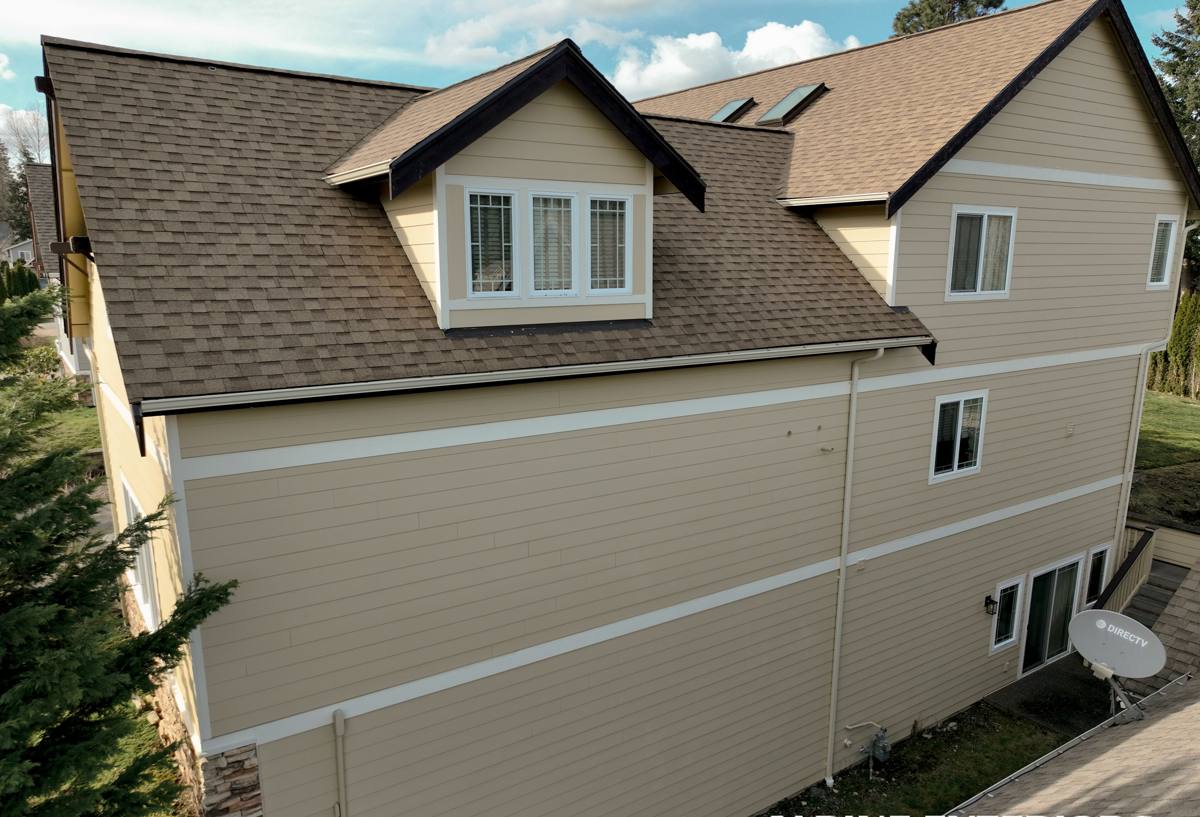
What Whatcom County Weather Does to Windows Over Time
Understanding the failure pattern helps explain why installation quality matters more here than in drier climates.
Driving rain and wind-driven moisture
Storms moving through Whatcom County frequently push rain sideways, not straight down. That means water gets forced up and under trim, into nail fins, and behind siding at the window edge — spots that never get wet in a light vertical rain. A window opening that isn't properly flashed and sealed on all four sides will eventually let that water in, even if the window unit itself is perfectly good.
Salt air and hardware corrosion
Homes closer to the Sound and the bay deal with a fine salt content in the air that speeds up corrosion on exposed metal — hinges, locks, screws, and cheaper aluminum components. Over years, that shows up as stiff or failing hardware and staining around fasteners long before the window frame itself gives out.
Moss, algae, and prolonged dampness
Whatcom County's moss season runs long — shaded north- and west-facing walls in particular stay damp for months at a stretch. Wood sills and trim in constant shade are where we see the earliest rot, because the wood never gets a real chance to dry between rain events.
Signs a Cordata Home's Windows Need Attention
Not every issue means full replacement, but these are the signs worth having looked at:
- Soft, spongy, or visibly rotted wood at the sill or lower corners of the frame
- Fogging or a permanent haze between panes of a double-pane window (seal failure)
- Drafts you can feel with a hand near the frame on a windy day
- Windows that are hard to open, close, or lock — often a sign of a warped or settled frame
- Paint or finish bubbling and peeling around the window, which usually points to moisture trapped behind it
- Visible daylight or gaps between the frame and the siding or trim
- Water staining on interior drywall or trim below or beside a window
What a Correct Window Installation Actually Involves
The window unit itself is often the easy part. The installation is where most long-term problems start or get prevented.
Removal and opening inspection
Once the old window is out, we check the rough opening — sill, jack studs, and header — for rot or water damage before anything new goes in. Installing a new window into a compromised opening just hides the problem for a few more years.
Sill pan and flashing
A sloped sill pan directs any water that gets past the window back outside instead of into the wall cavity. Flashing tape is layered in the correct shingle-lap order — bottom, sides, then top — so water moving down the wall is always shed over the layer below it, never trapped behind one.
Integration with the water-resistive barrier
The window's flashing has to tie into the house's weather-resistive barrier correctly, not just butt up against it. This is one of the most common shortcuts we see on older or poorly done installs, and it's usually invisible until a wall gets opened up years later.
Sealing and insulation
The gap between the window frame and the rough opening gets insulated (typically low-expansion foam, not standard high-expansion foam that can bow the frame) and sealed with an appropriate exterior sealant rated for this climate's temperature and moisture swings.
Interior and exterior finish
Trim, casing, and any siding disturbed during the install get reset properly, with attention to keeping water shedding outward rather than back toward the window.
Full-Frame Replacement vs. Insert Replacement
There are two general approaches, and the right one depends on the condition of what's already there.
| Approach | Best For | Trade-offs |
|---|---|---|
| Insert (pocket) replacement | Existing frame is sound, dry, and square | Faster, less disruption, but any hidden rot or flashing problem stays hidden |
| Full-frame replacement | Frame shows rot, water damage, or the opening needs correction | More labor and cost, but lets us fully inspect and reflash the opening |
We'll tell you honestly which one your situation calls for. On a lot of older Cordata-area homes with original wood windows, what looks like a simple swap turns into a full-frame job once the opening is exposed — we'd rather flag that upfront than surprise you mid-project.
Choosing Window Frame Materials for This Climate
Frame material affects how a window holds up to years of Whatcom County weather, not just how it looks on install day.
| Material | Moisture Behavior | Maintenance | Typical Cost Position |
|---|---|---|---|
| Vinyl | Won't rot; performs well in wet, salt-air climates | Low — occasional cleaning | Most affordable |
| Fiberglass | Very stable, resists warping and moisture damage | Low | Mid to upper range |
| Wood (unclad) | Attractive but vulnerable in a long wet season without diligent upkeep | High — regular painting/sealing | Higher, plus ongoing cost |
| Wood with vinyl or aluminum cladding | Exterior face protected; interior keeps wood look | Moderate | Upper range |
For most Cordata homes, we steer people toward vinyl or fiberglass on any elevation that takes direct weather, simply because it removes an ongoing maintenance burden in a climate that doesn't give wood much of a break. That's a practical recommendation based on how these materials age here, not a claim that wood windows are a bad product — plenty of homeowners choose clad-wood for the interior look and keep up with the maintenance it needs.
Energy Performance and Condensation
Window replacement is one of the more noticeable energy-efficiency upgrades a homeowner can make, but in this climate, condensation control matters as much as the U-factor rating on the label.
Double- or triple-pane windows with a good low-E coating reduce heat loss and help keep interior glass surfaces warmer, which cuts down on the condensation that shows up on cold, damp mornings — a common complaint in older single-pane or worn double-pane homes throughout Whatcom County. We can walk through the performance ratings that make sense for your home's orientation and exposure without pushing you toward the most expensive option by default.
Our Process, Start to Finish
- On-site assessment — we look at the existing windows, openings, and any visible water damage, and talk through your goals and budget.
- Honest recommendation — insert or full-frame, material options, and a clear explanation of why, in plain terms.
- Written estimate — scope, materials, and price laid out before any work starts.
- Careful removal — old windows out, opening inspected and documented.
- Correct installation — sill pan, flashing, WRB integration, insulation, and sealing done in the right order, every time.
- Finish work — trim, caulking, and cleanup so the job looks as good as it performs.
- Walkthrough — we check operation on every window with you before we consider the job done.
Why It Matters That We Already Work the Cordata Area
A lot of window problems in this part of Whatcom County trace back to installation shortcuts, not bad products — flashing skipped or done out of order, sealant used in place of proper drainage, or a rough opening that never got inspected. A crew that regularly works in and around Ferndale and the Cordata area has already seen how local homes are built, how they've weathered, and where the recurring problem spots tend to show up.
That familiarity means fewer surprises mid-project and a realistic estimate from the start, because we're not guessing at how this climate treats a window installation — we're accounting for it.
Simple Maintenance That Extends the Life of New Windows
- Clear debris and moss from window sills and adjacent trim, especially on shaded sides of the house
- Check and refresh exterior caulking every couple of years, sooner on sun- or wind-exposed elevations
- Operate every window a few times a year, even ones you rarely open, to keep hardware and weatherstripping working properly
- Watch for paint bubbling, soft trim, or staining as early warning signs rather than waiting for a visible leak
- Keep gutters and downspouts clear so roof runoff isn't dumping extra water past upper-story windows
If your Cordata-area home has windows that are drafty, hard to operate, or original to the house, we're glad to take a look and give you a straight assessment — no pressure, no upsell. Use the form below to request a free estimate and we'll go from there.