 Ferndale Siding
 Why Semiahmoo Roofs Wear Differently
A roof over a home near Semiahmoo does more work than a roof twenty miles inland. It sits closer to open water, which means salt-laden air moves across it almost constantly, and it takes the brunt of storms that come off the Strait of Georgia with real wind behind the rain. Add Whatcom County's long, wet shoulder seasons and shaded, moisture-holding tree cover in many yards, and you have a roof environment that punishes shortcuts. Fasteners corrode faster. Moss gets a longer runway to establish itself. Water finds gaps that would stay dry somewhere drier and less windy. None of this means a roof here can't last its full service life — it means the installation has to account for the site from the first nail.
Salt Air and Metal Fatigue
Salt air accelerates corrosion on any exposed metal — flashing, fasteners, vents, and drip edge. Standard electro-galvanized fasteners can start showing rust streaks years before they should. This is a materials and detailing issue, not a mystery: it's solved by choosing corrosion-resistant hardware and flashing metals suited to a coastal environment, not by hoping a roof this close to the water behaves like one further inland.
Wind-Driven, Driving Rain
Rain that falls straight down is easy for any roof to shed. Rain that's being pushed sideways by wind off the water is a different problem — it tests every seam, every piece of flashing, and every shingle's wind rating. A roof that looks fine in a calm inspection can still leak in a January storm if the underlayment, flashing laps, and fastening pattern weren't built for driving rain in the first place.
A Long Moss Season
Whatcom County doesn't get a short, sharp winter followed by a dry summer — it gets months of mild, damp weather that moss and algae thrive in, especially on north-facing slopes and anywhere shaded by trees. Moss isn't just cosmetic. Its root structure lifts shingle edges and holds moisture directly against the roofing material, which shortens the life of the roof underneath it.
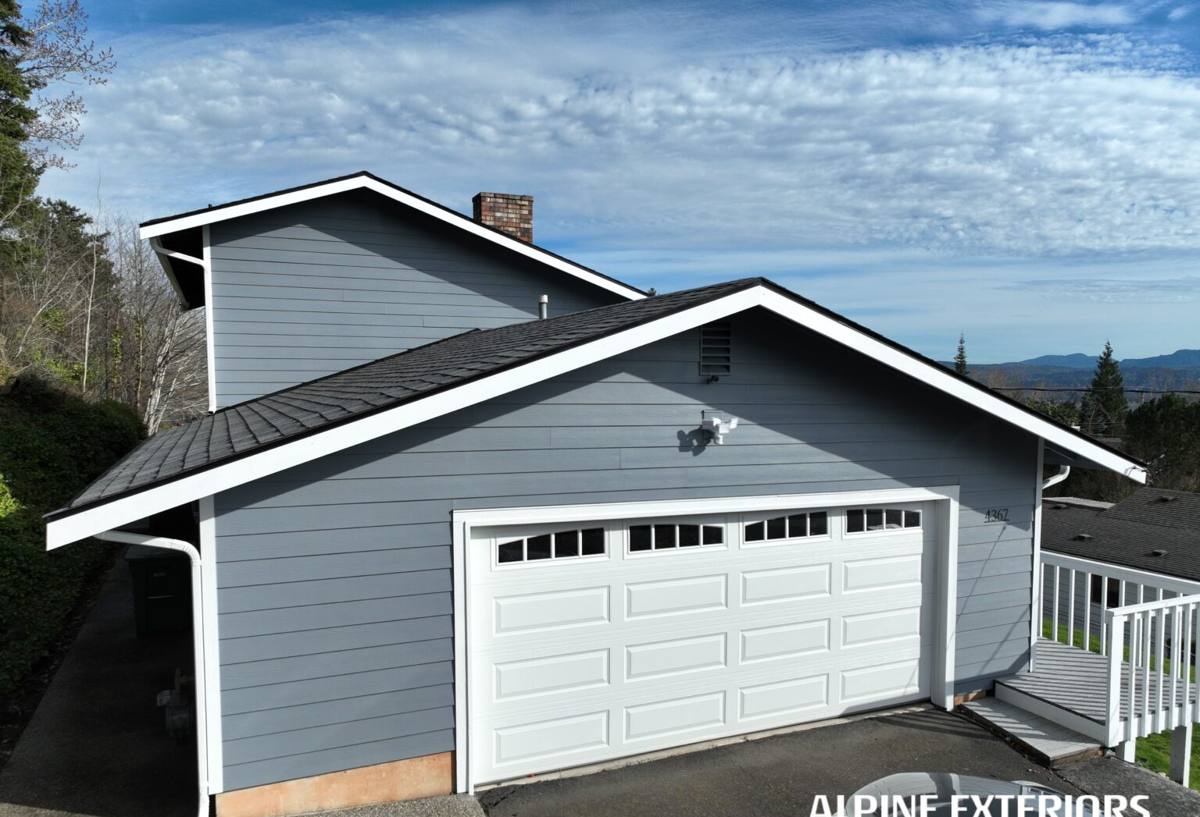
Signs Your Semiahmoo Roof Is Ready for Replacement
Most roofs don't fail all at once. They give warning signs for a season or two before a leak actually shows up inside the house. Worth walking your property and checking for the following, or having a contractor do it for you at no charge:
- Granules collecting in gutters or at downspout outlets — a sign shingles are past their protective life
- Shingles that are cupping, curling at the edges, or visibly cracked
- Moss or dark algae streaking that keeps coming back no matter how often it's cleaned
- Soft spots or noticeable sag when walking the roofline (viewed from the ground, not walked on)
- Daylight visible through the attic roof deck, or damp insulation after a storm
- Flashing around chimneys, vents, or skylights that's rusted, lifted, or gapped
- A roof that's 20+ years old on standard asphalt shingle, regardless of visible condition
Any one of these on its own might just mean a repair. Several at once, especially on an older roof, usually means it's time to talk about full replacement instead of chasing leaks one at a time.
What a Correct New Roof Installation Actually Involves
A new roof is more than shingles on plywood. Done right, in a climate like this, it's a system where every layer supports the one above it. Skipping or shortcutting any layer is exactly where coastal roofs start failing early.
Tear-Off and Deck Inspection
We remove the old roofing down to the deck rather than layering over it. That's the only way to actually see what's underneath — soft or delaminated sheathing, hidden rot around old flashing, or damage that's been quietly getting worse under intact-looking shingles. Any compromised decking gets replaced before anything new goes down.
Underlayment and Water-Entry Protection
Underlayment is the roof's backup plan for the moments shingles alone aren't enough — wind-driven rain, ice, or a shingle that gets damaged years down the road. In vulnerable areas like eaves, valleys, and around penetrations, self-adhering waterproof membrane goes down before synthetic underlayment covers the rest of the deck.
Flashing and Penetrations
Flashing around chimneys, skylights, vent stacks, and roof-to-wall transitions is where the majority of real-world leaks start — not in the open field of shingles. Correct flashing means new metal, correct laps (each piece overlapping the one below so water is always shed downhill), and sealant used as a secondary defense, not the primary one.
Ventilation
An attic that can't breathe traps moisture, which condenses, soaks insulation, and rots decking from underneath — often before any exterior sign shows up. Balanced intake and exhaust ventilation is part of a correct install, not an upsell.
Ridge and Field Installation
Shingles get fastened per the manufacturer's wind-rated pattern — not a shortcut pattern — with ridge caps closing out the top of the roof where wind uplift is highest.
Roofing Material Options for a Semiahmoo Home
There's no single correct material for every roof. The right choice depends on budget, roof pitch, how much shade and moss pressure the property has, and how long you want to go before the next major roofing decision.
| Material | Typical Lifespan | Coastal / Moss Considerations |
|---|---|---|
| Architectural asphalt shingle | 25–30 years | Good value; algae-resistant granule options help with moss-prone, shaded roofs |
| Standard 3-tab shingle | 15–20 years | Lower upfront cost, but lighter wind rating and shorter service life in driving-rain conditions |
| Metal (standing seam or panel) | 40–50+ years | Sheds moisture fast and resists moss well; needs coastal-grade fasteners and coatings to manage salt air |
| Synthetic/composite shingle | 30–50 years | Strong impact and wind resistance; higher material cost, good option for exposed sites |
For most Semiahmoo homes we talk through architectural asphalt with algae-resistant granules as the practical middle ground, and metal for homeowners who want to minimize maintenance and are planning to stay in the home long-term. We don't push one material as universally "best" — we walk the roof, look at pitch and exposure, and give an honest read on what fits the house and the budget.
What Affects the Cost of a New Roof Here
| Factor | Why It Matters |
|---|---|
| Roof size and number of planes | More square footage and more complex geometry means more material and labor time |
| Pitch and access | Steep or hard-to-access roofs take longer and require more safety setup |
| Decking condition | Rot or soft sheathing found during tear-off adds material and labor not visible from the ground |
| Material choice | Asphalt, metal, and synthetic products carry different material and installation costs |
| Layers of existing roofing | A second or third layer to remove adds disposal and labor time |
| Flashing and penetration count | Chimneys, skylights, and multiple vents each need individual, correctly lapped flashing |
We give a written, itemized estimate after walking the roof in person — not a phone quote. Broad ranges are honest and useful for budgeting, but the only number worth trusting is one based on your actual roof.
Our Installation Process, Step by Step
- On-site inspection. We walk the roof, check the attic from inside where accessible, and note the roof's true condition — not just what's visible from the driveway.
- Honest scope and estimate. A written breakdown of materials, labor, and any decking allowance, with material options explained in plain terms.
- Scheduling around weather. Whatcom County's wet season means timing matters — we plan tear-off days around forecasts so your home is never left exposed longer than necessary.
- Tear-off and deck repair. Old roofing comes off, decking is inspected, and any damaged sheathing is replaced before moving forward.
- Underlayment, flashing, and ventilation install. The protective layers go in first and get inspected before shingles or panels ever go down.
- Final installation. Roofing material goes on per manufacturer spec, with correct fastening and ridge detailing for wind resistance.
- Cleanup and walkthrough. Site is cleared of debris and nails (magnetic sweep included), and we walk the finished roof with you before calling the job done.
Why a Crew That Already Works Semiahmoo Matters
Roofing crews that mostly work drier, inland areas sometimes treat coastal detailing as optional — extra flashing steps, corrosion-resistant fasteners, moss-resistant granules — because it's not what they see every day. A crew that already works this part of Whatcom County builds those choices in as standard practice, not as an add-on, because we've seen firsthand what shortcuts cost a homeowner two or three winters later.
Local familiarity also means fewer surprises during the job itself: knowing how Ferndale and Whatcom County permitting and inspection typically run, understanding realistic weather windows for tear-off scheduling, and having a track record in the area that you can actually check on rather than take on faith. When a contractor already knows the conditions your specific roof is up against, the estimate and the finished job both tend to be more accurate.
Keeping a New Roof Performing After Installation
A correctly installed roof still benefits from basic upkeep, especially in a moss-friendly, salt-air climate.
- Keep gutters clear so wind-driven rain has somewhere to go besides under the shingles
- Trim back overhanging branches to cut down shade and debris that feed moss growth
- Have moss treated or gently removed before it establishes rather than after
- Schedule a quick visual check after major windstorms to catch lifted flashing or shingles early
- Keep attic vents clear of insulation or debris so ventilation keeps working as designed
None of this requires a contractor visit every year — it's mostly a homeowner's five-minute checks a couple times a season, which go a long way toward getting full value out of a new roof.
If your roof near Semiahmoo is showing its age or you just want an honest read on its condition, we're glad to come take a look. The estimate is free, there's no pressure, and you'll get a straight answer about what your roof actually needs — use the form below to get started.