 Ferndale Siding
 Decking Built for the Custer Climate, Not a Catalog Photo
Custer sits close enough to the water and far enough into the rural stretch north of Ferndale that its weather asks more of a deck than most manufacturer literature accounts for. You get driving rain off the Strait for months at a time, a marine air layer that carries salt further inland than people expect, and a moss season that can run from October well into spring. A deck that looks right the day it's installed has to also survive standing water on low spots, algae film on shaded boards, and the freeze-thaw cycles that hit Whatcom County a handful of times most winters. Composite decking handles that combination better than most materials, but only when it's detailed correctly for this specific climate — not just installed to the generic instructions in the box.
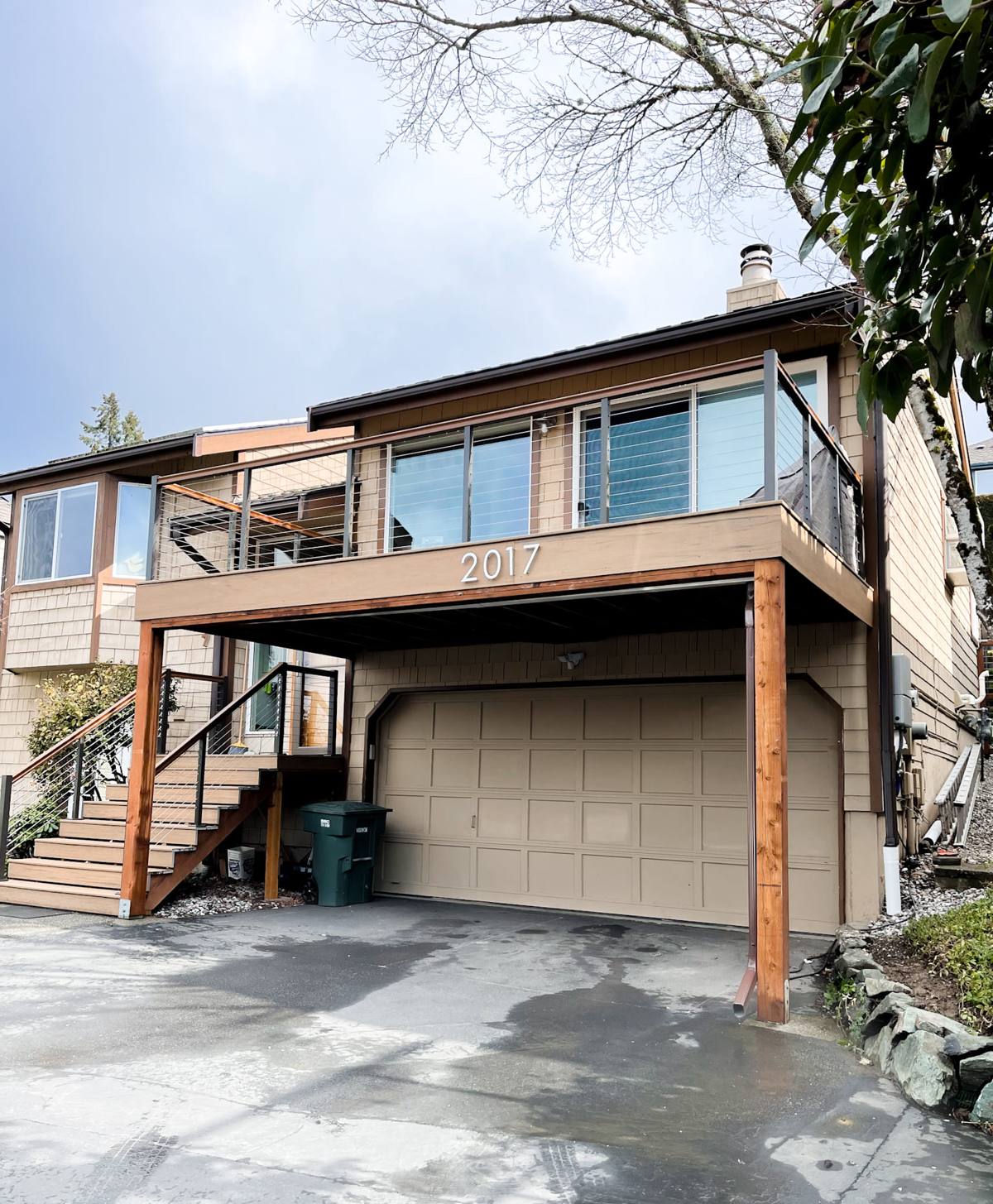
What Custer Homes Actually Need From a Deck
Most of the decks we look at in this area fail — or start looking bad early — for the same handful of reasons: trapped moisture under the boards, fastener corrosion, framing that was never rated for a wet climate, and drainage that dumps water right back against the house. None of those are composite decking problems specifically; they're installation problems that composite decking will hide for a while and then expose all at once, usually as staining, soft spots at the joist lines, or mildew that keeps coming back no matter how often it's washed.
Airflow Under the Deck
Composite boards don't rot, but the framing underneath still can, and trapped moisture under low-clearance decks is one of the most common issues we find on service calls in this area. Custer's rain volume means a deck built tight to grade with no ventilation gap is going to hold moisture under the boards for days after every storm. That moisture doesn't hurt the composite decking itself much, but it works on the joists, the ledger board, and any fasteners that weren't rated for wet exposure.
Drainage Away From the House
A deck attached to the house needs a slight pitch away from the structure and a ledger flashing detail that actually sheds water instead of channeling it behind the siding. This is the single most common defect we find on decks that were installed by out-of-area crews or handled as a weekend add-on — the boards look fine, but water has been getting behind the ledger board for years.
Fastening and Hardware
Salt-tinged air corrodes standard fasteners faster than people expect, especially on decks with any western or southern exposure that catches weather off the water. Hidden fastener systems and structural hardware both need a corrosion rating that matches a marine-influenced climate, not just a "treated lumber compatible" label.
Composite vs. Other Decking Materials for This Area
Composite isn't automatically the right call for every deck, but for this climate specifically, here's how it stacks up against the other materials homeowners in Custer usually ask about:
| Material | Moisture Behavior | Moss/Mildew Resistance | Maintenance |
|---|---|---|---|
| Pressure-treated wood | Absorbs water, prone to warping and checking | Needs regular treatment to resist growth | Annual staining/sealing |
| Cedar | Better than PT wood but still absorbent over time | Moderate resistance, fades and grays without upkeep | Sealing every 1-2 years |
| Capped composite | Non-absorbent core with protective shell | Good, especially with brush finish for grip | Occasional wash, no sealing |
| PVC decking | Fully non-absorbent | Very good | Occasional wash, lightest overall upkeep |
We install capped composite as our standard recommendation for most Custer projects because it strikes a practical balance — it holds up to the rain and salt air far better than wood without the higher material cost and different installation sensitivities that come with full PVC systems. Uncapped composite is the one product we generally steer clients away from in this climate; without a protective cap layer, it absorbs more moisture at the surface and is more prone to mildew staining in a wet, low-sun environment like this one. That's not a knock on any brand — it's a maintenance and moisture trade-off we've watched play out on real decks in this county.
The Moss and Mildew Reality
Even good composite decking will get a film of algae or moss buildup in shaded, low-airflow areas during a Whatcom County winter — that's a function of the climate, not a defect in the product. The difference between a deck that stays clean-looking and one that turns green by January usually comes down to board selection (brushed or grooved textures resist buildup better than smooth, glossy caps) and layout decisions made during installation, like leaving gaps for airflow and avoiding designs that trap standing water in corners or against the house.
A simple seasonal wash with a deck cleaner and a stiff brush handles most of it. Pressure washers can be used on composite but need to be kept at a safe distance and angle — too aggressive, and you can etch the cap layer, which then holds dirt and moisture worse than before.
Our Process for a Composite Deck in Custer
1. On-Site Assessment
We look at drainage patterns around the existing structure or planned footprint, sun/shade exposure, proximity to the water table or low-lying ground, and the condition of any existing framing if we're replacing an old deck. This is where most of the climate-specific decisions get made — board direction, gap spacing, and where extra ventilation or drainage detailing is worth the added labor.
2. Framing and Substructure
We build or verify the substructure to a standard that accounts for sustained wet exposure, not just code minimums — proper joist spacing for the composite product being used, corrosion-rated hardware, and ledger flashing that actually directs water away from the house.
3. Installation
Boards are installed with the fastening system specified by the manufacturer for that product line, with attention to expansion gaps (composite moves more with temperature swings than people expect) and consistent spacing for drainage and airflow.
4. Walkthrough
We go over basic care with the homeowner — what to expect in year one, how to clean it, and what a normal moss film looks like versus something that needs attention.
Cost Factors Homeowners Should Understand
Composite decking costs more upfront than pressure-treated wood and less than most PVC systems, but the real cost variables on a Custer project usually come down to a few specific factors rather than the boards themselves:
- Whether existing framing can be reused or needs to be rebuilt to handle wet-climate exposure properly
- Deck height and whether under-deck ventilation or drainage systems are needed
- Ledger and flashing work at the house connection — often the most labor-intensive part of the job
- Railing material and style, which can range from basic composite to metal or cable systems
- Board pattern and picture-framing details, which add material waste and labor time
- Site access — decks over difficult grade or with limited equipment access take longer to build
We'll walk through these specifics during an on-site estimate rather than quoting a number sight unseen — too much of the real cost depends on what's actually under and around the existing structure.
Why Local Experience Matters on This Job
A composite deck built to a generic national spec sheet will look fine for the first year almost anywhere. What separates a deck that holds up in Custer for fifteen-plus years from one that starts showing problems in three is whether the crew building it understands what this specific stretch of Whatcom County does to a structure over time — the rain volume, the salt-influenced air, the long stretches of low sun and high humidity that feed moss and mildew growth. That's not something you get from reading a product manual once; it's something you build from doing this work repeatedly on homes in this area and seeing which details actually hold up and which ones fail quietly over a few winters.
It also matters for permitting and code compliance. Whatcom County has its own permitting process for attached decks, and requirements can vary depending on deck height, footprint, and proximity to setbacks or environmentally sensitive areas near the water. A crew that pulls permits in this county regularly knows what inspectors are going to look for and builds to that standard from the start, instead of finding out at inspection time.
Signs Your Current Deck Needs Attention
- Boards that feel spongy or flex more than they used to, especially near the house
- Dark staining that keeps returning within weeks of cleaning
- Visible gaps or corrosion at fastener points
- Standing water that doesn't drain within a few hours after rain stops
- Railing posts that feel loose or move when pushed
- A ledger board connection you haven't had inspected in several years
Any one of these on its own isn't necessarily urgent, but a couple of them together usually means it's worth having someone look at the structure before deciding whether a repair, a partial rebuild, or a full replacement makes more sense.
Get a Straight Answer for Your Property
Every deck in Custer sits a little differently — sun exposure, drainage, distance from the water, age of the existing structure. A quick on-site look tells us far more than a phone estimate ever could. If you're weighing composite decking for a new build or thinking about replacing a tired deck before another wet season sets in, we're happy to come take a look and give you an honest read on what it needs. Use the form below to request a free, no-pressure estimate.