 Ferndale Siding
 Custer's Climate Is Harder on Siding Than Most Homeowners Realize
Custer sits in the northwest corner of Whatcom County, close enough to the Salish Sea that salt-laden air is a regular part of the weather, and close enough to the Nooksack lowlands and surrounding farmland that moisture sits in the landscape for long stretches of the year. Add in Pacific storm systems that bring driving, wind-blown rain off the water, and you have a combination that wears down exterior siding faster than it would in a drier, inland part of the state. Homes here don't just get rained on — they get rained on sideways, sit in damp air overnight, and then spend months under a marine layer that never fully dries the wall surface out.
That's the environment any siding product installed on a Custer home has to survive, year after year, without constant homeowner intervention. A lot of siding failures we see out here aren't really about bad luck — they're about a product or an installation that was never matched to this specific climate.
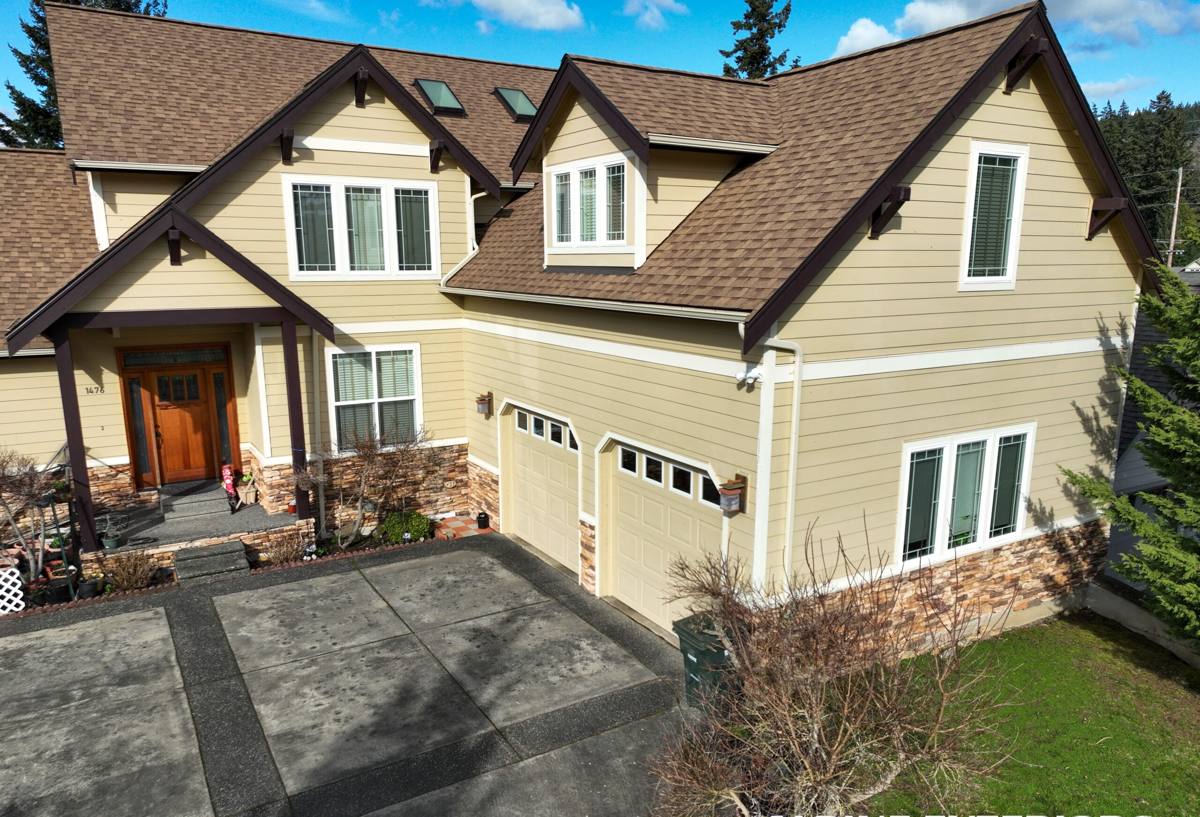
What Salt Air, Rain, and Moss Season Actually Do to a Wall System
Each of these three factors attacks siding a little differently, and understanding the mechanism helps explain why the fix isn't just "put up new siding" — it's putting up the right siding, installed correctly.
Salt Air
Airborne salt is corrosive to exposed metal fasteners, flashing, and trim, and it can accelerate the breakdown of certain paint films and coatings over time. Materials that rely on a surface-applied finish are more vulnerable here than materials with a factory-cured, baked-on finish, because salt exposure works on the coating itself, not just the substrate underneath.
Driving Rain
Wind-driven rain doesn't just wet the face of a wall — it pushes water sideways and upward, testing every seam, lap joint, and penetration in the siding system. A product that's dimensionally unstable, or a job where the water-resistive barrier and flashing details were rushed, will find that weakness during the first real storm, not years down the road.
Moss and Sustained Moisture
Whatcom County's long wet season means siding surfaces, especially on shaded north- and west-facing walls, can stay damp for days at a time. That's exactly the environment moss, algae, and mildew need to take hold. Once organic growth establishes itself on a porous or absorbent siding material, it holds even more moisture against the wall, which speeds up rot, delamination, or coating failure underneath it.
Signs a Custer Home Needs Siding Replacement, Not Just a Patch
Not every siding problem calls for a full replacement, but in this climate, small issues tend to compound quickly if they're ignored. Watch for:
- Soft, spongy, or crumbling spots when you press on the siding, especially near the bottom courses or under windows
- Persistent moss or algae staining that comes back within a season or two of cleaning
- Visible warping, buckling, or gaps opening up at seams and corners
- Paint or coating that's peeling, chalking heavily, or failing in patches rather than evenly across the wall
- Rising interior humidity, musty smells, or damp drywall on exterior-facing walls
- Fastener heads rusting or "bleeding" rust streaks down the siding face
- Siding that's original to a home built more than 20-25 years ago, particularly if it was never a fiber cement product
If you're seeing more than one of these at once, it's usually a sign the whole wall system — not just the visible surface — has been compromised.
Why We Install Only James Hardie Fiber Cement Siding
We made a deliberate decision to install one product line — James Hardie fiber cement — rather than offering a menu of vinyl, LP SmartSide, primed wood, or other fiber cement brands. That's not about brand loyalty; it's about what actually holds up in Whatcom County's marine climate with the least long-term maintenance burden for the homeowner.
Fiber cement is non-combustible, dimensionally stable in wet-dry cycling, and resistant to the kind of moisture-driven rot and insect damage that affects wood-based products. James Hardie's ColorPlus finish is baked on at the factory under controlled conditions, rather than field-applied, which matters directly in a salt-air environment where surface-applied coatings tend to break down faster. Hardie also engineers its HZ5 product line specifically for regions with more rain and humidity exposure — a relevant distinction for a location like Custer, where wind-driven rain off the water is a routine part of the weather, not an occasional event.
We're not going to tell you every other siding product on the market is bad — many of them work fine in the right conditions. But after years of tearing off failed siding on Whatcom County homes, we standardized on the one product system we're confident will hold up here without the homeowner needing to babysit it.
What a Correct Siding Replacement Job Actually Involves
Replacing siding on a Custer home isn't a cosmetic swap. Done right, it's a full rebuild of the wall's weather barrier, from the sheathing out. Skipping steps here is exactly how a new siding job ends up with the same moisture problems five years later.
Tear-Off and Inspection
Old siding comes off down to the sheathing, and that sheathing gets inspected for rot, soft spots, or hidden water damage — problems that are invisible until the old siding is gone. This is often where we find out how much moisture had actually been getting behind the old wall system.
Water-Resistive Barrier and Flashing
A new weather-resistive barrier goes on correctly lapped, and flashing gets installed at every window, door, and penetration so water is directed out and down, never trapped behind the cladding. In a driving-rain climate, this layer matters as much as the visible siding itself.
Fastening and Fit
James Hardie panels and lap siding are fastened according to the manufacturer's specifications for our climate zone, with proper clearances at grade, decks, and roof lines so the material never sits in standing water or gets buried against soil or mulch.
Trim, Caulking, and Finish Detailing
Corners, trim boards, and joints get sealed and detailed correctly, which is often where corners get cut on lower-quality installs. A clean finish line here is also what keeps moss and algae from finding an easy foothold at the seams.
Our Process, Start to Finish
- Free on-site estimate — we walk the exterior, look at current siding condition, and talk through what your home actually needs
- Detailed written proposal — scope, product selection, and cost laid out clearly before any work begins
- Tear-off and sheathing inspection — old material removed, substrate checked and repaired if needed
- Weather barrier and flashing installation — the layer that actually keeps water out
- James Hardie siding installation — installed to manufacturer spec for our climate zone
- Final walkthrough — we go over the finished job with you before calling it done
Cost Factors for Siding Replacement in Custer
Every home is different, but the same handful of factors drive most of the cost variation we see on jobs in this area:
| Factor | Why It Matters |
|---|---|
| Home size and wall complexity | More square footage and more corners, gables, or dormers mean more material and labor time |
| Condition of existing sheathing | Rot or water damage found during tear-off adds repair work before new siding can go on |
| Siding profile chosen | Lap siding, panel systems, and shingle-style Hardie products carry different material and labor costs |
| Trim and detail work | Extensive trim, window/door count, and corner detailing add labor time |
| Site access | Rural lots, long driveways, or tight setbacks common around Custer can affect staging and scaffolding needs |
We don't quote a job until we've actually looked at your home, because a phone estimate can't account for what's underneath the existing siding.
Why It Matters That We Already Work in Custer
Custer isn't a big commercial center — it's a mix of rural properties, farmland-adjacent homes, and residential streets tucked between Ferndale and Blaine. A crew that regularly works this specific stretch of Whatcom County already understands how the marine layer, the wind exposure off the water, and the local moss growth patterns affect a wall system here, rather than treating it like any other job in the county. That familiarity shows up in small decisions — how flashing gets detailed on a west-facing wall that catches the worst of the weather, or which areas of a property tend to stay shaded and damp long after a storm passes.
It also means straightforward logistics: shorter response times for estimates and follow-up, and a crew that isn't learning the area's quirks on your project for the first time.
Keeping Your New Siding Performing for the Long Run
James Hardie siding is low-maintenance, but "low-maintenance" doesn't mean "no maintenance" — especially in a climate that grows moss on nearly anything left damp long enough. A simple annual routine goes a long way:
- Rinse the exterior with a garden hose once or twice a year to knock off pollen, salt residue, and early algae growth
- Keep gutters clean and downspouts directed away from the foundation so water isn't splashing back onto lower siding courses
- Trim back vegetation and landscaping so siding gets airflow and isn't sitting in constant shade and moisture
- Check caulking at trim and penetrations every year or two and have any cracked sealant addressed early
If you're seeing signs of wear on your current siding, or you'd just like an honest look at what condition your home's exterior is really in, we're happy to come out and take a look. The estimate is free, there's no pressure, and you'll get a straight answer about what your Custer home actually needs.