 Ferndale Siding
 Building a Deck That Holds Up on the Peninsula
Homes in and around the Lummi Nation sit on a peninsula surrounded by saltwater on nearly every side, which is a different environment than a deck build a few miles inland in Ferndale. Add in Whatcom County's long wet season and the moss that comes with it, and a deck here needs to be built with a different set of priorities than a deck catalog photo would suggest. We've built and repaired decks throughout this area long enough to know which shortcuts show up as callbacks two winters later, and which details actually matter.
This page covers what a custom deck built for this specific stretch of coastline needs, what a correctly done job looks like from the footings up, and how we approach the work when we're on your site.
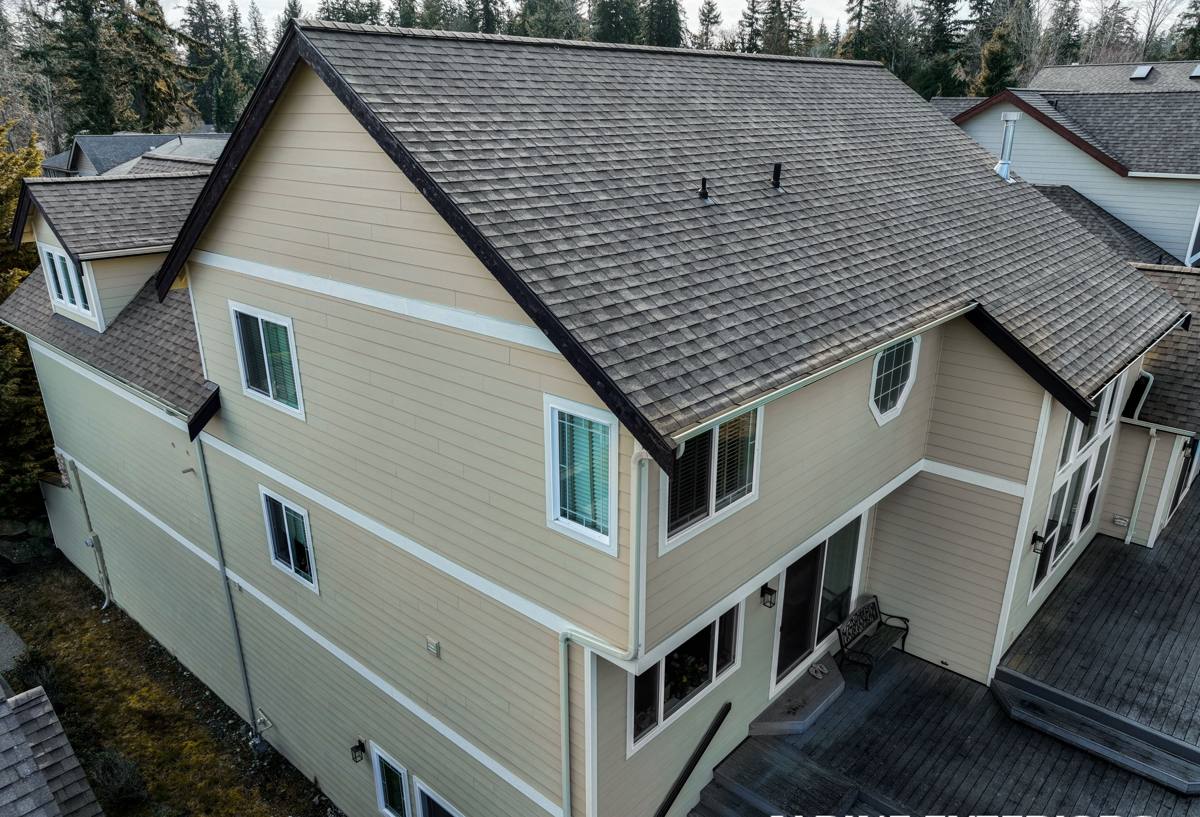
What Salt Air, Rain, and Moss Actually Do to a Deck
It's easy to assume a deck failure is just "old age," but most of the problems we see trace back to a handful of predictable causes tied directly to this climate.
Salt Air and Fasteners
Airborne salt accelerates corrosion on any metal it touches. Standard electro-galvanized nails and screws can start showing rust bleed and weakening within a few seasons this close to the water. It's not just cosmetic — a corroded fastener loses holding strength, and that's the fastener holding your ledger board, your joist hangers, or your railing posts. Every metal component on a deck built in this area should be rated for the exposure it's actually going to see, not the minimum the lumber yard has in stock.
Driving Rain and the Ledger Board
The ledger board — where the deck attaches to the house — is the single most common point of hidden rot on any deck in western Washington, and driving rain off the water makes it worse here. Wind-driven rain gets pushed sideways and upward under railings and behind ledger boards that aren't flashed correctly. By the time you see staining or soft wood on the exterior, the framing behind it may already be compromised.
Moss, Algae, and Foot Traffic
A long moss season means any horizontal wood surface that doesn't drain and dry quickly will grow something on it. Beyond the maintenance headache, moss and algae on decking and stair treads get slick fast, and that's a real fall hazard on stairs and ramps. Board spacing, surface texture, and how much sun and airflow a deck actually gets all factor into how much of a moss problem you'll be dealing with by year two.
Choosing the Right Decking Material
There's no single "best" decking material — there's a best material for your budget, your maintenance tolerance, and how exposed your site is to sun, rain, and salt air. Here's how the common options actually compare in this climate.
| Material | Moisture & Salt Air Behavior | Maintenance | Typical Lifespan |
|---|---|---|---|
| Pressure-treated lumber | Resists rot when properly finished; fasteners must be rated for treated wood's chemical content | Needs re-staining or sealing every 1-2 years in this climate | 15-20 years with upkeep |
| Cedar | Naturally rot- and insect-resistant, but softer surface can absorb moisture if finish isn't maintained | Regular sealing recommended; grays without it | 15-20 years with upkeep |
| Composite decking | Doesn't absorb water or rot; some early-generation boards had moss/mildew issues on the surface in shaded, damp spots | Occasional cleaning; no staining or sealing | 25-30+ years, warranty-backed |
| PVC decking | Fully synthetic, no organic material for moisture or moss to take hold in | Lowest maintenance of the group | 25-30+ years, warranty-backed |
We'll walk you through the honest trade-offs for your specific deck rather than pushing one product line. A shaded, low-airflow deck close to the water is a different recommendation than a sunny, open one — the same material won't perform the same way in both spots.
What a Correctly Built Deck Actually Involves
A deck that lasts in this environment comes down to details that aren't visible once the project is finished. This is what we treat as non-negotiable on every build:
- Footings sized and set to depth for your soil conditions, not just the minimum for a permit sign-off
- Ledger board flashing that sheds water away from the house rather than trapping it against the sheathing
- Corrosion-rated fasteners and hardware throughout — ledger bolts, joist hangers, structural screws — matched to the salt air exposure on your site
- Proper board spacing and airflow beneath the deck so surfaces can actually dry out between rain events instead of staying damp
- Drainage planning so water sheds off the deck surface and away from the foundation, not pooling under it
- Railing and stair construction that meets current code for height, baluster spacing, and load, especially where moss can make surfaces slick
None of this is exotic — it's standard good building practice. But it's exactly the kind of detail that gets skipped when a crew is trying to move fast, and it's the difference between a deck that's solid in year ten and one that needs structural repair by year seven.
Permitting and Site Considerations in This Area
One thing that catches homeowners off guard: land use and building permits in and around the Lummi Nation aren't always processed the same way as a build a few miles away in unincorporated Whatcom County or inside Ferndale city limits. Depending on whether a property sits on tribal trust land or fee land, the applicable land use and building authority can be different, and setback, easement, or shoreline rules can apply differently near the water. We don't guess on this — we confirm the correct permitting path for your specific parcel before design work goes final, so you're not stuck redoing plans partway through.
Shoreline proximity can also bring additional review depending on how close a proposed deck sits to the water's edge. This is worth sorting out early rather than after materials are ordered.
Our Process, Start to Finish
We keep the process straightforward and try to remove the guesswork for you:
- On-site visit and consultation — we look at your existing structure or building site, sun and wind exposure, drainage, and how the deck will actually be used before recommending anything
- Design and material selection — we lay out layout, railing style, and material options with honest cost and maintenance trade-offs for your specific spot
- Permitting confirmation — we identify the correct permitting authority for your property and handle the application
- Site prep and footings — proper layout and footing depth before any framing goes up
- Framing, flashing, and structural work — ledger attachment, joists, and hardware installed to the standard this climate requires, not the minimum code allows
- Decking, railing, and finish work — surface material, stairs, and railings installed and inspected
- Final walkthrough — we go over the finished deck with you, including what maintenance it actually needs going forward
Maintenance Checklist for a Coastal Whatcom County Deck
Whatever material you choose, a little seasonal attention goes a long way in this climate. We tell every customer to keep an eye on:
- Standing water or slow drainage on the deck surface after a heavy rain
- Moss or algae buildup on stair treads and shaded corners, especially going into fall and winter
- Rust staining around fasteners, hinges, or railing hardware
- Soft or discolored wood where the deck meets the house (the ledger board area)
- Gaps opening up between decking boards or railing posts loosening at their base
- Re-sealing or re-staining wood decking on the schedule the finish product calls for, not just when it looks faded
Why a Crew That Already Works This Area Matters
A deck built to a generic spec sheet can look fine on installation day and still fail early in a spot like this. The value of hiring a crew that already works in and around the Lummi Nation and greater Ferndale area is that we've already seen what this specific combination of salt air, driving rain, and moss does to decks over time — and we build accordingly, without having to relearn it on your project. We also already know the permitting path for tribal trust land versus fee land, which saves real time and avoids costly redesigns.
If you're planning a new deck or replacing one that's showing its age, we're happy to take a look and give you a straightforward, no-pressure estimate. Fill out the form below and we'll set up a time to visit your site and talk through your options.