 Ferndale Siding
 Windows Built for the Way Everson Weather Actually Behaves
Everson sits inland from Bellingham Bay but still gets the full package of Whatcom County weather: salt-tinged air moving up the Nooksack valley, long stretches of driving rain off the Pacific systems, and a moss season that can run from October well into spring. None of that is dramatic on any single day. It's the accumulation that wears on a house — and windows are one of the first places that accumulation shows up, whether as a fogged pane, a soft sill, or a frame that's started to swell or crack at the corner joints.
A window that's correctly chosen and correctly installed for this climate should be one of the lowest-maintenance parts of a home. A window that isn't becomes a recurring problem: drafts in January, condensation on the glass every morning, black streaking on the sill by summer. This page is about what "correct" actually means for a home in Everson specifically, not just in general terms.
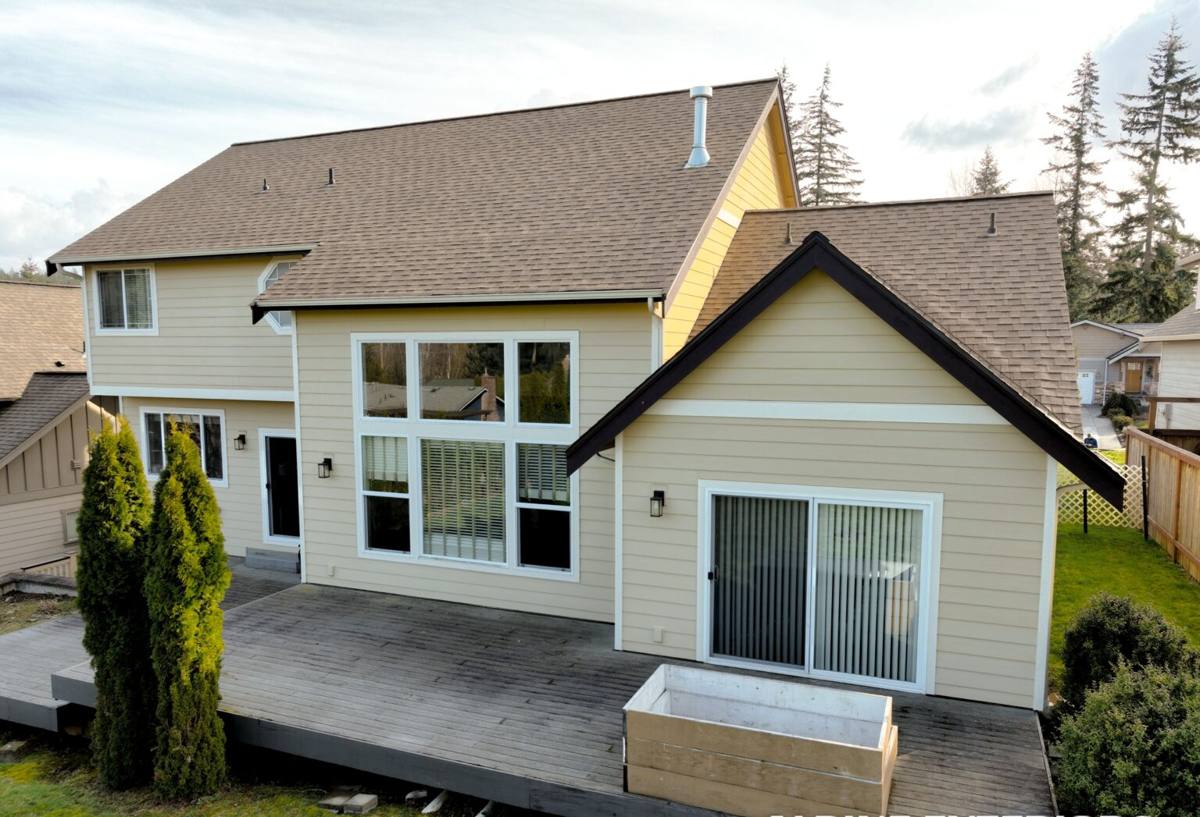
What Constant Damp and Moss Season Do to the Wrong Window
Western Washington's moisture load is different from a dry climate's. It's not one hard freeze or one big storm that causes trouble — it's months of the wood, vinyl, or trim around a window staying damp longer than it gets to dry out. A few specific failure patterns show up again and again on older homes in this area:
- Seal failure in double-pane glass. The insulated glass unit's edge seal breaks down under sustained moisture exposure, letting condensation form between the panes. Once you see fogging inside the glass itself, that unit needs replacing — cleaning won't fix it.
- Wood rot at the sill and lower corners. Wood-frame and wood-clad windows that were caulked instead of properly flashed tend to trap water right where it does the most damage — the sill, which is also where a window is hardest to inspect from outside.
- Moss and algae staining. North-facing and shaded windows in particular develop dark streaking below the frame as spores from nearby moss growth wash down the siding and glass. It's cosmetic at first, but it's also a sign that water is running across the window face longer than it should.
- Swollen vinyl frames and sticking sashes. Cheaper vinyl can expand and contract enough with temperature and moisture swings that sashes stop sliding smoothly, and weep holes clog with debris and stop draining.
None of this means every window in Everson needs replacing. It means the ones showing these signs are telling you something specific, and it's worth having them looked at before a cosmetic problem becomes a structural one.
Choosing the Right Window Type for Everson's Housing Mix
Everson has a mix of older farmhouses, mid-century homes, and newer construction, which means the right window recommendation isn't the same for every house. Frame material is the biggest decision point, and each option has real trade-offs worth understanding rather than a single "best" answer.
| Frame Material | How It Handles This Climate | Maintenance | Best Fit |
|---|---|---|---|
| Vinyl | Good moisture resistance, won't rot; quality varies a lot between grades | Low — occasional cleaning | Most homes prioritizing value and low upkeep |
| Fiberglass | Very stable in temperature and moisture swings, minimal expansion/contraction | Low | Homes wanting the durability of vinyl with a stronger frame |
| Wood-clad | Interior wood warmth with an exterior shell resisting weather, but cladding must be installed and sealed correctly | Moderate — depends on cladding quality | Homes matching a traditional or farmhouse look |
| Aluminum | Conducts cold and can condense heavily in our damp winters unless thermally broken | Low, but condensation risk is higher | Rarely our first recommendation for full-house replacement here |
We don't push one brand or material as the answer for every house. What we do is tell you honestly which option fits your home's exposure, age, and budget — and which one we'd put in our own house given the same conditions.
Glass Package Matters as Much as the Frame
In a climate with this much sustained damp and gray-sky days, the glass package affects comfort more than most homeowners expect. Low-E coatings help manage heat loss without darkening the room, and argon-filled double-pane units are the practical standard for this area. Triple-pane glass is worth discussing for homes with a north or west exposure that takes the worst of the wind-driven rain, but it's not a blanket recommendation — it adds cost and weight that isn't always justified by the payback.
What a Correct Installation Actually Involves
Most window failures we see in this area trace back to installation, not the product itself. A window is only as good as the flashing and sealing around it, and that work is invisible once the trim goes back on — which is exactly why it's worth understanding what should happen behind the scenes.
The Steps That Actually Prevent Water Intrusion
- Remove the old window and inspect the rough opening for hidden rot or damage before anything new goes in — this is often where the real problem was hiding.
- Install a sloped sill pan so any water that does get past the exterior seal drains back out instead of pooling.
- Integrate flashing tape with the house wrap in the correct shingle-lap order (sides, then top, then head flashing) so water sheds down and out, not into the wall cavity.
- Set the window level, plumb, and square, then shim and fasten per the manufacturer's specifications — not just "close enough."
- Seal and insulate the gap between the frame and rough opening with a low-expansion foam or backer rod and sealant, avoiding gaps or over-packed voids.
- Finish exterior trim and caulking with a sealant rated for sustained UV and moisture exposure, not a bargain caulk that will crack within a couple of seasons.
Skip the sill pan, rush the flashing lap order, or rely on caulk alone to do the job flashing should be doing, and you get a window that looks fine for a year or two before moisture starts working its way into the wall behind it.
Our Process, From Estimate to Final Walkthrough
We keep this straightforward on purpose:
- On-site assessment. We look at each window's condition, the wall assembly behind it, and your home's specific exposure to wind and rain before recommending anything.
- Honest recommendation. We'll tell you which windows need replacing now, which can wait, and which just need re-caulking or minor repair.
- Written estimate. Clear pricing by window, material, and glass package — no vague lump sums.
- Installation. Proper flashing and sealing per window, not a rushed swap-and-caulk job.
- Final walkthrough. We check operation, seals, and trim with you before we consider the job done.
Energy Efficiency and Comfort in a Damp, Mild Climate
Whatcom County doesn't see extreme heat or extreme cold most years, but the persistent dampness and wind create their own comfort challenges — cold drafts near window frames, condensation on the interior glass on cold mornings, and rooms that feel chilly even when the thermostat says otherwise. A well-sealed, properly glazed window addresses all three. Look for a U-factor suited to the Pacific Northwest climate zone and a condensation resistance rating that reflects our humidity, not just a generic "energy efficient" label on the box. We can walk you through the specific ratings on any product we recommend so you're comparing real numbers, not marketing language.
What Window Replacement Typically Costs and Why
Every home and window count is different, but the factors that move the price are consistent. This is meant as a general guide to what drives cost up or down — not a quote.
| Factor | Effect on Cost |
|---|---|
| Frame material (vinyl vs. fiberglass vs. wood-clad) | Vinyl is typically the most budget-friendly; fiberglass and wood-clad run higher |
| Glass package (double vs. triple pane, Low-E options) | Triple pane and specialty coatings add cost but can improve comfort on exposed walls |
| Window size and configuration | Large picture windows, bays, and custom shapes cost more than standard double-hungs |
| Condition of the rough opening | Hidden rot or framing damage found during removal adds repair cost before the new window goes in |
| Number of windows replaced at once | Doing a full-house project together generally lowers the per-window cost versus one-off replacements |
We'll always break these factors down for your specific home in the written estimate rather than quoting a flat per-window number that doesn't account for your house's actual condition.
A Homeowner's Maintenance Checklist for Everson's Climate
Once new windows are in, a little seasonal attention keeps them performing for decades. This is the same list we'd hand any Everson homeowner regardless of who installed the windows:
- Clear debris from weep holes and window tracks each fall before the heavy rains set in.
- Rinse moss and algae staining off sills and glass with a soft brush and mild cleaner — avoid pressure washers directly on seals.
- Check exterior caulking annually for cracking or gaps, especially on south and west-facing walls that take the most weather.
- Watch for condensation between panes, which signals a failed seal rather than a cleaning issue.
- Test that sashes open and lock smoothly each season; sticking can mean debris in the track or early frame swelling.
- Trim back vegetation and moss-prone growth near windows to reduce spore contact and shade-driven damp.
Why a Crew That Already Works Everson Matters
Window installation done right depends on understanding the specific way water moves around a home in this climate — where wind-driven rain hits hardest, how long moss-heavy shade keeps a wall damp, and what a rough opening in an older Whatcom County home tends to look like once the old window comes out. A crew that works this area regularly has already seen the patterns specific to Everson homes and knows what to check for before problems get expensive. That local familiarity is part of what you're paying for, not just the window itself.
If you're noticing drafts, fogged glass, or sticking sashes, or you're just ready to plan ahead before the wet season sets in, we're happy to take a look. Reach out for a free, no-pressure estimate — we'll assess your windows honestly and walk you through your real options, using the form below.