 Ferndale Siding
 Windows Built for Lynden's Weather, Not Just Any Weather
Lynden sits far enough inland from Bellingham Bay that people sometimes assume the coastal stuff — salt air, wind-driven rain — doesn't reach it the way it hits Ferndale or Blaine. It does, just on a slower schedule. What Lynden gets on top of that is its own version of a long, wet Whatcom County winter: low fog off the Nooksack valley, extended damp stretches, and a moss season that runs longer here than it does twenty miles inland in drier parts of the state. Windows in this climate aren't just glass and trim — they're one of the main places water tries to get into a house, and they're one of the first places you'll see rot, fogging, or air leaks show up if the install wasn't done right the first time.
A custom window job in Lynden has to account for that from the start: flashing detail, sill pitch, sealant choice, and how the window ties into the siding around it. Get those wrong and you won't notice for a year or two — by then the damage is already inside the wall.
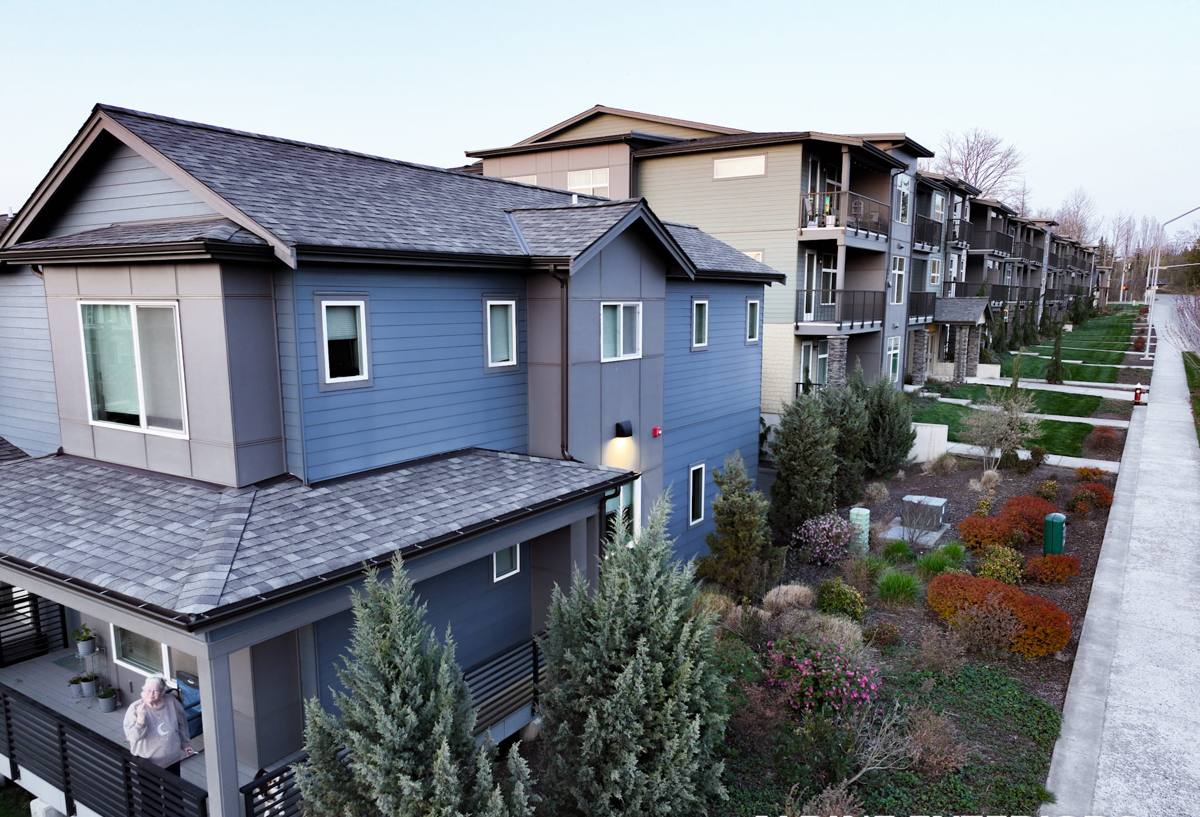
What "Custom" Actually Means Here
Custom doesn't mean fancier trim or a bigger price tag. It means the window is sized, framed, and flashed to fit the actual opening in your actual wall — not a stock size that gets shimmed and caulked into submission. Most Lynden homes we work on fall into a few categories:
- Older farmhouses and older in-town homes with original rough openings that don't match anything on a standard size chart
- Additions or remodels where a new window has to match sightlines with existing ones
- Homes getting a full siding replacement where windows are swapped at the same time to get one continuous, correctly flashed weather barrier
- Larger openings — picture windows, bay configurations — that need structural framing considered, not just a window dropped in
Custom sizing also matters more than people expect when a home is being re-sided. If the window stays a stock size but the wall assembly changes thickness (new sheathing, new house wrap, thicker siding), the reveal and flashing geometry all shift. Doing the window and siding as one coordinated job avoids a mismatched, patched-together look — and more importantly, avoids a patched-together water path.
Common Window Types We Install
| Window Type | Where It Fits Best | Local Consideration |
|---|---|---|
| Vinyl double-hung | Standard replacement, most rooms | Good moisture tolerance, low maintenance in wet climate |
| Fiberglass casement | Higher-exposure walls, west/south sides | Tighter seal against driving rain, holds up well long-term |
| Vinyl or fiberglass slider | Bedrooms, additions | Fewer moving seals to maintain than double-hung |
| Picture / fixed | Living rooms, view walls | No operable seal to fail, but flashing at the head is critical |
| Bay or bow | Larger remodels | Needs proper roof-let-in flashing to shed water correctly |
Why Flashing Matters More Than the Window Itself
We'll say this plainly: a mid-grade window installed with correct flashing will outperform a premium window installed sloppy, every time, in this climate. The window itself is a product. The flashing, house wrap integration, and sealant work is the actual weatherproofing system, and it's where most Whatcom County window failures actually start.
What a correct install includes
- Sill pan flashing under the window opening, sloped to drain outward, not just caulk and hope
- Head flashing that laps correctly over the house wrap above the window, so water sheds over it, not behind it
- Side flashing tied into the house wrap in proper shingle-lap order — bottom, sides, top, always in that sequence
- Backer rod and sealant at the exterior trim joint, sized correctly for the gap rather than just packed full
- Shimming that supports the frame without racking it, so the sash operates true for years, not just on install day
Skip any one of these steps and the window can look perfect from the outside while quietly feeding water into the wall cavity behind it. In a climate with as much annual rainfall as Whatcom County sees, that's not a hypothetical — it's a matter of when, not if.
Moss, Algae, and the Long Wet Season
Moss doesn't grow on window glass, but it grows on sills, trim, and the siding right around a window opening — and that matters more than people think. Moss and algae hold moisture against wood trim and painted surfaces for weeks at a time during Whatcom County's long damp stretches. Around a window, that constant dampness is exactly what breaks down caulk joints and starts rot at the sill horns, which are usually the first place an old window fails.
When we replace windows here, we look at trim material and detailing with that in mind — using materials and joint designs that shed water and dry out fast rather than holding it. It's a small design decision that has an outsized effect on how long the install lasts before it needs attention again.
Our Process for a Lynden Window Job
- On-site assessment — We look at the actual openings, existing flashing condition (if visible), siding type, and any signs of past water intrusion around current windows.
- Sizing and product selection — We measure for true custom fit rather than defaulting to stock sizes, and talk through frame material trade-offs based on the wall's sun and rain exposure.
- Removal and opening inspection — Once the old window is out, we check the sheathing and framing underneath for hidden rot before anything new goes in. This is the point where problems either get caught or get sealed up and forgotten.
- Flashing and installation — Sill pan, window set, shimmed level and plumb, then head and side flashing integrated into the house wrap in the correct order.
- Exterior trim and sealant — Trim installed to shed water, sealant joints sized and tooled properly, not just smeared over gaps.
- Final check — Operable windows tested for smooth function and a tight seal; fixed windows checked for square and even reveals.
Cost Factors Homeowners Should Know
We won't quote a number here that doesn't mean anything without seeing your home, but the factors that actually move the price on a Lynden window job are consistent:
| Factor | Why It Matters |
|---|---|
| Frame material | Vinyl is the budget-friendly standard; fiberglass costs more but holds up better on high-exposure walls |
| Opening condition | Rot or damage found once the old window is out adds repair scope before the new one goes in |
| Window size and type | Standard double-hung is simplest; bay, picture, and oversized openings take more labor and flashing detail |
| Number of windows and access | A full-house replacement is more efficient per window than one or two done in isolation |
| Paired with siding work | Doing windows and siding together often reduces total labor versus two separate projects |
Why a Local Crew Matters for This
Window flashing detail isn't universal — it changes with local wall assemblies, siding types, and how much water a given wall actually sees. A crew that works Ferndale, Lynden, and the rest of Whatcom County regularly has already seen how these openings fail here specifically: which sills rot first, which trim details hold up against driving rain off the strait, how long moss takes to compromise a joint in this climate versus a drier one. That's not something you get from a general contractor who does one window job a year between other trades.
It also matters for accountability. A local crew is easy to reach if something needs a second look after the job's done, and has a reputation in the community worth protecting — not a one-time job before moving to the next county.
Questions Worth Asking Any Window Contractor
- Do you install sill pan flashing on every window, or only when the opening looks bad?
- How do you integrate new flashing with existing house wrap or siding?
- What happens if you find rot once the old window is removed?
- Are you pulling permits when required, and do you carry current WA contractor licensing and insurance?
- What's the warranty on labor, separate from the manufacturer's window warranty?
Signs It's Time to Replace, Not Just Recaulk
Not every window problem means a full replacement. But in this climate, some signs mean the window and its flashing are past the point where sealant alone fixes it:
- Soft or discolored trim or sill wood around the frame
- Fogging between panes on a double-pane window (seal failure, not fixable with cleaning)
- Drafts you can feel even with the window fully latched
- Visible gaps or cracked caulk that reappear within a season of resealing
- Difficulty opening, closing, or latching that's gotten worse over time
If you're seeing more than one of these, especially soft trim, it's worth having someone look at the flashing underneath, not just the window itself.
Get a Straight Answer for Your Home
Every wall and every opening is a little different, and the right approach for a 1970s Lynden ranch isn't the same as a newer addition or a farmhouse with original windows. We'll come take a look, tell you honestly what your windows and their flashing actually need, and give you a free, no-pressure estimate — use the form below to get started.