 Ferndale Siding
 The Lake, the Trees, and the Marine Air: What Sudden Valley Asks of a Window
Sudden Valley sits back in the trees along Lake Whatcom, and that setting is a mixed blessing for the windows on your house. Heavy tree cover means less direct sun to dry out a wall assembly after a storm, and Whatcom County's marine climate means storms roll through often, especially from fall through spring. Wind-driven rain gets pushed at odd angles by lake breezes and works into gaps that would never leak in a calmer, drier climate. Add in the salt-laden marine air that's common to Western Washington's coastline and settles over Whatcom County on a regular basis, and you've got conditions that are genuinely harder on window components than what you'd find in most of the country.
Over a long enough moss season - which here can run most of the year on shaded north and west-facing walls - organic growth builds up in frame tracks, weep holes, and sill corners. That trapped moisture is what actually damages a window, more than the rain itself. Wood sills swell and eventually rot. Aluminum hardware and older aluminum frames corrode. Seals between panes fail years earlier than they should, and once that happens the insulating gas between the panes escapes and the glass fogs permanently.
None of this means windows fail quickly in Sudden Valley. It means they fail differently than they would in a drier climate, and a correct installation has to plan for that from the start - not patch it after the fact.
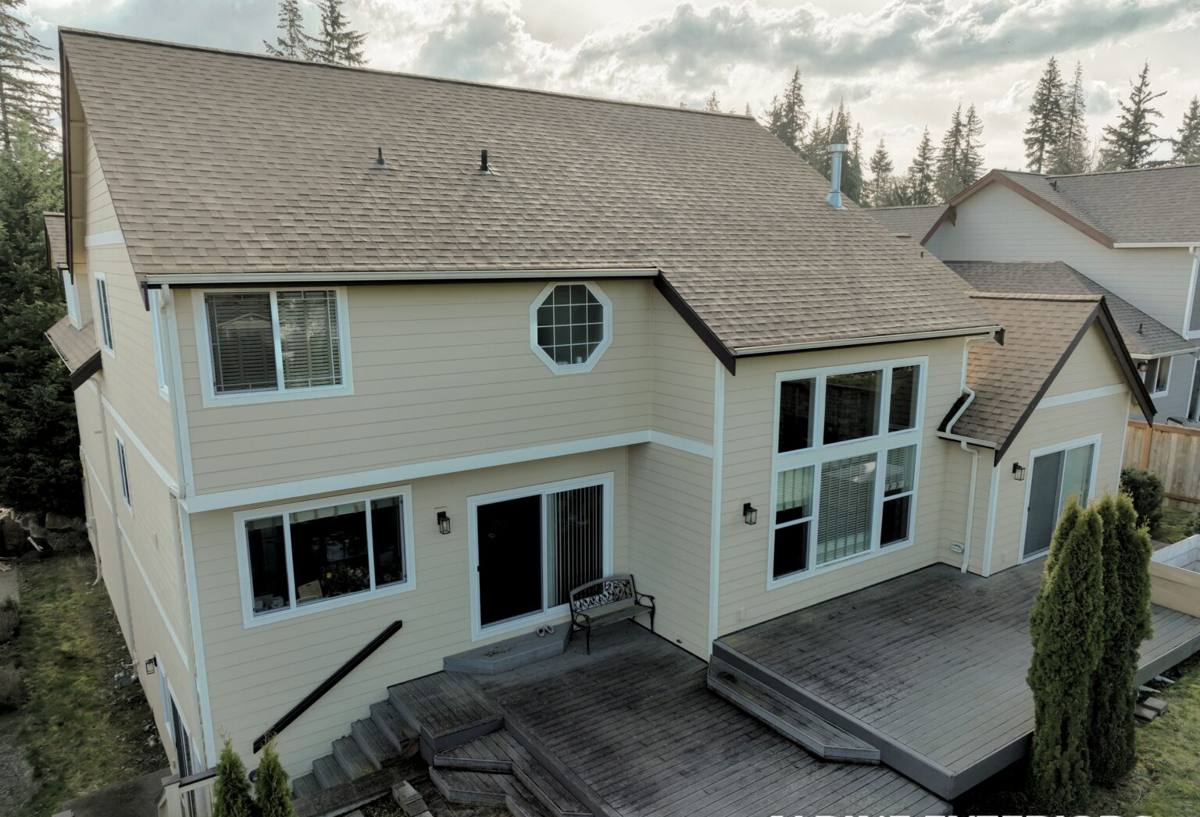
Warning Signs Homeowners in Sudden Valley Should Watch For
Most window problems don't show up as a sudden failure. They show up as small annoyances that get worse over a couple of wet seasons. Worth checking each fall before the rain settles in:
- Fogging or a hazy film between the panes of glass (the seal has failed and can't be repaired - only the glass unit or window can)
- A window that's suddenly hard to open, close, or lock - frames swell when they've absorbed moisture
- Visible moss, algae, or black staining in the frame track or at the bottom corners
- Soft or discolored wood at the sill, especially on the exterior side
- A noticeable draft even when the window is latched
- Paint or caulk that's cracked, peeling, or pulling away from the frame
- A jump in heating costs without an obvious cause
Any one of these on its own isn't an emergency. Several of them on the same window, or the same symptom repeating across multiple windows on one side of the house, usually means the window or its installation has reached the end of its useful life.
What a Correct Custom Window Installation Actually Involves
Flashing and Weatherproofing Come First
Most window leaks aren't actually the window's fault - they're a flashing problem. Water that gets behind the trim needs a clear path back out, using flashing tape, a sloped sill pan, and house wrap integration that sheds water down and away from the framing rather than letting it collect. This step is invisible once the trim goes back on, which is exactly why it's the step worth asking a contractor about directly. It matters more in a climate like this than almost anything else about the window itself.
Frame Material Matters More Here Than in Drier Climates
Every frame material - vinyl, fiberglass, wood-clad, aluminum - performs differently under constant moisture and temperature swings. We'll walk through the trade-offs in the next section, but the short version is that the right choice depends on your home's exposure, your budget, and how much upkeep you're willing to do.
Glass Packages Worth Paying For
Whatcom County's climate is mild compared to the rest of the country, so an extreme cold-climate glass package usually isn't necessary here. What does pay off is a good low-E coating, which cuts down on both heat loss in winter and glare and heat gain on the lake-facing side of a house in summer, and argon gas fill between the panes, which improves insulation without much added cost. Triple-pane glass is available and does help on north-facing or wind-exposed walls that take the brunt of the weather, but it's not something every window in the house needs.
Comparing Frame Materials for Whatcom County's Wet Climate
| Frame Material | How It Handles Moisture | Maintenance | Typical Cost |
|---|---|---|---|
| Vinyl | Won't rot or corrode; expands and contracts with temperature | Low - occasional cleaning | Most affordable |
| Fiberglass | Excellent - minimal expansion, very stable through wet-dry cycles | Low | Premium |
| Wood-clad | Good if the cladding stays intact; exposed interior wood needs protection from indoor moisture | Moderate to high - finish upkeep | Premium |
| Aluminum | Prone to corrosion and condensation over time in this climate | Moderate | Mid-range |
We don't install bare aluminum frames on new work in this climate. Aluminum conducts heat and cold efficiently, which means it condensates heavily under our humidity swings, and older aluminum sliders are a common source of the fogged-glass and stuck-track complaints we see on service calls around the lake. That's a maintenance and performance call on our part, not a knock on anyone who already has aluminum windows - plenty of them are still serviceable, and we'll say so honestly if yours are.
Our Process for a Sudden Valley Window Replacement
Assessment and Measurement
We start on site, not over the phone. Every opening gets measured individually - older homes especially rarely have perfectly square, identical openings - and we look at exposure: which walls face the weather, which are shaded by trees, and which already show signs of moisture damage.
Removal and Hidden Moisture Check
Once the old window comes out, we check the framing and sheathing underneath before anything new goes in. This is the point where hidden rot from years of trapped moisture actually gets found - and it's far cheaper to deal with here than to discover it later because a new window was installed over an existing problem instead of fixing it.
Installation
New flashing, a sill pan, and air-sealing go in before the window does. The window gets set, shimmed level and plumb, and fastened to the manufacturer's specifications - skipping or shortcutting this step is the single most common cause of early failure. Trim and caulk go back on last, using exterior-grade sealant rated for our climate.
Walkthrough and Warranty
We walk the finished work with you, operate every window, and go over the manufacturer warranty along with what we cover on labor. You should leave that conversation knowing exactly what's covered and for how long - not guessing.
What Drives the Cost of a Custom Window Project
A handful of factors move the price on any given project more than anything else:
- Number of openings and how many are non-standard sizes or shapes
- Frame material chosen: vinyl, fiberglass, wood-clad, or aluminum
- Glass package - standard double-pane low-E versus triple-pane on exposed walls
- Full-frame replacement versus insert replacement, where the insert reuses the existing frame if it's sound
- Extent of hidden rot or framing repair discovered once the old window is out
- Access and staging - upper-story or hard-to-reach lake-side windows take more time
We give you a real, itemized number after we've actually looked at your windows - not a phone-quote guess - because on a wooded or lake-adjacent lot, the condition behind the old window varies enough from house to house that a guess isn't useful to either of us.
Why a Crew That Already Works Sudden Valley Is Worth Hiring
A contractor who's done work in the area already understands things that would otherwise be a learning curve on your project. That includes knowing which frame materials actually hold up on shaded, moisture-heavy lots versus which ones look fine in a showroom and then struggle after a few wet winters. It includes knowing how to plan access and staging on lake-adjacent and wooded properties where a straight driveway pull-up isn't always available. And it includes being familiar with neighborhood association guidelines where they apply, so exterior changes don't turn into a second project of paperwork after the fact.
It also means a contractor who isn't guessing about your climate. Crews that mostly work drier inland areas sometimes under-spec flashing and sealant details that matter enormously here and barely matter there. That gap doesn't show up on install day - it shows up two or three winters later as a leak or a rotted sill, usually right about when the original crew is hard to reach.
Maintenance That Keeps New Windows Performing
A correctly installed window in this climate still needs a little seasonal attention to get its full lifespan:
- Clear debris and moss from tracks and weep holes each fall before heavy rain sets in
- Rinse pollen, salt residue, and grime off the glass and frame a couple of times a year
- Check exterior caulk lines annually and re-caulk any spot that's cracked or pulled away
- Keep tree branches and shrubs trimmed back from window walls so they dry out between storms
- Operate every window a few times a year, even ones you rarely open, so hardware doesn't seize
None of this is complicated, but skipping it is how a well-installed window ends up with the same moss and seal problems as a poorly installed one, just a few years sooner.
If you're dealing with drafty, fogged, or hard-to-operate windows in Sudden Valley, or you're planning ahead for a remodel, we're happy to come take a look and give you a straightforward, no-pressure estimate on what it would take to do it right.