 Ferndale Siding
 Building Decks That Hold Up in Custer's Weather
Custer sits far enough north in Whatcom County that homeowners deal with a different set of pressures than someone building a deck in a dry inland climate. The air carries salt influence off the nearby Salish Sea, rain comes in sideways more often than straight down, and moss doesn't take a season off here — it's a near year-round battle on any horizontal wood surface that stays damp. A deck built without those three things in mind will look fine for a year or two and then start showing rot at the ledger board, black streaking on the boards, and rust bleeding out of fasteners. A deck built for this specific climate is a different project from the start: different material choices, different fastener grade, different flashing details, and different spacing between boards.
This page is about deck building specifically for Custer homes — what the local conditions demand, what a job done right actually involves, and how we approach it differently than a crew that doesn't build in this area regularly.
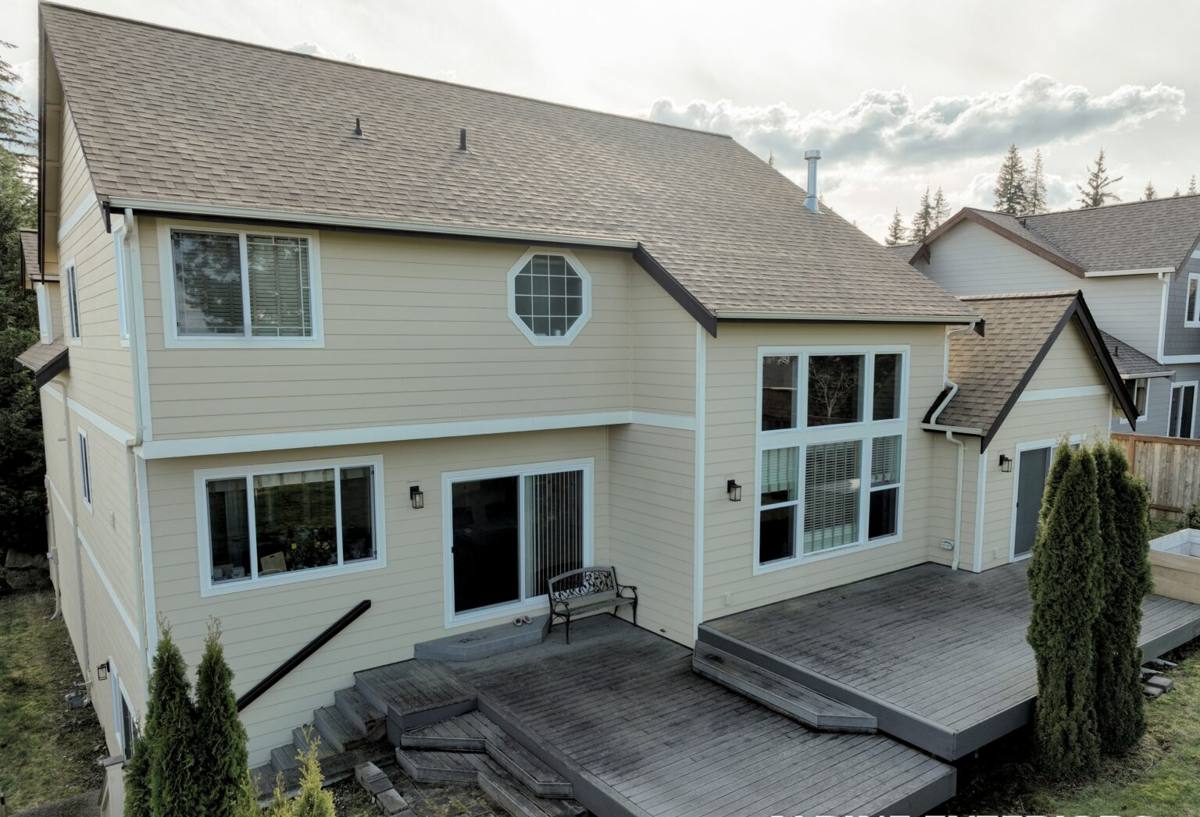
What Custer Homes Actually Need From a Deck
Most of the properties around Custer are a mix of rural acreage, farmland-adjacent lots, and newer residential builds, often with more open exposure to wind and weather than a tightly packed neighborhood would have. That open exposure means decks here take more direct rain and more sustained dampness after a storm than a deck tucked under mature tree cover somewhere more sheltered. A handful of things matter more here than they would in a milder climate:
- Drainage under and around the deck so water doesn't pool against the house foundation or the deck posts
- Air circulation underneath the structure to let framing dry out between rain events instead of staying wet for days
- Corrosion-resistant fasteners and connectors, since salt-influenced moisture accelerates rust on standard hardware
- Board spacing and surface selection that resist moss and algae growth rather than trap moisture against the wood
- Ledger board flashing that keeps water from tracking behind the siding where the deck attaches to the house
None of this is exotic. It's standard good building practice applied consistently, because in this climate the cost of skipping a step shows up faster than it would somewhere drier.
Choosing the Right Decking Material for This Climate
Wood vs. composite trade-offs
There's no single "best" decking material — there's a best material for a given budget, maintenance appetite, and how much sun or shade the deck gets. In a moss-prone climate like Custer's, the honest trade-offs look like this:
| Material | Moisture & Moss Behavior | Maintenance | Rough Lifespan |
|---|---|---|---|
| Pressure-treated fir/hem-fir | Resists rot with proper sealing; can hold surface moisture on shaded areas, inviting moss | Needs re-sealing every 1-3 years; regular cleaning to stay moss-free | 15-20 years with upkeep |
| Western red cedar | Naturally rot- and insect-resistant; still needs care in constantly shaded, damp spots | Periodic cleaning and finish; less prone to warping than fir | 20-25 years with upkeep |
| Composite decking | Doesn't absorb water like wood, but can still grow surface algae/moss film if never cleaned | No sealing or staining; occasional wash-down | 25-30+ years, backed by manufacturer warranty |
We'll walk through this table with you in person, because the right call depends on how much sun the deck actually gets, whether it's shaded by the house or trees, and what you want to spend on upkeep over the years you own the home. A shaded, north-facing deck in this climate is where moss problems concentrate hardest — that's often where we steer people toward composite or a tighter-fastened cedar deck rather than the cheapest treated lumber option.
Framing, Fasteners, and the Details That Actually Prevent Failure
The decking boards are the part everyone sees, but the framing underneath is what determines whether the deck is still solid in fifteen years. In driving rain and salt-influenced air, a few structural details matter more than people expect:
Ledger flashing
Where the deck attaches to the house, water has to be diverted away from the wall, not funneled behind the siding. A proper flashing detail — metal flashing plus a water-resistant membrane at the ledger — is one of the most commonly skipped steps on older or lower-bid deck jobs, and it's the single most common cause of hidden rot we find when we're called out to repair or rebuild an existing deck.
Hardware grade
Standard galvanized fasteners can corrode faster than expected in this climate, especially where they contact pressure-treated lumber (the chemicals in modern treated wood are more corrosive to certain metals). We use connectors and fasteners rated for that combination, not whatever is cheapest at the yard.
Joist spacing and ventilation
Tighter joist spacing than the bare code minimum gives a stiffer deck and less board movement over time, which matters when boards are wet and drying on a near-constant cycle. Keeping enough clearance and airflow under the frame lets the structure actually dry between storms instead of sitting damp.
Moss, Mildew, and the Long-Term Maintenance Reality
Whatcom County's moss season runs long — realistically much of the year in shaded or low-airflow spots. No decking material is completely immune to it; the difference is how much it costs you in cleaning and how much damage it does if you ignore it. On wood, moss holds moisture against the fibers and accelerates rot. On composite, it's mostly cosmetic and comes off with a wash, but it can make a surface slick if left unchecked. Board spacing, surface texture, and how much direct sun a deck gets all affect how fast moss establishes. Part of doing this job right is designing for that reality up front — proper gaps between boards for drainage, grooved vs. smooth composite profiles chosen based on sun exposure, and framing that lets the whole structure breathe — rather than leaving the homeowner to fight moss every spring with no help from the design.
Our Deck Building Process
- On-site assessment — we look at sun and shade patterns, drainage, soil, and how the deck will tie into the house before recommending materials.
- Material and layout discussion — honest trade-offs on wood vs. composite, board direction, and railing options based on your budget and maintenance preference.
- Permitting — deck projects in Whatcom County typically require a permit depending on size and height; we handle that process rather than leaving it on you.
- Framing and structural work — footings, posts, ledger flashing, and joists built to hold up under sustained wet weather, not just pass a one-time inspection.
- Decking, railing, and finish work — boards, railings, stairs, and any sealing or finishing the material calls for.
- Final walkthrough — we go over care and maintenance specific to the material you chose, so moss and moisture don't catch you off guard later.
What a Correctly Built Deck Includes — Homeowner Checklist
If you're comparing bids or evaluating an existing deck, these are the things worth checking. A deck missing several of these isn't necessarily unsafe today, but it's a deck that will age poorly in this climate:
- Metal flashing (not just caulk) at the ledger board where the deck meets the house
- Corrosion-resistant hardware rated for contact with treated lumber
- Footings set below frost depth and sized appropriately for the deck's load and height
- Adequate gap between boards for drainage and airflow, not tight-butted for looks alone
- Clearance and ventilation underneath the frame so it can dry out between rain events
- A documented permit and inspection where the project size or height requires one
- A maintenance plan you actually understand before the crew leaves
Cost Factors to Expect
Every deck is priced around size, material, height off the ground, and how much structural work the site needs — we won't quote a number without seeing the property. In broad terms, these are the factors that move the price most:
| Factor | Why It Affects Cost |
|---|---|
| Material choice (treated lumber, cedar, composite) | Material cost per square foot varies significantly, and composite carries a higher upfront cost offset by lower maintenance |
| Height and footing requirements | A deck several feet off the ground needs more substantial framing, railings, and often stairs |
| Site access and existing structure | Tearing out and hauling away an old deck, or working around tight access, adds labor time |
| Railings and custom features | Cable rail, custom stairs, built-in seating, and multi-level layouts all add cost beyond a basic rectangle |
Why It Matters That We Already Build in Custer
A crew that only occasionally works this far north in Whatcom County doesn't always build with this climate's specific pressures front of mind — the same crew might build a fine deck in a drier region using details that fall short here. Working regularly in and around Ferndale and Custer means we're not guessing at how much rain exposure a given site gets, how the local moss season behaves on different materials, or which flashing and fastener details actually hold up out here over time. That familiarity shows up in the parts of the job you don't see once it's finished — the flashing behind the ledger, the hardware inside the frame, the drainage under the structure — which is exactly where a wrong call costs the most to fix later.
If you're planning a new deck or replacing one that's showing its age, we're happy to come take a look and give you a straightforward, no-pressure estimate — just fill out the form below.