 Ferndale Siding
 Decks Built for Point Roberts' Exposed, Marine Setting
Point Roberts sits on its own peninsula, bordered by water on three sides and connected to the rest of Whatcom County only by a drive through Canada. That geography is part of what makes it a beautiful place to have a deck — open water views, marine air, quiet surroundings. It's also exactly why decks here take more abuse than decks built a few miles inland. Salt-laden wind, near-constant winter moisture, and heavy shade from surrounding evergreens combine to wear out fasteners, framing, and decking faster than most homeowners expect.
We build and repair decks throughout Ferndale and the rest of Whatcom County, and Point Roberts is one of the areas where cutting corners shows up fastest. A deck that would hold up fine in a drier, more sheltered yard can develop soft spots, rusted hardware, or slick moss cover within a few seasons out on the Point if it wasn't built with this specific environment in mind.
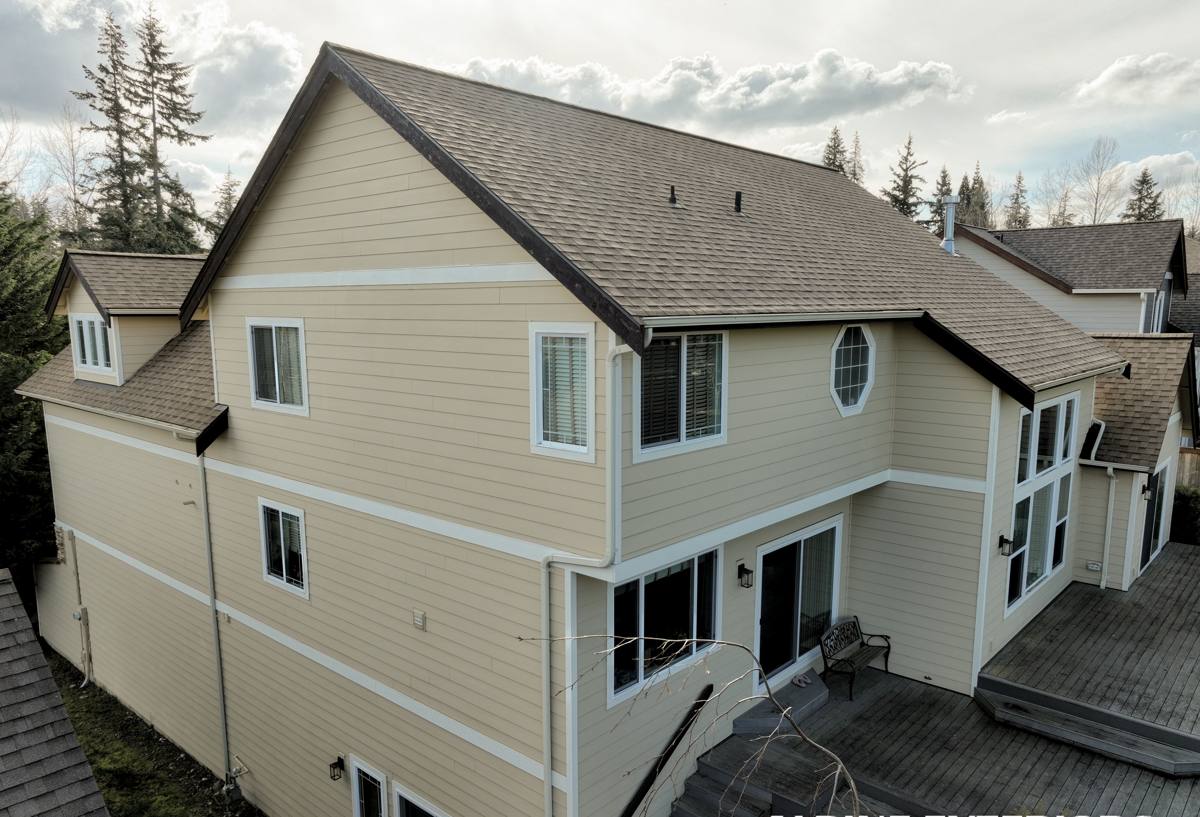
How Salt Air, Rain, and Moss Wear Down a Deck Here
Three environmental factors do most of the damage to decks in this area, and each one calls for a different response in how the deck is built.
Salt Air and Metal Hardware
Wind coming off the water carries fine salt spray that settles on every exposed surface, including a deck's structural hardware. Ordinary galvanized fasteners and connectors can start corroding years earlier in this kind of exposure than they would inland. Once a joist hanger or a bolt starts to rust, it's not just cosmetic — the connection it's holding gets weaker every season.
Moss and Trapped Moisture
Whatcom County's long wet season is bad enough for moss growth on its own; the tree cover common around Point Roberts properties adds shade that keeps decking damp longer after every rain. Moss holds moisture directly against the decking surface and fasteners, which accelerates rot in wood decking and can trap grit that scratches and dulls composite boards. It's also a slip hazard on stairs and landings.
Driving Rain at Ledger Boards and Rail Posts
Wind-driven rain doesn't just fall straight down — it gets pushed sideways into the gap where a deck ledger meets the house, and into any post that penetrates the decking surface. Those two connection points are where most of the water-related deck failures we see actually start, because they're the hardest places for water to drain away from and the easiest places to under-flash.
Choosing Decking and Framing Materials That Hold Up
There's no single "correct" decking material for Point Roberts — the right choice depends on budget, how much upkeep the homeowner wants to do, and how exposed the deck's location is. What matters most is matching the material to a realistic maintenance plan rather than assuming any product is maintenance-free in this climate.
| Material | Salt/Moisture Resistance | Moss & Maintenance | Typical Lifespan |
|---|---|---|---|
| Pressure-treated fir/hem-fir | Good if sealed and re-sealed on schedule | Needs regular cleaning and re-sealing to resist moss and graying | 15-20 years with upkeep |
| Cedar | Naturally moisture- and rot-resistant, but surface still needs care | Still grows moss without cleaning; benefits from periodic oil or stain | 15-25 years with upkeep |
| Composite/PVC decking | Very good — doesn't absorb moisture or rot | Moss/algae can grow on the surface film and needs occasional washing, but no sealing required | 25-30+ years, varies by product warranty |
Whichever decking material a homeowner chooses, the framing underneath deserves just as much attention. We build the structural frame out of pressure-treated lumber rated for ground contact where it's near grade, and we use stainless steel or heavy-duty coated fasteners and connectors rated for coastal/marine exposure rather than standard galvanized hardware. The cost difference on fasteners is small compared to the cost of tearing into a deck a few years later to replace corroded connectors.
The Logistics of Building on an Exclave Peninsula
Point Roberts is still part of Whatcom County for permitting purposes, but it's physically separated from the rest of the county and state, reachable only by driving through Canada or by water. That has real, practical effects on a deck project that don't come up anywhere else we work:
- Permits for a Point Roberts deck are pulled through Whatcom County just like anywhere else in the county, but plan review and inspection scheduling need to account for the crossing.
- Material deliveries have to be planned around border logistics rather than a normal same-day lumber yard run — bringing decking, framing lumber, concrete, and hardware over in the right quantities the first time matters more here than it does closer to town.
- Crew scheduling has to account for crossing time in both directions, which affects how a project is sequenced and how many trips a job realistically takes.
- Weather windows for pouring footings or setting posts are tighter to plan around when a wasted trip costs more than just drive time.
None of this makes building a deck in Point Roberts harder in a technical sense — it just means the planning has to happen before the crew shows up, not on the fly.
Our Deck Building Process, Start to Finish
We run the same process on every deck we build, adjusted for the site conditions and logistics specific to Point Roberts.
- Site visit and design. We look at sun/shade exposure, drainage on the lot, proximity to the water and prevailing wind, and how the deck will attach to the house before recommending materials and layout.
- Permitting. We handle the Whatcom County permit application and scheduling, including planning inspection visits around the crossing so the project doesn't stall waiting on a sign-off.
- Materials and delivery. Framing lumber, decking, fasteners, and hardware are ordered and staged so everything needed arrives together — this is the step where Point Roberts logistics matter most.
- Footings and framing. Footings are set below frost depth and sized for the deck's actual load; framing uses corrosion-resistant hardware throughout, not just at the visible connections.
- Ledger attachment and flashing. This is treated as the most important structural and waterproofing step on the whole project, described in more detail below.
- Decking, railing, and stairs. Installed to the manufacturer's spacing and fastening specs, with attention to drainage gaps between boards.
- Final walkthrough. We go over the finished deck with the homeowner, including what maintenance the specific materials chosen will need going forward.
Getting the Structural Details Right: Footings, Ledger, Drainage
A deck that looks fine can still be built wrong underneath, and in a wet, salt-exposed environment those mistakes show up faster. Three details get extra attention on every deck we build in this area:
Footings
Footings need to be sized correctly for the deck's load and set to the required depth for this region's frost line — undersized or shallow footings are one of the most common causes of a deck that starts to shift or sag within a few years.
Ledger Board and Flashing
Where the deck attaches to the house, we install proper flashing that directs water out and away from the ledger board and the house's wall assembly behind it, rather than relying on caulk alone. Caulk fails; correctly lapped flashing doesn't rely on staying intact to keep water out.
Drainage Under and Around the Deck
Decking boards are spaced and fastened to shed water instead of pooling it, and where a deck sits low to the ground we make sure water has somewhere to go rather than sitting under the structure feeding rot and moss growth from underneath.
Keeping a Point Roberts Deck Looking Good Year After Year
Even a well-built deck needs some seasonal attention in this climate. A simple annual routine goes a long way:
- Sweep debris and needles off the deck surface regularly, especially in fall — trapped organic matter feeds moss and holds moisture against the boards.
- Wash the deck surface at least once a year to remove salt film, algae, and early moss growth before it gets established.
- Check railing posts and stair connections annually for movement or corrosion at the hardware.
- Re-seal or re-stain wood decking on the schedule the product calls for — don't wait until it visibly needs it, since damage starts before it's visible.
- Keep gutters and downspouts near the deck clear so roof runoff isn't dumping extra water onto or under the structure.
- Trim back overhanging branches where practical to cut down on shade and debris that encourage moss.
Why It Matters to Hire a Crew That Already Works in Point Roberts
A deck builder who hasn't worked on the Point before has to learn its logistics — border crossing, material staging, permit scheduling through Whatcom County across the gap — on the homeowner's project. That usually means delays, extra trips, or corners cut to avoid them. We've built our process around those realities already, so a Point Roberts deck project runs on the same timeline and gets the same attention to salt- and moisture-resistant construction that we'd put into a deck anywhere else in Whatcom County.
Just as important is knowing the environment itself. A crew that understands how exposed a given lot is to wind and salt spray, how much shade it gets, and how the site drains will make better material and construction decisions than a generic build plan would produce. That's the difference between a deck that needs real attention in five years and one that's still solid in twenty.
If you're planning a new deck or need an honest look at one that's showing its age out in Point Roberts, we're happy to come take a look. Fill out the form below for a free, no-pressure estimate — there's no obligation, and we'll give you a straight answer about what your deck actually needs.