 Ferndale Siding
 Building Decks for the Sumas Area Around Ferndale
Sumas sits inland from the coast but still gets the full weather package that defines Whatcom County: long stretches of driving rain, damp shoulder seasons, and enough shade under mature fir and cedar cover to keep moss and algae going strong most of the year. A deck built here isn't just a place to put a grill and a couple of chairs — it's a wood or composite structure that sits outside, uncovered or partly covered, for months at a time without a real drying window. That changes what "correct" construction looks like compared to decks built in drier climates.
We're a Ferndale-based crew that already works the Sumas area regularly, so this isn't a page we wrote to rank for a keyword — it's a description of how we actually build decks out here, and why the details matter more in this specific corner of Whatcom County than they would somewhere drier.
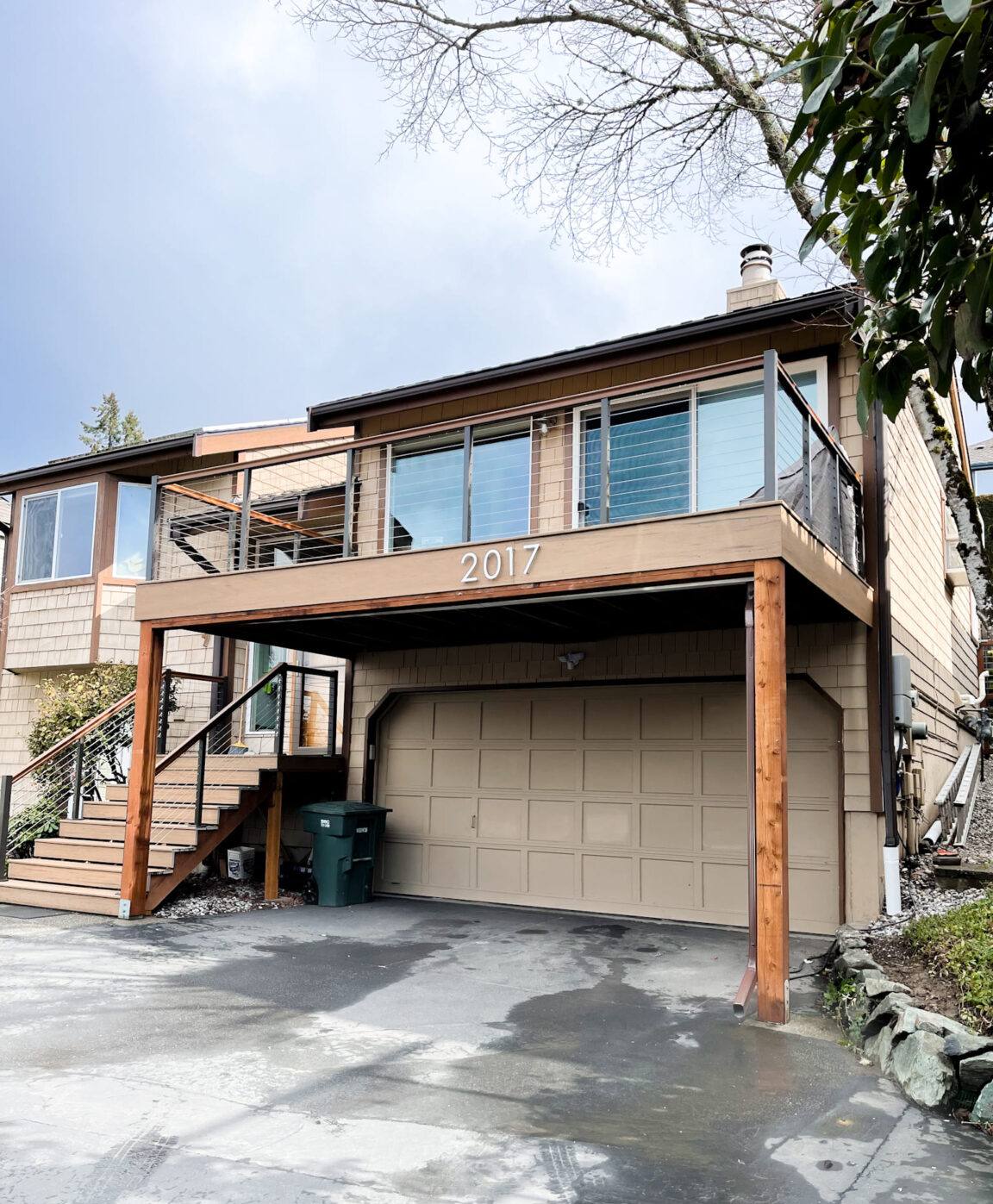
What Sumas Homes Actually Need From a Deck
Three things drive almost every decision we make on a Sumas deck project:
- Standing moisture management — ledger boards, joists, and post bases that stay wet longer because the air doesn't dry them out between rain events
- Moss and algae control — surfaces that hold shade and moisture grow moss fast, and moss on decking is a slip hazard as much as a cosmetic problem
- Fastener and hardware corrosion — being closer to the coast means more salt in the air over time, which accelerates rust on the wrong grade of screws, brackets, and flashing
None of these are exotic problems. They're just the baseline conditions a deck has to be designed around here, and skipping any one of them is how a deck ends up needing structural repair at year eight instead of lasting two or three decades.
Why Generic Deck-Building Advice Falls Short
A lot of national deck-building guidance assumes a climate that gets real dry summers and a hard freeze in winter — conditions that let wood shed moisture and slow down rot and mold growth. Whatcom County doesn't work that way. Wood here can stay damp for weeks, and that changes what fastener coatings, flashing details, and even board spacing need to look like. Building to a national-average spec instead of a Pacific Northwest spec is one of the more common ways decks in this area fail early.
What a Correct Deck Build Involves Here
Ledger and Structural Connection
Where the deck attaches to the house is the single most important moisture detail on the whole project. That connection needs proper flashing so water is directed away from the house's siding and framing, not trapped behind the ledger board. We've seen more rot damage originate at a poorly flashed ledger than from any other single point on a deck.
Footings and Posts
Footings need to be sized and set below frost depth and positioned so water drains away from the post base rather than pooling around it. Post bases should hold the post above the concrete, not embedded in it — wood in direct, prolonged contact with concrete and soil moisture rots from the inside out, often invisibly, until it's a structural problem.
Joists, Beams, and Framing
All structural lumber should be rated for ground contact or exterior exposure as appropriate, and every cut end needs to be re-treated before it goes into service — a factory-treated board with an untreated cut end is a moisture entry point waiting to happen. Joist tape over the top of joists adds a real layer of protection against the years of standing moisture this area produces.
Fasteners and Hardware
Given the salt air exposure this region gets, we use corrosion-resistant fasteners and structural hardware rated for treated lumber and coastal-adjacent conditions — not just whatever is cheapest at the yard. Mismatched metals or under-rated coatings are a slow-motion failure that shows up as rust streaks and loosening connections years down the line.
Decking Material and Surface Drainage
Board spacing, ventilation underneath the deck, and the decking material itself all affect how fast a surface dries out between rain events. A deck with poor airflow underneath stays damp longer and grows moss faster, regardless of what's on top.
Wood vs. Composite Decking: An Honest Comparison for This Climate
Both materials can perform well in Sumas conditions if they're installed correctly and maintained on a realistic schedule. Neither is a "set it and forget it" solution here — the local moisture load means every deck surface needs some ongoing attention.
| Factor | Wood (cedar / treated lumber) | Composite |
|---|---|---|
| Moss/algae resistance | Needs regular cleaning and periodic sealing | Still grows moss in shaded, damp spots; needs occasional cleaning |
| Upfront cost | Generally lower | Generally higher |
| Maintenance routine | Cleaning, re-sealing every few years | Occasional washing; no sealing/staining |
| Moisture sensitivity | Can cup, splinter, or rot if seal fails | Won't rot, but can trap moisture at fastener points if not detailed correctly |
| Appearance over time | Natural look; grays without maintenance | Consistent color; some fading possible |
We install both, and we'll give you a straight answer on which one fits your budget, your maintenance appetite, and the amount of shade your particular lot gets — a full-sun deck and a deck tucked under tree cover behave differently even a few hundred feet apart.
Our Process for a Sumas Deck Project
- On-site visit to assess site drainage, shade exposure, existing structure (if replacing a deck), and how the deck ties into the house
- Design and material discussion — wood or composite, footprint, railing style, and any covered-area considerations
- Permitting — most deck projects in Whatcom County require a permit; we handle that process as part of the job
- Footings and framing, built to the moisture and corrosion standards described above
- Decking installation with attention to spacing and airflow for drainage
- Final walkthrough covering maintenance expectations specific to this climate
What We Won't Cut Corners On
- Ledger flashing — this is non-negotiable regardless of budget
- Fastener grade — we don't mix incompatible metals or use interior-rated hardware outdoors
- Footing depth and drainage — shortcuts here cause problems that are expensive to fix later
- Cut-end sealing on treated lumber — every field cut gets treated before installation
Repair, Rebuild, or Replace?
If you already have a deck showing signs of trouble, the right move depends on where the damage is. Surface graying or minor moss is cosmetic and cleanable. Soft spots in decking boards, rust stains streaking down posts, or any movement in the railing or stairs point to structural issues that need a closer look before anyone just re-decks over the top of them. We'll tell you honestly whether a deck can be repaired or whether the framing has deteriorated to the point a rebuild makes more sense — patching over rotted framing just delays a bigger problem.
Signs Worth a Second Look
- Soft, spongy, or spongy-feeling boards underfoot
- Visible gaps or rust trails at fastener locations
- Persistent moss buildup in the same spots year after year
- Any wobble in railings, stair stringers, or post connections
- Water pooling on the surface instead of draining off
Maintenance Expectations After the Build
A well-built deck in this climate still needs seasonal attention. That generally means clearing debris and standing leaves before fall rains set in, an annual or biannual wash to knock back moss and algae before it gets established, and periodic inspection of fastener heads and railing connections for the early signs listed above. Wood decks need re-sealing on a schedule that depends on sun exposure and the sealant used; composite decks need less, but "none" isn't accurate for any deck sitting under Whatcom County tree cover and rainfall.
Why a Ferndale Crew That Already Works Sumas Matters
Deck problems in this region tend to repeat themselves in specific ways — the same ledger flashing shortcuts, the same undersized footings, the same wrong-grade hardware — because a lot of general contracting work doesn't specialize in what this particular climate does to an outdoor structure over years, not months. Working Sumas and the greater Ferndale area regularly means we've seen how decks built to lower standards actually fail here, not just in theory. That shows up in the flashing details, the hardware we spec, and how we talk you through material choice instead of just upselling whatever's convenient.
If you're planning a new deck or dealing with an aging one in the Sumas area, we're glad to come take a look. A free, no-pressure estimate gets you a straight assessment of what your project needs and what it'll cost — no obligation, just an honest read on the work. The form below gets that conversation started.