 Ferndale Siding
 Why Decks in Cordata Take Extra Punishment
Cordata sits close enough to the Salish Sea and the open marine air that moves through Whatcom County to feel it in the wood. Salt-tinged air corrodes fasteners and hardware faster than it would further inland, driving rain gets pushed sideways into ledger boards and railing joints during winter storms, and the long stretch of overcast, damp months means moss and algae get a real foothold on any horizontal surface that doesn't dry out quickly. A deck built for a drier climate simply doesn't hold up the same way out here.
None of this means a deck is doomed — it means the wood, fasteners, and flashing details have to be chosen and installed with this specific climate in mind, and repairs have to address the actual cause of the damage rather than just patching what's visible on top. A board that's gone soft is usually a symptom of a moisture path that's been active for a while, not an isolated problem.
Signs Your Deck Needs Repair, Not a Full Rebuild
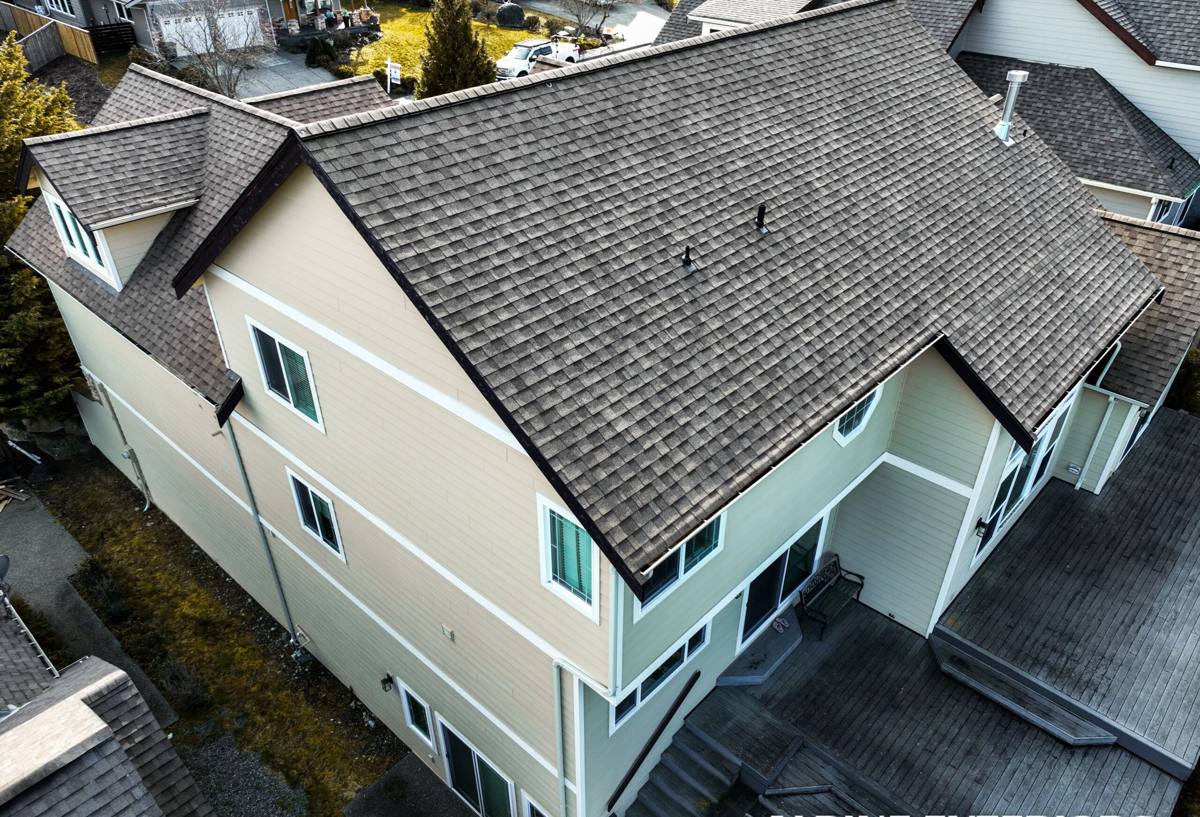
Most decks we look at in and around Cordata don't need to be torn out and started over. The framing underneath — the joists, beams, and posts — often has years of life left even when the surface boards or railings are clearly failing. The key is catching problems while they're still localized.
- Boards that feel spongy, springy, or noticeably softer underfoot than the boards around them
- Rust streaks bleeding out from screw heads or bracket connections
- Railings or posts that wobble, flex, or feel loose when you lean on them
- Green or black staining that comes back within weeks of cleaning it off
- Gaps opening up where the deck meets the house (the ledger board connection)
- Stair stringers that feel uneven, bouncy, or show splitting near the fasteners
- Visible daylight or gaps where flashing has pulled away from the house siding
If you're seeing one or two of these, it's very likely a repair situation. If the framing itself is soft when probed with a screwdriver, or if the damage is spread across most of the deck rather than concentrated in one area, that's when a fuller rebuild starts to make more financial sense than chasing repairs one at a time.
What a Correct Deck Repair Actually Involves
Framing and Joists
Any repair worth doing starts underneath the decking, not on top of it. We check joists and beams for soft spots, especially near the ends where they meet the ledger or a beam, since that's where water tends to sit longest. Sistering a new piece of lumber alongside a compromised joist is often enough to restore strength without replacing the whole structural member.
Ledger Board and Flashing
The ledger board — where the deck attaches to the house — is the single most common failure point we find on repair calls. Flashing that was installed poorly, or wasn't installed at all, lets water track behind the board and into the rim joist. A proper repair means pulling the decking back far enough to inspect and correct the flashing, not just caulking the visible seam and hoping for the best.
Decking Boards and Fasteners
Individual boards get replaced in kind — matching species and dimension so the repair doesn't stand out or create an uneven walking surface. Fasteners get upgraded where the originals were undersized or the wrong material for exterior use; this is usually where the rust staining homeowners notice is coming from.
Railings and Guardrails
Loose railings are a safety issue, not just a cosmetic one. We check post attachment to the framing (not just to the decking, which isn't strong enough to anchor a railing on its own), and confirm baluster spacing and rail height meet current building code, since older decks in the area were sometimes built before today's guardrail requirements.
Repair or Replace? Weighing the Cost Factors
We'll always give you an honest read on which direction makes more sense for your specific deck. Here's generally how the decision plays out:
| Factor | Leans Toward Repair | Leans Toward Replacement |
|---|---|---|
| Framing condition | Solid, only isolated soft spots | Widespread rot in joists or beams |
| Age of structure | Under 15-20 years | Original wood is at or past its service life |
| Extent of damage | Limited to boards, railings, or fasteners | Damage affects most of the deck's footprint |
| Ledger/flashing | Sound or correctable in place | Failed with hidden damage to the house rim joist |
| Code compliance | Meets current railing and attachment codes | Undersized footings, missing hardware, or non-compliant railings |
When the framing and ledger are sound, repair almost always costs less and gets you back on the deck faster. When rot has worked its way into the structure itself, patching around it usually just delays a bigger job — we'll tell you plainly if that's what we're seeing.
How We Handle a Deck Repair in Cordata
Inspection and Moisture Check
We start by probing suspect areas — boards, railing posts, the ledger connection, stair stringers — to find where moisture has actually gotten in, not just where it's visible from the top. This is also when we check whether framing is structurally sound or needs to be part of the scope.
Written Scope and Estimate
You get a clear breakdown of what's being repaired and why, so you're not guessing at what you're paying for. If we find something during the inspection that changes the scope, we talk it through with you before any work starts, not after.
The Repair Itself
We replace what needs replacing, correct flashing and moisture paths at the source, and use fasteners and hardware rated for exterior, coastal-influenced conditions. New material is matched to the existing deck as closely as possible so the repair blends in rather than looking like a patch job.
Cleanup and Walkthrough
We clear debris and old fasteners from underneath and around the deck, and walk the finished repair with you so you know exactly what was done and what to keep an eye on going forward.
Materials That Hold Up to Whatcom County Weather
Pressure-Treated Framing Lumber
For structural repairs, we use pressure-treated lumber rated for ground contact where it's called for, since framing members here are exposed to more sustained moisture than in drier parts of the state.
Fasteners and Hardware
Standard zinc-coated screws corrode faster in salt-influenced air than most homeowners expect, which is why rust streaking is one of the most common complaints we see. We use hot-dip galvanized or stainless hardware for structural connections, matched to what's compatible with treated lumber to avoid the chemical corrosion that happens when the wrong metals are paired together.
Decking Surface Options
Whether we're replacing boards in kind with wood or transitioning a section to composite decking comes down to your budget and how much upkeep you want going forward. Wood costs less upfront but needs regular cleaning and refinishing to keep moss and algae from taking hold; composite costs more but sheds moisture differently and doesn't need staining. We'll walk you through the honest trade-offs for your situation rather than pushing one option.
Why a Crew That Already Works in Cordata Makes a Difference
Deck repair isn't one-size-fits-all, and a crew that's already familiar with this part of Whatcom County brings something a generalist can't: a working sense of how the local combination of marine air, sideways rain, and shaded, moss-prone yards actually plays out on a deck year over year. We know which details — flashing laps, fastener choice, board spacing for drainage — matter most for decks that sit in this climate, because we've seen what happens when they're skipped.
That local familiarity also means straighter answers: a realistic read on whether a repair will hold, what maintenance actually keeps moss from coming back, and a scope of work that reflects how these decks age here, not a generic checklist.
Keeping a Repaired Deck in Good Shape
A good repair buys you years, but a little seasonal attention protects that investment:
- Sweep leaves and debris off the deck surface regularly through fall, when moss gets its start
- Keep gutters and downspouts clear so water isn't dumping onto or near the deck
- Clean visible moss and algae promptly rather than letting it establish and spread
- Check railings and stair connections periodically for looseness
- Keep planters and rugs from sitting directly on boards for long stretches, which traps moisture underneath
If you're noticing soft boards, rusted fasteners, a wobbly railing, or storm damage on a deck in Cordata, we're happy to take a look and give you a straightforward, no-pressure estimate on what it would take to fix it right. Just fill out the form below and we'll get in touch.