 Ferndale Siding
 Everson's Climate Is Harder on Decks Than It Looks
Everson sits inland from the coast, but that doesn't spare it from the weather that wears out decks across Whatcom County. Driving rain moves through for months at a stretch, and the low-lying valley terrain around Everson holds onto moisture longer than open, breezy sites do. A lot of local lots also carry heavier tree cover than you'd find closer to town, which means more shade, slower drying, and decking that stays damp well after the rain stops. Add the marine air that pushes inland from the Sound through the fall and winter, and you get the long, gray stretch of "moss season" that coats every horizontal wood surface in the region if it isn't kept ahead of.
None of that shows up right away. A deck that's built without accounting for this climate can look completely normal for a season or two while the real damage happens underneath — in the ledger connection, the joists, the fastener heads, the footings. By the time boards are visibly cupping, spongy, or streaked with black growth, the structure holding them up has usually been losing integrity for a while already.
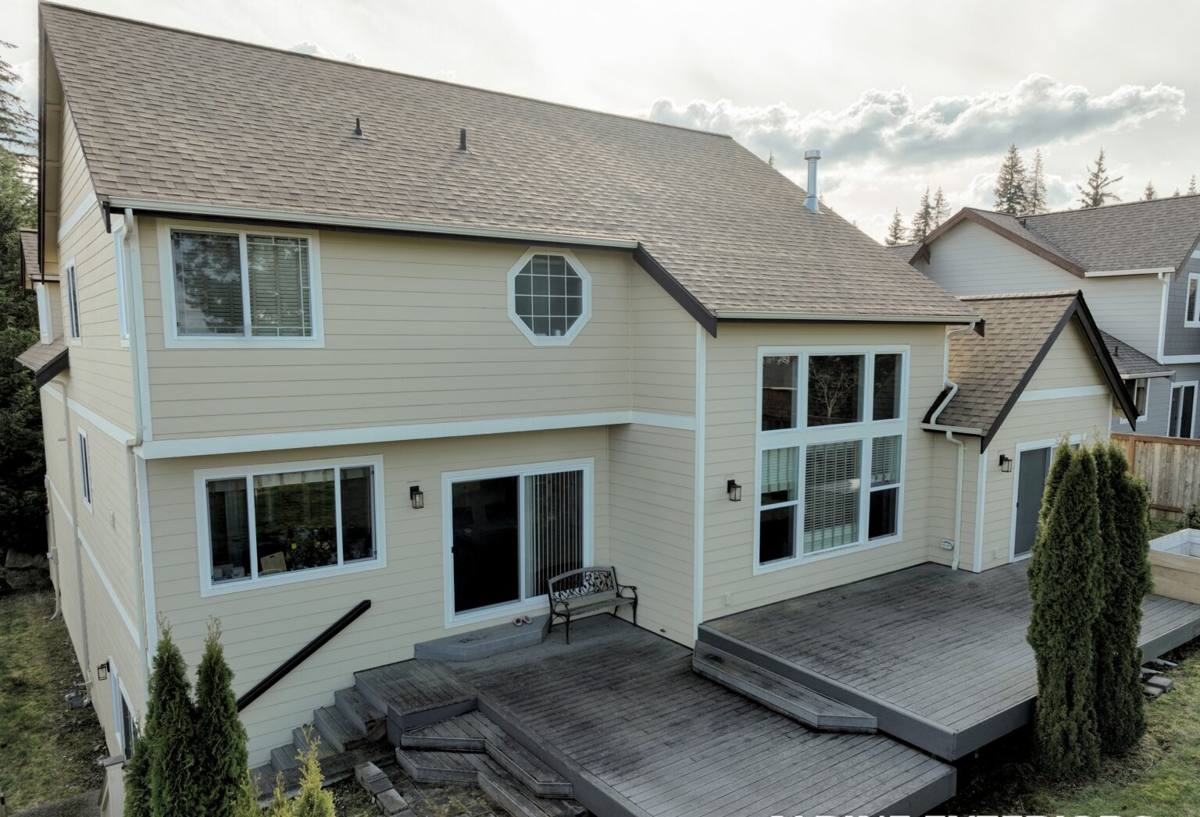
Signs a Deck Needs Replacement, Not Another Repair
Not every worn deck needs to be torn out. But a lot of Everson homeowners call us thinking they need a few new boards when the real problem is underneath. Here's what tells us a repair won't cut it:
- Soft, spongy, or bouncy spots when you walk across the deck, especially near the house
- Boards that have cupped, split, or opened up wide gaps between them
- Rust streaking around fastener heads or visible corrosion on brackets and hangers
- A ledger board separating from the house, or missing/failed flashing at that connection
- Posts that feel loose, or a footing that's shifted, heaved, or settled unevenly
- Black or green staining that doesn't lift with a normal wash
- A deck older than 15-20 years, built before current fastening and flashing practices were standard
If the framing is sound and the wear is only cosmetic, resurfacing or targeted repair is the honest recommendation, and we'll say so. If the substructure is compromised, new decking on top of it is money spent on a problem that's still there — the new surface will only ever be as good as what's underneath it.
What a Correct Deck Replacement Actually Involves
It starts below the decking, not on top of it
A real replacement means the ledger, joists, beams, posts, and footings all get inspected and, where needed, rebuilt — not just the visible surface. In a climate that keeps wood damp for long stretches, joist hangers, post bases, and any wood-to-concrete contact points are where problems concentrate first. We check all of it before a single new board goes down.
Flashing at the ledger is not optional
Where the deck attaches to the house is the single most common failure point we find on older decks in this area, and it's almost always a flashing problem rather than a decking problem. Water gets behind the ledger board, into the rim joist, and sometimes into the house framing itself, long before anyone notices from the outside. A correct replacement installs proper flashing at that connection every time, no exceptions, regardless of what decking material goes on top.
Fasteners matter as much as the lumber
Standard fasteners corrode faster in a wet climate, and corroding fasteners weaken a deck from the inside without any visible warning until something fails. We use fasteners rated for the treated lumber and connector hardware involved, matched to the metals already in the structure, so galvanic corrosion isn't quietly working against the build for the next twenty years.
Choosing Decking Material for Everson's Weather
There's no single "best" decking material — there's a best fit for how a household uses the deck, what upkeep they're willing to do, and what budget they're working with. Here's how the common options actually compare in a climate like this one:
| Material | Moisture Behavior | Maintenance | Typical Lifespan |
|---|---|---|---|
| Pressure-treated wood | Absorbs and releases moisture; needs sealing to control swelling and checking | Annual cleaning, re-sealing every 1-2 years | 10-15 years with upkeep |
| Cedar | Naturally rot-resistant but still moisture-sensitive over time | Regular cleaning and periodic sealing/staining | 15-20 years with upkeep |
| Composite (capped) | Resists rot and moss buildup much better than wood; won't warp from water | Periodic washing to keep surface algae/mildew from taking hold | 25-30 years, backed by manufacturer warranty |
| PVC / cellular decking | Essentially impervious to moisture; no wood fiber to rot | Occasional washing | 25-30+ years, backed by manufacturer warranty |
In a shaded, damp lot, composite or PVC decking earns its higher upfront cost back in reduced maintenance and a much longer stretch before the surface starts hosting moss instead of shedding it. Wood costs less to install but asks for real, ongoing maintenance to hold up in this climate — skip a season of sealing and the clock on replacement starts moving faster than most people expect.
Footings, Framing, and Code Requirements
A deck replacement is a structural project, not a cosmetic one, and it's treated that way whether or not the finished product looks different from what was there before. Footings need to reach frost depth and bear on solid, undisturbed soil. Joist spacing and beam sizing have to match the actual span and expected load, not just copy whatever the old deck had. Guardrails, baluster spacing, and stair geometry follow current building code requirements, which have generally gotten stricter — an older deck built decades ago may not meet the guardrail or attachment standards required today, even if it looks structurally fine.
Permitting requirements apply to most deck replacements in Whatcom County, and skipping that step is a real risk, not a technicality — it can complicate a future home sale or an insurance claim if something goes wrong. We handle the permit process as part of the job rather than leaving it for the homeowner to sort out.
Our Deck Replacement Process
On-site assessment
We start by getting under the deck, not just looking at the surface. That means checking the ledger connection, footings, joists, and any hidden moisture damage before we ever talk about decking material or price.
Demo and disposal
Old decking, framing, and hardware come out completely. We don't build new decking over old framing we haven't fully evaluated — it's how hidden rot ends up trapped under a brand-new surface.
Framing, flashing, and footings
Any compromised structural members get replaced, footings are corrected or added where needed, and proper flashing goes in at the ledger before any decking is installed.
Decking and railing installation
Whatever material you've chosen goes down with fasteners matched to it, following the manufacturer's spacing and gapping specs so the deck performs the way it's supposed to as it moves through wet and dry seasons.
Final walkthrough
We walk the finished deck with you, cover what routine maintenance it actually needs, and make sure everything from stair railings to gate latches is solid before we consider the job done.
Keeping a New Deck Ahead of Moss and Moisture
A well-built deck still needs some seasonal attention in a climate that stays damp this much of the year. The goal isn't constant work — it's a short list of habits that keep moss and moisture from getting a foothold in the first place.
- Sweep leaves and debris off the surface and out of gaps between boards regularly through fall
- Rinse or wash the deck surface a couple of times a year to keep algae and moss spores from establishing
- Keep gutters and downspouts near the deck clear so runoff isn't draining directly onto it
- Trim back overhanging branches where practical to let more light and air reach the surface
- Check the ledger flashing and fastener heads once a year for early signs of trouble
- Reseal wood decking on the manufacturer's recommended schedule rather than waiting until it looks dry
None of this is complicated, but skipping it is exactly how a well-built deck ends up needing early attention in a climate this consistently wet.
Why Hire a Crew That Already Works in Everson
A deck replacement done by a crew unfamiliar with this area tends to make the same mistakes over and over: underestimating how much shade and moisture a given lot actually holds, defaulting to standard details that don't account for a long moss season, or treating flashing and fastener choices as an afterthought instead of the part of the job that determines how long everything else lasts. A crew that already works throughout Whatcom County has seen how decks in this climate actually fail, not just how they're built on paper.
There's also a practical side to it — permitting familiarity, realistic scheduling around the wettest months, and being close enough to Everson to show up for a walkthrough or a warranty check without it being a special trip. That local footing is worth something on a project that's meant to hold up outdoors for decades.
If your deck in Everson is showing its age or you're planning ahead of a problem, we're glad to take a look and give you a straightforward, no-pressure estimate. There's a form below — reach out and we'll get a time on the calendar.