 Ferndale Siding
 Why Lummi Island Decks Wear Out Faster Than You'd Expect
Lummi Island sits out in the salt air coming off Bellingham Bay and the Salish Sea, and that changes how a deck ages compared to a similar structure inland. Salt-laden moisture works into fastener heads, corrodes hardware from the inside out, and settles into end grain and joints where standard coatings can't fully seal it out. Add Whatcom County's long stretch of driving rain each fall and winter, plus the shaded, damp conditions that let moss and algae take hold on north-facing and low-clearance decks, and you get a structure that can look fine on the surface while the framing underneath is already compromised.
We see this pattern often on island properties: a deck that's 12 to 15 years old, still walkable, but with soft spots near the ledger board, rusted-through fasteners, and joists that have been quietly absorbing moisture for years. By the time boards start visibly sagging or splintering, the structural wood underneath is usually further along than the surface suggests.
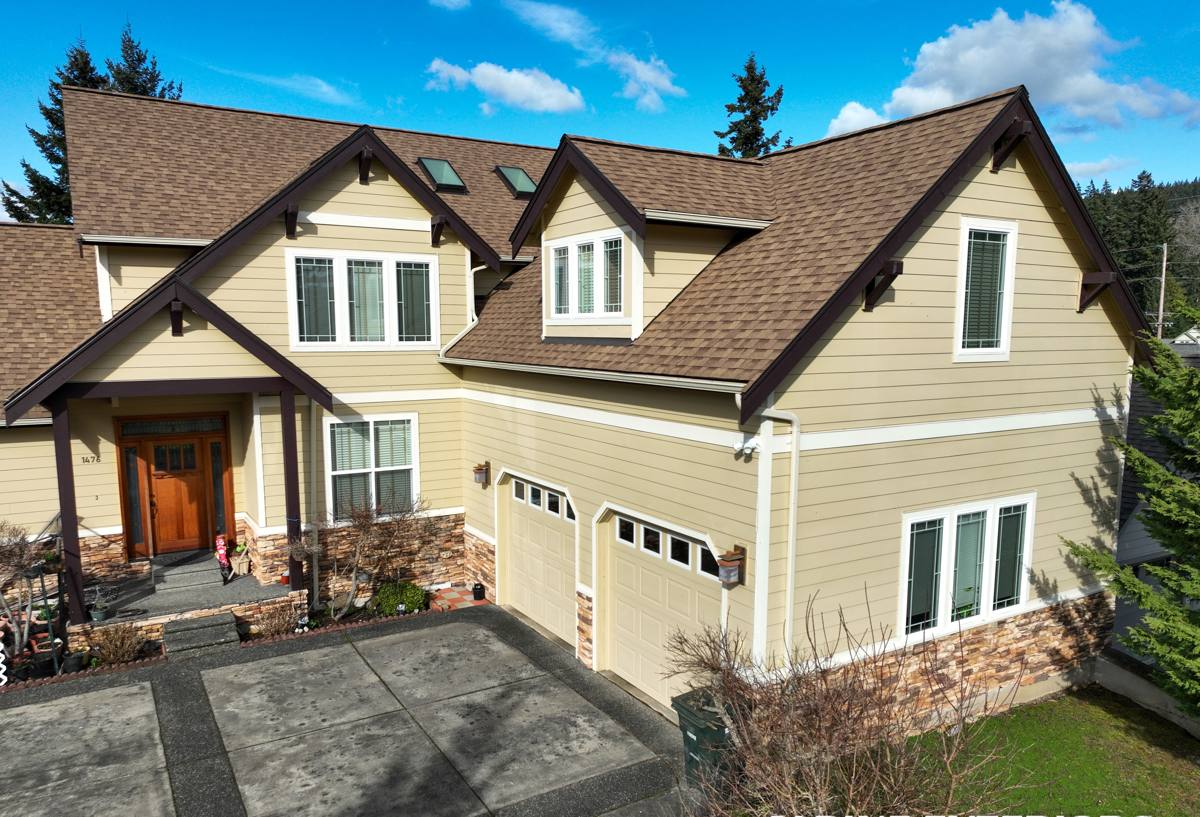
Repair or Replace? Signs to Look For
Not every tired deck needs a full replacement, but on Lummi Island the margin for "just patch it" is smaller than it is elsewhere in Ferndale, because of how consistently the framing takes on moisture. Here's how we sort it out during an inspection:
| Condition | Usually Repairable | Usually Needs Replacement |
|---|---|---|
| Surface graying, minor splintering on a few boards | Yes | No |
| Rusted or corroded fasteners across the deck | No | Yes |
| Soft or spongy spots near the ledger or stairs | No | Yes |
| Persistent moss/algae staining on a shaded section | Sometimes | Sometimes |
| Joists show rot when probed with a screwdriver | No | Yes |
| Railing posts loose or wobbling | Sometimes | Yes, if post base is rotted |
The honest answer is that a probe test with an awl or screwdriver tells us more than a visual inspection ever will. Wood that looks weathered but sounds solid can often be resurfaced. Wood that looks fine but gives way under light pressure is telling you the deck's structural life is over.
What a Correct Deck Replacement Actually Involves
A deck replacement is more than swapping old boards for new ones. On a property exposed to salt air and consistent rain, the parts you don't see matter more than the decking surface itself.
Ledger Board and Flashing
The ledger board — where the deck attaches to the house — is the single most common failure point we find, because it's the hardest spot for water to drain away from. A correct replacement means removing the old ledger, inspecting the rim joist and sheathing behind it for hidden rot, and installing new flashing that directs water out and away from the house rather than behind the siding.
Framing and Fasteners
Joists, beams, and posts get replaced with pressure-treated lumber rated for ground contact where applicable, and all structural connections use stainless steel or heavy hot-dip galvanized fasteners and hardware — not standard coated screws, which corrode faster in salt air and can fail well before the wood does.
Drainage and Airflow
Proper joist spacing, gapping between boards, and clearance underneath the deck all affect how quickly moisture can leave the structure after a rain event. A deck built too tight to the ground, or with boards packed too close together, holds moisture longer and grows moss faster.
Decking Material Options for This Climate
There's no single "best" decking material — each one comes with trade-offs in maintenance, upfront cost, and how it handles the salt air and moss conditions common on the island.
| Material | Maintenance | Salt Air / Moisture Behavior | Typical Lifespan |
|---|---|---|---|
| Pressure-treated wood | Annual cleaning and re-sealing | Prone to graying and splintering without upkeep | 10-15 years |
| Cedar | Periodic sealing to maintain color and moisture resistance | Naturally rot-resistant but needs consistent care near salt spray | 15-20 years |
| Composite | Occasional washing, no sealing | Resists moisture well; surface can stay damp longer, feeding moss growth if not cleaned | 25-30 years |
| PVC / capped polymer | Occasional washing, no sealing | Fully sealed against moisture absorption; best resistance to salt and algae staining | 25-30+ years |
We don't push one material on every homeowner. Wood gives a warmer, traditional look and a lower upfront cost, but it demands real maintenance discipline in this climate — skip a year of sealing and you'll feel it. Composite and PVC cost more up front but hold up with far less attention, which matters if the property isn't visited or maintained year-round.
Our Process, Start to Finish
- On-site inspection — we probe the framing, check the ledger connection, and assess drainage and sun/shade exposure before recommending repair vs. replacement.
- Written estimate — material options, scope, and a realistic timeline, including how ferry scheduling factors in.
- Permitting — we handle the paperwork required for structural deck work in Whatcom County.
- Demolition and framing inspection — old decking and framing removed, hidden damage documented before rebuilding.
- Rebuild — new framing, flashing, fasteners, and decking installed to spec.
- Final walkthrough — we go over the finished deck with you, including care recommendations specific to your site's sun and shade exposure.
Working on Lummi Island: Logistics That Matter
Any contractor working on Lummi Island has to plan around the ferry schedule, and that affects how a project gets sequenced. We batch material deliveries and crew trips to minimize back-and-forth runs, and we build ferry timing into the estimate up front rather than letting it become a surprise delay mid-project. A crew that's worked the island before knows to load trailers efficiently, confirm tide and ferry windows before scheduling a start date, and avoid the rookie mistake of discovering mid-job that a forgotten material means another ferry crossing and a lost afternoon.
This isn't a minor detail — it's often the difference between a project that finishes on the timeline we quoted and one that drags out because logistics weren't planned for.
What Drives the Cost of a Deck Replacement
| Factor | Why It Matters |
|---|---|
| Deck size and shape | More square footage and complex angles mean more material and labor |
| Decking material chosen | Wood costs less upfront; composite and PVC cost more but need less upkeep |
| Framing condition | Hidden rot at the ledger or joists adds repair scope once demo begins |
| Height and railing requirements | Elevated decks need more substantial framing and code-compliant railings |
| Site access | Ferry logistics and tight or sloped lots can add labor time |
| Stairs and landings | Additional structural elements beyond the main deck surface |
We won't quote a number without seeing the site and probing the existing structure — a deck that looks straightforward from the surface can turn up framing issues that change the scope once we're into it.
Keeping a New Deck Ahead of Moss Season
A well-built deck still needs some seasonal attention in this climate, especially through the wetter months. A little consistency goes a long way toward protecting the investment:
- Sweep debris and leaves off the deck surface regularly, especially in fall — trapped organic matter feeds moss growth
- Rinse shaded or north-facing sections periodically to slow algae and moss buildup before it sets in
- Check that gaps between boards stay clear so water can drain rather than pool
- Inspect railing posts and stair connections once a year for movement or corrosion at fasteners
- Re-seal wood decking on the manufacturer's recommended schedule — don't wait until it visibly grays
- Trim back overhanging branches or vegetation that keeps sections of the deck shaded and damp
Why Hiring a Crew That Already Works Lummi Island Matters
A deck replacement on the island isn't the same job as one in downtown Ferndale, even though the core carpentry is similar. The material choices, fastener grade, flashing details, and even the scheduling all need to account for salt exposure and ferry logistics — and a crew that hasn't done it before will learn those lessons on your project, at your expense. We've worked island properties enough to know which fastener grades actually hold up, which decking materials are worth the extra cost given the exposure, and how to plan a job so ferry timing doesn't turn into wasted days.
If you're weighing repair versus replacement, or just want an honest look at what your current deck's framing looks like underneath the surface, we're happy to come out and take a look. We offer free, no-pressure estimates — fill out the form below and we'll set up a time to walk the property with you.