 Ferndale Siding
 Why Semiahmoo Homes Need a Different Approach to Siding
Homes near Semiahmoo sit about as close to the water as you can get in Whatcom County. That location is the whole appeal — and it's also the reason siding fails here faster than it does ten miles inland. Salt-laden air off Semiahmoo Bay and the Strait of Georgia works on exterior materials in ways that don't show up on a spec sheet: it accelerates corrosion on fasteners and trim, it keeps painted surfaces perpetually damp, and combined with the near-constant wind off the water, it drives rain sideways into joints and laps that would stay dry on a more sheltered lot.
Add in Whatcom County's long wet season — moss and algae growth here isn't a summer nuisance, it's a nine- or ten-month condition on north- and west-facing walls — and you've got a climate that punishes any siding product with a weak point. Wood siding checks and rots. Vinyl chalks, warps in temperature swings, and never really sheds the green film that builds up in shaded areas. Even fiber cement, if it's installed wrong or left with the wrong finish, will fail early in this environment.
This page is about doing it right: James Hardie fiber cement siding, installed to spec, on a home in the Semiahmoo area, by a crew that already knows what this coastline does to a house.
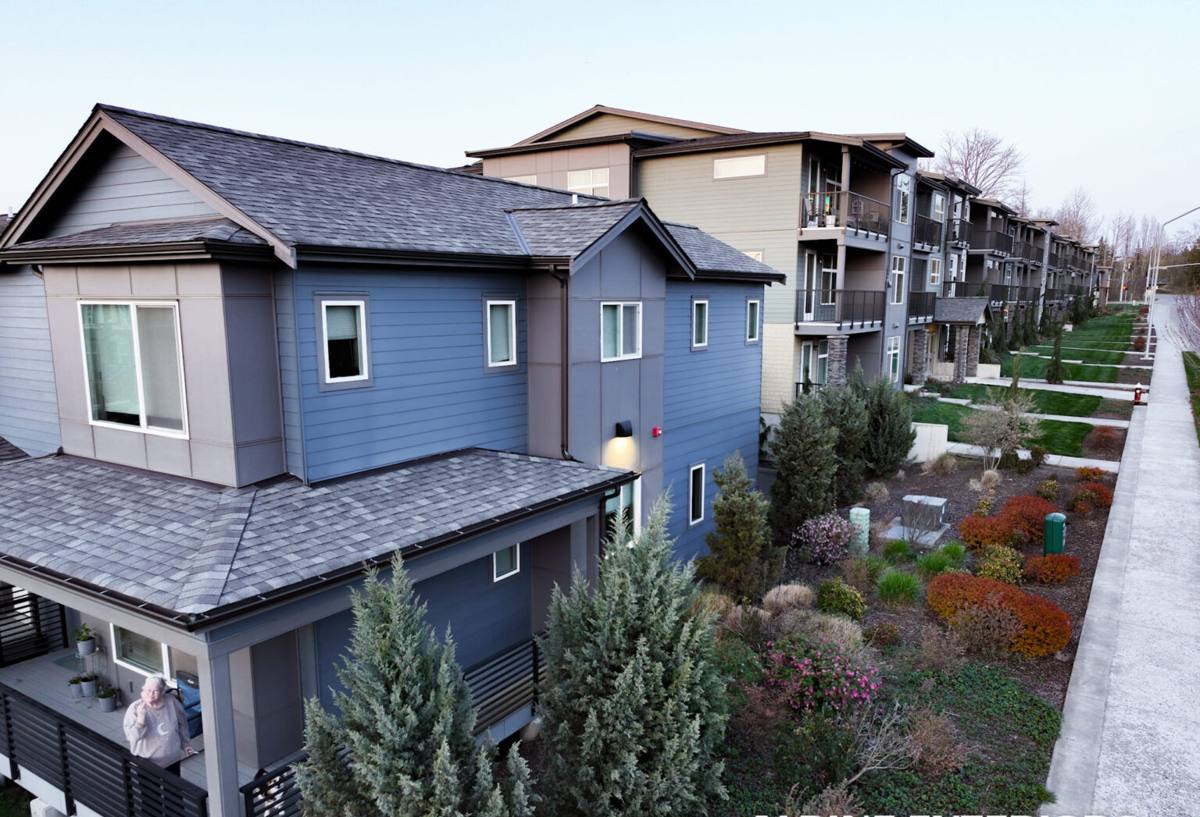
What the Semiahmoo Climate Actually Does to a House
Salt Air and Metal Fatigue
Salt air oxidizes exposed metal — nail heads, flashing seams, trim fasteners — faster than it will a few miles from shore. Once fasteners start rusting, they stain the siding face and eventually lose their grip, which is how you end up with boards that rattle or pull away in wind. The fix isn't a different siding product, it's using corrosion-resistant fasteners and flashing rated for coastal exposure, and making sure every fastener is set correctly instead of overdriven or underdriven.
Wind-Driven Rain
Open water exposure means rain rarely falls straight down here — it comes in at an angle, and it comes in often. That puts real pressure on every horizontal lap, every window and door flashing detail, and every inside and outside corner. A siding job that would hold up fine in a sheltered inland neighborhood can leak within a couple of seasons on a wind-exposed Semiahmoo lot if the flashing and lap details weren't built for it.
Extended Moss Season
Whatcom County's damp, mild climate means moss and algae get a long runway on shaded siding, especially on north walls and under eaves. On porous or poorly finished surfaces, that growth digs in and stains permanently. On a factory-finished, non-porous fiber cement surface, it mostly sits on top and rinses off — which is a meaningful difference in a place where moss season basically never fully ends.
Why We Install James Hardie — and Only James Hardie
We standardized on James Hardie fiber cement siding for every job we take, including work in the Semiahmoo area, and we don't install LP SmartSide, vinyl, Cemplank, Allura, primed spruce, or cedar. That's not a marketing position — it's a decision based on how those products actually perform against this specific climate over 20-plus years, versus how Hardie performs.
- Non-combustible core: Hardie's fiber cement won't ignite, warp, or melt from heat exposure — relevant given regional wildfire smoke and ember risk in dry summer stretches.
- ColorPlus factory finish: baked-on, not brushed on site, so it holds color and resists the chalking and fading that painted wood and some vinyl products show after a few wet Whatcom winters.
- HZ climate-engineered lines: Hardie manufactures specific formulations for high-moisture, high-humidity climates like ours, rather than a one-size-fits-all product.
- Dimensional stability: fiber cement doesn't expand and contract with moisture the way wood does, which matters directly for how well caulked joints and laps hold up to driving rain.
- Transferable warranty: a real, documented warranty backing the product, which matters if the home changes hands.
We're not going to tell you the alternatives are junk — they're not, and each has a place. LP SmartSide is engineered wood and it's genuinely improved over the years, but engineered wood still relies on an intact factory seal to keep moisture out, and any breach in that seal in a wet climate becomes a problem. Vinyl is inexpensive and low-maintenance in the sense that it needs no painting, but it's also the product most likely to show visible wind and impact damage on an exposed waterfront lot, and it can't be refinished — only replaced. Cedar looks great and plenty of people love it, but it's the highest-maintenance option in a climate that keeps wood wet for most of the year. We made the call to install one product because we'd rather be excellent at one system than mediocre across five.
What a Correct Job Looks Like in This Environment
Fiber cement siding is only as good as the install underneath it. On a Semiahmoo-area home, a handful of details matter more than usual:
Rainscreen Gap
A ventilated rainscreen gap behind the siding lets any moisture that does get past the cladding drain and dry out instead of sitting against the wall assembly. On a wind-exposed lot, this is the difference between a wall system that manages incidental water and one that traps it.
Flashing at Every Penetration
Windows, doors, hose bibs, light fixtures, deck ledgers — every penetration through the siding is a place water can get behind the cladding if it's not flashed correctly. This is the single most common source of siding failure we see on re-inspections, and it's almost always a shortcut taken during the original install, not a product defect.
Fastener Selection and Placement
Corrosion-resistant fasteners, set to Hardie's specified depth (not overdriven, which cracks the board edge, and not underdriven, which leaves it loose), following Hardie's field-cut and fastener-pattern guidance for the specific product line installed.
Caulking and Sealant Joints
Used at trim transitions and specific joints per Hardie's installation instructions — not as a substitute for proper flashing, but as a complement to it. Sealant is a maintenance item that ages; flashing does the structural water-management work.
Factory-Cut Edges Where Possible
Every field cut exposes raw fiber cement that should be sealed per Hardie's instructions. Minimizing field cuts and sealing the ones you can't avoid keeps the factory finish's protection intact at every edge.
Our Process on a Semiahmoo-Area Job
- On-site assessment: we walk the home, check the existing siding and sheathing condition, note wind exposure by elevation, and look at moss and moisture patterns already showing on the walls.
- Product and color selection: we recommend the Hardie product line and ColorPlus color suited to the home's exposure — some elevations facing the water may warrant different detailing than sheltered ones.
- Tear-off and sheathing check: we remove existing siding and inspect the sheathing underneath for rot or damage before anything new goes on. Water damage found here gets addressed, not covered up.
- Weather barrier and rainscreen install: a proper water-resistive barrier and drainage gap go in before any siding.
- Flashing at all penetrations: done before siding installation, not patched around after.
- Hardie siding install to manufacturer spec: correct fastener pattern, correct exposure, correct field-cut sealing.
- Final walk-through: we review the completed job with you and point out anything you should watch for or maintain going forward.
Why a Local Crew Matters Here
Semiahmoo isn't a typical inland Whatcom County lot, and a crew that mostly works sheltered neighborhoods doesn't automatically know how to detail a wind-exposed, salt-air property correctly. A crew that already works this stretch of coastline has seen which elevations take the worst weather, knows how moss behaves on shaded walls near the water, and doesn't need to relearn coastal flashing detail on your house. That experience shows up in fewer callbacks and a job that's still performing well a decade in, not just on install day.
Cost Factors for a Semiahmoo Siding Project
| Factor | Why It Affects Cost |
|---|---|
| Wind exposure by elevation | Water-facing walls may need more flashing detail and labor time than sheltered elevations |
| Existing sheathing condition | Rot or moisture damage found during tear-off adds repair scope before new siding goes on |
| Home size and wall complexity | More corners, penetrations, and trim transitions mean more flashing and cut work |
| Hardie product line chosen | Lap siding, panel systems, and shingle-style profiles carry different material costs |
| Color and trim selection | ColorPlus finishes and trim packages vary in price by line and color |
| Access and staging | Waterfront lots with limited access or steep grades can affect labor time |
We give a firm number after walking the property — broad ranges without seeing the home and its exposure aren't much use to you.
Signs Your Semiahmoo Home's Siding Needs a Closer Look
- Persistent moss or algae growth that comes right back after cleaning, especially on north or west walls
- Soft spots, staining, or bubbling near window and door trim
- Rust streaks running down from nail heads or metal trim
- Boards that flex, rattle in wind, or show gaps opening at the laps
- Paint that's chalking, peeling, or needing repainting more often than every few years
- Visible warping or cupping on wood or engineered wood siding
- Musty smell or drafts near exterior walls, which can point to moisture behind the cladding
If you're seeing any of that on a Semiahmoo-area home, or you're planning ahead for a siding replacement, we're happy to take a look. The estimate is free, there's no pressure, and you'll get a straight answer about what your home actually needs — use the form below to get started.