 Ferndale Siding
 Windows Built for the Fairhaven Climate, Not a Catalog Climate
Homes in and around Fairhaven deal with a specific mix of weather that a lot of window products simply aren't designed for. You've got salt-laden air rolling in off the water, wind-driven rain that finds its way sideways into places dry-climate windows never have to defend, and a long damp season each year where moss, algae, and mildew get a real foothold on anything that stays wet too long. A window that performs fine in a catalog photo or in a showroom two states away can fail here in ways that show up slowly — fogged glass, soft sills, drafts that weren't there the first winter. Energy-efficient windows for this area need to solve two problems at once: keep conditioned air where it belongs, and shrug off years of marine exposure without rotting, corroding, or losing their seal.
We work on homes throughout Ferndale and nearby Whatcom County communities, including Fairhaven, and we size up every window job against that same local reality. This page walks through what that actually means — for the glass, the frame, the installation, and the process — so you know what you're paying for before you ever get a quote.
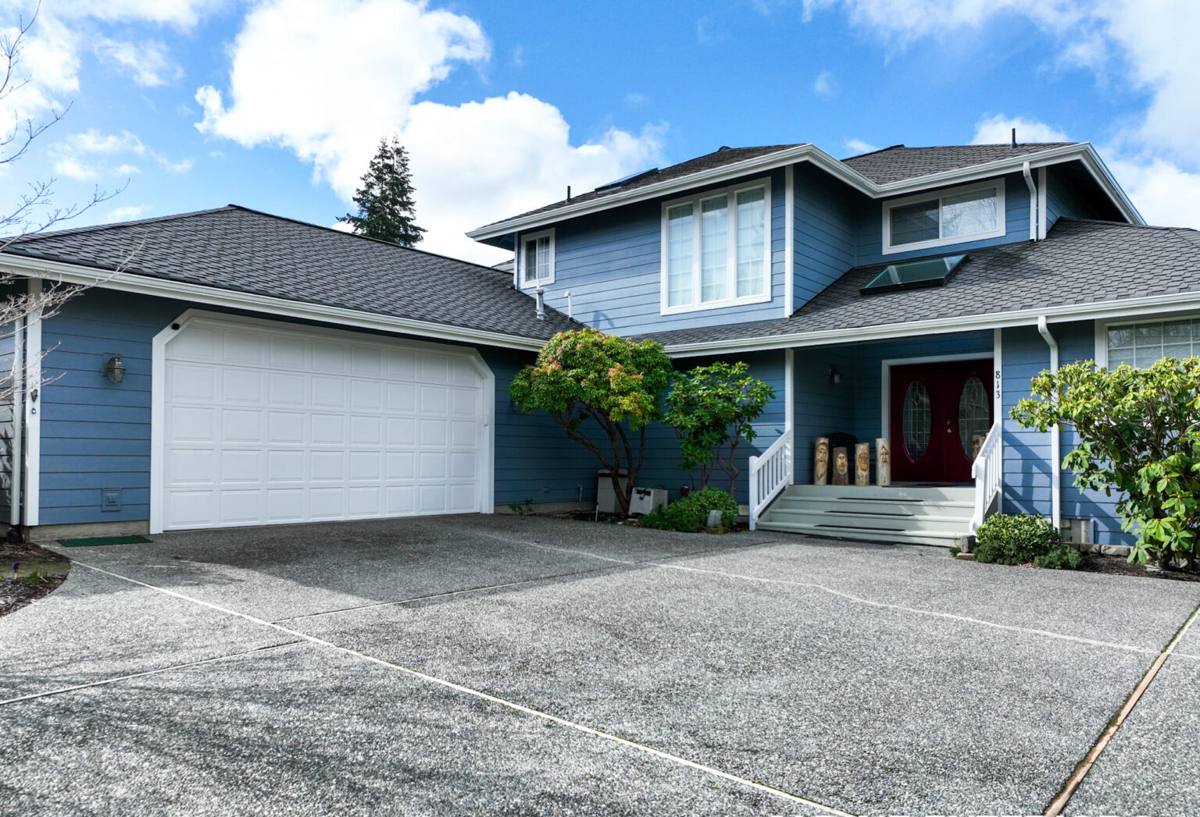
What Whatcom County's Marine Climate Does to Windows Over Time
Understanding why certain window choices hold up here and others don't starts with understanding what the climate is actually doing to a window assembly, day after day, year after year.
Salt Air and Metal Components
Coastal and near-coastal air carries fine salt particulate that settles on hardware, screens, and metal frame components. Over time it accelerates corrosion on anything that isn't rated for it — hinges pit, screen frames discolor, and untreated aluminum can pit and streak. This is less about the glass and more about every metal touchpoint on a window: locks, balances, weep hole covers, and cladding fasteners.
Wind-Driven Rain and Water Intrusion
Rain that falls straight down is easy to manage. Rain that's being pushed sideways by wind off open water is a different problem — it finds gaps in flashing, undersized sills, and sealant that's past its service life. Most window failures we see in this region aren't glass failures at all; they're water management failures where moisture got behind the window unit and started working on the wall assembly from the inside.
Moss, Mildew, and Prolonged Damp
A long wet season means anything that stays damp for extended stretches — window sills, bottom rails, the transition where a window meets siding — becomes a candidate for moss and mildew growth if it can't dry out between rain events. Wood components that aren't properly sealed or that lack adequate drainage are the most vulnerable.
What "Energy-Efficient" Actually Means Here
Energy-efficient window marketing tends to lean hard on one number, but the right window for this climate is a balance of a few factors working together, not a single spec.
U-Factor Matters More Than Solar Heat Gain Here
U-factor measures how well a window resists heat loss — lower is better, and it's the number that matters most in a heating-dominated climate like ours, where the bigger cost is keeping warmth in during the long stretch of cool, overcast months. Solar Heat Gain Coefficient (SHGC), which measures how much solar heat a window lets in, matters far more in climates with intense, direct sun. Around here, with fewer high-sun days, we weigh U-factor more heavily than SHGC when helping homeowners pick glass packages, though SHGC still matters on south- and west-facing exposures.
Air Leakage and Condensation Resistance
Two other ratings deserve attention: air leakage (lower is better — it's a direct measure of drafts) and condensation resistance (higher is better — it tells you how well the window resists interior fogging in cold, damp conditions). Both matter more in a marine climate than they do in a dry one, because humidity is a constant factor here, not a seasonal one.
Frame Material Is an Energy Decision, Too
The frame conducts heat and cold just like the glass does, and it's also the part of the window doing battle with salt air and moisture year-round. Frame material choice is really a joint decision about thermal performance and long-term durability — they're not separate questions.
Comparing Frame Materials for This Climate
There's no single "best" frame material for every home — it depends on budget, exposure, and how the window will be maintained. Here's how the common options stack up for a coastal Whatcom County property.
| Frame Material | Coastal/Salt Air Durability | Thermal Performance | Maintenance |
|---|---|---|---|
| Vinyl | Good — won't corrode or rot | Good, especially multi-chambered profiles | Low; occasional cleaning |
| Fiberglass | Very good — dimensionally stable, resists moisture | Very good; low expansion/contraction | Low |
| Wood (clad exterior) | Depends entirely on cladding integrity and seal quality | Excellent natural insulator where dry | Higher; cladding and seals need periodic inspection |
| Aluminum (non-thermally broken) | Poor in salt air without special coatings | Weak; conducts heat and cold readily | Moderate to high |
For most Fairhaven-area homes we install vinyl or fiberglass, because both resist the specific stresses of salt air and driving rain without the maintenance burden of exposed wood cladding. Wood-clad windows can still be the right call on certain homes, especially where matching an existing architectural style matters, but we're upfront that they ask more of the homeowner in ongoing care. We generally steer away from non-thermally-broken aluminum for full window replacements here — not because it's a bad product everywhere, but because its thermal and corrosion performance is a poor match for this specific climate.
What a Correct Installation Actually Involves
The window unit itself is maybe half the job. The other half — the part that determines whether that window is still performing well in ten years — is how it's integrated into the wall.
Flashing and Sill Pan Details
Every window opening needs a properly lapped flashing system and a sloped sill pan that directs any water that does get past the exterior seal back outside, not into the wall cavity. This detail is invisible once the job is done, which is exactly why it's the detail that separates a durable install from a future callback.
Integration With the Water-Resistive Barrier and Siding
A window has to tie correctly into the house wrap or building paper and the surrounding siding so water sheds down and over each layer in sequence, never behind it. Because we work on siding as much as windows, we pay close attention to this handoff — it's one of the most common places we find prior water damage on older homes.
Sealant Selection and Application
Not all sealants are rated for the same movement and exposure. We use products suited for sustained damp exposure and UV, applied at the joints that actually need a seal — not smeared everywhere as a substitute for proper flashing, which is a shortcut that fails within a few years in this climate.
How Our Process Works
- On-site assessment. We look at existing window condition, frame material, signs of water intrusion, and how the windows tie into your siding and trim.
- Measurement and product selection. We measure each opening individually and walk you through frame material, glass package, and performance ratings suited to your home's exposure.
- Prep and removal. Old units are removed carefully, and we inspect the opening — sill, framing, and sheathing — for hidden moisture damage before anything new goes in.
- Install with proper flashing and sill pan detailing. This is the step that protects the investment long-term, and it's not optional or rushed.
- Seal, trim, and integrate with siding. Exterior finish work is matched to your home so the new windows look original to the house, not bolted on.
- Walkthrough and cleanup. We test operation on every unit and leave the site clean.
Signs Your Current Windows Are Working Against You
Homeowners often assume window problems will announce themselves clearly. In practice, the early signs are subtle. Watch for:
- Visible fogging or moisture between panes (a failed seal on double- or triple-pane glass)
- Soft, discolored, or spongy wood at the sill or bottom corners
- Persistent drafts near the frame, even with the window fully latched
- Moss or dark streaking building up on the sill or lower sash each wet season
- Difficulty opening, closing, or latching that wasn't there a few years ago
- Noticeably higher heating costs without another clear cause
- Condensation forming on the interior glass or frame during cold, damp weeks
Any one of these on its own might just mean a minor repair. Several together, especially on windows original to an older home, usually means the assembly has reached the point where replacement makes more sense than continuing to patch it.
Why a Crew That Already Works This Area Matters
Window performance in a marine climate is a local knowledge problem as much as a product problem. A crew that regularly works Fairhaven and the greater Ferndale area already understands how exposure varies block to block depending on how open a lot is to prevailing wind and rain, which details tend to fail first on homes of a given age and construction style in Whatcom County, and how to sequence a window install around our wet season so openings aren't sitting exposed longer than necessary. That local pattern recognition is hard to replicate with a crew that mostly works inland or in a different climate zone — it shows up in smaller decisions throughout the job that add up to a window system that actually holds up here.
It also matters for the boring-but-important logistics: knowing local permitting expectations, being reachable for a follow-up question after the job is done, and standing behind the work because we're not driving in from out of the area.
Get a Straightforward, No-Pressure Estimate
If your windows are drafty, fogged, showing water damage, or just old enough that you're wondering whether repair still makes sense, we're happy to take a look. Use the form below to request a free estimate — we'll assess your home's specific exposure and walk you through options that make sense for your budget and your house, with no pressure to decide on the spot.