 Ferndale Siding
 Why Fairhaven's Coastal Climate Wears Out Siding Faster
Homes in and around the Fairhaven area sit close to the water, and that proximity changes what siding has to survive year after year. Salt-laden air off the Salish Sea accelerates corrosion on fasteners and metal trim, driving rain off Bellingham Bay pushes moisture sideways into wall assemblies during winter storms, and the shaded, damp conditions common along this stretch of Whatcom County keep moss and algae growing on north-facing walls for much of the year. Siding here doesn't just need to look good — it needs to shed water, resist rot, and hold up to salt exposure without constant babysitting.
We've seen what happens when siding isn't matched to this environment: swollen seams, peeling paint, soft trim boards, and moss staining that never fully washes off. That's the backdrop for every siding decision we make on a Fairhaven-area home, and it's why we install one product exclusively.
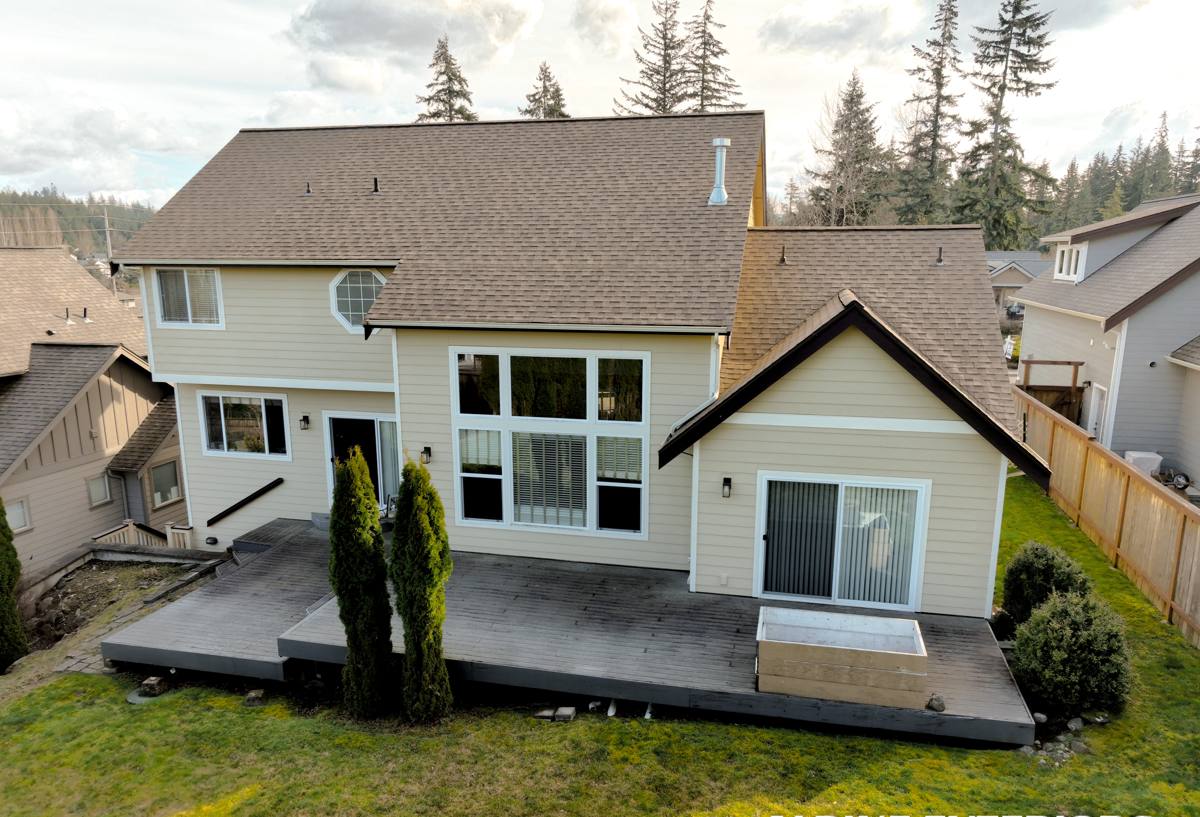
Why We Only Install James Hardie Fiber Cement
We don't install vinyl, LP SmartSide, Cemplank, Allura, or bare cedar. That's not a marketing line — it's a standard we hold because we've watched how each of those products actually performs in a wet, salty, moss-prone climate over 15 or 20 years, not just in the first five. Wood-based composite siding can swell at cut edges and fastener points when moisture gets in repeatedly, which is a real risk in a climate that rarely gives wood siding a long enough dry stretch to recover. Vinyl expands and contracts with temperature swings and can crack or warp under UV and salt exposure over time, and its seams give moss and grime more places to grip. Unpainted cedar looks great on day one but demands a maintenance schedule most homeowners don't keep up with, especially in a climate where mildew and moss pressure never really lets up.
James Hardie fiber cement is engineered differently. It's cement, sand, and cellulose fiber — non-combustible, dimensionally stable, and formulated specifically for the kind of moisture cycling this area produces. That's the whole reason we standardized on it.
HZ5 Engineering for This Climate
James Hardie makes region-specific formulations under its HZ (HardieZone) system, and the Pacific Northwest falls under HZ5 — the zone engineered for high moisture exposure and freeze-thaw cycling. HZ5 panels are formulated to resist moisture-related cracking and to hold paint and caulk better in wet, humid conditions than a generic one-size-fits-all board. For a Fairhaven-area home taking on driving rain and salt spray for months at a time, that regional engineering isn't a marketing detail — it's the reason the product holds up.
ColorPlus Factory Finish
Most Hardie siding we install goes on with the ColorPlus finish — a multi-coat, baked-on finish applied at the factory under controlled conditions, not brushed or sprayed on site. It resists fading and chipping better than field-applied paint, and because it's cured before the boards ever reach the jobsite, you're not depending on the weather cooperating during a paint window. In a climate where a dry, calm painting day isn't guaranteed, that matters.
What a Correct Hardie Installation Actually Involves
James Hardie siding is only as good as the installation behind it. The product is built to manage moisture, but that only works if the assembly underneath it is built correctly. On every Fairhaven-area job, the details that matter most are the ones nobody notices once the siding is up:
- A continuous weather-resistant barrier behind the siding, with all seams properly lapped and taped to shed water downward
- Correct flashing at every window, door, and roofline transition — the single most common failure point on poorly installed siding
- Proper fastener spacing and depth, using corrosion-resistant fasteners rated for coastal exposure
- Butt joints and panel seams caulked and sealed per Hardie's published installation instructions, not just "close enough"
- A drainage gap or rainscreen approach where conditions call for it, so any moisture that does get behind the siding has somewhere to go
- Proper clearance at the bottom edge — siding kept off decks, patios, and grade so it isn't sitting in standing water or splash-back
Moisture Management Is the Real Job
Fiber cement itself doesn't rot, but the framing, sheathing, and trim behind it can if water gets trapped. In a climate with this much rain and humidity, the drainage plane and flashing details behind the siding are doing as much work as the siding itself. That's the part of the job that separates a correct Hardie install from one that just looks right for the first year or two.
Mistakes We See From Other Installs
We regularly get called to look at Hardie siding installed by crews that don't specialize in it — and the failures are almost always installation issues, not product issues. Panels nailed too tight with no room for the product's normal expansion and contraction. Missing or undersized flashing above windows. Caulk used to cover gaps instead of correct trim work. Siding run straight down to grade. None of these are Hardie's fault, but every one of them leads to moisture problems and callbacks down the road.
Our Process on Fairhaven-Area Homes
Because we work this coastline regularly, our process is built around what actually shows up on inspection here — moss buildup on the north and east walls, soft trim near ground contact, and flashing that was never installed correctly the first time.
1. On-Site Assessment
We walk the full exterior, checking existing siding and trim condition, flashing at penetrations, moss and moisture staining patterns, and the state of the sheathing and framing wherever we can access it. This tells us whether we're dealing with a straightforward re-side or whether there's underlying rot or moisture damage to address first.
2. Tear-Off and Substrate Repair
Old siding comes off, and any damaged sheathing, framing, or trim gets repaired before anything new goes up. Installing new siding over compromised substrate just hides the problem — it doesn't fix it.
3. Weather Barrier and Flashing
A new weather-resistant barrier goes on with correctly lapped seams, and flashing is installed at every window, door, and transition point to Hardie's specifications and best practice for coastal exposure.
4. Hardie Panel Installation
Panels, fasteners, and trim go in per the manufacturer's installation guide — proper spacing, proper clearance from grade and hard surfaces, and joints sealed correctly. This is also where product choice (lap siding, panel siding, or shingle-style HardieShingle, depending on the home) gets finalized based on the house's exposure and style.
5. Final Walkthrough
We review the completed work with you, cover basic care and what to watch for, and make sure everything meets both Hardie's standards and ours.
What Affects Cost on a Fairhaven-Area Siding Job
Every home is different, and we won't quote a number without seeing the house, but these are the factors that most often move the price up or down on a fiber cement re-side in this area:
| Factor | Why It Matters |
|---|---|
| Home size and wall complexity | More corners, gables, and dormers mean more cutting, flashing, and labor time |
| Current siding condition | Rotten sheathing or framing found during tear-off adds repair scope before new siding goes on |
| Siding profile chosen | Lap, panel, and shingle-style Hardie products differ in material and labor cost |
| Trim and accent work | Corner boards, window trim, and fascia detail add material and installation time |
| Access and site conditions | Tight lots, steep grades, or landscaping close to the house affect staging and labor |
| Moisture/moss remediation | Heavier moss buildup or existing water damage may require extra prep before install |
Living With Hardie Siding in a Marine, Moss-Prone Climate
James Hardie siding is low-maintenance compared to wood or vinyl, but "low-maintenance" doesn't mean "no maintenance" — especially this close to the water. A little seasonal attention keeps it performing the way it's designed to:
- Rinse siding annually, focusing on north- and east-facing walls where moss and algae tend to build up first
- Keep gutters clear so overflow isn't running down the siding face during heavy rain
- Trim back shrubs and landscaping so walls get airflow and sunlight to dry out between storms
- Check caulking at trim joints and penetrations every year or two and touch up as needed
- Watch for any staining or streaking near ground level, which can signal splash-back or a drainage issue worth addressing early
None of this is heavy work, but skipping it in a climate this wet lets moss and moisture problems get a head start.
Why Hiring a Crew That Already Works This Area Matters
Fiber cement installation isn't identical everywhere in the country, and a crew that mostly works drier inland climates doesn't always think about drainage gaps, moss-prone shading, or salt-air fastener corrosion the way a crew based in Ferndale and working this coastline does. We see the same failure patterns repeat on this side of Whatcom County — the same flashing shortcuts, the same moss buildup zones, the same trim rot near grade — and we build our process around avoiding them from the start, not fixing them five years later.
Choosing a crew that's local to this stretch of coastline also means faster response if something needs a look after the job is done, and a better read on how your specific site — sun exposure, wind direction, tree cover — will affect how the siding weathers over time.
If you're planning a siding project on a home in the Fairhaven area, we're happy to take a look and give you an honest, no-pressure estimate — including what we find during the walkaround, not just a number. Use the form below to get started.