 Ferndale Siding
 Fairhaven Roofs Work Harder Than Most
Homes in and around Fairhaven sit close enough to the water that the air itself is part of the maintenance problem. Salt-laden marine air moves inland on a regular basis, driving rain comes in sideways off Bellingham Bay during winter storms, and the deep shade from mature evergreens keeps north-facing roof slopes damp for weeks at a stretch. That combination — salt, wind-driven moisture, and shade — is exactly the recipe that shortens a roof's working life if it isn't accounted for in how repairs are done.
We're a Ferndale-based siding and exterior contractor, and roof repair calls from Whatcom County homeowners follow a pattern we've come to recognize. It's rarely one dramatic failure. It's usually a slow accumulation of small, weather-driven problems — a lifted shingle tab here, a soft spot of moss holding water there — that eventually adds up to a leak. Fixing that correctly means understanding why it happened in this specific climate, not just patching the symptom.
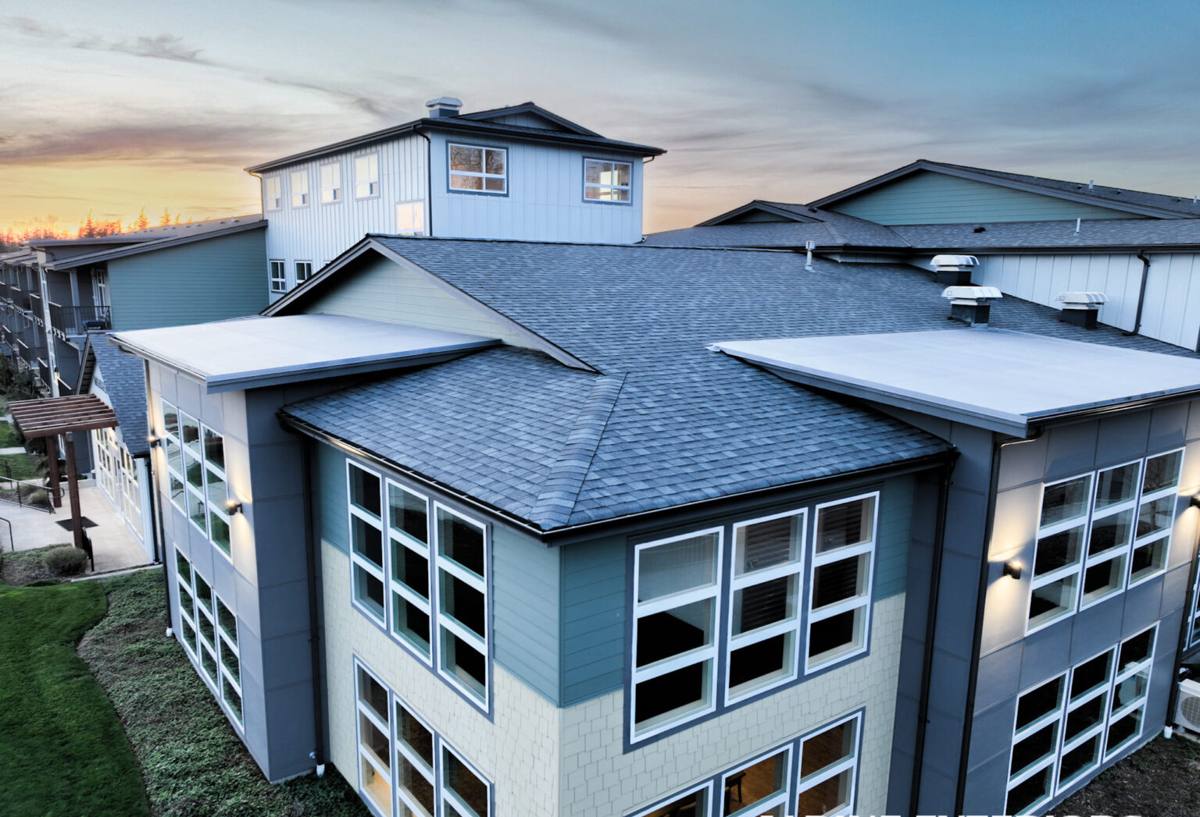
What Coastal Whatcom County Weather Does to a Roof
Salt Air and Metal Fatigue
Salt in the air accelerates corrosion on any exposed metal component — flashing, drip edge, fasteners, and vent stacks. A nail or flashing seam that would last decades inland can start showing rust streaks and pinhole leaks much sooner this close to the water. Once a fastener corrodes, it loses grip on the roof deck, and that's often the actual point of failure even when the shingle above it still looks fine.
Driving Rain and Wind-Blown Water
Fairhaven's exposure to storms coming off the Strait means rain doesn't just fall straight down — it gets pushed sideways under shingle edges, around chimney flashing, and into any gap that a calmer climate would never test. Repairs that only address the visible surface, without checking whether water can get up and under an edge, tend to fail again in the next big blow.
Moss, Shade, and Standing Moisture
Western Washington's long wet season, combined with tree cover common in this part of Whatcom County, gives moss and algae months to establish themselves on north- and west-facing slopes. Moss isn't just cosmetic — its root structure lifts shingle edges and holds water directly against the roofing material, which is one of the fastest ways to rot decking and open up a leak path that wasn't there the year before.
Common Roof Repair Issues We See in Fairhaven Homes
- Lifted or cracked shingle tabs along exposed, wind-facing slopes
- Corroded or failing flashing around chimneys, skylights, and roof-to-wall transitions
- Moss and algae growth holding moisture against the roof surface, especially on shaded slopes
- Soft or spongy decking discovered once a leak finally shows up inside the attic or ceiling
- Clogged or undersized gutters backing water up under the roof edge during heavy rain
- Nail pops and fastener corrosion loosening shingles that otherwise look intact
Most of these show up gradually. A homeowner might notice a small ceiling stain, a shingle edge that looks slightly curled, or dark streaking on the roof surface — none of which look urgent on their own, but each one is worth a look before the next wet season.
What a Correct Roof Repair Actually Involves
Real Diagnosis Before Any Patching
A roof repair done right starts with figuring out the actual water path, not just covering the spot where the stain shows up inside. Water often travels along the underlayment or decking before it drips through the ceiling, so the visible leak location and the actual entry point can be several feet apart. We check the roof surface, the flashing details, and — where accessible — the attic side before deciding what needs to happen.
Matching Materials, Not Just Colors
A patch that doesn't match the surrounding shingle's age, exposure, and granule wear will shed water differently than the material around it, which can create a new weak point instead of solving the old one. We aim to match not just appearance but also how the repair section will perform against the same wind and moisture the rest of the roof already handles.
Fastening and Flashing Done for This Climate
Given the corrosion risk from salt air, we pay particular attention to fastener quality and flashing details on coastal Whatcom County jobs — this is where a rushed repair tends to fail first, often within a season or two, while a properly detailed one holds up for years.
Repair or Replace? How We Help You Decide
Not every roof problem in Fairhaven calls for a full repair — and not every roof issue can be solved with a repair either. The honest answer depends on the roof's age, how widespread the damage is, and what's actually underneath the shingles once we can see it. Here's how we generally think about it:
| Situation | Repair Usually Makes Sense | Replacement Worth Considering |
|---|---|---|
| Roof age | Under roughly 12-15 years, otherwise sound | Nearing or past the material's expected lifespan |
| Damage extent | Localized — one slope, one flashing detail, isolated moss patch | Widespread granule loss, multiple leak points, deck damage in several areas |
| Decking condition | Solid, dry, no soft spots | Soft, rotted, or repeatedly re-wetted decking |
| Underlying cause | One-time or fixable issue (a failed flashing, storm damage) | Systemic issue — material failure, chronic moss/moisture across the roof |
We'll tell you plainly which category your roof falls into. If a repair is the honest answer, that's what we'll recommend — a repair-first contractor earns the replacement call later, not the other way around.
Our Roof Repair Process
- Inspection and diagnosis — we walk the roof and check attic access where possible to trace the actual water path, not just the visible symptom.
- Written scope and estimate — you get a clear explanation of what's failing, why, and what fixing it correctly involves, before any work starts.
- Repair the cause, not just the symptom — that means addressing flashing, fastening, or moss/moisture issues alongside any shingle or decking work, so the same failure doesn't return next storm season.
- Clean site work — debris and old material removed, gutters and downspouts checked for interference with the repair.
- Final walkthrough — we show you the completed work and explain any maintenance that will help it last, particularly around moss control given the shade and moisture common in this area.
Materials and Treatments We Consider
Material choice for a repair should match what's already on the roof whenever possible, but there are a few coastal-specific decisions worth understanding upfront:
| Component | Standard Approach | Coastal/Fairhaven Consideration |
|---|---|---|
| Flashing metal | Galvanized steel | We often step up to a more corrosion-resistant metal or coating on salt-exposed slopes |
| Fasteners | Standard roofing nails | Corrosion-resistant fasteners hold up longer against salt air near the water |
| Moss treatment | Manual removal | Combined with zinc or copper strips and gutter/downspout checks to slow regrowth on shaded slopes |
| Underlayment (where exposed) | Standard felt or synthetic | Synthetic underlayment holds up better against the prolonged dampness typical of shaded, moss-prone areas |
We're upfront about the trade-offs of each option — better corrosion resistance and moss-resistant details cost a bit more upfront, but on a roof that faces this much salt air and shade, that extra cost is usually the difference between a repair that lasts and one that reopens in a year or two.
Roof Maintenance Checklist for Fairhaven Homeowners
Between repairs, a little seasonal attention goes a long way in this climate. A few things worth checking yourself, or asking us to check during a service visit:
- Clear moss buildup on shaded slopes before it thickens into a heavy mat
- Keep gutters and downspouts clear so water doesn't back up under the roof edge during heavy rain
- Trim back overhanging branches to reduce shade, debris, and moisture retention on the roof
- Look for streaking, curling, or missing shingle tabs after major windstorms
- Check attic insulation and ventilation — poor airflow traps moisture and accelerates deck rot from underneath
- Have flashing around chimneys and skylights inspected every few years, since that's where salt-air corrosion shows up first
Why Hiring a Crew That Already Works in Fairhaven Matters
A roof repair contractor who works this specific stretch of Whatcom County regularly already knows which details fail first in this climate — which flashing points corrode, which slopes hold moss longest, and which repairs from other contractors tend to come back as leaks a year or two later. That local pattern recognition is the difference between a repair that treats the visible symptom and one that solves the actual cause.
It also means faster, more accurate estimates. We're not learning the area's weather behavior on your roof — we've already seen how salt air, driving rain, and moss season play out on homes nearby, and we bring that knowledge to the diagnosis from the first visit.
Get an Honest Look at Your Roof
If you're dealing with a leak, a soft spot, moss buildup, or just want a second opinion on a repair another contractor recommended, we're happy to take a look. Request a free, no-pressure estimate using the form below, and we'll give you a straight answer on what your Fairhaven roof actually needs.