 Ferndale Siding
 Siding Replacement in Fairhaven: Why the Climate Sets the Rules
Fairhaven sits close enough to the water that its homes take on a different kind of weathering than houses further inland in Whatcom County. Salt-tinged marine air drifts across the neighborhood most of the year, rain arrives sideways as often as it falls straight down, and the mild, damp climate keeps moss and mildew active for a long stretch of the calendar. None of that is unusual for this part of Washington. But it does mean that "siding replacement" in Fairhaven is a different job, with different failure points to check for and different materials to trust, than the same words would mean on a dry-side property.
When we replace siding on a Fairhaven home, we're not just swapping old panels for new ones. We're accounting for how wind-driven rain finds its way into lap joints and trim seams, how salt air quietly degrades fasteners and finishes over years rather than months, and how shaded, tree-covered lots hold moisture longer after a storm passes. Get those factors wrong and a brand-new install can start showing problems years ahead of schedule. Get them right, and the replacement should genuinely outlast what it replaced.
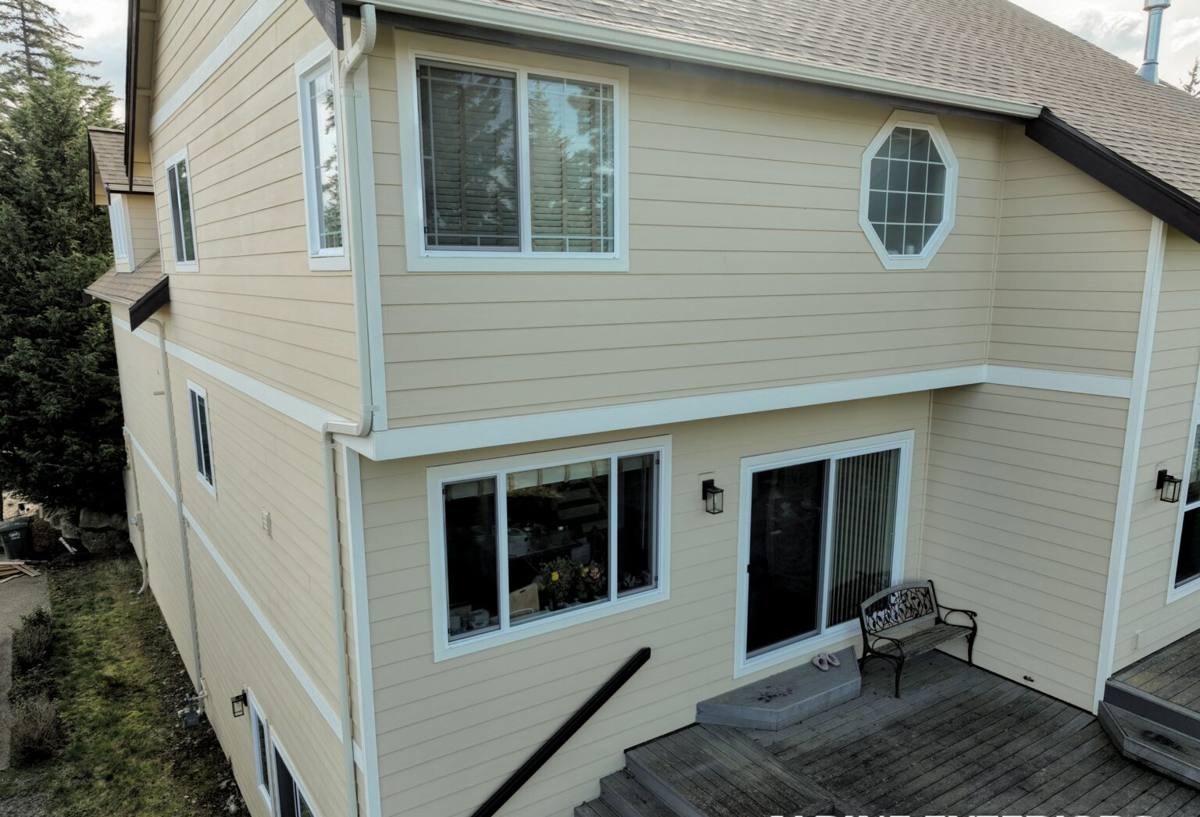
Repair or Full Replacement? Reading the Signs
When a Patch Job Still Makes Sense
Not every siding problem in Fairhaven means starting over. Isolated impact damage, a cracked or missing plank, or trim that's worked loose around a window can often be repaired and matched into the existing wall without a full tear-off, especially if the siding is still relatively young and the rest of the wall assembly is sound underneath.
When It's Time for a Full Tear-Off
Full replacement becomes the honest recommendation when the damage isn't isolated, when moisture has clearly been tracking behind the siding for a while, or when the existing material has simply reached the end of what it can reasonably do. Older wood-based or engineered products that have absorbed years of this climate's moisture cycles are the most common candidates.
- Soft, spongy, or visibly swollen siding, especially at butt joints and lower courses
- Moss or dark staining that returns within weeks of cleaning, particularly on shaded or north-facing walls
- Paint or finish that's peeling, bubbling, or chalking well ahead of its expected life
- Warped, cupped, or separating panels, a common sign of trapped moisture behind engineered wood or older composite products
- Rust streaking from fasteners, or nail heads that have started to pop or back out
- Soft trim or window casing, which often signals water has already reached the sheathing
If you're only seeing one or two of these signs in a contained area, a repair conversation is worth having first. If several are showing up across the house, replacement is usually the more honest answer, and we'll tell you which situation you're actually looking at rather than defaulting to the bigger job.
What a Correct Siding Replacement Actually Involves
Tear-Off and Substrate Inspection
Every proper replacement starts with removing the old siding down to the sheathing, not just overlaying new material on top of a wall we haven't inspected. That's the only way to find out what's actually happening underneath, and in a climate this wet, what's underneath matters as much as what goes back on.
Repairing What's Underneath
It's common to find rot, soft sheathing, or compromised framing behind older siding on homes that have weathered a lot of Fairhaven's rain seasons, particularly around window openings and lower wall sections close to grade. Installing new siding over that kind of damage just hides a problem that keeps getting worse. We repair the substrate before anything new goes up.
House Wrap and Flashing as One System
Wind-driven rain doesn't respect a siding panel on its own; it looks for the seams, laps, and penetrations around it. That means house wrap, window and door flashing, and the siding itself need to work together as a single water-management system, not as separate steps installed in isolation. This is one of the most common places we find corners cut on past installs, and it's usually where water problems start.
Installing James Hardie to Spec
Correct fastening patterns, proper clearance from grade and rooflines, and properly lapped and sealed joints all matter as much as the material choice itself. A rushed installation is one of the most common reasons a genuinely good product ends up performing poorly, and it's why we treat installation detail with the same seriousness as material selection.
Why Every Replacement We Do Uses James Hardie
We install James Hardie fiber cement siding, and only James Hardie, on every replacement we do, including the ones in Fairhaven. That's a professional standard we've settled on after seeing what holds up in a marine-influenced climate like this one, and what doesn't.
- Non-combustible core: Fiber cement doesn't feed a fire the way wood-based siding products can.
- Factory-applied ColorPlus finish: The color coat cures under controlled factory conditions rather than being brushed on at the job site, which holds up far better against fading, chalking, and moisture than field-applied paint.
- Climate-engineered HZ product line: Hardie's HZ5 formulation is built specifically for regions with sustained moisture and freeze-thaw cycling, a closer match to Whatcom County's coastline than a generic national spec.
- Dimensional stability: Fiber cement doesn't swell, cup, or warp the way engineered wood can after repeated wet-season moisture cycles.
- A strong transferable warranty: Backed by the manufacturer, provided the installation follows spec, which is exactly why correct installation matters so much.
LP SmartSide, vinyl, Cemplank, Allura, primed spruce, and cedar are all legitimate products, and plenty of contractors install them well. We made a professional call that in a climate this consistently wet and salt-exposed, standing behind one system we understand completely serves homeowners better than a cheaper option that quietly shifts maintenance risk downstream.
| Material | What It Does Well | Trade-Off in This Climate |
|---|---|---|
| Vinyl siding | Low upfront cost, low maintenance in mild climates | Can warp under sun exposure, crack in a cold snap, and trap moisture behind the panel if house wrap and flashing weren't installed with real care |
| LP SmartSide (engineered wood) | Wood-look appearance, workable installation | Resin-treated strand core is more sensitive to moisture intrusion at cut edges and fastener penetrations than fiber cement |
| Cedar or primed spruce | Natural appearance many homeowners want | Needs ongoing painting or sealing; in a climate this wet, that maintenance schedule tends to slip, shortening real-world lifespan |
| James Hardie fiber cement | Factory-cured finish, non-combustible, climate-engineered HZ5 formulation | Higher material cost; performance depends on correct installation to spec |
Our Replacement Process, Start to Finish
- On-site assessment: We walk the property in person, check the current siding, trim, and any visible moisture damage, and talk through what we're seeing before recommending repair or replacement.
- Written scope and proposal: A clear breakdown of the work, materials, and timeline, so there's no ambiguity about what's included.
- Tear-off: Removal of the existing siding down to the sheathing, with debris hauled and the site kept reasonably contained throughout.
- Substrate inspection and repair: Any rot, soft sheathing, or compromised framing gets addressed before new material goes up.
- House wrap and flashing: Installed or repaired as one integrated water-management system around every window, door, and penetration.
- Hardie installation: Fastened, lapped, and sealed to manufacturer spec, with attention to clearance from grade and rooflines.
- Trim, caulking, and final details: The finish work that determines how clean the job looks and how well the seams shed water.
- Final walk-through: We go over the finished work with you before calling the job done.
What Drives the Cost of a Fairhaven Siding Replacement
| Factor | What It Affects | Why It Matters Here |
|---|---|---|
| Home age and wall complexity | Total material and labor | Older homes near the water often have more trim detail and roofline intersections where wind-driven rain works its way in |
| Substrate condition | Repair costs before new siding goes on | Years of moisture exposure behind failing siding can rot sheathing and framing before it's visible from the outside |
| Square footage and wall height | Material quantity and access equipment | Multi-story or sloped-lot homes near the bay may need staging or scaffolding |
| Trim and color selection | Material cost and finish longevity | ColorPlus factory finishes outlast field-applied paint against salt air and UV exposure |
| Site access and slope | Labor time and setup | Sloped terrain common near Fairhaven can add staging time and complicate material staging |
Real numbers depend on the specific house and what we find once tear-off starts, which is why we walk the property and give you a written scope before any work begins, rather than pricing off square footage alone.
What to Expect During the Project
A full replacement is disruptive by nature, but knowing what's coming makes it manageable. A few things are worth planning around:
- Expect exterior noise and some debris staging during tear-off and installation
- Clear a path around the house for equipment and material staging where possible
- Move or cover outdoor furniture, plants, and anything fragile close to the walls
- Ask about scheduling flexibility, since Whatcom County's wetter months can shift timelines
- Expect a walk-through at the end where you can flag anything before we consider the job complete
Weather is the biggest variable on timing. Sustained rain can pause exterior work, particularly during tear-off when the wall is temporarily open, so we plan around the forecast rather than pushing through conditions that would risk trapping moisture behind new work.
Why Hiring a Crew That Already Works Fairhaven Matters
A crew that already does this work in and around Fairhaven has already seen what this specific stretch of coastline does to a house over time. That's not a small thing. It means fewer surprises during tear-off, better judgment about where extra flashing detail is worth the time, and a realistic sense of how sloped lots and mature landscaping near the water affect drainage and drying time around the wall. A contractor who mostly works dry-side or inland jobs may install a technically correct system that still wasn't built with this coastline's rain and salt exposure in mind. Local experience shows up less in the sales pitch and more in the details you don't see once the wall is closed back up.
If your Fairhaven-area home is due for a siding replacement, or you're not sure yet whether repair or full replacement is the right call, we're glad to walk the property and give you a straight, no-pressure assessment. Use the form below to request a free estimate.