 Ferndale Siding
 Point Roberts Takes More Weather Than Most Whatcom County Homes
Point Roberts sits on its own peninsula, wrapped by Boundary Bay and the Strait of Georgia on three sides. That waterfront exposure is part of what makes the area special, and it's also why siding here works harder than siding on a typical inland home elsewhere in Whatcom County. Salt-laden air moves off the water and settles on exterior walls year-round. Storms roll in with driving, wind-blown rain instead of straight-down rain, which pushes moisture into laps, seams, and trim in ways a sheltered inland wall never has to deal with. And because so much of the peninsula stays shaded and damp for long stretches of the year, moss and algae get a real head start on any surface that holds moisture.
None of this is a reason to avoid siding your home well — it's a reason to be deliberate about the material and the installation. We install James Hardie fiber cement exclusively, and on a property like this, that choice matters more than it would on a drier, more sheltered lot inland.
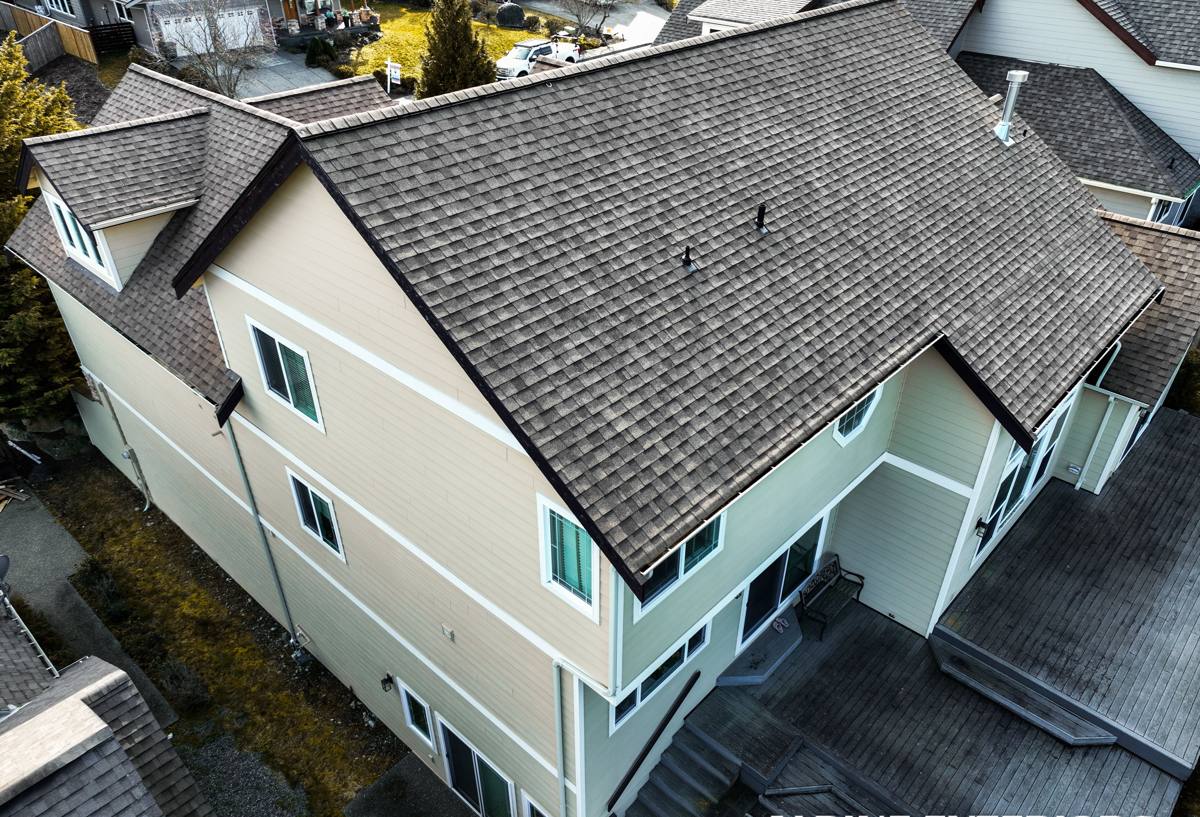
Why We Recommend James Hardie for This Exposure
Fiber cement is a mix of Portland cement, sand, and cellulose fiber, pressed and cured into a dense, stable board. It doesn't absorb and swell with water the way wood-based siding does, it won't rust or pit the way some metal-faced products can in salt air, and it's non-combustible. On a peninsula where wind-driven rain and salt spray are constant background conditions rather than occasional weather events, those material properties are the difference between siding that ages gracefully and siding that needs constant attention.
Climate-Engineered HZ5 Formulation
James Hardie manufactures different product formulations for different climate zones across the country. The Pacific Northwest falls under Hardie's HZ5 engineering, built specifically for regions with sustained moisture, moderate temperatures, and high humidity rather than the freeze-thaw extremes or desert heat other zones deal with. That's a meaningfully different product than what gets installed in Arizona or the upper Midwest, and it's the formulation we use on every job in this area, Point Roberts included.
ColorPlus Factory Finish
Hardie's ColorPlus finish is baked on in a controlled factory environment rather than sprayed or brushed on site. In a marine climate, that matters: a factory-cured finish resists the fading, chalking, and moisture intrusion at the paint film that a field-applied coat is more prone to over time, especially with salt air working on it continuously. Less repainting means fewer maintenance cycles and fewer chances for water to find its way behind the siding through a compromised paint layer.
What a Correct Installation Involves Here
The product only performs as well as the installation. On an exposed, wet site like this one, a few details matter more than they would on a sheltered lot:
- Proper clearance from grade and hard surfaces so splash-back and standing moisture can't wick into the bottom edge of the siding
- Flashing at every penetration and transition — windows, doors, roof lines, and trim — so wind-driven rain has nowhere to get behind the cladding
- A continuous weather-resistive barrier installed and lapped correctly under the siding, not just present but actually doing its job
- Correct fastener spacing and gapping per Hardie's published installation specs, not a generic "close enough" nailing pattern
- Caulking only where Hardie specifies it — over-caulking traps moisture rather than shedding it, which is a common mistake on wetter sites
Fasteners Matter More in Salt Air
Standard fasteners can corrode faster in a marine environment than they would a few miles inland. We use fasteners rated for the exposure — hot-dip galvanized or stainless, depending on the application — because a corroding fastener eventually telegraphs through the finish and becomes a maintenance problem years down the road. It's a small line item during installation and a real headache to fix later.
Drainage Plane and Airflow Behind the Siding
Given how much rain this area absorbs off the water, we pay close attention to the drainage plane behind the siding — making sure water that does get past the cladding has a clear path down and out rather than pooling against the sheathing. On homes with heavier wind-driven rain exposure, that detail is what keeps a well-installed product performing well for decades instead of just looking good for a few years.
Moss and Algae: The Long Wet Season Problem
Shaded north- and west-facing walls near mature trees or close plantings stay damp longer here than almost anywhere else in the county, and that's exactly the environment moss and algae need to take hold. Bare wood and some painted surfaces give organic growth something to grip and feed on. Fiber cement with a factory finish gives it a much harder time. It's not moss-proof — nothing permanently mounted outside in this climate is — but it holds up dramatically better than the untreated or field-painted wood siding a lot of older homes in the area were built with. Correct roof and wall flashing also plays a role here: runoff concentrated onto one section of wall from a poorly flashed roofline or gutter will grow moss faster than the rest of the house no matter what siding is on it, so we look at the whole water path, not just the siding itself.
How Our Process Works on Point Roberts Jobs
We start with an on-site walk-through to look at the home's exposure — which walls take the worst of the wind and rain, where moisture is already showing up, and what the existing siding and flashing tell us about how the house has weathered so far. From there it's careful removal of the old material, repair of any sheathing or framing damage we find underneath (which is common once old siding comes off a wet-climate home), correct installation of the weather barrier and flashing package, and then the Hardie siding itself, installed to manufacturer spec rather than shortcuts.
Working Across the Border
Point Roberts is only reachable by land through Canada — there's no direct road connection to the rest of Whatcom County. That changes how a siding project gets planned. Materials, tools, and crew all have to be staged and timed around border crossings, and it's not something every contractor wants to deal with on a regular basis. Because we already work this area, that logistics piece is routine for us rather than something we're figuring out on your job for the first time.
James Hardie Product Lines That Fit This Exposure
| Product | Typical Use | Why It Works Here |
|---|---|---|
| HardiePlank Lap Siding | Primary wall cladding | Most common choice; wide color range in ColorPlus, proven track record in wet coastal climates |
| HardiePanel Vertical Siding | Accent walls, modern styling, gable ends | Fewer horizontal laps means fewer joints for wind-driven rain to test |
| HardieShingle | Accent areas, gables, dormers | Traditional shingle look without the moisture absorption of cedar shingle |
| HardieTrim | Corners, window and door casings, fascia | Matched material and finish so trim ages at the same rate as the field siding |
Cost Factors Specific to a Point Roberts Project
| Factor | Why It Affects the Project |
|---|---|
| Border logistics | Material deliveries and crew scheduling have to be planned around crossing times, which affects timeline more than pricing directly |
| Extent of tear-off | Full removal of old siding and any needed sheathing repair adds time versus siding over sound existing substrate |
| Wall exposure | Sides taking the worst of the wind and rain may need more flashing and detail work than sheltered elevations |
| Product line selection | Lap siding, panel, and shingle products carry different material and labor costs per square foot |
| Trim and detail complexity | Homes with more windows, dormers, and roof transitions require more flashing and trim work regardless of siding brand |
We give a specific number after seeing the house in person — broad online estimates rarely hold up once actual exposure, substrate condition, and trim complexity are factored in.
Maintaining Hardie Siding in a Marine Climate
Correctly installed Hardie siding is low-maintenance, not no-maintenance, especially this close to the water. A simple annual routine goes a long way:
- Rinse accumulated salt film off exterior walls, particularly on sides facing the water
- Keep shrubs and trees trimmed back so walls get airflow and sunlight, discouraging moss
- Check caulking at joints and trim once a year and have any cracked or missing sections redone
- Clear moss, leaves, and debris off ledges, trim tops, and anywhere water can pool
- Inspect flashing around windows, doors, and roof transitions for gaps or damage after major storms
Why Hiring a Crew That Already Works Point Roberts Matters
A lot of contractors are hesitant to take on jobs here simply because of the border logistics, and that means some homeowners end up with crews who are learning the area's quirks on their dime. We already know how to plan material staging and scheduling around the crossing, we know how differently a waterfront-exposed wall ages compared to a sheltered one a few miles inland in Ferndale, and we know which installation details actually matter for a house that takes this much salt air and driving rain. That familiarity shows up in fewer surprises during the project and in siding that's detailed correctly for the exposure it's actually going to face for the next several decades.
If you're planning a siding project on Point Roberts, we're happy to come take a look and walk the property with you. There's no cost and no pressure — just a straight assessment of what your home needs and what correct James Hardie installation would look like for your specific site. Use the form below to request a free estimate.