 Ferndale Siding
 Fiber Cement Siding for Nooksack Homes
Nooksack sits inland from Ferndale, out toward the eastern edge of Whatcom County along the Nooksack River, closer to the foothills of the Cascades than to open saltwater. That difference in geography matters for siding. Homes here see a somewhat different mix of weather than a waterfront property near Ferndale or Bellingham does — less direct salt spray, but more river-valley humidity, more fog that settles into the bottomland overnight, and cold air draining down off the foothills in winter that a coastal lot rarely deals with. The broader pattern that shapes exterior work across Whatcom County still applies here: driving rain that gets pushed sideways into a wall more often than it falls straight down, and a moss season that runs long because the valley floor holds onto moisture instead of shedding it quickly. We work in Nooksack and the surrounding agricultural communities regularly, and this page is about one thing specifically: what it takes to get fiber cement siding installed correctly on a home in this part of the county.
We install James Hardie fiber cement siding exclusively, and for a Nooksack property dealing with this combination of driving rain, valley dampness, and a long wet season, it's the material we recommend without hesitation.
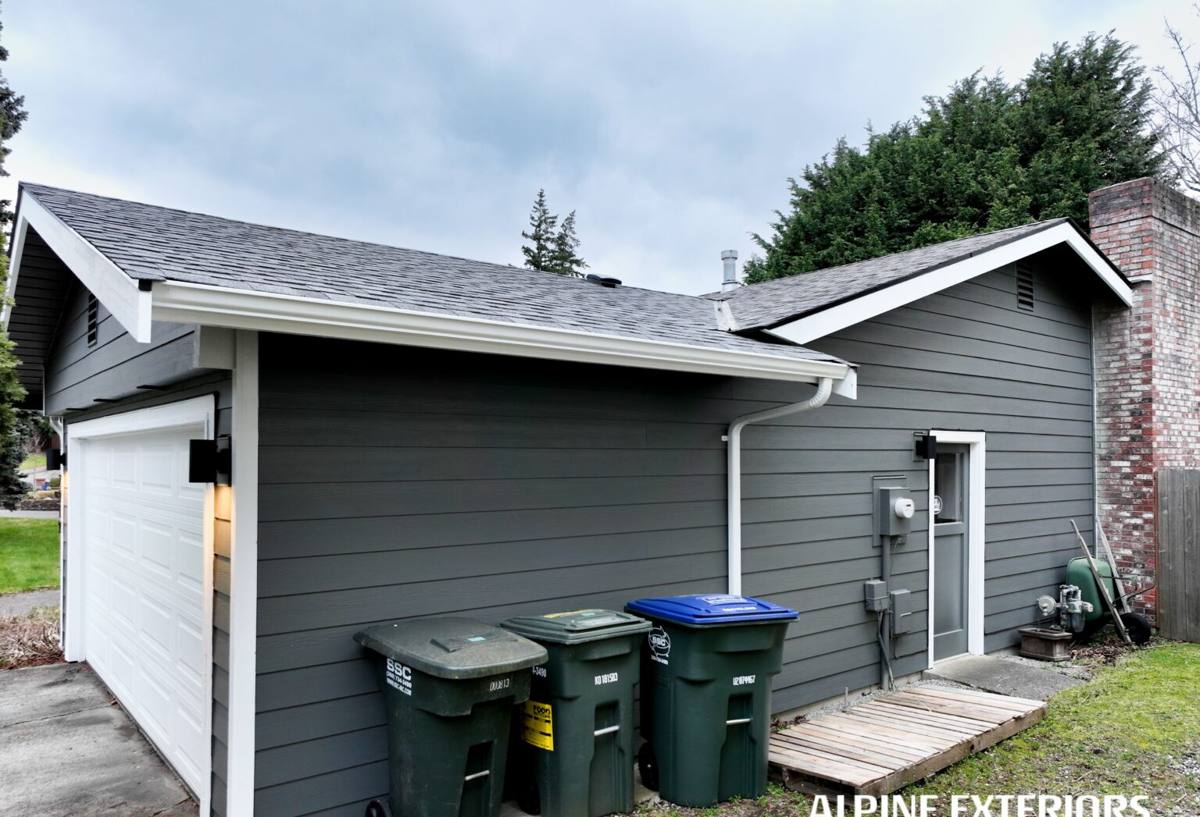
What the Nooksack Climate Does to Siding
Driving Rain and Wind-Driven Moisture
Storm systems moving through Whatcom County don't always drop rain straight down. Wind pushes it sideways into lap joints, trim seams, and anywhere flashing isn't doing its job, and that's a harder test for siding than a simple rainfall total suggests. Nooksack's open valley terrain doesn't offer much in the way of windbreaks, so wind-driven rain reaches walls here about as directly as it does closer to the water, even though the salt content in that moisture drops off the farther a property sits from the coast.
River Valley Humidity and Fog
Being close to the Nooksack River and sitting low in the valley means mornings here often start with fog that lingers longer than it would on higher, drier ground. That extra humidity keeps siding, trim, and window sills damp for more hours of the day than a home on a hillside lot would see, and materials that don't handle sustained dampness well tend to show it first in swelling, soft spots, or a finish that fails well ahead of schedule.
Freeze-Thaw Cycling Off the Foothills
Cold air draining down from the Cascade foothills gives Nooksack more frequent hard frosts than milder, closer-to-the-water parts of the county see. When moisture that's worked its way into a porous or poorly sealed siding material freezes, it expands, and that expansion accelerates cracking and material failure faster than a purely wet-but-mild climate would.
A Long Moss and Mildew Season
Valley humidity, shaded tree lines along the river, and mild temperatures add up to a moss and mildew season that runs most of the year in this part of the county. It shows up first on north-facing and shaded walls, and it isn't just cosmetic — sustained organic growth holds moisture directly against the wall assembly, which is exactly the condition that leads to hidden rot if it isn't cleaned off and addressed.
Fiber Cement vs. the Alternatives Here
Every siding material handles Nooksack's mix of valley humidity, driving rain, and freeze-thaw a little differently. The table below reflects what we've seen matters most for homes in this specific setting, not a generic pros-and-cons list.
| Factor | Vinyl | Engineered Wood | Fiber Cement (Hardie) |
|---|---|---|---|
| Moisture and rot resistance | Doesn't rot, but seams and J-channels trap water against the wall | Vulnerable if the protective coating is breached or fasteners aren't sealed correctly | Doesn't absorb moisture into its core; engineered for wet climates |
| Freeze-thaw performance | Can become brittle and crack in hard frost | Swelling from trapped moisture gets worse with repeated freeze cycles | Dimensionally stable through freeze-thaw when installed to spec |
| Wind and impact durability | Can crack, warp, or blow off in sustained wind exposure | Reasonable, but edge and end-cut damage is a common failure point | Dense, rigid material that holds up well to wind and debris impact |
| Finish longevity | Color is mixed into the material but fades and chalks over time | Site-applied or factory-primed finishes need repainting on a shorter cycle | Factory-applied ColorPlus finish holds color far longer than field-applied paint |
| Fire resistance | Petroleum-based product; not non-combustible | Wood-based core; not non-combustible | Non-combustible fiber cement core |
None of these materials are without their fans. But for a property that sits low, stays humid, and takes a real freeze a few times most winters, fiber cement is the material that best matches what the site actually demands.
Why James Hardie Is What We Install
We install one siding system, and it's Hardie fiber cement — nothing else. We don't put LP SmartSide, vinyl siding, Cemplank, Allura, primed spruce, or cedar on a home. Every one of those products has a place in the broader market and homeowners who are satisfied with them elsewhere. Our decision to standardize on Hardie is a professional judgment call about what performs best under the conditions we see repeatedly in Whatcom County, and it comes down to a handful of specific things:
- Non-combustible core: Fiber cement doesn't feed a fire the way wood-based or wood-derived siding products can, which matters for both household safety and insurance underwriting.
- Factory-applied ColorPlus finish: The color is baked on under controlled conditions instead of brushed on in the field, so it holds up against fog, humidity, and UV far longer than site-applied paint.
- Climate-engineered HZ5 formulation: Hardie's HZ5 product line is built for regions with sustained moisture exposure and freeze-thaw cycling, which is a solid match for a Nooksack property's valley setting.
- Dimensional stability: Fiber cement doesn't swell, cup, or warp through repeated wet-season moisture cycles the way engineered wood siding can.
- Strong transferable warranty: Hardie backs its products with a real warranty structure, provided the installation follows spec, which gives homeowners actual protection instead of a marketing line.
What a Correct Installation Involves
Fastening and Clearances
Correct fastening patterns, proper clearance from grade, deck surfaces, and rooflines, and the right nail or screw spacing aren't optional details — they're what keeps a fiber cement wall performing the way it's designed to. On a Nooksack property, where wind-driven rain and valley humidity are both in play, cutting corners on fastening spec is the kind of shortcut that shows up as a callback within a season or two rather than years down the road.
Flashing, Joints, and Water Management
Joints need to be lapped and properly sealed rather than just butted together and caulked over. Housewrap and flashing have to actually integrate with the siding system — overlapping in the right direction, tied into window and door openings correctly — instead of relying on caulk to cover gaps that shouldn't be there in the first place. On a home that sits in fog and dampness more hours of the day than a drier inland lot, a flashing detail that's "close enough" tends to get exposed fast.
Our Process, Start to Finish
- Walk the home and assess the current siding, trim, and any signs of hidden moisture damage before recommending anything.
- Decide honestly between a repair, a partial re-side, or a full tear-off based on what the substrate actually looks like once we're into it.
- Prep the wall with correct housewrap and flashing before a single piece of siding goes up.
- Install Hardie fiber cement to manufacturer spec — fastening pattern, clearances, joint treatment, all of it.
- Finish trim, corners, and caulk lines with the same attention as the field siding, since that's where most callbacks originate.
- Walk the finished job with the homeowner before we consider it done.
Cost Factors for a Nooksack Siding Project
| Factor | What It Affects | Why It Matters Here |
|---|---|---|
| Tear-off vs. overlay | Labor scope and substrate access | Tear-off reveals hidden moisture damage that's common under older siding in humid valley conditions |
| Substrate condition | Repair costs before new siding goes on | Long-standing dampness or fog exposure can rot sheathing and framing behind older siding |
| Trim and detail complexity | Labor time for corners, window trim, and joints | More trim detail means more places water can get in if it's rushed |
| Site access and terrain | Equipment and staging needs | Rural valley properties can have longer driveways, softer ground, or limited staging area |
| Plank profile and color | Material cost | Factory ColorPlus finishes and certain profiles carry a different price point than standard options |
Exact costs depend on the specific property and its condition, which is why we walk the home in person before giving a real number instead of quoting off a generic price sheet.
Signs Your Siding Needs Attention
- Moss or dark staining that comes back quickly after cleaning, especially on shaded or north-facing walls
- Soft or spongy siding low on the wall or around window and door trim
- Visible gaps at seams, corners, trim joints, or window flashing
- Paint or finish that's chalking, peeling, or fading unevenly
- Cracked, warped, or missing siding sections after a windstorm
- Persistent musty smell or condensation on interior walls that back up to exterior siding
- Rising energy bills that may point to a wall assembly that's no longer sealing properly
Why a Local Crew Matters Here
A crew that works Nooksack and the surrounding eastern Whatcom County communities regularly understands the difference between a valley property and a coastal one — not from a spec sheet, but from having installed and repaired siding on both. That experience shapes real decisions on install day: which walls stay damp longest through the morning fog, where the extra fifteen minutes on flashing actually pays off, and which fastening details matter more on a low-lying, humid site than they would closer to the water. Ferndale is a short drive from Nooksack, and we treat that proximity as a reason to know this area well, not as an excuse to apply a one-size-fits-all approach built for a different part of the county.
What to Expect When You Call Us
A walk-through of the home to look at the current siding and trim condition, an honest read on whether you're looking at a repair or a full re-side, a clear explanation of why we recommend James Hardie for a property in this setting, and a written estimate with no pressure to sign on the spot. If your Nooksack home needs new siding or just an honest second opinion on what's happening behind an aging wall, reach out using the form below to schedule a free, no-pressure estimate.