 Ferndale Siding
 Siding Built for Kendall's Corner of Whatcom County
Kendall sits inland from the coast but doesn't escape what Whatcom County weather does to a house. Homes here get the same soaking, months-long rainy stretches as the rest of Ferndale, plus a heavier moss and mildew load thanks to tree cover and shaded north walls that never fully dry out between storms. Add in the salt-tinged air that rides inland off Bellingham Bay and the Strait on a west wind, and you've got a climate that is genuinely hard on exterior materials — not in a dramatic way, just a slow, relentless one. Paint chalks and peels early. Caulk joints fail. Anything with exposed wood grain starts to swell, cup, or rot at the edges within a handful of seasons if it isn't maintained perfectly.
We install James Hardie fiber cement siding exclusively, and Kendall is a neighborhood where that decision matters more than most. This page covers what fiber cement siding needs to do in this specific area, what a correct installation actually involves, and why using a crew that already works this part of the county — rather than someone from out of the area — changes the outcome.
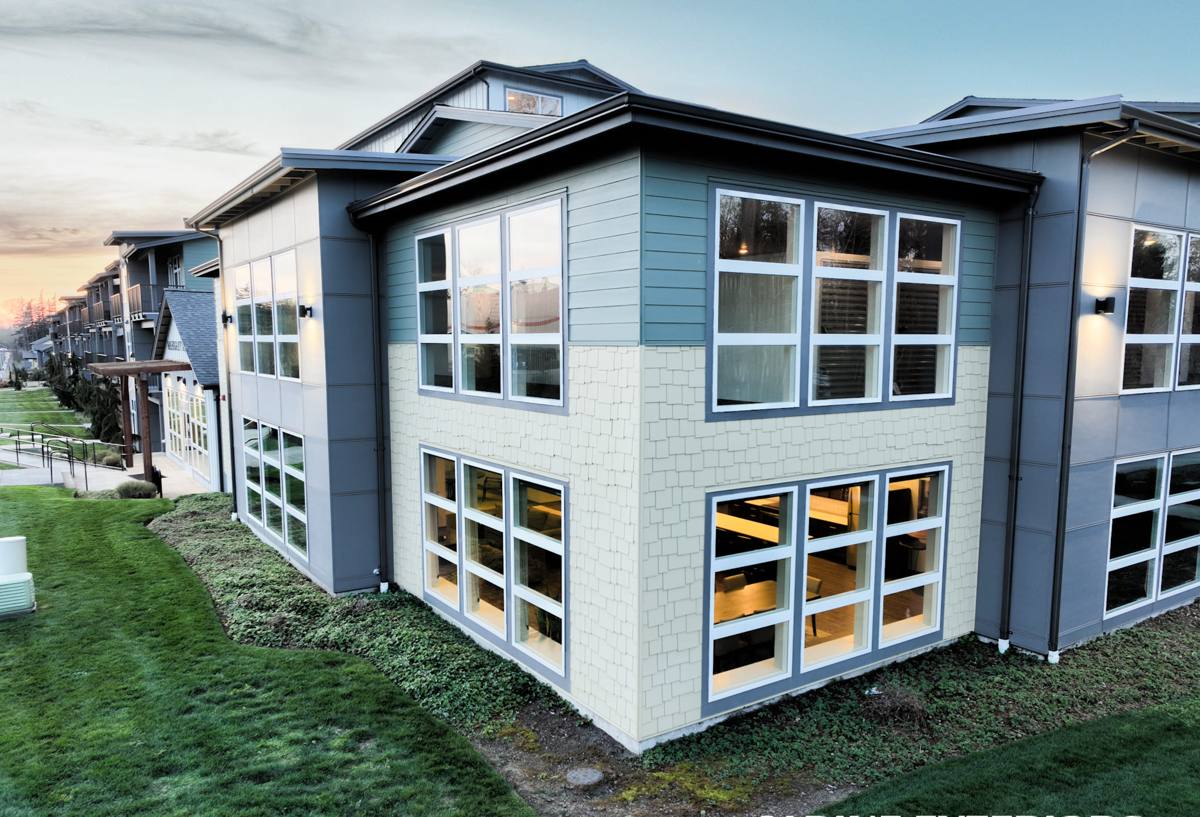
What Kendall's Climate Actually Does to Siding
Driving rain and wind-driven moisture
Whatcom County storms don't just drop rain straight down — winter systems push rain sideways into walls, especially on west- and southwest-facing elevations. That means the siding assembly has to manage water that's actively being forced at the wall, not just water that's falling on it. Weather-resistant barrier, flashing details, and proper drainage gaps behind the siding matter as much as the siding material itself.
Extended moss and mildew season
Because Kendall has more tree canopy and shade than open coastal lots, siding here stays damp longer after a storm passes. That extended dry-out window is exactly what moss, algae, and mildew need to take hold. Once organic growth gets a foothold on a porous or poorly finished surface, it holds moisture against the material and accelerates whatever damage is already happening underneath.
Salt-influenced air
Kendall isn't beachfront, but Whatcom County's marine air still reaches inland on prevailing winds, especially in fall and winter. Salt-laden moisture speeds up corrosion on fasteners and trim hardware and adds another reason to use factory-finished, engineered materials rather than field-painted wood products that depend entirely on the homeowner's maintenance schedule to hold up.
Why We Only Install James Hardie
We get asked regularly why we don't offer LP SmartSide, vinyl, or cedar as options. It comes down to what actually holds up under Whatcom County's specific combination of constant moisture, moss pressure, and salt air over a 20-30 year timeline.
- Vinyl is affordable and low-maintenance, but it's a thin, flexible material that can warp in temperature swings, crack in impacts, and never fully seals at seams — water gets behind it more easily than homeowners expect.
- LP SmartSide and other wood-strand products perform reasonably when installed and maintained to spec, but they're an engineered wood product at the core — any breach in the factory coating (a nail pop, a saw cut left unsealed, a corner that gets knocked) opens a path for moisture into a wood-based substrate. In a moss-heavy, high-moisture zone like Kendall, that's a real risk over time.
- Cedar and primed spruce look great initially but are the highest-maintenance option by far — they need re-staining or repainting on a cycle, and any lapse in that maintenance shows up fast as checking, cupping, or rot, especially on shaded elevations that don't get sun to dry them out.
James Hardie fiber cement is cement, sand, and cellulose fiber — non-combustible, dimensionally stable, and immune to the rot and insect issues that come with wood-based sidings. Its ColorPlus factory finish is baked on under controlled conditions, which holds color and resists fading and chipping far better than field-applied paint, and it's backed by a strong transferable warranty. For a neighborhood dealing with year-round dampness and shade, that combination of moisture resistance and low ongoing maintenance is the deciding factor.
Hardie Product Lines Suited to Kendall
| Product | Best Use | Why It Fits Kendall |
|---|---|---|
| HardiePlank HZ10 lap siding | Primary wall siding | Engineered for the Pacific Northwest's wet climate zone; resists moisture-driven damage on shaded, rain-exposed walls |
| HardieTrim boards | Corners, window/door trim, fascia | Fiber cement trim avoids the rot that plagues wood trim in damp, low-sun areas |
| HardiePanel vertical siding | Accent walls, gables | Clean modern look with the same moisture and moss resistance as the lap siding |
| HardieShingle siding | Accent/architectural detail | Adds texture without introducing a wood-based material into a high-moisture zone |
What a Correct Installation Involves
Fiber cement siding is only as good as the assembly behind it. Most siding failures we see on older Kendall homes trace back to installation shortcuts, not the material itself. A correct job includes:
Water management behind the siding
A properly lapped weather-resistant barrier, correctly integrated window and door flashing, and a drainage gap or rainscreen strategy that lets any moisture that gets behind the siding drain and dry out. This is the single most important part of the job in a climate like ours — it's invisible once the siding goes up, but it determines whether the wall assembly survives 30 years of Whatcom County rain or starts rotting from the inside in year eight.
Fastening and joint detail to spec
James Hardie publishes specific fastener patterns, nail types, and clearances for HZ10 zone installations. Butt joints need to be properly flashed or caulked with the right sealant, and every cut edge needs to be sealed with touch-up paint to maintain the factory moisture protection. Skipping this step is the most common way a Hardie installation ends up with problems it shouldn't have.
Clearances that account for moss and moisture
Siding needs proper clearance from grade, roofing, and decks — typically several inches minimum — so it isn't sitting in standing water or constant splash-back. In a moss-prone area like Kendall, we also pay attention to keeping siding clear of vegetation and shaded ground cover that traps moisture against the wall longer than necessary.
Caulking and sealant at penetrations
Every penetration — vents, hose bibs, light fixtures, meter bases — is a place water can find its way in if it's not sealed correctly with a compatible, quality sealant. These small details add up over a full house, and they're where a rushed job shows itself first.
Our Process for a Kendall Project
- On-site assessment — we walk the property, check for existing moisture damage, moss buildup, and problem areas (especially shaded north and west walls), and evaluate the current wall assembly.
- Free estimate and product selection — we go over which HardiePlank profile, trim, and ColorPlus color fit the home and the neighborhood, along with a clear written scope and cost.
- Tear-off and wall prep — old siding comes off, sheathing is inspected and repaired if needed, and any moisture damage found during tear-off is addressed before anything new goes up.
- Weather-resistant barrier and flashing — the water management layer goes in first and gets inspected before siding installation starts.
- Hardie installation to manufacturer spec — correct fastening, clearances, joint treatment, and sealed cut edges throughout.
- Final walkthrough — we go over the finished work with the homeowner and confirm everything meets spec before calling the job done.
Why a Crew That Already Works Kendall Matters
Siding installation isn't one-size-fits-all across a county. A crew that already works in and around Kendall knows which elevations on a typical local lot see the least sun, where moss tends to build up fastest, and how local tree cover and terrain affect drying time after a storm. That local pattern recognition shows up in small decisions — extra attention to a shaded gable end, a slightly more conservative clearance from grade, tighter sealant work around penetrations — that a crew unfamiliar with the area might not think twice about. It also means faster response if a warranty question or a minor issue comes up later, instead of trying to track down a contractor who did one job in the neighborhood and moved on.
Signs Your Kendall Home May Need New Siding
- Paint that's peeling, bubbling, or chalking faster than a normal repaint cycle would explain
- Soft spots or visible warping when you press on wood siding, especially on shaded walls
- Persistent moss or algae staining that comes back quickly after cleaning
- Gaps opening up at seams, corners, or trim joints
- Visible rot or discoloration around window and door trim
- Rising heating bills that may point to a compromised wall assembly behind the siding
Cost Factors for a Kendall Fiber Cement Project
| Factor | How It Affects the Job |
|---|---|
| Tear-off scope | Full removal of old siding vs. installing over existing sheathing changes labor and disposal costs |
| Wall condition | Rot or moisture damage found during tear-off adds repair work before new siding can go on |
| Product line and profile | HardiePlank lap siding, panel siding, and shingle siding carry different material and labor costs |
| Trim and detail work | Corner boards, window trim, and architectural accents add labor time |
| Home size and elevation complexity | Multi-story homes, steep rooflines, and complex gables take longer to access and finish correctly |
| Color selection | ColorPlus factory finishes vs. field painting affect both cost and long-term maintenance |
We give every Kendall homeowner a written, itemized estimate after an in-person assessment — there's no way to give an honest number without seeing the actual condition of the walls first.
Maintenance After Installation
One of the real advantages of fiber cement in a climate like this is how little ongoing work it needs compared to wood siding. That said, a little basic care goes a long way:
- Rinse the exterior periodically to keep moss and algae from establishing, especially on shaded walls
- Keep vegetation and mulch beds trimmed back from direct contact with the siding
- Check caulking at trim joints and penetrations every year or two and touch up as needed
- Touch up any cut edges or nicks with matching paint to maintain moisture protection
- Keep gutters clear so overflow isn't running down the wall face during heavy storms
None of this compares to the repainting and re-staining cycle wood siding demands — it's occasional upkeep, not a maintenance schedule you have to plan around.
If your Kendall home's siding is showing its age or you're planning ahead for a replacement, we're happy to come take a look. The estimate is free, there's no pressure, and you'll get a straight answer about what your home actually needs.