 Ferndale Siding
 Metal Roofing Built for Kendall's Climate
Kendall sits in a stretch of Whatcom County where heavy tree cover, damp air moving in off the Salish Sea, and long stretches of gray, wet weather all combine to put real stress on a roof. Homes out here tend to sit on wooded lots with plenty of shade, which means less sun exposure to dry a roof out between storms. That combination of moisture and shade is exactly what shortens the life of a standard asphalt shingle roof and exactly what a properly installed metal roof is designed to handle.
We install and repair metal roofing throughout Ferndale and the surrounding Whatcom County communities, including Kendall, and we've built our process around the specific way roofs fail out here: driving rain that gets pushed sideways under poorly flashed edges, moss and organic debris that hold moisture against a roof surface for weeks at a time, and wind gusts that find every loose fastener eventually. A metal roof done right addresses all three. A metal roof done wrong just fails in different, more expensive ways.
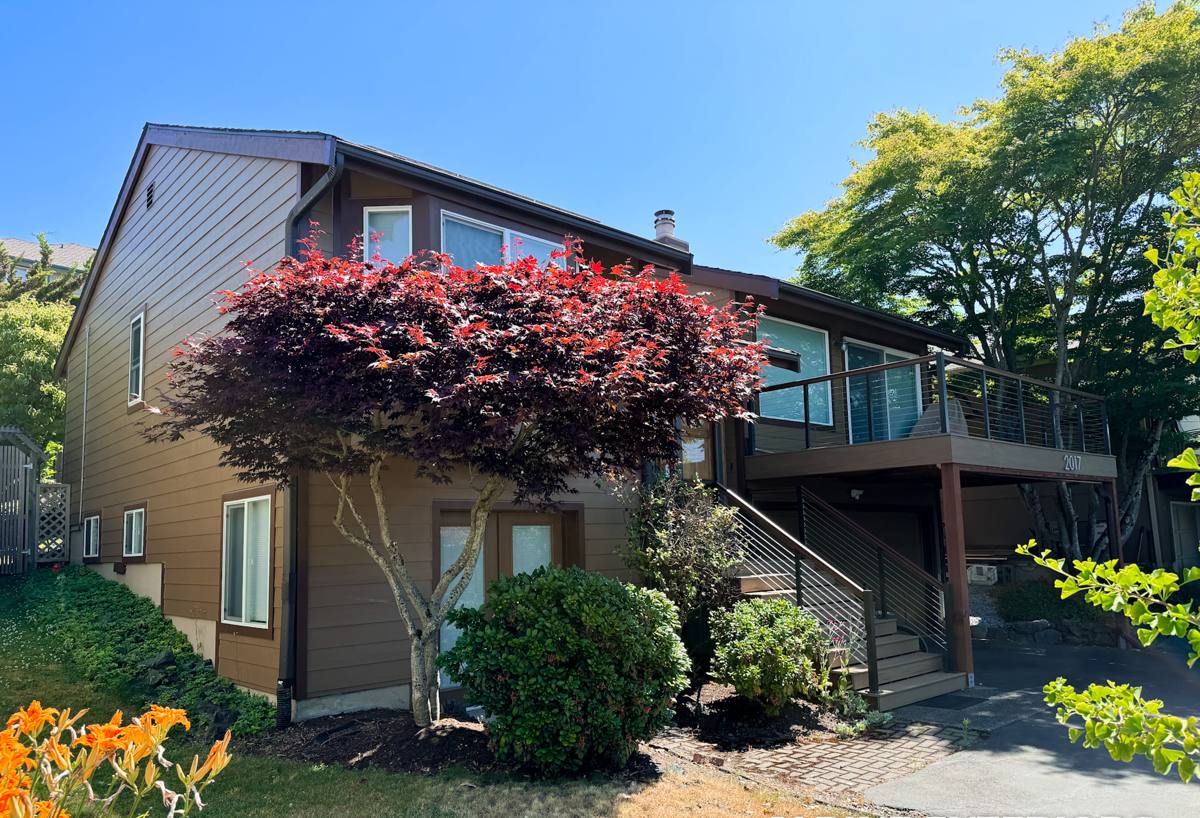
What a Correctly Installed Metal Roof Actually Involves
"Metal roofing" covers a wide range of quality, and the difference between a roof that lasts decades and one that leaks in five years almost never comes down to the metal itself. It comes down to what's underneath it and how it's fastened, flashed, and vented.
Underlayment and moisture barrier
Metal panels are the visible layer, but the underlayment beneath them is what actually keeps a home dry during wind-driven rain, ice, or a blocked gutter backing water up under the panel edge. In a wet climate like ours, we use synthetic or self-adhered underlayment rated for the exposure the roof will see, with extra protection at eaves, valleys, and any low-slope transitions where water lingers longest.
Fastening method
Exposed-fastener panels are held down with screws driven through the face of the panel; standing seam panels are held down with concealed clips that let the metal expand and contract without stressing the fastener holes. Both systems work when installed correctly, but exposed fasteners rely on rubber washers that harden and shrink over time — meaning the roof's watertightness depends on someone re-torquing or replacing those fasteners down the road. We're upfront with Kendall homeowners about that trade-off before they choose a system.
Flashing and penetrations
Chimneys, skylights, vent stacks, and roof-to-wall transitions are where the overwhelming majority of metal roof leaks actually start — not in the open field of panels. Correct flashing detail at every penetration, plus proper valley and ridge treatment, is what separates a roof that sheds our regional rain for 40-plus years from one that needs chronic patching.
Ventilation
A metal roof installed over a poorly ventilated attic can trap moisture underneath it, leading to condensation, rot in the roof deck, and premature failure of the underlayment — problems that show up from the inside before they're visible from the ground. We check attic ventilation as part of every metal roofing project, not as an upsell.
The Moss and Moisture Problem Under Kendall's Tree Cover
Whatcom County's mix of shade, rainfall, and mild temperatures is close to ideal growing conditions for moss, and Kendall's wooded, low-traffic lots see more of it than roofs in more open, sun-exposed parts of Ferndale. Moss itself doesn't damage steel or aluminum panels the way it can undermine asphalt shingles, but it still causes problems on a metal roof: it traps organic debris and moisture against seams and fasteners, holds water in valleys longer than the roof was designed for, and can hide the early signs of a fastener backing out or a seam opening up.
A properly installed metal roof with the right panel profile sheds moss far more effectively than shingles because there's no rough, granular surface for spores and debris to grip. Standing seam in particular gives moss very little to hold onto on the open panel field. Where moss does gather — usually near valleys, under overhanging branches, or on north-facing slopes that stay shaded most of the day — routine, gentle cleaning (never pressure washing directly on seams or fasteners) keeps it from becoming a moisture problem instead of just a cosmetic one.
Choosing the Right Metal Roofing System
Not every metal roofing system makes sense for every Kendall property. The right choice depends on roof pitch, budget, how long the homeowner plans to stay in the house, and how much of the panel is visible from the ground.
| System | Best For | Trade-offs |
|---|---|---|
| Standing seam (concealed fastener) | Long-term ownership, steeper roofs, homes with heavy tree cover | Higher upfront cost; fewer maintenance points over the roof's life |
| Exposed-fastener panel | Budget-conscious projects, outbuildings, shops, simpler rooflines | Lower upfront cost; fasteners and washers need periodic inspection and replacement |
| Steel shingle or shake profile | Homeowners who want a traditional roof look with metal's durability | More seams and fastener points than standing seam; installation detail matters more |
We walk Kendall homeowners through this decision on-site, looking at the actual roof — its pitch, its overhangs, how much shade it gets — rather than recommending the same system for every house.
Our Installation Process
- On-site evaluation. We inspect the existing roof deck, ventilation, and any problem areas — valleys, chimneys, skylights — before quoting anything.
- Deck assessment and repair. Metal only performs as well as what it's fastened to. Any soft, rotted, or water-damaged decking gets replaced before a single panel goes on.
- Underlayment installation. Full-coverage underlayment appropriate for our rainfall totals, with reinforced protection at eaves and valleys.
- Panel and flashing installation. Panels are laid and fastened to manufacturer spec, with custom-formed flashing at every penetration and transition rather than generic, one-size-fits-all pieces.
- Final walkthrough. We check fastener torque, seam integrity, and flashing details with the homeowner before calling the job complete.
Repair, Maintenance, and Extending the Life of an Existing Roof
Not every call is a full replacement. A lot of the metal roofing work we do around Kendall is repair and maintenance on roofs that are structurally sound but need attention: a fastener pattern that's loosened over the years, a flashing detail around a chimney that was never sealed correctly, or a section of panel damaged by a fallen branch. Left alone, small issues like these are exactly what turns a repair into a full re-roof — moisture finds the gap, gets under the panel or into the deck, and the damage spreads long before it's visible from the ground.
Routine maintenance for a metal roof in our climate is straightforward but easy to skip: keeping gutters and valleys clear of needles and debris so water actually drains instead of pooling, checking exposed fasteners every few years, and clearing moss buildup before it holds moisture against seams through an entire wet season.
Signs Your Kendall Roof Needs Attention
- Streaking, dark patches, or moss buildup concentrated on shaded or north-facing slopes
- Rust spots or scratches in the finish, especially near fasteners or panel edges
- Fasteners that look raised, backed out, or have cracked or missing rubber washers
- Water stains on interior ceilings or in the attic near valleys or penetrations
- Gutters that overflow or pull away, sending water behind fascia instead of off the roof
- Panels that flex, drum loudly, or seem loose in wind
- Any flashing around a chimney, skylight, or vent that looks caulked-over rather than properly formed
What Drives Cost on a Kendall Metal Roofing Project
Metal roofing costs more upfront than asphalt shingles, but the honest comparison has to account for lifespan and maintenance, not just the install price. A few factors move the number most on projects out here:
| Factor | Why It Matters |
|---|---|
| Panel system chosen | Standing seam runs higher than exposed-fastener panel per square, mainly due to material and labor for concealed clips |
| Roof pitch and access | Steep pitches and limited access around trees or outbuildings add labor time |
| Deck condition | Any rot or soft decking found during tear-off has to be repaired before installation — this is common on older Whatcom County homes |
| Number of penetrations | Chimneys, skylights, and multiple roof valleys each require custom flashing work |
| Tear-off vs. overlay | Removing old roofing versus installing over an existing layer changes both cost and long-term performance |
We give straightforward, itemized quotes so homeowners can see exactly what's driving the price, rather than a single bottom-line number.
Why Hire a Crew That Already Works in Kendall
Kendall isn't downtown Ferndale — the properties tend to be more rural, more wooded, and often set back from the road, which changes how a roofing job gets staged and how moisture and shade actually affect a given roof. A crew that already works this part of Whatcom County knows to check for the moss and debris buildup that's common under heavy tree cover, understands how our rainfall totals and wind exposure affect underlayment and flashing choices, and isn't guessing at how a roof here behaves through a full wet season. That local familiarity shows up in fewer callbacks and a roof that's detailed correctly the first time, not just installed quickly.
If you're weighing a new metal roof, a repair, or just want an honest read on the condition of what's up there now, we're happy to take a look. Reach out for a free, no-pressure estimate using the form below.