 Ferndale Siding
 Roofing on Lummi Island Is a Different Job Than Roofing Inland
Lummi Island sits out in Whatcom County's salt water, and that changes what a roof has to survive. A shingle roof on a home a few miles inland in Ferndale deals with plenty of rain, but a roof on the island takes salt-laden air, wind-driven rain that gets pushed sideways under poorly lapped shingles, and a moss season that runs longer than most homeowners expect. None of that means asphalt shingles are the wrong choice for the island. It means the installation details that get treated as optional elsewhere need to be treated as mandatory here.
We've worked enough roofs out on the island to know the difference between a shingle roof that's built for this exposure and one that was installed the same way you'd install it in a sheltered subdivision. The materials look similar from the ground. The performance over ten or fifteen years is not.
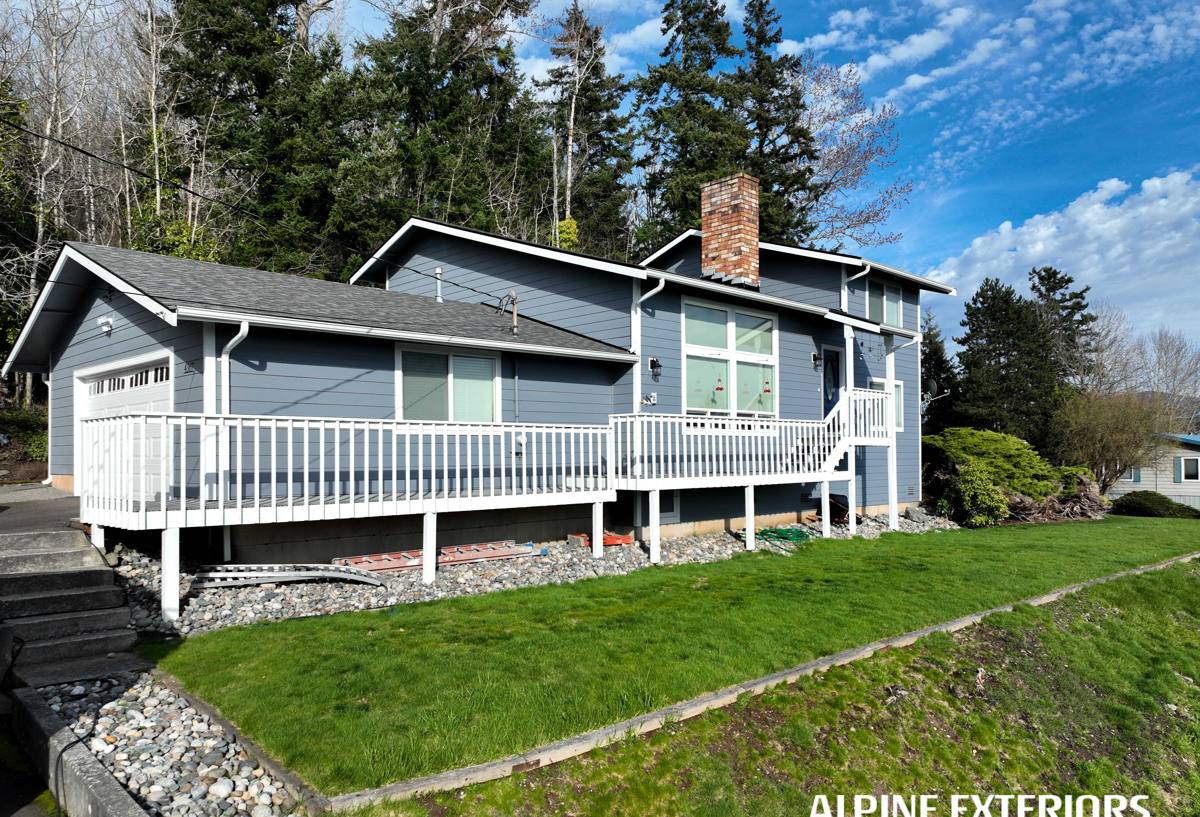
What Salt Air, Driving Rain, and Moss Actually Do to a Roof
Salt Air
Airborne salt doesn't dissolve asphalt shingles, but it accelerates corrosion on everything metal on your roof — nails, flashing, drip edge, and vent stacks. When those components corrode faster than expected, they fail years before the shingles themselves would have worn out. A roof is only as good as its weakest fastener, and on salt-exposed sites that's usually where problems start.
Driving Rain
Wind off the water doesn't just fall on a roof, it pushes rain uphill under shingle laps and around penetrations. Standard shingle coverage assumes rain falls mostly straight down. On exposed elevations facing the water, that assumption doesn't hold, which is why underlayment choice and flashing detail work matter more here than the shingle brand printed on the wrapper.
Moss
Whatcom County's damp, mild winters are already good moss-growing conditions, and shaded or north-facing roof sections on the island hold moisture even longer. Moss isn't just cosmetic — its root structure lifts shingle edges, holds water against the roof deck, and creates the exact conditions that lead to rot and premature granule loss.
What a Correctly Installed Roof Needs on Lummi Island
- Corrosion-resistant fasteners and flashing — standard galvanized components can pit and rust faster in salt air; stainless or heavier-coated hardware holds up longer.
- Full synthetic underlayment, not just felt strips — a complete water-resistant barrier under the shingles protects the deck if wind-driven rain gets past the shingle layer.
- Ice-and-water shield at vulnerable points — valleys, eaves, and around every penetration, not just where code minimums require it.
- Proper attic and roof ventilation — trapped moisture from the inside is just as damaging as rain from the outside, and poor ventilation shortens shingle life regardless of exposure.
- Algae-resistant shingle granules — copper- or zinc-infused granules that resist the moss and algae growth this climate encourages.
- Tight step and counter flashing at every wall and chimney intersection — the most common failure points on any roof, and the first place driving rain finds a way in.
Choosing the Right Shingle for This Exposure
Not every asphalt shingle product is built the same way, and on an exposed island site the difference matters more than it would on a sheltered inland roof. Here's how the common options compare for this specific climate:
| Shingle Type | Wind Resistance | Moss/Algae Resistance | Typical Lifespan Here |
|---|---|---|---|
| 3-Tab Shingles | Lower — smaller nailing area, more edge exposure | Only if algae-resistant granules are specified | Shorter end of the range in this exposure |
| Architectural (Laminate) Shingles | Higher — heavier, more surface bonded to the roof | Widely available with algae-resistant granules | Longer, more consistent performance |
| Impact-Rated Architectural Shingles | Highest rated among asphalt options | Available with algae-resistant granules | Longest, at a higher upfront cost |
For most Lummi Island homes we recommend architectural shingles with an algae-resistant rating and a manufacturer wind rating suited to open, water-facing exposure. It's a middle-ground choice: meaningfully more durable than 3-tab in this climate, without the premium cost of impact-rated products, which make more sense on roofs with specific storm or insurance considerations.
Our Process for Lummi Island Roofing Projects
1. On-Site Assessment
We walk the roof, check the deck condition where accessible, look at existing flashing and ventilation, and note exposure direction — which slopes take the worst of the wind and rain, and which hold moss longest. This tells us where to spend extra attention, not just what to quote.
2. Material and Logistics Planning
Getting a full roofing job's worth of materials and a crew to an island site takes more planning than a mainland job. We schedule deliveries and crew transport around ferry timing so materials arrive when we need them and the job doesn't stall waiting on a return trip. This is one of the most overlooked parts of island roofing and one of the biggest reasons timelines slip when it's handled by a crew that doesn't do it regularly.
3. Tear-Off and Deck Inspection
Once the old roofing is off, we inspect the deck itself. Any soft, delaminated, or moss-damaged sheathing gets identified and replaced before new roofing goes down — covering a compromised deck with new shingles just hides the problem until it's worse.
4. Installation to Exposure-Specific Standards
Underlayment, ice-and-water shield, flashing, and shingle installation follow the standards outlined above, adjusted for which sections of your roof face the water and prevailing wind.
5. Cleanup and Walkthrough
We clear debris and fasteners from the site — important on any job, but especially on an island where hauling matters — and walk the finished roof with you before we consider the job done.
Problems We Commonly Find on Island Roofs
A lot of the roofing calls we get on Lummi Island aren't for brand-new installs — they're for older roofs showing damage that's specific to this exposure. The most common issues:
- Moss buildup at shaded valleys and north slopes, holding moisture against the shingles and deck long after the rest of the roof has dried out.
- Corroded fasteners and flashing on roofs that used standard-grade hardware not rated for salt exposure.
- Lifted or cracked shingle edges on wind-facing slopes, from wind-driven rain working under improperly sealed tabs over time.
- Granule loss concentrated on water-facing elevations, well ahead of the rest of the roof's wear pattern.
- Flashing failures at chimneys and wall intersections, usually the first place a roof actually starts leaking.
Maintenance That Extends Roof Life in This Climate
A well-installed roof still needs upkeep suited to this environment. A few habits go a long way:
- Have moss physically removed rather than just treated — chemical treatments slow growth but don't undo the damage moss has already caused.
- Keep gutters clear so water isn't backing up under the shingle edge, especially during the wetter months.
- Have flashing and fastener condition checked every few years, since corrosion isn't always visible from the ground.
- Trim back overhanging branches where possible — shade is a major driver of how fast moss returns to a given section of roof.
- Address small leaks immediately; on a roof already dealing with moisture from two directions, small problems don't stay small for long.
Why a Crew That Already Works Lummi Island Makes a Difference
Roofing an island home involves logistics that a mainland-only crew simply hasn't had to solve: coordinating material deliveries and crew transport around ferry schedules, planning around weather windows that affect crossing reliability, and knowing which construction and permitting requirements apply to Whatcom County island properties versus the mainland. A crew that already works out here has that logistics problem solved before your project starts, instead of figuring it out — and burning your timeline — on the fly.
There's also a materials-knowledge piece. A crew that regularly roofs salt-exposed, moss-prone homes in this county already knows which fastener grades, underlayment systems, and shingle products hold up here, rather than defaulting to whatever's standard for a typical inland job.
What Affects the Cost of a Lummi Island Roofing Project
| Factor | Why It Matters |
|---|---|
| Roof size and pitch | More surface area and steeper slopes mean more material and labor time |
| Number of tear-off layers | Removing existing roofing layers adds labor and disposal cost |
| Deck repair needs | Moss or moisture-damaged sheathing found during tear-off adds material and time |
| Shingle grade selected | 3-tab, standard architectural, and impact-rated products carry different material costs |
| Flashing and ventilation upgrades | Bringing older flashing or ventilation up to current standards adds scope but reduces future risk |
| Delivery and crew logistics | Ferry-dependent scheduling can affect project timeline and, in some cases, cost |
Every roof is different, and the only way to give you an honest number is to see the roof in person. We'd rather walk your roof and give you a real figure than throw out a range that doesn't hold up once we're up there.
Get a Straight Answer About Your Roof
If you own a home on Lummi Island and your roof is showing moss, aging shingles, or you're just not sure how much life it has left, we're glad to take a look. We'll tell you honestly what we find — whether that's a full replacement, a repair, or a few years of maintenance before replacement makes sense. Use the form below to request a free, no-pressure estimate.