 Ferndale Siding
 Decking on Lummi Island Has to Answer to the Weather First
A deck on Lummi Island isn't just a backyard feature — it's an exterior structure that sits directly in the path of everything Whatcom County's marine climate throws at it. Salt-laden air off the water, long stretches of driving rain through fall and winter, and a moss season that can run half the year all put real stress on decking materials. A board or fastener system that works fine forty miles inland can start failing here within a few seasons if it wasn't chosen and installed with this specific environment in mind.
Composite decking, done right, holds up well against these conditions. Done poorly — wrong board for the exposure, wrong fastening approach, no attention to drainage — it can trap moisture, grow moss just as readily as wood, and develop problems that are expensive to trace back to the install. The difference is almost always in the details underneath the surface, not the composite material itself.
Salt Air and Hardware
Composite boards themselves don't corrode, but every deck depends on metal: joist hangers, structural screws, ledger flashing, post bases. On Lummi Island, salt air accelerates corrosion on anything less than a stainless or high-grade coated fastener. We spec hardware rated for coastal exposure on every composite deck we build here, not just the boards that get seen — the fasteners and connectors buried under the decking are what actually determine how long the structure lasts.
Moss, Shade, and Standing Moisture
Whatcom County's moss season isn't limited to roofs. Shaded decks, north-facing decks, and decks tucked under tree cover collect the same spores and stay damp long enough for moss and algae to take hold on any surface — including composite. The boards themselves resist rot, but a slick, moss-covered composite deck is still a slip hazard and still needs the right board texture and enough airflow underneath to dry out between rains.
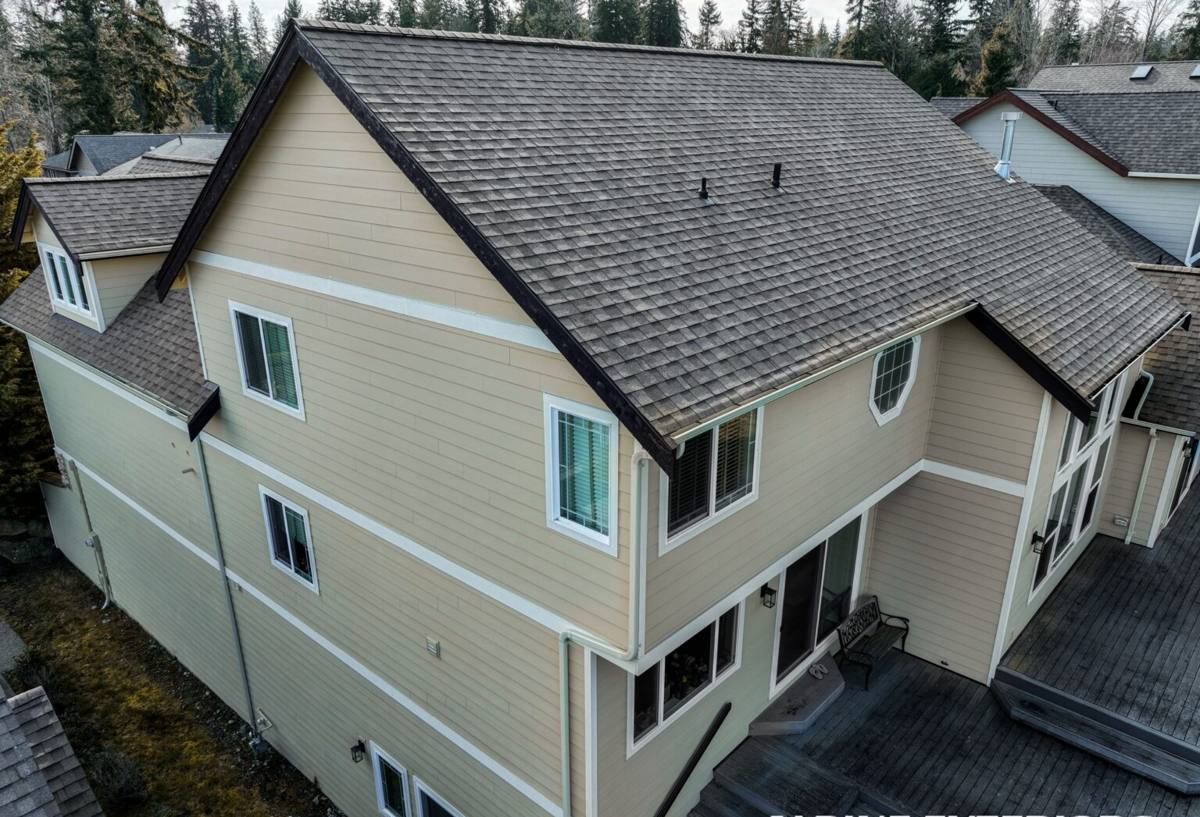
What a Correct Composite Deck Install Actually Involves
The composite boards get the attention, but most deck failures we get called to inspect trace back to what's underneath them. On a property exposed to this much rain and salt air, the substructure work matters more than which composite brand ends up on top.
Ledger Board Flashing
Where a deck attaches to the house, water intrusion at the ledger board is the single most common cause of hidden rot damage — to the house, not just the deck. We flash this connection properly with a waterproof membrane and metal flashing that sheds water away from the band joist, every time, regardless of what deck material is going on top.
Joist Spacing and Airflow
Composite boards need consistent joist spacing to avoid deflection over time, and they need airflow underneath to let moisture escape instead of sitting against the underside of the deck. We follow manufacturer spec on joist spacing (tighter for angled or diagonal board patterns) and keep the structure high enough off grade, or vented enough, that the underside can actually dry.
Fastening Method
Hidden fastener systems give a clean, screw-free surface and are our default for most composite installs — they also allow slight board expansion and contraction without stress cracking around screw heads, which matters through Whatcom County's wide seasonal humidity swings. Face-screwed installs have their place (stair treads, picture-frame borders, high-traffic edges) but we use coastal-rated stainless fasteners either way.
Post and Footing Depth
Footings need to go below frost depth and bear on solid, well-drained soil — Lummi Island's mix of clay and glacial till in places means we check bearing conditions on site rather than assuming a standard footing depth will work everywhere on the island.
Choosing a Composite Board for This Environment
Not every composite product handles a wet, salty, low-sun climate the same way. The main differences that matter here are the capstock (the protective outer layer), how the board handles moisture at the core, and surface texture for slip resistance.
| Board Type | How It Handles This Climate | Trade-Off |
|---|---|---|
| Capped composite (full wrap) | Best moisture and stain resistance; capstock sheds water and resists moss staining better than uncapped boards | Higher upfront cost than uncapped composite |
| Uncapped composite | Can absorb some moisture at cut ends and exposed edges over time, which shows up faster in a wet climate like this | Lower cost, but needs more diligence at cut ends during install |
| PVC / cellular decking | Fully synthetic, no wood fiber to hold moisture; performs very well in constant damp conditions | Higher cost; can feel less "wood-like" underfoot to some homeowners |
| Wood-plastic blend, low-grade capstock | Entry-level pricing but thinner capstock wears faster under driving rain and UV cycling | Shorter realistic service life before fading or surface wear becomes visible |
For most Lummi Island projects we recommend a fully capped composite or PVC board, with a textured, slip-resistant surface finish given how often the decking will be wet. We'll walk through actual product lines and warranty terms during your estimate rather than pushing one brand — the right choice depends on your budget, sun exposure, and how the deck will be used.
Our Process, Start to Finish
- On-site assessment — we look at sun exposure, drainage, existing structure (if replacing an old deck), and access for materials.
- Design and board selection — layout, board pattern, railing style, and product options based on your budget and the site's exposure.
- Written estimate — clear scope, materials, and pricing before anything is ordered.
- Permitting — most new or significantly rebuilt decks require a Whatcom County building permit; we handle that paperwork.
- Demo and substructure — removal of the old deck if applicable, footings, framing, and ledger flashing.
- Decking and railing install — composite boards, fastening system, and railing to code.
- Final walkthrough — we check the finished deck with you before calling the job done.
Maintenance: What Composite Actually Needs on Lummi Island
One of the reasons homeowners choose composite here is lower maintenance than wood — but "lower" isn't "none," especially with a moss season this long. A little seasonal attention keeps a composite deck looking and performing the way it should for decades.
- Sweep off leaves, needles, and debris regularly — trapped organic matter is what feeds moss and algae growth on any deck surface.
- Rinse or lightly scrub with a soft-bristle brush and mild soap a couple times a year, more often in heavily shaded areas.
- Avoid pressure washing at close range or high PSI — it can damage capstock and void some manufacturer warranties.
- Keep gutters and downspouts near the deck clear so runoff isn't dumping directly onto the decking or substructure.
- Check railing connections and stair fasteners annually for any movement or corrosion, especially in the first couple years after install.
- Trim back overhanging branches where possible to cut down on shade and debris buildup.
Cost Factors for a Composite Deck Here
Composite decking costs more upfront than pressure-treated wood but less over time in maintenance and replacement. Actual project cost depends on a handful of site-specific factors more than the square footage alone.
| Factor | Why It Moves the Price |
|---|---|
| Board tier (uncapped vs. fully capped/PVC) | Capstock quality and warranty length are the biggest material cost differences |
| Height and railing requirements | Taller decks need code-compliant railing systems, which adds material and labor |
| Substructure condition | New footings and framing cost more than reusing sound existing structure |
| Site access | Material delivery and staging on Lummi Island properties can affect labor time depending on lot access |
| Board pattern and detailing | Diagonal layouts, picture-frame borders, or multi-level decks add labor beyond a straight installation |
We give a written, itemized estimate before any work starts so you know exactly what's driving the number — no vague allowances.
Why It Matters to Hire a Crew That Already Works Lummi Island
Lummi Island is reached by a short ferry crossing, and that changes some practical realities of a construction project: material deliveries, crew scheduling, and timing work around ferry hours all take planning that a contractor unfamiliar with the island hasn't had to think through. A crew that regularly works Ferndale and the surrounding Whatcom County coastline already has that logistics figured out, along with a working sense of how exposure, shade, and drainage vary from one part of the island to another.
Local experience also means we've seen how specific composite products actually perform after a few Pacific Northwest winters here — not just what the manufacturer's spec sheet claims. That's the kind of knowledge that shapes better product recommendations and fewer surprises after the job is done.
Get a Straightforward Estimate
If you're weighing composite decking for a Lummi Island property, we're happy to take a look, talk through board options for your site's sun and moisture exposure, and give you a clear, no-pressure written estimate. Use the form below to get started.