 Ferndale Siding
 Roof Repair Built for the Lummi Nation Area
Homes in and around Lummi Nation sit on some of the most exposed ground in Whatcom County. This stretch of coastline along Bellingham Bay gets a steady dose of salt-laden air, wind-driven rain off the water, and a shoulder season that barely qualifies as dry. Roofs out here don't fail the same way roofs fail twenty miles inland, and repairing them correctly means understanding that difference before a single shingle gets touched.
We work on roofs throughout Ferndale and the surrounding Lummi Nation area on a regular basis. That means we're not guessing at how this climate treats a roof over time — we're looking at the same wear patterns, the same trouble spots, and the same moss buildup on a weekly basis. A repair job here isn't a smaller version of a repair job somewhere dry. It's a different job.
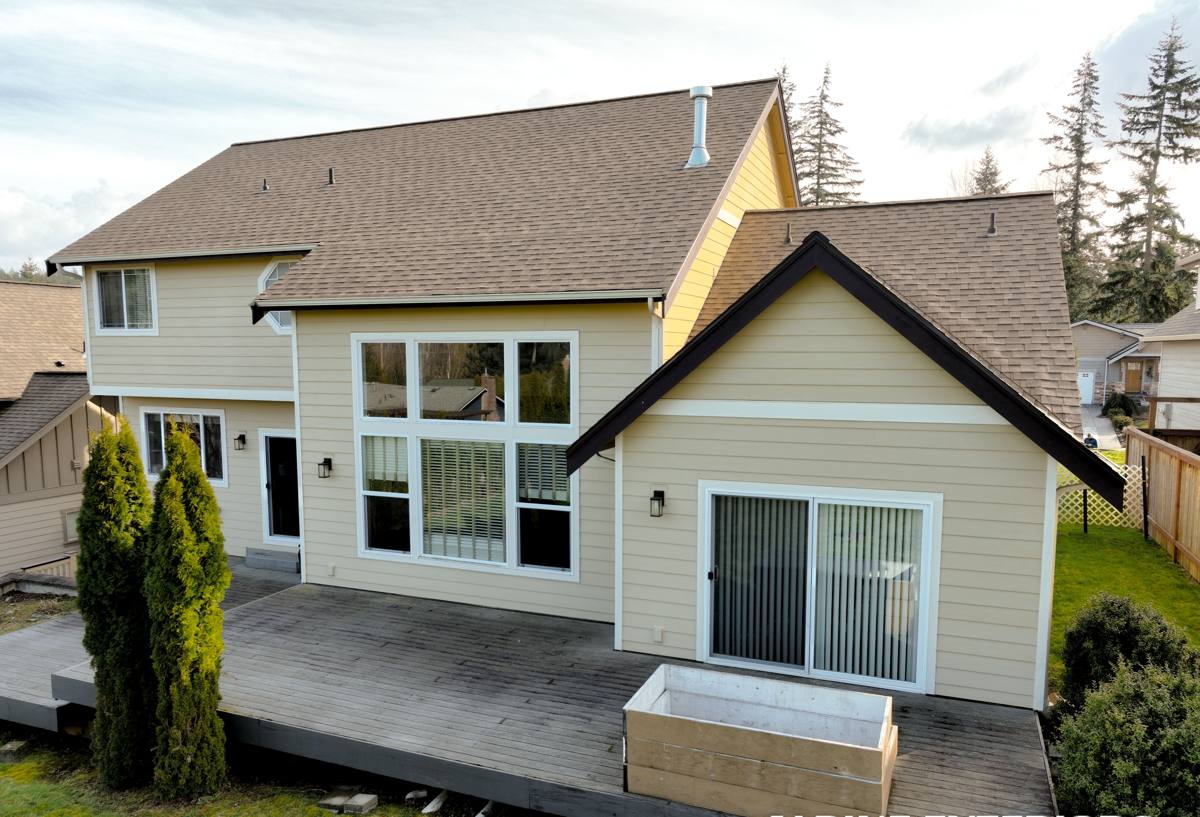
Why This Climate Is Hard on Roofs
Salt Air and Metal Fatigue
Proximity to the water means airborne salt settles on every exposed surface, including your roof. Over years, that salt accelerates corrosion on exposed fasteners, flashing, and any metal roofing components. A repair that reuses corroded fasteners or patches around already-compromised flashing doesn't hold — it just delays the next call.
Driving Rain and Wind
Storms coming off the Salish Sea don't just drop rain straight down. Wind pushes it sideways and up under laps, ridge caps, and anywhere a seal has started to fail. A leak that would stay harmless on a calm-weather roof becomes an active intrusion point here, because the water has help getting in.
Moss and Moisture Retention
Whatcom County's long wet season gives moss months to establish itself, and once it takes hold on shingles or shakes, it holds moisture against the roofing material far longer than open air would allow. That constant dampness is what actually causes the damage — rot in decking, granule loss on shingles, and lifted edges that let wind-driven rain in underneath.
Signs a Roof Needs Repair (Not Full Replacement)
Most roofs don't fail all at once. They fail in specific spots first, and catching those spots early is usually what keeps a repair a repair instead of a replacement. Common warning signs we see on service calls in this area include:
- Dark streaking or thick moss growth concentrated on north-facing slopes or shaded sections
- Granules collecting in gutters or at downspout outlets
- Soft spots or slight sagging when walked, especially near valleys or chimneys
- Water stains on interior ceilings, particularly after a windy rainstorm rather than a calm one
- Lifted, cracked, or missing shingles around roof penetrations — vents, skylights, chimneys
- Rusted or visibly deteriorating flashing at valleys, walls, or roof-to-wall transitions
- Daylight visible through the roof deck from inside an attic space
If what you're seeing is isolated to one or two areas and the roof deck underneath is still sound, repair is almost always the right call. Replacement becomes necessary when the decking itself has rotted over a wide area, or when the roofing material is uniformly past its service life rather than damaged in a few spots.
What an Honest Roof Repair Actually Involves
A repair that actually lasts in this climate goes past the visible damage. Here's what we consider non-negotiable on any repair job:
Finding the Real Source
Water travels before it shows up as a stain. A ceiling stain in one room can trace back to a flashing failure several feet away, upslope. We trace the path before we start patching, because repairing the visible spot without finding the actual entry point means the leak comes back.
Matching Materials, Not Just Colors
A patch that doesn't match the surrounding shingle profile, granule color, or exposure will stand out and, more importantly, may not shed water the same way the surrounding material does. We match roofing material as closely as the existing product allows, and we're upfront when an exact match isn't available due to age or discontinued product lines.
Flashing and Underlayment Get Replaced, Not Reused
Flashing around chimneys, valleys, and wall transitions is where most leaks in this area actually originate — not the shingle field itself. If flashing is disturbed during a repair, it gets replaced with new material, not bent back into place. Underlayment in the repaired section gets replaced too, especially self-adhered membrane in valleys and along eaves where wind-driven rain concentrates.
Ventilation Gets Checked
Trapped moisture in an attic accelerates deck rot and shortens the life of any repair. If a repair area shows signs of poor airflow — condensation staining on rafters, damp insulation — we'll flag it, because a repair on a poorly ventilated roof section tends to need repeating.
Repair Approach by Roofing Material
The right repair method depends heavily on what's already on the roof. Here's how we approach the materials most common in this area:
| Roofing Material | Common Issue Here | Repair Consideration |
|---|---|---|
| Asphalt Composition Shingle | Granule loss, lifted tabs from wind, moss undermining seal strips | Match shingle line and exposure where possible; reseal or replace tabs individually rather than blanket patching |
| Cedar Shake/Shingle | Moss retention, splitting, accelerated weathering on shaded slopes | Individual shake replacement with matching split/sawn profile; treat surrounding moss to slow recurrence |
| Metal Roofing/Flashing | Fastener corrosion, seam and panel-lap failure from salt exposure | Replace corroded fasteners with corrosion-resistant hardware; reseal or re-lap seams rather than surface-caulking over them |
| Flat/Low-Slope Sections | Ponding water, membrane seam separation | Address drainage slope issues, not just the visible seam failure |
Our Repair Process
Every repair call gets handled the same way, whether it's a single missing shingle or a multi-spot leak investigation:
- On-site inspection. We get on the roof (weather permitting) and in the attic if accessible, tracing the actual path of any leak rather than assuming it's directly above the interior damage.
- Plain-language diagnosis. We tell you what's actually wrong, what's causing it, and whether it's a contained repair or a sign of broader roof age. No pressure toward replacement if repair is the honest answer.
- Written scope and estimate. You know what's being replaced, what's being reused, and roughly what it will cost before work starts.
- The repair itself. Damaged material comes out, decking is checked underneath, flashing and underlayment are addressed as needed, and new material goes in matched to the surrounding roof.
- Cleanup and check. Debris, old material, and displaced granules get cleared from gutters and the ground before we consider the job done.
A Practical Roof Repair Checklist
Whether you hire us or someone else, a repair done right in this climate should check these boxes:
- The actual leak source was traced, not just the visible interior damage
- Roof decking was inspected for soft spots or rot in the repair area
- Flashing at valleys, chimneys, and wall transitions was replaced if disturbed
- Underlayment, including any self-adhered membrane, was replaced in the repair zone
- Replacement material reasonably matches the existing roof's profile and color
- Fasteners and metal components used are appropriate for a salt-air environment
- Attic ventilation was checked if moisture or condensation was a factor
- Gutters and downspouts near the repair were cleared of debris and granules
Moss and Maintenance: Extending the Repair's Life
A repair is only as good as the maintenance that follows it. In a climate that grows moss for most of the year, a few habits go a long way toward keeping a repair from becoming a repeat call:
Keep gutters clear so water has somewhere to go besides backing up under roof edges. Have moss physically removed rather than just treated chemically when it's established heavily, since chemical treatment alone doesn't address moss that's already lifted shingle edges. And have the roof looked at after any major windstorm — driving rain finds weak points fast, and catching a lifted shingle before the next storm is cheaper than repairing the water damage it causes.
Why Local Experience Matters for This Job
Roof repair is one of those jobs where general experience isn't quite the same as local experience. A crew that mostly works drier inland roofs may not think twice about reusing flashing that would corrode within a season this close to the water, or may not recognize how aggressively moss establishes itself on a shaded, moisture-retaining slope near Bellingham Bay. We work this specific stretch of Whatcom County regularly enough to know which repair shortcuts don't hold up here — and we build every repair around the conditions this area actually produces, not generic assumptions about what a roof repair should involve.
If you've got a leak, a suspicious stain, or a roof that's overdue for a look, we're happy to come out, take an honest look, and walk you through what we find. Estimates are free and there's no pressure to act on anything beyond what the roof actually needs — just fill out the form below to get started.