 Ferndale Siding
 Decking Built for How It Rains Here
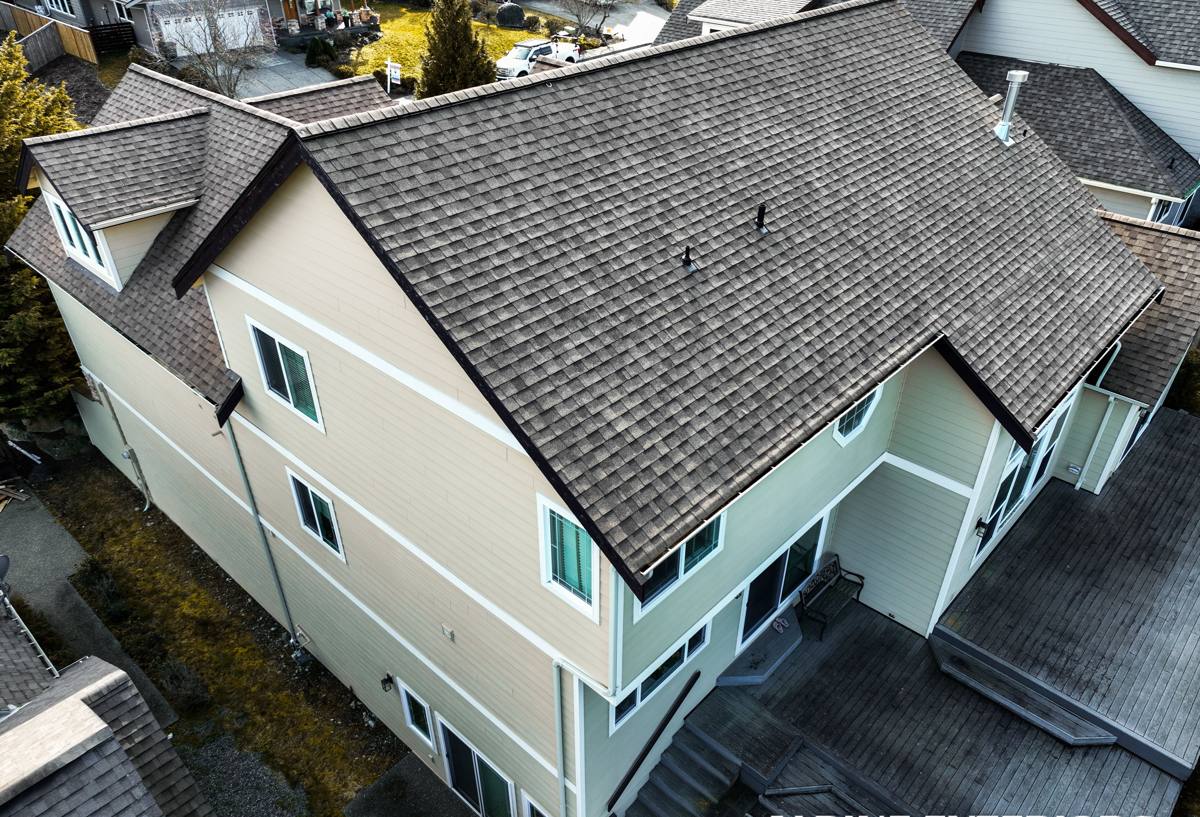
Lynden sits inland from Ferndale but shares the same weather pattern that defines Whatcom County: long stretches of gray, driving rain that runs from October through May, humid air off the Nooksack valley and nearby Puget Sound, and shade from mature trees that keeps decks damp long after a storm has passed. A deck built here doesn't fail because the materials are bad — it fails because it was built for a drier climate than the one it's actually in. Composite decking, installed correctly for this environment, is one of the few deck systems that holds up to years of that cycle without the yearly maintenance treadmill wood demands.
We install composite decking across Whatcom County, and Lynden jobs come with their own quirks — larger lots with more tree cover, older homes with decks tied into additions or sunrooms, and a lot of families who want a deck they can actually use without spending every spring scraping and re-staining it. This page covers what a composite deck needs to hold up in Lynden's climate, what a correct install actually involves, and what to watch for when you're comparing bids.
Why Composite Makes Sense in This Climate
Wood decking isn't a bad product — it's a product that needs consistent upkeep to survive wet-dry cycling, and a lot of homeowners don't find that out until the boards start cupping or the fasteners start bleeding rust streaks. Composite decking is engineered wood fiber and plastic, capped on most quality boards with a protective shell that doesn't absorb water the way solid wood does. In a climate with this much sustained moisture, that difference matters more than it would somewhere dry.
What It Actually Solves
- Moisture absorption: capped composite boards don't swell, cup, or splinter from repeated wet-dry cycles the way untreated or even pressure-treated wood can over time.
- Moss and algae growth: composite's dense, capped surface gives moss and algae less to grip than open wood grain, which slows regrowth after cleaning — it doesn't eliminate it, but it makes the problem manageable.
- Rot at fastener points: hidden fastener systems used with composite avoid the face-screwed holes that let water into the board core, which is one of the most common rot-starting points on wood decks in this area.
- Color fade and graying: UV-stabilized caps hold color longer under the region's mix of overcast humidity and summer sun exposure than uncoated wood, which grays within a season or two.
Composite isn't maintenance-free — nothing exposed to Whatcom County weather truly is — but it shifts the maintenance from sanding, staining, and sealing every year or two to periodic washing.
What Lynden Lots Bring to the Job
Every deck site has its own conditions, and the ones we see repeatedly around Lynden shape how we plan the install:
Tree Cover and Shade
Larger residential lots and mature landscaping mean more decks sitting under partial or full tree canopy. Shaded decks dry slower after rain, which is exactly the condition moss and algae need. We factor board spacing and airflow into the design specifically to help these areas dry out faster, not just for looks.
Ledger Attachment to Older Homes
A lot of the housing stock here includes additions and remodels done at different times, which means the wall a deck ties into isn't always original construction. Before we attach a ledger board, we check the sheathing and flashing behind it — a deck can be built perfectly and still cause a moisture problem if the ledger connection to the house isn't properly flashed.
Drainage Away From the House
With this much annual rainfall, where the water goes after it hits the deck matters as much as the decking material itself. Grading, gutter placement, and how the deck framing sheds water all factor into whether a deck stays dry underneath or turns into a standing-water problem that invites rot in the substructure, even when the surface boards are composite.
What a Correct Composite Install Involves
Composite boards are only as good as the structure and detailing underneath them. A rushed install with the right material still fails early in this climate. Here's what we hold every composite deck to, regardless of the brand:
- Structural evaluation first. Footings, ledger connection, joist spacing, and load capacity get checked against current code before any decking goes down — not assumed from the old deck being replaced.
- Proper flashing at the house. A self-adhering flashing membrane at the ledger board keeps water from tracking behind the siding into the wall structure, which is one of the most common hidden failure points on deck-to-house connections.
- Joist tape on framing. Covering the tops of pressure-treated joists with a waterproof tape before decking is installed protects the framing lumber from the moisture that inevitably sits on top of it during our wet season.
- Correct joist spacing for the board. Composite boards have manufacturer-specified spacing requirements — often tighter than traditional wood spacing — and going outside those specs voids the warranty and can lead to sagging over time.
- Hidden fastener systems. Clip-based fastening avoids face screws, keeps water out of the board core, and gives a cleaner finished surface.
- Gapping for drainage and expansion. Composite expands and contracts with temperature more than wood; correct gapping prevents buckling and keeps water moving off the deck surface instead of pooling.
- Railing and stair code compliance. Especially on multi-level or elevated decks common on Lynden's larger lots, railing height, baluster spacing, and stair geometry all need to meet current building code.
Composite vs. Other Decking Materials
| Material | Moisture Resistance Here | Yearly Maintenance | Typical Lifespan |
|---|---|---|---|
| Composite (capped) | Strong — resists swelling, cupping, and rot from wet-dry cycles | Periodic washing; no staining or sealing | 25–30+ years with proper install |
| Pressure-treated wood | Moderate — treatment slows rot but doesn't stop moisture absorption | Annual cleaning, sanding, and re-staining/sealing | 10–15 years before major repairs |
| Cedar | Moderate — natural rot resistance, but still absorbs moisture and grays fast in this climate | Regular sealing to maintain color and resist moss | 15–20 years with diligent upkeep |
| PVC (cellular) | Very strong — fully synthetic, no wood fiber to absorb water | Occasional washing | 25–30+ years, higher upfront cost |
We install composite for most Lynden clients because it lands in the sweet spot between wood's lower cost and PVC's higher price point, while performing far better than wood in exactly the conditions that cause problems here — sustained moisture and shade.
What Drives the Cost of a Composite Deck
Composite decking itself is priced by the linear or square foot depending on the board line, but the material is only one piece of the total cost. What we walk every Lynden homeowner through before quoting:
| Factor | Why It Changes the Price |
|---|---|
| Deck size and shape | Square footage plus complexity — angles, curves, and multiple levels add labor and material waste |
| Height and structure | Elevated decks need more substantial framing, footings, and often stairs and railing |
| Board line and color | Composite lines vary in cap quality, color options, and warranty length, which affects material cost per square foot |
| Existing structure condition | Reusing sound framing versus rebuilding rotted substructure changes the scope significantly |
| Railing and fascia | Composite or metal railing systems and matching fascia boards add to the finished cost beyond the decking surface itself |
| Site access | Tree cover, slope, and how close a crew can get equipment to the build site affect labor time |
We give honest, written estimates broken out by these factors so you know what you're paying for — not a single lump number with no explanation behind it.
Living With Moss and Algae in This Climate
No decking material is immune to moss and algae in a climate this wet, but composite makes the fight far easier than wood does. A capped composite surface doesn't give moss spores the porous grip that open wood grain does, and cleaning is straightforward:
- Sweep debris and fallen leaves regularly, especially under tree cover where moisture sits longest.
- Wash with a soft-bristle brush and a mild soap-and-water solution a couple of times a year, more often in heavily shaded areas.
- Avoid pressure washers on composite unless used on the lowest setting with a wide fan tip — too much pressure can damage the cap surface.
- Keep gutters and downspouts clear so runoff isn't draining directly onto the deck surface.
- Trim back overhanging branches where possible to let more light and air reach the deck.
This routine takes a fraction of the time wood decking demands, and it's the difference between a deck that still looks good in year ten and one that's been quietly deteriorating under a coat of algae.
Why Hire a Crew That Already Works Lynden
Composite decking is a forgiving material when it's installed right, and an unforgiving one when it isn't — warranty claims get denied over incorrect joist spacing or fastening all the time, and that's a problem homeowners usually don't discover until years later when a board starts to sag or buckle. A crew that works Whatcom County regularly already knows the rainfall totals to plan drainage around, how shaded lots behave differently than open ones, and what flashing details matter on the area's mix of older and newer homes. That local pattern recognition is worth more than a lower bid from a crew that's never built a deck in this specific climate before.
We stand behind our composite installs with workmanship coverage on top of the manufacturer's material warranty, and we'll walk you through exactly what's covered by each before you sign anything.
Questions to Ask Before You Hire
- Is the contractor a manufacturer-certified installer for the composite brand being quoted?
- Does the quote specify joist spacing and fastening method, or just "composite decking installed"?
- Is ledger flashing and joist tape included, or treated as an upsell?
- What's covered under workmanship warranty versus the manufacturer's material warranty, and for how long?
- Does the estimate break out structural work separately from surface decking costs?
- Are permits and inspections included, or is that left to the homeowner?
If a contractor can't answer these clearly before you sign, that's worth noticing now rather than after the deck is built.
If you're weighing options for a new composite deck or a replacement in Lynden, we're happy to walk the site, look at what you're working with, and put together a straightforward, no-pressure estimate. Use the form below to get started.