 Ferndale Siding
 Building Decks That Hold Up in Lynden's Climate
Lynden sits inland from the coast, but that doesn't mean it's spared from the wet, gray stretch of weather that defines a Whatcom County winter. Long soaking rains, heavy dew, and short daylight hours in the cooler months add up to wood that stays damp far longer than it does in drier parts of the country. Add in the moss and algae that thrive in that kind of shade and moisture, and a deck built without that reality in mind starts showing problems within a few seasons — soft spots, slick surfaces, and fasteners that rust before their time.
A deck in Lynden isn't a project you can treat the same way a contractor in Arizona or Texas would. The framing, the fasteners, the decking material, and even the layout all need to account for a climate where wood rarely gets a long enough dry stretch to fully release moisture between rains. We've built and repaired decks across Whatcom County long enough to know which shortcuts show up as callbacks two winters later, and which details actually matter.
What Lynden Homes Need From a Deck
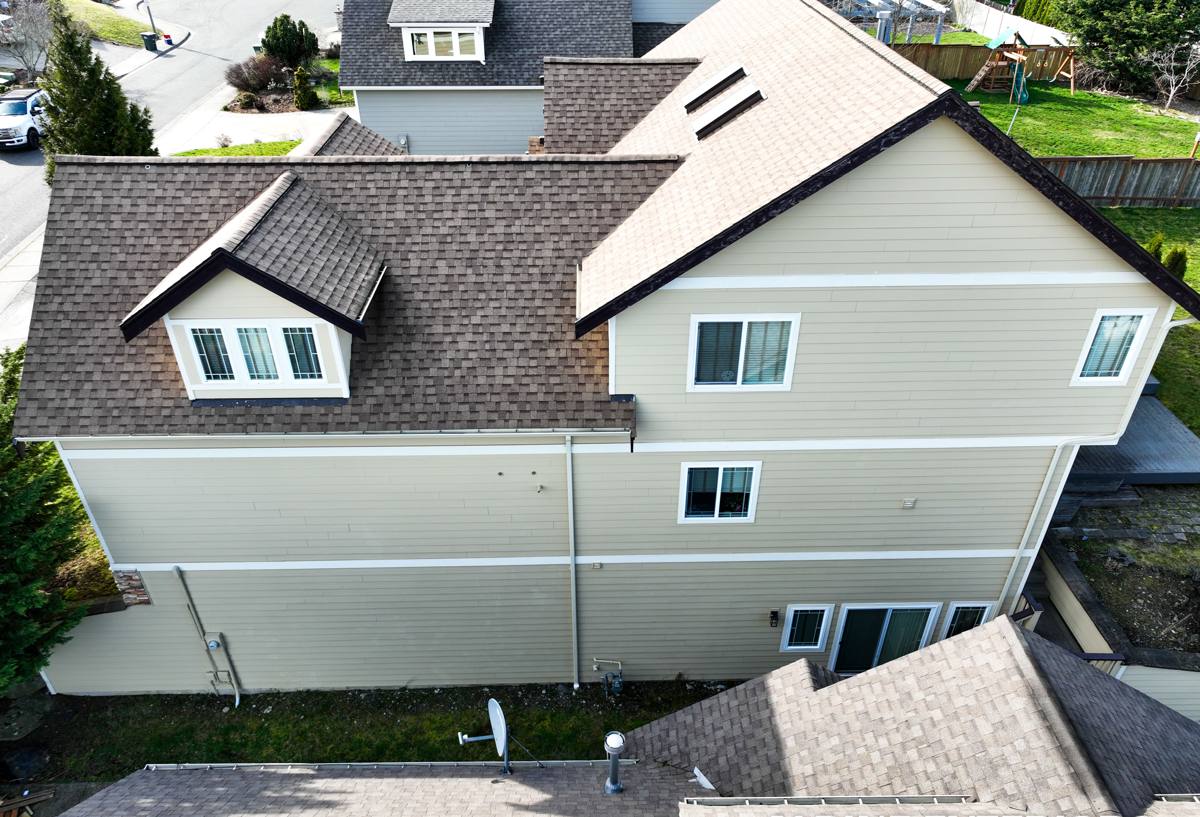
Most of the decks we work on in Lynden fall into a few categories: farmhouse-style properties with larger lots and open backyards, newer subdivision homes with smaller footprints where the deck does double duty as the main outdoor living space, and older homes where an aging deck has reached the point of needing a full rebuild rather than another patch job. Each of these has different pressures, but they share the same underlying climate problem — moisture management.
Drainage Comes First
Before we talk about decking boards or railing styles, we look at how water moves underneath and around the structure. A deck that traps standing water beneath it, or that dumps runoff against a foundation or siding wall, is setting up problems that have nothing to do with the deck itself. In a region that gets sustained rain events rather than quick downpours, slow-draining ground under a low deck can stay saturated for days, which accelerates rot in support posts and framing long before the visible decking shows any wear.
Airflow Underneath
Low-clearance decks are common on ranch-style and single-story homes, but they're also the decks most prone to hidden rot because there's not enough airflow to dry the framing between rain events. Where clearance allows, we build in ventilation gaps and keep skirting from fully sealing off the underside. Where clearance is tight, we pay closer attention to material choice and fastener quality since the wood will simply stay wetter longer.
Framing: The Part Nobody Sees, Until It Fails
The decking boards get all the attention because they're what you walk on and look at, but the framing underneath is what actually determines how long a deck lasts. In a damp climate like ours, we treat framing decisions as the most important part of the build.
- Pressure-treated framing lumber rated for ground contact where posts meet soil or concrete, not just above-ground rated material
- Post bases and joist hangers in stainless or heavy hot-dip galvanized coating — cheaper coated hardware corrodes faster in persistent damp and can fail from the inside without any visible warning
- Proper flashing where the deck ledger board attaches to the house, so water is directed away from the wall framing instead of wicking into it
- Joist tape or a similar moisture barrier on top of joists, so standing water from decking gaps doesn't sit directly on cut lumber
- Concrete footings set below frost depth and sized for the actual load, not guessed at
None of this is visible once the decking goes down, which is exactly why it's the part most likely to get shortcut by a crew trying to hit a lower price. It's also the part that determines whether you're looking at a deck that lasts fifteen years or one that needs structural repair in five.
Choosing Decking Material for a Damp Climate
There's no single "best" decking material — there's a best material for your budget, your maintenance appetite, and how much sun versus shade the deck actually gets. Shaded decks under trees or on the north side of a house are where moss and algae growth is worst, and that should factor into the decision.
| Material | How It Handles Our Climate | Maintenance | Typical Lifespan |
|---|---|---|---|
| Pressure-treated wood | Affordable, but needs consistent sealing to resist moisture absorption and moss growth in shaded areas | Annual cleaning, re-sealing every 2-3 years | 10-15 years with upkeep |
| Cedar | Naturally rot-resistant and handles damp conditions well, but will gray and can still host moss if not cleaned | Periodic cleaning and oil/stain if you want to keep the color | 15-20 years |
| Composite decking | Doesn't absorb water like wood, resists rot, but still needs cleaning since algae and moss will grow on any damp surface, composite included | Occasional washing, no sealing or staining | 25-30 years |
| PVC/capped composite | Best moisture resistance of the group, holds up well in shaded, damp spots | Lowest maintenance — mainly rinsing off debris and organic growth | 25-30+ years |
We'll walk through these trade-offs honestly based on where your deck sits, how much shade it gets, and what you're comfortable maintaining. A composite deck under full sun and a composite deck buried in shade under fir trees are two very different maintenance situations, even though it's the "same" material.
Dealing With Moss, Algae, and Slick Surfaces
Whatcom County's long wet season means moss isn't an occasional nuisance — it's a recurring maintenance item on any exterior surface that stays damp and shaded, decks included. A few things make a real difference here:
- Board spacing and orientation that lets water shed rather than pool
- Grooved or heavily textured composite boards can actually hold more moisture and organic buildup in their channels than a smooth-faced board — worth discussing if your deck sits in heavy shade
- Keeping nearby vegetation trimmed back so the deck surface gets some sun and airflow during dry spells
- Routine cleaning with a deck-safe cleaner rather than pressure-washing wood aggressively, which can damage the surface fibers and make future moss growth worse
No decking material is immune to moss if it sits in constant shade and moisture — the difference is how easily it cleans off and whether the surface stays structurally sound underneath while it's damp.
Railings, Fasteners, and Hardware
Railings and hardware are an easy place for corrosion to show up first, especially on hardware facing prevailing weather or splash-back from the yard. We spec fasteners and connectors rated for exterior, damp-climate use rather than standard interior-grade hardware, and we pay attention to metal railing systems where dissimilar metals or lower-grade coatings can start rusting or staining the decking within a season or two. If you want a metal or cable railing look, we'll talk through which systems actually hold up here versus which ones look good in a showroom in a drier climate.
Our Process for a Lynden Deck Build
- On-site assessment — we look at drainage, sun/shade exposure, existing structure if there's a deck to replace, and how the space will actually be used
- Design and material walkthrough — layout, railing style, decking material, and a straightforward cost breakdown with no vague allowances
- Permitting — most deck builds in Whatcom County require a permit depending on height and size; we handle that process rather than leaving it on you
- Demo and site prep — removing any old structure and grading for proper water flow before footings go in
- Framing — footings, posts, ledger flashing, and joists built to the standards above, not the minimum code allows
- Decking and railing install — final surface material and railing system installed with attention to fastener placement and spacing for drainage
- Final walkthrough — we go over care and maintenance specific to the material you chose, so you know what upkeep to expect before the first wet season hits
Repair, Replace, or Rebuild?
Not every deck problem means starting over. We get called out to plenty of decks in Lynden where the surface boards are worn but the framing underneath is sound, and a resurfacing job makes more sense than a full rebuild. The reverse is also true — a deck with fresh-looking boards can be hiding rotted joists or failing post connections underneath. A quick way to think about it:
- Surface boards cupping, splintering, or graying but framing feels solid underfoot — likely a resurfacing job
- Soft or spongy spots when walking the deck, visible gaps around post bases, or noticeable movement/bounce — framing issue, needs inspection before anything else
- Railings loose or wobbly independent of the deck surface — often a hardware fix, not a full replacement
- Deck older than 15-20 years with no documented upgrades to flashing or hardware — worth a full evaluation before investing in new decking on top of an aging structure
We'll always tell you honestly which category your deck falls into rather than pushing a full rebuild when a repair will genuinely hold up.
Why Hire a Crew That Already Works This Area
Whatcom County stretches from saltwater coastline to inland farm towns like Lynden, and the climate shifts along the way, but the underlying pattern — long wet seasons, limited drying time, and moss-friendly shade — holds across most of it. A crew that builds decks here regularly isn't guessing at fastener grades or flashing details; those choices come from having seen what fails in this specific climate and building around it from the start. That's the difference between a deck that needs attention every year and one that just quietly does its job through another wet Whatcom County winter.
If you're planning a new deck or trying to figure out whether an existing one needs repair or replacement, we're happy to take a look and give you a straightforward assessment. Reach out for a free, no-pressure estimate using the form below.