 Ferndale Siding
 Siding Installation for Lynden Homes, Done by a Crew That Works This County
Lynden sits inland from the water compared to some of the towns we serve, but it doesn't escape what makes Whatcom County siding a different job than siding almost anywhere else in the state. Wet Pacific air moves through the valley most of the year, moss finds a foothold on anything north-facing and shaded, and driving rain off the Nooksack lowlands and the Strait beyond hits siding at an angle, not just straight down. A siding installation done for a dry-climate spec sheet doesn't hold up here. One done for this valley does.
We're a Ferndale-based crew, and Lynden is inside our regular service area — not a place we drive to occasionally, but a community whose housing stock, weather exposure, and common failure points we've seen up close, repeatedly. That matters more than it sounds like it should. A lot of what determines whether siding lasts twenty years or needs early repair isn't the product on the label — it's whether the person installing it understood what this specific climate does to a wall.
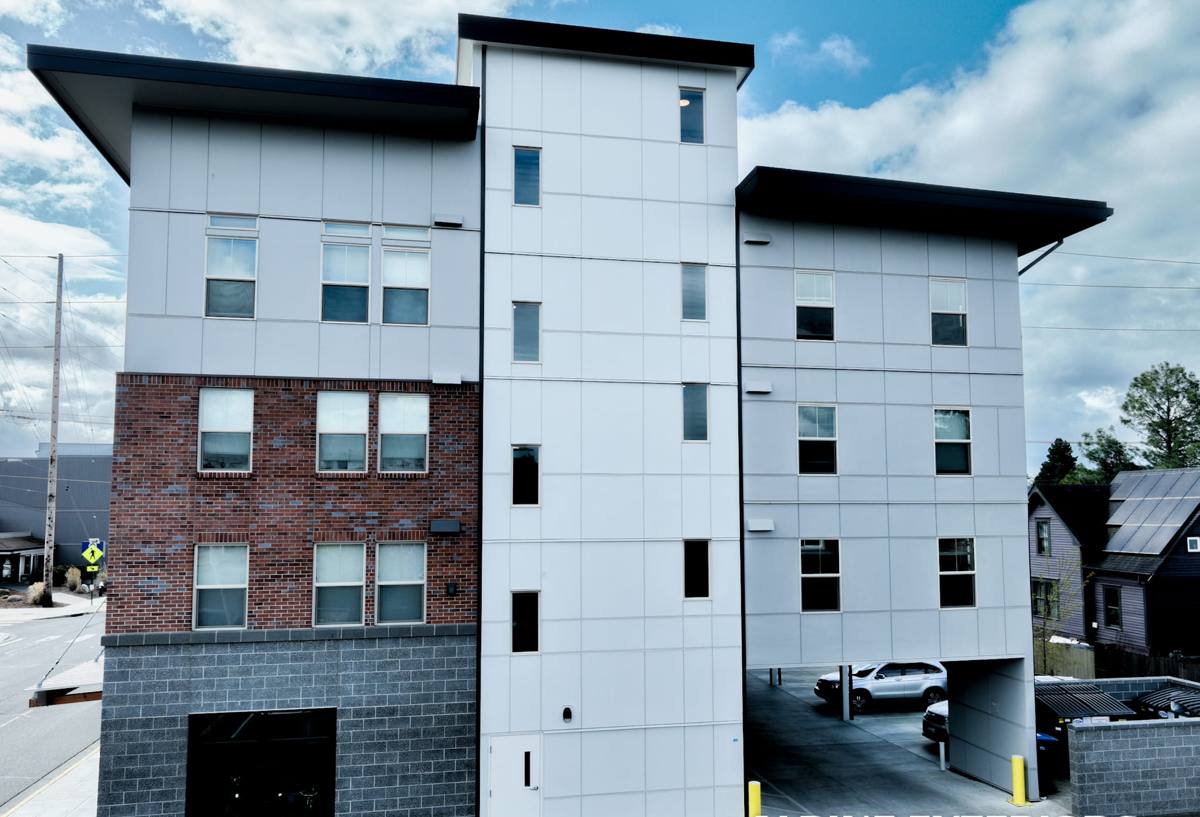
What Lynden's Climate Actually Does to Siding
Three things drive almost every siding problem we see on homes in this part of Whatcom County:
Sustained Moisture
It's not the amount of rain that causes the most damage — it's how long the county stays wet between dry stretches. Siding, trim, and the water-resistive barrier behind it spend long periods holding moisture rather than shedding it and drying out. Any product that absorbs water and swells, or any installation with a gap in the drainage plane, gets punished slowly and quietly, often behind the wall where nobody sees it until paint starts failing or trim starts softening.
Driving Rain and Wind-Driven Exposure
Storms that move through the valley don't always drop rain straight down. Wind pushes it sideways into wall assemblies, which is exactly what lap siding, flashing details, and caulk joints are supposed to resist — if they were installed correctly. Undersized laps, missed flashing at windows and trim, or caulk used to patch a gap that should have been flashed are the kind of shortcuts that look fine on install day and fail two or three winters later.
A Long Moss and Algae Season
Shaded, north-facing walls and anything under tree cover stay damp long enough for moss and algae to establish themselves for much of the year, not just a few weeks. That's a cosmetic issue at first, but sustained organic growth holds moisture against the siding surface, which accelerates whatever underlying weakness the material already has.
Why We Only Install James Hardie Fiber Cement Here
We've made a deliberate decision as a company to install one siding system: James Hardie fiber cement. We don't install vinyl, LP SmartSide, Cemplank, Allura, primed spruce, or cedar, and we're upfront about why — it's not that those products have no place in the market, it's that we've concluded they're not the right long-term bet for the moisture load this county puts on a home, and we'd rather stand fully behind one system than offer several we have reservations about.
Fiber cement is cement, sand, and cellulose fiber — it doesn't swell, rot, or feed insects the way wood-based products can, and it doesn't soften or distort under sustained heat and moisture cycling the way vinyl can. James Hardie's HZ5 product line is specifically engineered for the Pacific Northwest's freeze-thaw and moisture pattern, which is the exact profile Lynden sits in. The factory-applied ColorPlus finish also matters more here than in a drier climate: a finish baked on and cured in a factory holds up to sustained damp exposure better than a field-applied coat, and it means less time spent repainting siding on a house that already fights moss and mildew for most of the year.
What a Correct Siding Installation Looks Like on a Lynden Home
The product is only half the equation. We've seen good siding fail because of a bad install, and we've seen it hold up thirty years because someone got the details right. On homes in this part of the county, the installation details that matter most are:
- Water-resistive barrier, done continuously — no gaps, no shortcuts around windows and penetrations, lapped correctly top-to-bottom so water sheds outward instead of finding a seam to enter.
- A true drainage gap behind the siding so any moisture that does get past the cladding has somewhere to go besides sitting against the sheathing.
- Correct lap exposure and fastening per James Hardie's published specifications — under-lapping or over-driving fasteners are common shortcuts that quietly shorten a siding job's life.
- Flashing at every horizontal transition — window heads, trim boards, deck ledgers, anywhere water can be redirected into the wall instead of off it.
- Caulk used as a finish detail, not a substitute for flashing — caulk fails and needs maintenance; flashing is permanent.
- Proper clearance at grade and hard surfaces so siding isn't sitting in contact with soil, concrete, or standing water at the base of the wall.
Our Process on a Lynden Job
1. Walkthrough and Assessment
We look at the existing siding and sheathing condition, note any moisture damage already present (especially on north- and west-facing walls, which take the worst of the driving rain and hold shade longest), and check trim, window flashing, and grade clearance before we ever talk about product.
2. Tear-Off and Sheathing Check
Once old siding comes off, we inspect the sheathing underneath. This is the point where hidden moisture damage from a prior installation's shortcuts usually shows up, and it's better to find and address it now than to install new siding over a compromised wall.
3. Water-Resistive Barrier and Drainage Plane
We install the weather barrier continuously and correctly lapped, with a drainage gap behind the siding, before a single piece of Hardie board goes up.
4. Installation to James Hardie Spec
Lap exposure, fastening pattern, and flashing at every transition are installed per manufacturer specification — not a generalized "close enough" approach, which is what tends to happen when a crew installs several different siding brands and doesn't specialize in one system's requirements.
5. Final Inspection
We walk the finished job checking every flashing point, joint, and clearance before we call it done.
Comparing Siding Options for a Lynden Home
| Factor | James Hardie Fiber Cement | Vinyl | Wood / Engineered Wood |
|---|---|---|---|
| Moisture behavior in sustained wet climate | Does not absorb or swell | Can warp or distort with heat/moisture cycling | Absorbs moisture; rot risk if any gap in protection |
| Moss/algae resistance | Factory finish resists staining; surface doesn't feed growth | Can stain and hold moss in damp, shaded areas | Organic material; can support growth if damp persists |
| Fire resistance | Non-combustible | Combustible | Combustible |
| Finish durability | Factory-cured ColorPlus finish | Color molded in, can fade | Field-applied paint/stain, needs recoating |
| Long-term maintenance | Occasional wash, repaint on a longer cycle | Low maintenance but limited repair options if damaged | Regular repainting/sealing required |
What This Costs and What Drives the Number
Every siding job is priced around the same core factors, and being upfront about them up front saves everyone time:
- Total square footage and the home's wall complexity (gables, dormers, multiple stories add labor).
- Condition of the existing sheathing once old siding comes off — hidden repair needs aren't knowable until then.
- James Hardie product line and profile selected (lap width, panel vs. lap, trim package).
- Amount of trim, window, and flashing detail work required.
- Site access and staging conditions.
We give a written estimate after seeing the home, not a phone-quote guess, because the sheathing condition and detail work genuinely change the number.
Why Hiring a Crew That Already Works in Lynden Matters
A siding crew that mainly works drier inland climates, or that installs whatever product a homeowner asks for, doesn't build the same instinct for what this valley does to a wall over time. We're based in Ferndale and work throughout Whatcom County, including Lynden regularly enough that the moisture patterns, the moss exposure on shaded walls, and the driving-rain direction on this side of the county aren't a guess for us — they're the baseline we install to every time. That's the difference between siding that looks right on install day and siding that's still doing its job in year twenty.
If you're planning a siding project on a Lynden-area home, we'll walk the property, look at what your current siding and sheathing are telling us, and give you a straightforward, no-pressure estimate for a James Hardie installation built for this county's climate. There's no obligation — just an honest look at what your home needs.