 Ferndale Siding
 Whatcom County gets its share of rough weather off the water — windstorms that roll through in the fall and winter, atmospheric river events that dump inches of rain in a day or two, and the kind of sustained damp that keeps roofs wet for weeks at a time. Lynden homes, sitting out in the open agricultural land east of Ferndale, tend to catch the wind a little harder than roofs tucked into town. When a storm damages a roof here, waiting to deal with it almost always makes the repair bigger and more expensive than it needed to be.
Why Storm Damage Hits Lynden Roofs the Way It Does
Lynden's open fields and fewer wind breaks mean gusts that would be softened by tree cover or dense housing elsewhere often hit rooflines at full force. Add in the region's marine-influenced climate — moisture-laden air moving in off Puget Sound and the Strait of Georgia — and you get a combination of wind-driven rain and sustained dampness that finds every weak point in a roof system. A shingle edge that lifts an eighth of an inch during a windstorm doesn't need to blow off to cause a problem; it just needs to stay lifted long enough for the next round of driving rain to get underneath it.
Winter brings its own version of the same issue. Whatcom County doesn't see heavy, sustained snow most years, but wet, heavy snow followed by a freeze-thaw cycle can stress a roof deck and flashing in ways that look like nothing from the ground and turn into a ceiling stain a few weeks later.
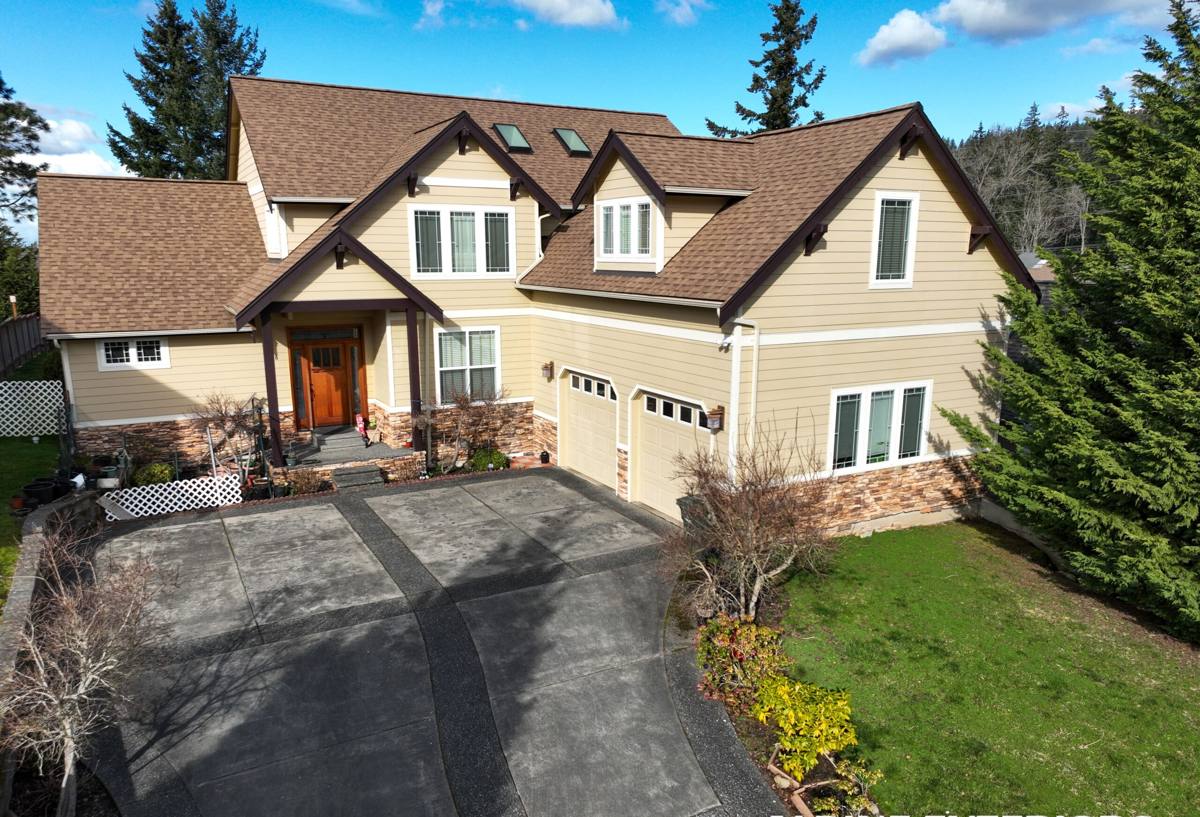
How Storms Actually Damage a Roof
Storm damage rarely shows up as one dramatic hole. More often it's a handful of smaller failures that add up:
- Wind-lifted or creased shingles, especially near ridges, edges, and valleys where uplift pressure is highest
- Flashing knocked loose or bent around chimneys, skylights, and roof-to-wall transitions
- Impact damage from wind-thrown branches or debris, which can bruise or puncture roofing material without an obvious visible break
- Gutter and downspout damage that lets water back up under the roof edge instead of draining away
- Granule loss on asphalt shingles from driving rain and wind abrasion, which accelerates aging even when the shingle stays in place
- Nail pops and fastener failure where repeated wind flex has worked shingles loose over time
Some of this is visible from the ground with binoculars. A lot of it isn't, which is why a proper storm inspection means getting on the roof, not just looking up at it.
What a Correct Storm Repair Actually Involves
Beyond the Visible Damage
A repair that only replaces the shingles you can see from the driveway is a repair that misses the point. Wind and rain damage tends to travel — water that got under a lifted shingle during one storm can migrate along the underlayment and show up as a stain several feet away from where the actual entry point is. A correct repair traces the damage back to its source, checks the underlayment and decking underneath the damaged area for saturation or rot, and confirms that flashing details are sealed and functioning before any new shingles go down.
Matching Materials, Not Just Covering Holes
Whenever possible, storm repairs should use materials that match the existing roof in type, weight, and color so the repaired section weathers at the same rate as the rest of the roof. On older roofs where an exact shingle match isn't available, that's worth discussing honestly upfront rather than discovering a visible patch after the fact.
Code and Manufacturer Requirements
Proper storm repair also respects manufacturer installation specs and current building code for fastening patterns, flashing overlaps, and ventilation — details that matter for warranty coverage and for how the roof performs in the next storm, not just this one.
Our Storm Damage Repair Process
When we get a call about storm damage, the process is straightforward and built around getting your roof watertight fast, then doing the repair right:
- Inspection. We get on the roof and check the full surface, not just the area you can see damage on, since wind damage often extends past the obvious spot.
- Documentation. We photograph and note the damage in a way that's usable for an insurance claim, whether or not you end up filing one.
- Temporary protection. If there's active leaking or exposed decking, we get a tarp or temporary seal in place before we leave, so the situation doesn't get worse while a permanent repair is scheduled.
- Repair plan and estimate. We explain what we found, what needs to be done, and give you a clear estimate before any work starts.
- Repair. We replace damaged material, re-seal or replace flashing as needed, and check that the repaired area is properly integrated with the surrounding roof.
- Final walk-through. We show you what was done and what to keep an eye on going forward.
Repair or Replacement: How We Decide
Not every storm-damaged roof needs to be replaced, and not every roof should just be patched. The right call depends on a few honest factors:
| Factor | Repair Usually Makes Sense | Replacement Should Be Considered |
|---|---|---|
| Roof age | Roof is under roughly 12-15 years old, or well within its expected service life | Roof is near or past the end of its material's typical lifespan |
| Extent of damage | Damage is localized to one section, slope, or a handful of shingles | Damage is spread across multiple slopes or shows up alongside pre-existing wear |
| Decking condition | Decking underneath is dry and sound once opened up | Decking shows soft spots, rot, or repeated water staining |
| Material availability | A close match to existing shingles is available | Original material is discontinued and a patch would be visibly mismatched |
| Cost | Repair cost is a modest fraction of what a full replacement would run | Repair costs are climbing close to what a partial or full replacement would cost |
We'll tell you plainly which category your roof falls into. If a repair is the honest answer, that's what we'll recommend — a roof that doesn't need replacing yet shouldn't get sold one.
Working With Your Insurance Company
Most homeowner's policies cover sudden storm damage — wind, falling limbs, hail where it occurs — though coverage details, deductibles, and depreciation vary by policy and carrier. We're not your insurance adjuster and won't promise a claim outcome, but we can provide the documentation and repair estimate an adjuster typically needs, and we're glad to talk through what we found on the roof so you understand what you're dealing with before you file. Getting a repair done promptly can also matter for a claim, since insurers can push back on damage that's allowed to sit and worsen.
Moss, Long Wet Seasons, and Why They Complicate Storm Repairs
Whatcom County's moss season is long, and it doesn't take a storm to get moss established on a north-facing slope or a shaded valley — it just takes shade and months of damp weather. The problem is that moss and storm damage compound each other. Moss holds moisture against the shingle surface, which softens and degrades the material over time, so a roof with an established moss problem is often more vulnerable to wind and rain damage than a clean one. It also means that when we're repairing storm damage, we're checking for moss and organic growth in the same visit, because leaving it in place undermines the repair you just paid for.
What to Do Right After a Storm Damages Your Roof
- Check for interior signs first — water stains on ceilings, damp spots near chimneys or skylights, or musty smells in the attic
- Avoid getting on the roof yourself, especially right after a storm when surfaces are wet and debris may still be loose
- Photograph visible damage from the ground if it's safe to do so
- Clear obvious debris away from gutters and downspouts if it can be done safely from the ground
- Call for an inspection promptly — a small leak left alone through a few more storms can turn into decking damage
- Hold off on any permanent repair decisions until the full extent of the damage has been checked, not just the visible part
Why Hiring a Crew That Already Works in Lynden Matters
Storm damage repair isn't just a technical job, it's a timing job. A crew that already works this part of Whatcom County knows the material suppliers who stock what local roofs actually use, isn't guessing at wind exposure patterns specific to open Lynden lots versus more sheltered Ferndale streets, and can usually get out faster after a storm because we're not driving in from out of the area. Local experience also means we've seen how this county's combination of wind, rain, and moss plays out on roofs over years, not just in the moment right after a storm — which shapes how we diagnose and repair, not just what we patch.
If a recent storm has left your Lynden roof with missing shingles, a leak, or damage you're not sure how to assess, we're happy to take a look. Request a free, no-pressure estimate using the form below and we'll get back to you with an honest read on what your roof needs.