 Ferndale Siding
 Why Deck Repair in Marietta Isn't a One-Size-Fits-All Job
Marietta sits close to the water on the edge of Ferndale, in a part of Whatcom County where homes take on a steady mix of marine air, wind-driven rain, and long stretches of damp, shaded weather. A deck out here has no wall or roofline protecting it from any of that — it's a structure built to sit outside year-round, directly in the path of exactly the conditions that wear exterior work down fastest. That's true across this part of the county, but a low-lying, water-adjacent community like Marietta tends to feel it a little sooner than towns set further inland.
Deck repair done right starts with a simple question that gets skipped more often than it should: is this cosmetic, or is it structural? A gray board and a soft joist look similar from a distance, but they call for completely different fixes, and mixing them up either wastes money on cosmetic work that ignores a real problem, or throws unnecessary cost at something that only needed cleaning and a few fasteners. This page covers what actually goes wrong with decks in Marietta, what a correct repair involves, and why hiring a crew that already works this area — rather than one learning it on your project — makes a real difference.
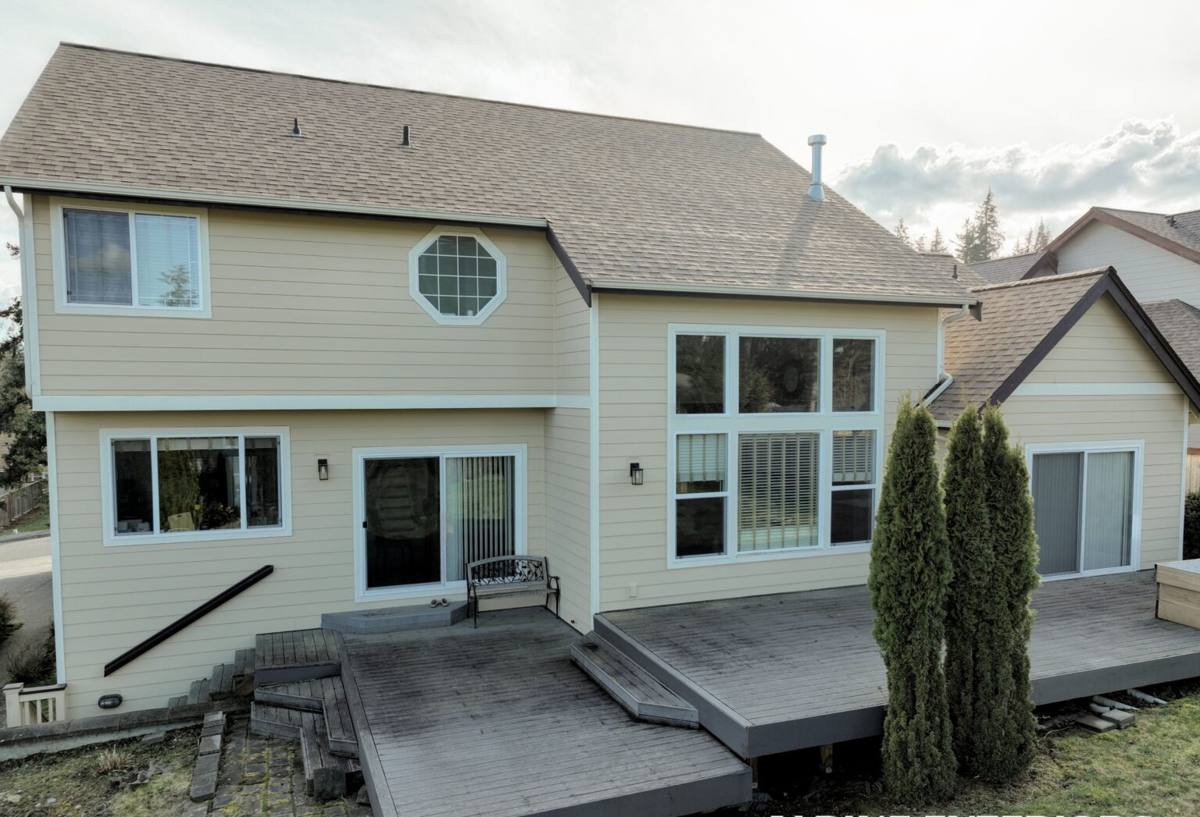
What This Climate Does to a Deck in Marietta
Salt Air Close to the Water
Homes near the water in Marietta take on a more consistent dose of salt-laden air than properties set back further into Ferndale or inland Whatcom County. Salt accelerates corrosion in exposed metal — deck screws, joist hangers, post brackets, railing hardware — and a corroding fastener loses holding strength well before it looks obviously bad from the surface. On a structure people walk and stand on, that's a real safety consideration, not just a maintenance nuisance.
Wind-Driven Rain
Storms in this part of the county don't just drop rain straight down. Wind pushes it sideways, driving it up under railings, into ledger connections, and between deck boards that have started to close their gaps as they age. A deck that would shed water fine in calm, dry weather can still trap moisture the moment wind gets involved, and out here that's often enough on its own to start rot at a connection point long before anything looks wrong from a few feet away.
A Moss Season That Runs Most of the Year
Mild temperatures and near-constant moisture give moss and mildew a long growing season in Marietta, and a horizontal deck surface is one of the first places it takes hold — it holds water longer than a vertical wall and stays damp between rain events. Shaded decks and north-facing surfaces usually show it first, and once moss and organic buildup sit against a board or a fastener head, they keep that spot wetter than the surrounding surface for longer, which speeds up whatever decay was already starting underneath.
Cosmetic Wear vs. a Structural Problem
Not everything that looks bad on a deck is actually serious, and not everything that looks minor is actually safe. Graying wood, faded composite color, surface mildew staining, and small hairline checking in boards are cosmetic — they affect appearance, not structural integrity, and they're usually addressed with cleaning, refinishing, or occasional board replacement. Soft or spongy decking, a joist that flexes more than it should underfoot, a railing post that's loosened at its base, or staining that traces back to a ledger connection are different — those point to moisture or corrosion that's compromised something load-bearing, and they need to be repaired properly rather than covered over.
The reason this distinction matters for pricing and scope is straightforward: cosmetic repairs are quick and inexpensive, while structural repairs involve opening up framing, addressing the actual moisture or corrosion source, and rebuilding the connection correctly. A contractor who quotes a repair without first sorting out which category they're actually dealing with is either guessing or planning to find out on your dime once the job is already underway.
The Repair Issues We See Most Often in Marietta
Some problems show up more consistently here than they would on a deck further from the water. The most common ones we get called out for include:
- Soft or rotting joists and ledger framing where wind-driven rain has been getting into a connection point for one or more seasons
- Corroded fasteners, joist hangers, or post hardware that have lost holding strength well before any rust is visible from the top of the deck
- Loose or wobbling railing posts, often tied to corrosion or rot at the base connection rather than the railing itself
- Cupping, splitting, or warping decking boards, especially on older wood decks that haven't been resealed on schedule
- Moss and organic buildup trapped between boards or against fastener heads, holding moisture against the surface longer than it should sit
- Ledger flashing that's failed or was never installed correctly, letting water track into the house-side connection over time
- Stair stringers and stair connections showing wear faster than the rest of the deck, since stairs see concentrated foot traffic and often less consistent drainage
Repair or Replace? What Actually Decides It
Homeowners often ask whether a given problem is worth repairing or whether it's a sign the whole deck should be replaced. There's no single rule, but a few factors consistently drive that decision:
| Factor | Favors Repair | Favors Replacement |
|---|---|---|
| Framing condition | Isolated soft spot, rest of substructure sound | Rot or corrosion spread across multiple joists or the ledger |
| Fastener & hardware condition | Localized corrosion, easily swapped out | Widespread corrosion throughout the structure |
| Decking surface | A handful of boards showing wear | Most of the surface is graying, cupping, or splitting |
| Age of the deck | Newer deck, one contained issue | Older deck already near the end of its material's typical service life |
| Cost relative to full rebuild | Repair cost is a modest fraction of replacement | Repair scope starts approaching what a rebuild would cost anyway |
In practice, most of the calls we get in Marietta turn out to be legitimate repairs — a section of framing, a run of fasteners, a handful of boards — rather than full replacements. But we won't recommend a repair just because it's the smaller job if the underlying problem is more widespread than it looks from the surface. That call gets made after an actual inspection, not from a photo or a phone description.
What a Correct Deck Repair Involves
A repair that actually holds up in this climate goes beyond swapping the obviously damaged piece for a new one. It includes:
- Tracing the moisture or corrosion source back to where it's actually entering, not just replacing the board or bracket that shows the damage
- Matching replacement framing lumber to the rest of the structure's rating and sizing, not just whatever's on hand
- Stainless steel or coastal-grade corrosion-resistant fasteners and hardware on any repaired connection, especially near the water in Marietta
- Correcting or replacing ledger flashing where that connection has failed, rather than resealing over a flashing detail that was never right
- Restoring proper board gapping and drainage where boards have closed up or shifted with age
- Sistering or fully replacing joists where rot has compromised load capacity, rather than patching around a weak member
Skipping any of those steps usually means the same problem returns in a season or two, just slightly further along than it was the first time.
How Our Process Works
We start with a site visit and an actual inspection — checking framing from underneath where it's accessible, testing decking for soft spots, looking at hardware condition, and tracing any staining or moisture back to its source. From there we lay out what we found in plain terms: what's cosmetic, what's structural, and what the repair actually requires to be done right, not just patched.
For anything involving structural framing, we handle the repair the same way we'd approach that work on a new build — correct lumber sizing, correct fastener grade for this environment, and correct flashing at any connection that ties back to the house. Once the repair is done, we walk through what the deck still needs from the homeowner going forward, since even a well-repaired deck isn't maintenance-free in this climate.
Keeping a Repaired Deck From Needing the Same Fix Again
A properly done repair should hold for years, but a few habits make a real difference in how long it actually lasts out here:
- Rinse the deck surface periodically to clear salt residue and organic buildup before it works into the wood or decking material
- Keep gaps between boards clear of leaves, needles, and debris so water and air can move through the way the design intends
- Check railing posts and hardware at least once a year, ideally before the wet season sets in
- Trim back branches or plants that hold shade and moisture against the deck surface longer than it needs
- Reseal or refinish wood decking on the schedule the product actually needs, not just when it starts looking gray
- Address any soft framing, loosening hardware, or new staining right away — those get more expensive to fix the longer they sit, not less
Why It Matters That We Already Work Marietta
A crew that mostly works decks further inland can still repair one competently, but a deck in Marietta deals with variables that come up more often here than they do elsewhere in Ferndale or the rest of Whatcom County — sustained salt exposure this close to the water, wind-driven rain finding its way into connections that would stay dry further inland, and a moss season long enough to work against a deck almost year-round. Working this area regularly means we're not guessing at those conditions on your project. We've seen which repair approaches actually hold up against Marietta's specific mix of salt air, driving rain, and moss, and which shortcuts just delay the same call for a few more seasons.
That familiarity also shows up in the smaller judgment calls — knowing which fastener grade is worth the extra cost on a repair this close to the water, and being straightforward with you about whether a problem is a quick fix or the first sign of something bigger.
Get a Straight Answer About Your Deck
Whether you've got one soft board you're worried about or a deck that hasn't been looked at in years, we're happy to take a look and give you an honest read on what it actually needs. Reach out below for a free, no-pressure estimate.