 Ferndale Siding
 Why Marietta Roofs Take More Punishment Than Most
Marietta sits low and close to the water at the edge of Bellingham Bay, in the same stretch of Whatcom County where the Nooksack River lowlands meet the coast. That location is part of what makes it a good place to live, and it's also exactly why roofs here wear differently than roofs twenty miles inland. Salt-laden air off the bay works on anything exposed and metallic — fasteners, flashing, vent caps, drip edge — long before it would fail in a drier climate. Add the driving rain that comes with fall and winter storms rolling off the water, often pushed sideways by wind instead of falling straight down, and you get moisture testing every seam, lap, and penetration on a roof, not just the flat field of it.
Then there's moss. Whatcom County's damp, mild winters and shaded north-facing slopes give moss and lichen months at a time to get established. Moss isn't just cosmetic — it holds water against the shingle surface long after a storm has passed, works into fastener holes, and lifts shingle edges enough for wind-driven rain to get underneath. A roof here rarely fails from one dramatic event. It fails from years of salt, rain, and moss all working on the same weak points at once.
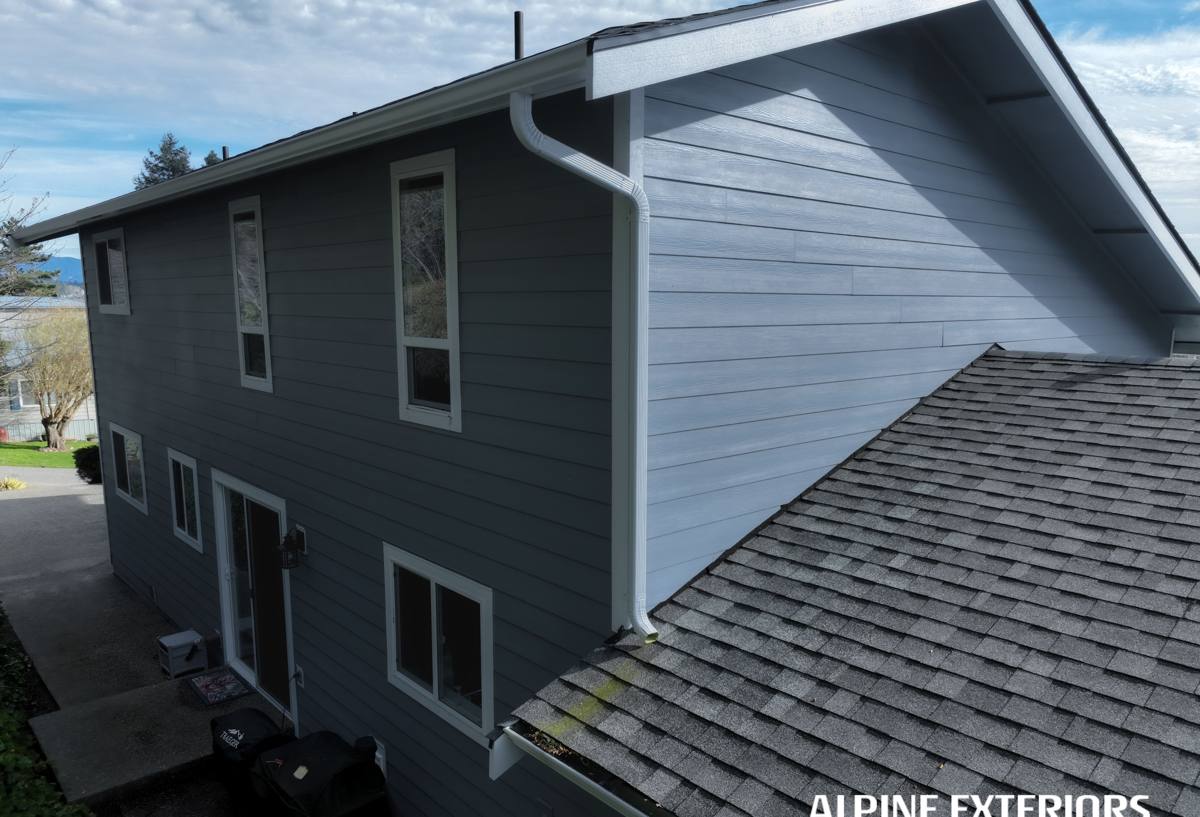
Signs a Marietta Home Needs a Replacement, Not Another Repair
Most homeowners call us after a leak, but by the time water is visible inside the house, the roof has usually been compromised for a while. Here's what we look for when deciding whether a repair still makes sense or whether it's time to replace:
- Granule loss heavy enough that you can see bare, shiny patches on the shingle surface
- Shingles that are curling, cupping, or cracking, especially on south- and west-facing slopes that take the most sun and wind
- Moss or lichen established across a significant portion of the roof, not just a shaded corner
- Soft or spongy spots when walking the roof deck, which usually means the sheathing underneath has taken on moisture
- Staining, daylight, or a musty smell in the attic
- Multiple repair calls in the past couple of years for different leaks rather than the same recurring spot
- A roof already past, or close to, the manufacturer's expected service life for its material and installation
One or two of these on their own might still be repairable. Several at once usually means the underlayment and decking have been absorbing damage for longer than the shingles let on.
What a Correct Roof Replacement Actually Involves Here
Tear-Off and Deck Inspection
We remove the existing roofing down to the deck rather than layering over it. That's the only way to actually see the condition of the sheathing, catch soft or delaminated plywood before it becomes a bigger problem, and give the new system a solid, flat surface to bond to. Any damaged decking gets replaced before anything new goes down.
Underlayment and Water Barrier
Given how much wind-driven rain this area sees, we don't treat underlayment as an afterthought. Self-adhered ice-and-water barrier goes at eaves, valleys, and around penetrations — the spots most likely to see standing water or wind-forced moisture — with synthetic underlayment across the rest of the field for a consistent, tear-resistant layer beneath the roofing material.
Ventilation
A roof that can't breathe traps moisture in the attic, which speeds up deck rot and gives moss and mildew a head start from underneath. We check intake at the soffits and exhaust at the ridge and make sure they're balanced, not just present.
Flashing, Valleys, and Penetrations
Chimneys, skylights, valleys, and pipe boots are where the vast majority of leaks start, not the open field of the roof. We install new flashing rather than reusing old pieces, and we pay particular attention to valleys, since that's where water concentrates fastest in a heavy Pacific Northwest downpour.
Choosing a Roofing Material for This Climate
There's no single "best" roofing material — the right choice depends on your budget, your roof's exposure, and how much maintenance you're willing to keep up with. Here's how the common options stack up for a home near the water in Whatcom County:
| Material | Typical Lifespan | Moss Resistance | Salt Air Durability | Maintenance |
|---|---|---|---|---|
| Asphalt composition shingle | 20-30 years | Moderate; benefits from algae-resistant granules | Good, with corrosion-resistant fasteners and flashing | Low to moderate |
| Standing seam metal | 40-50+ years | Strong; sheds moss and debris well due to slick surface | Very good with a marine-grade coating; standard steel needs proper coating to avoid corrosion | Low |
| Cedar shake | 20-30 years with upkeep | Poor without regular treatment; retains moisture | Moderate; needs consistent maintenance near salt air | High |
We install all three, but we're upfront about trade-offs. Cedar shake has real curb appeal, but in a damp, shaded, salt-air environment it demands a maintenance schedule most homeowners underestimate going in — regular cleaning and treatment to keep moss and rot at bay. Asphalt shingle with algae-resistant granules and proper ventilation is the most common choice for good reason: it balances upfront cost, lifespan, and low maintenance well. Metal costs more up front but asks the least of you afterward, which some homeowners value enough to make the trade.
Our Roof Replacement Process
- On-site inspection of the current roof, attic, and ventilation, with honest feedback on repair versus replacement
- Written estimate covering material options, scope of work, and a realistic cost range
- Material selection and scheduling around a stretch of dry weather where possible
- Protection of landscaping, siding, and gutters before work begins
- Full tear-off and disposal of the old roofing
- Deck inspection and repair of any compromised sheathing
- Installation of ice-and-water barrier, underlayment, new flashing, and the chosen roofing material
- Ventilation check and correction if intake or exhaust is inadequate
- Full site cleanup, including a magnetic sweep for stray nails
- Final walkthrough so you can see the finished work and ask questions before we consider the job done
What Affects the Cost of a Roof Replacement in Marietta
Every roof is different, so we don't quote a number until we've actually looked at yours. But these are the main factors that move the price up or down:
| Factor | Why It Matters |
|---|---|
| Roof size and pitch | More square footage and steeper pitches mean more material and more labor time |
| Material choice | Asphalt shingle, metal, and cedar shake carry different material and labor costs |
| Decking condition | Rotted or soft sheathing discovered during tear-off adds repair cost, but skipping it isn't an option |
| Number of existing layers | Removing multiple old layers takes more labor and disposal cost than a single layer |
| Roof complexity | Valleys, dormers, chimneys, and skylights each add flashing work and time |
| Accessibility | Steep lots, limited driveway access, or tight setbacks near the water can affect staging and disposal logistics |
As a broad guide, a straightforward asphalt shingle replacement on an average home typically runs in the mid four figures to low five figures, with metal and cedar shake landing higher. The only way to know your actual number is a real inspection.
Keeping a New Roof Moss-Free and Watertight
A properly installed roof still needs some upkeep in this climate, especially given how long moss season runs here. A little attention twice a year goes a long way:
- Clean gutters and downspouts each fall before the heavy rains start, so water has somewhere to go
- Treat moss and lichen on shaded slopes before it spreads across the whole roof
- Trim back overhanging branches to cut down on shade, debris, and the moisture they hold against the roof
- Have flashing, valleys, and pipe boots inspected every year or two, since these are the first places a leak starts
- Check attic ventilation isn't blocked by insulation or debris, so moisture keeps moving out instead of settling
Why a Crew That Already Works in Marietta Matters
Roofing crews that mostly work drier, inland areas don't always plan for what a home this close to Bellingham Bay actually deals with — the combination of salt air, sideways rain, and near-constant shade-driven moss growth. Knowing which slopes on a Marietta roof need extra flashing attention, which fasteners hold up against salt exposure, and how local permitting works isn't something you pick up on a single job. It comes from working roofs in this specific stretch of Whatcom County season after season. That local familiarity shows up in the details — the flashing choices, the fastener spec, the ventilation balance — long before it shows up as a problem you'd notice from the ground.
If your roof is showing its age or you just want a straight, no-pressure opinion on where it stands, we're happy to take a look. Fill out the form below for a free estimate — no obligation, no pressure, just an honest assessment of what your Marietta home actually needs.