 Ferndale Siding
 Metal Roofing in Birch Bay: A Roof Built for the Water
Birch Bay sits right on the shoreline in northern Whatcom County, and that location puts more demand on a roof than most homes a few miles inland ever deal with. Salt-laden marine air moves off the water and settles on every exposed surface. Wind pushes rain sideways into laps, flashing, and penetrations instead of letting it run straight off. And a long, mild, wet season keeps moss and organic growth active on shaded roof planes for most of the year. A roof out here isn't just shedding water for a few storms a winter — it's fighting corrosion, wind-driven moisture, and biological growth almost continuously.
Metal roofing, installed correctly, is one of the strongest answers to that combination. It's not the right fit for every budget or every house, and it's not a magic material that skips the need for good detailing. But when it's specified and installed with this specific climate in mind — the right alloy, the right coating, the right fastening system, and flashing that accounts for wind-driven rain rather than just gravity — it holds up to Birch Bay's exposure better than most alternatives, and it does it with less recurring maintenance than a homeowner might expect.
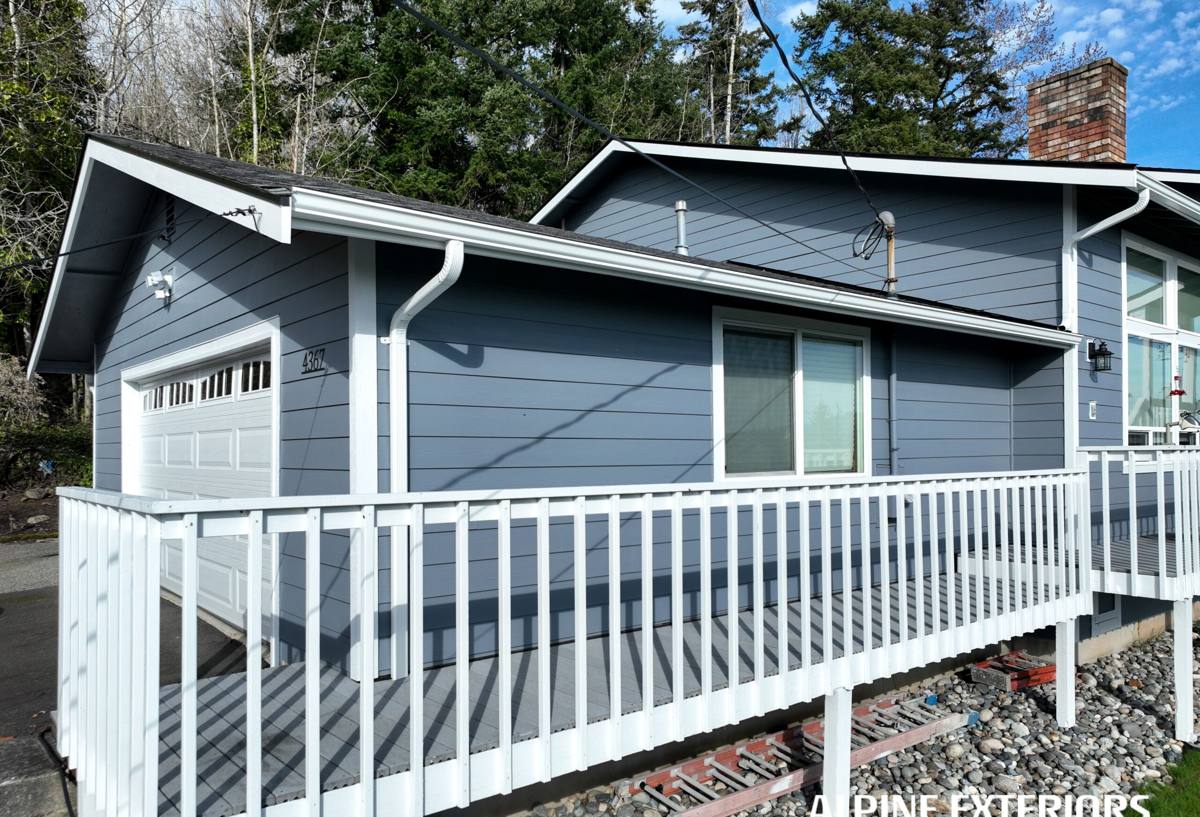
What This Climate Does to a Roof
Salt Air and Corrosion
Direct waterfront exposure means Birch Bay roofs take on more airborne salt than most of Whatcom County. Salt accelerates corrosion in any metal component — fasteners, flashing, gutters, and the roofing material itself — and it works fastest wherever a coating is thin, scratched, or was never rated for coastal exposure in the first place. This is the single biggest reason generic, big-box metal roofing components underperform on a property like this: they're built to a national average, not to a shoreline.
Wind-Driven Rain
Being on the water also means more sustained wind, and wind-driven rain doesn't behave like rain falling straight down. It gets pushed up under laps, sideways into fastener penetrations, and into roof-to-wall transitions that would stay dry in a calmer, more sheltered location. A roofing detail that's technically "up to code" inland can still leak here if it wasn't built with lateral water pressure in mind.
Moss and Organic Growth
Mild temperatures, shade, and near-constant moisture add up to a moss and mildew season that runs most of the year on north-facing and tree-shaded roof planes across this part of the county. Moss doesn't just look bad — it holds moisture against the roofing material, works into laps and fastener heads, and shortens the life of anything that isn't smooth or corrosion-resistant enough to shed it.
Why Metal Roofing Holds Up Here
A correctly specified metal roof addresses all three of those pressures at once, which is why it's become a common upgrade choice for waterfront and near-waterfront homes in this area:
- Smooth, non-porous surface: Metal doesn't give moss the textured, absorbent surface it needs to establish the way asphalt granules do, so growth is slower to take hold and easier to keep off.
- Engineered corrosion protection: Coastal-appropriate steel and aluminum panels use coatings specifically formulated to resist salt-driven corrosion, rather than a generic finish meant for an average inland climate.
- Fewer failure points: A well-designed standing seam system has far fewer exposed fasteners and penetrations than shingles or exposed-fastener panels, which means fewer places for wind-driven rain to find a way in.
- Long service life: Properly installed steel or aluminum roofing commonly runs in the range of 40 to 60 years, well beyond most other roofing materials, provided the coating and fastening system were matched to the exposure.
- Fire resistance: Metal roofing is non-combustible, which matters for safety and can matter for insurance as well.
None of that means metal roofing is maintenance-free. It means the maintenance it does need is more predictable and less frequent than what a shingle or wood roof needs in this same environment.
Choosing the Right Metal Roofing System for Birch Bay
Standing Seam vs. Exposed-Fastener Panels
Standing seam systems use raised, interlocking seams and concealed clips instead of screws driven through the panel face. That matters directly for this climate: there are no exposed fastener heads for wind-driven rain to work against, and the clips allow the metal to expand and contract with temperature swings without stressing the fasteners. Exposed-fastener panels — ribbed or corrugated styles — cost less upfront, but every screw penetration is a potential leak point, and the rubber washers under those screws degrade faster in salt air and UV exposure than they would inland. On a waterfront property, that difference in long-term performance is usually worth the added upfront cost of standing seam.
Steel vs. Aluminum
Steel roofing, typically coated with a zinc-aluminum alloy coating and then a painted finish, is strong and generally more affordable than aluminum. But steel's corrosion resistance depends entirely on that coating staying intact — any cut edge, scratch, or compromised finish becomes a starting point for rust, especially with this much salt in the air. Aluminum doesn't rust at all, since it doesn't contain iron, which makes it a common choice for homes with the most direct water exposure. It costs more and is a bit softer than steel, but for a property sitting right on the bay, that trade-off is often worth it.
Coating and Finish
The paint finish on a metal roof matters as much as the base metal underneath it. A PVDF-based finish (often referred to by trade names like Kynar 500) holds color and gloss far longer against sun, salt, and moisture than a lower-grade polyester finish. In an environment where UV and salt are both working against the coating year-round, that finish quality is one of the biggest factors in how the roof actually looks and performs after fifteen or twenty years, not just on installation day.
What Correct Installation Involves
A metal roof only performs the way it's designed to when the details underneath the panels are done right. In a wind-driven rain climate like Birch Bay's, we treat these as standard practice, not optional upgrades:
- Solid decking with synthetic underlayment: A continuous, solid roof deck with a high-quality synthetic underlayment (and self-adhered membrane at eaves, valleys, and penetrations) gives wind-driven rain a second line of defense if it ever gets past the panel laps.
- Matched fasteners and hardware: Stainless steel or coated fasteners rated for coastal exposure, sized and spaced to the manufacturer's specification rather than a generic pattern.
- Correct flashing at every transition: Valleys, chimneys, vent penetrations, and roof-to-wall intersections need flashing that's lapped and sealed for lateral water pressure, not just water running downhill.
- Galvanic separation: Dissimilar metals in direct contact — say, copper flashing against an aluminum panel, or the wrong fastener alloy against steel — cause accelerated corrosion at that contact point. Materials and hardware need to be matched, or properly isolated, throughout the system.
- Ridge and soffit ventilation: Proper airflow keeps condensation from forming on the underside of the panels, which is a real risk in a humid, marine climate if the attic or roof assembly can't breathe.
- Panel orientation for prevailing wind: On an exposed waterfront roof, panel laps and seam direction should account for the prevailing wind and rain direction off the bay, not just follow a standard layout.
A Checklist Before Hiring for Metal Roofing in Birch Bay
- Ask which alloy and coating they recommend for this specific waterfront exposure, and why
- Confirm whether they're proposing standing seam or exposed-fastener panels, and what that means for long-term maintenance
- Ask how they detail flashing at valleys and roof-to-wall transitions for wind-driven rain specifically
- Confirm current Washington contractor licensing and active liability insurance
- Get separate warranty terms in writing for the paint finish, the panel material, and the installation labor — these are usually three different warranties, not one
Cost Factors to Understand
Metal roofing costs more upfront than asphalt shingles, and the range within metal roofing itself varies significantly based on the system and materials chosen. The table below is a general guide to how the common options compare in this climate, not a quote — actual pricing depends on roof complexity, access, and the current condition of the deck and framing underneath.
| System | Corrosion Resistance | Maintenance in Salt Air | Relative Cost |
|---|---|---|---|
| Standing seam aluminum | Highest — won't rust | Low | Higher |
| Standing seam steel (coated) | High, dependent on coating integrity | Low to moderate | Higher |
| Exposed-fastener steel (ribbed/corrugated) | Moderate — fastener washers are a wear point | Moderate; washer replacement over time | Lower |
| Stone-coated steel panels | Good, provided cut edges are sealed | Moderate | Moderate |
The right choice usually comes down to how directly exposed the roof is to wind and salt spray, how long the homeowner plans to be in the house, and how much upfront cost they want to trade against long-term maintenance. We walk through that trade-off honestly rather than steering every homeowner toward the most expensive option by default.
Our Process
We start with an on-site assessment of the existing roof and deck — checking for soft spots, past moisture damage, ventilation, and how the current system has held up to this specific exposure. From there we go over system options with the homeowner: panel style, alloy, coating, and color, along with the honest trade-offs between them for this location. Once a system is chosen, we put together a clear written scope before any work begins.
During installation, the underlayment, flashing, fastener selection, and ventilation details described above are handled as our standard process, not as line-item upgrades. We do a final walkthrough with the homeowner before calling the job complete, so there's a clear understanding of what was installed and what routine maintenance, if any, it will need going forward.
Why a Local Birch Bay Crew Matters
A crew that regularly works this stretch of coastline already knows how salt exposure, wind direction, and sustained moisture behave differently here than they do even a short distance inland. That shows up in practical decisions — which coating grade actually holds up on a bay-facing roof, how panel laps should run relative to prevailing wind, where extra flashing detail is worth the added labor. Those are the kinds of decisions that separate a metal roof that still looks and performs well decades from now from one that starts showing corrosion or leaks within a handful of wet seasons.
Beyond the technical side, working locally also means we're familiar with the permitting and inspection expectations in Whatcom County and can plan a project around them instead of running into surprises partway through.
Maintenance: What a Metal Roof Actually Needs Here
One of the appeals of metal roofing is how little routine maintenance it needs compared to shingles or wood roofing, but "low maintenance" isn't "no maintenance," especially this close to the water. A simple annual check — clearing debris and moss from valleys, confirming fasteners and sealant around penetrations are intact, and looking for any scratches or damage that could expose bare metal — catches small issues before salt air turns them into bigger ones. Gutters and downspouts should be kept clear as well, since standing water and trapped debris are what actually cause most of the localized corrosion we see on otherwise sound metal roofs.
If you're weighing a metal roof for a Birch Bay property, or trying to compare it honestly against other options for your specific roof, we're happy to walk it with you and give a straight read on what it needs. Reach out below for a free, no-pressure estimate.