 Ferndale Siding
 Board and batten has become one of the most requested siding profiles for homes in and around Nooksack, and it's not hard to see why. The vertical lines read as farmhouse, as modern rural, as timeless Pacific Northwest — a look that fits the mix of newer builds and older farmhouses scattered through this part of Whatcom County. But board and batten is also one of the least forgiving profiles to install badly. Get the layout, fastening, and moisture management wrong, and the same lines that make the siding attractive will telegraph every flaw. Get it right, and it's one of the most durable, low-drama siding systems you can put on a house here.
Why Board & Batten Fits This Part of Whatcom County
Nooksack sits in a landscape of open fields, tree lines, and river bottomland, where homes tend to be more spread out and the architecture leans toward barns, farmhouses, and simple gable-roofed builds. Board and batten has always belonged on that kind of structure — it originated as a practical way to cover gaps between wide barn boards, and the vertical shadow lines still read as agricultural and honest rather than fussy. On newer construction in the area, it's also become a popular way to break up a facade, pairing wide board sections with lap siding or trim to add texture without adding busyness.
That said, a good-looking installation and a durable one aren't automatically the same thing. The batten strips create dozens of extra vertical seams compared to standard lap siding, and every one of those seams is a place water can get behind the cladding if it isn't detailed correctly.
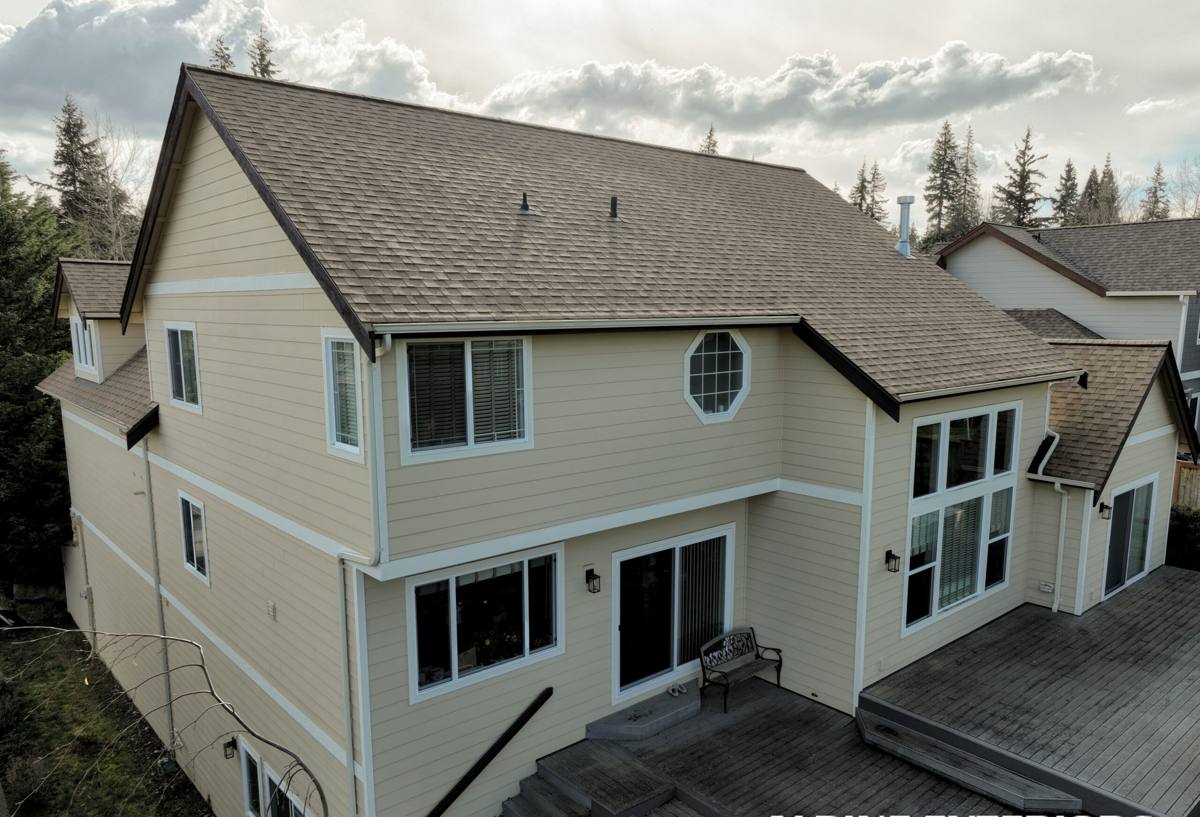
What Whatcom County's Climate Actually Does to Vertical Siding
Homes around Ferndale and Nooksack deal with a climate that's harder on siding than it looks from the outside. It rarely feels dramatic — no hurricanes, no extreme heat — but the steady combination of moisture and low sun exposure wears materials down over years, not days.
Wind-Driven Rain
Rain here doesn't just fall, it blows. Storms moving in off the Strait of Georgia and Puget Sound push rain sideways against west- and south-facing walls, and that driving rain finds any gap in a siding system's drainage plane. On board and batten specifically, the batten-to-board seams are under more wind pressure than a flat lap seam, which makes correct flashing and an actual drainage gap behind the siding non-negotiable.
Salt Air and Moisture
Ferndale and the surrounding lowlands sit close enough to tidal water that homes in this area see a measurable amount of salt-laden moisture in the air, especially during winter storms. Salt air accelerates corrosion on fasteners and metal flashing and speeds up the breakdown of coatings that aren't built for it — a real factor even for homes set back from the water, like many around Nooksack.
The Long Moss Season
Whatcom County's moss season isn't really a season — for shaded, north-facing, or tree-lined walls, it's most of the year. Moss and algae hold moisture against the siding surface far longer than open air would, which is exactly the condition that causes swelling, delamination, and paint failure in siding products that aren't rated for constant damp exposure.
Why Board & Batten Is Harder to Get Right Than It Looks
A board and batten wall isn't one big panel — it's a system of vertical boards, cover strips, fasteners, and a drainage plane underneath, all working together. A few of the details that separate a correct installation from a problem waiting to happen:
- Fastener placement — battens must be fastened into solid backing, not just through the board beneath them, or the whole assembly can work loose under wind load.
- Expansion clearance — every siding material moves slightly with temperature and moisture. Boards installed too tight against battens, trim, or each other will buckle over time.
- A true drainage gap — a rainscreen gap behind the siding lets any water that does get past the surface drain and dry out, instead of sitting against the wall sheathing.
- Flashing at every horizontal transition — window heads, roof lines, and trim boards all need flashing detailed to shed water outward, not just caulk.
Caulk-dependent installations are the most common shortcut we see. Caulk is a maintenance item, not a waterproofing strategy — it degrades under UV and temperature cycling, and once it fails, the seams it was covering have no backup.
James Hardie Board & Batten: The Only System We Install
We install James Hardie fiber cement exclusively, including for board and batten profiles, and we don't offer vinyl, LP SmartSide, or primed wood alternatives for this style. That's a deliberate standard, not a sales pitch.
Vinyl board and batten is lightweight and low cost, but it's a rigid plastic panel that expands and contracts significantly with temperature swings, and in a climate with the humidity swings Whatcom County sees, that movement shows up as visible waviness over time. Engineered wood products like LP SmartSide perform reasonably well when perfectly maintained, but they rely on an engineered wood core and a factory treatment to resist moisture — any breach in that treatment, from a cut edge to a fastener hole, opens the door to swelling. In a region with this much sustained dampness and moss growth, that's a maintenance burden we're not willing to put on a homeowner's roof — or wall, in this case.
James Hardie's fiber cement is cement, sand, and cellulose fiber — it doesn't have an organic core to rot, it doesn't feed moss the way wood fiber does, and it holds its shape through the area's wet winters and drier summers. Hardie's ColorPlus factory finish is baked on under controlled conditions, which gives it far better UV and moisture resistance than field-applied paint, and it's backed by a real transferable finish warranty. For board and batten specifically, we typically work with Hardie's panel and batten systems engineered for vertical applications, finished in one of the ColorPlus palette options rather than requiring separate on-site painting.
What a Correct Installation Involves
The materials only matter if the installation respects them. On a board and batten project, our approach includes:
Building Envelope First
Before any siding goes up, we inspect and, where needed, replace the weather-resistant barrier underneath. This is the layer that actually keeps water out of the wall assembly — the siding is the first line of defense, not the only one.
A Real Rainscreen Gap
We install furring or a dedicated rainscreen product to create a drainage and ventilation gap behind the panels. This lets incidental moisture drain and the wall cavity dry, instead of trapping dampness against the sheathing — especially important on the shaded walls around Nooksack that stay damp longest.
Fastening to Manufacturer Spec
Hardie publishes specific fastener types, spacing, and embedment requirements for board and batten assemblies, and wind and moisture performance depends on following them exactly — not approximating them.
Flashing and Trim Detail
Every window, door, and roof transition gets proper metal or manufactured flashing integrated with the weather barrier, so water is directed out and down rather than relying on sealant alone.
Our Process, Start to Finish
We keep the process straightforward because most siding projects go wrong from communication gaps, not craftsmanship gaps.
- On-site assessment — we walk the exterior, check the current siding and sheathing condition, and measure for the board and batten layout that fits the home's proportions.
- Plan and quote — we lay out board width, batten spacing, and ColorPlus color selection, with a written estimate before any work starts.
- Prep and moisture management — removal of old siding, inspection and repair of sheathing, weather barrier installation, and rainscreen setup.
- Installation — boards and battens installed to Hardie's fastening and clearance specifications, with flashing integrated at every transition.
- Final walkthrough — we review the finished work with the homeowner before calling the job complete.
Maintenance in a Moss-Prone, Rain-Heavy Climate
Correctly installed Hardie board and batten is low-maintenance, but "low" isn't "none." A short seasonal routine goes a long way in this climate:
- Rinse siding annually, focusing on shaded and north-facing walls where moss and algae take hold first.
- Keep gutters clear so overflow doesn't run down the wall surface repeatedly during fall and winter storms.
- Trim back vegetation and tree limbs that keep siding in shade and slow drying after rain.
- Check caulking at trim joints and penetrations once a year and touch up if it's cracking or pulling away.
- Watch for any soft spots, staining, or discoloration near ground level, which can indicate splashback or drainage issues rather than a siding problem itself.
Cost Factors for Board & Batten in This Area
Board and batten costs more than standard lap siding to install because it uses more linear material and more labor hours per square foot of coverage. The table below outlines what typically drives cost up or down on a Whatcom County project — we'll walk through your home's specific factors during a free estimate rather than quoting from a general range.
| Cost Factor | Impact | Why It Matters Here |
|---|---|---|
| Board and batten spacing/width | Moderate | Narrower spacing means more battens, more fasteners, and more labor hours |
| Wall complexity (gables, dormers, cuts) | High | Farmhouse-style rooflines common in this area add cutting and flashing time |
| Existing siding removal and sheathing repair | High | Older homes near Nooksack sometimes have moisture damage hidden under old siding |
| Rainscreen/drainage gap installation | Moderate | Adds labor and material but is essential given the area's driving rain |
| ColorPlus finish selection | Low to Moderate | Factory-finished color eliminates future painting costs |
Why a Crew That Already Works Nooksack Matters
Board and batten installed to spec in a dry climate and board and batten installed to spec here are not quite the same job. A crew that regularly works this stretch of Whatcom County already knows which walls take the worst of the wind-driven rain, how much moss pressure to expect on shaded elevations, and how the area's salt-laden winter air affects fastener and flashing choices over the long run. That local pattern recognition shows up in small decisions — where to add extra flashing, which walls need a more generous drainage gap — that a crew unfamiliar with the area might not think to make.
It also matters for permitting and scheduling. Working consistently in and around Ferndale and Nooksack means understanding local permitting expectations and planning installation around the area's wetter months, rather than treating every job as a first attempt.
If you're weighing board and batten for a home in the Nooksack area, we're happy to walk the property, talk through layout and color options, and give you a straightforward, no-pressure estimate — just fill out the form below.