 Ferndale Siding
 Siding That Has to Work in the Nooksack River Valley
Nooksack sits inland from Ferndale along the Nooksack River valley, a part of Whatcom County where dense tree cover, agricultural land, and river-bottom humidity combine into one of the harder climates in the region for exterior siding to survive. Homes here deal with the same marine-influenced rain and long wet season as the rest of Whatcom County, but tree-shaded lots and valley moisture hold that dampness against a house longer than it lingers on open coastal properties. That's a meaningful difference when you're choosing a siding product, because the materials that hold up fine on a breezy, sun-exposed lot can struggle on a shaded, low-airflow one.
Salt air, driving rain, and a long moss season all take their toll on siding across this part of the county, and Nooksack gets its own version of that stress test. Constant moisture plus shade is exactly the combination that grows moss fastest, softens wood fiber over time, and keeps siding surfaces damp for days after a storm instead of hours. Any siding installed here needs to handle sustained moisture exposure without swelling, delaminating, or feeding rot at the seams — and it needs a finish that doesn't turn into a moss farm within a few years of installation.
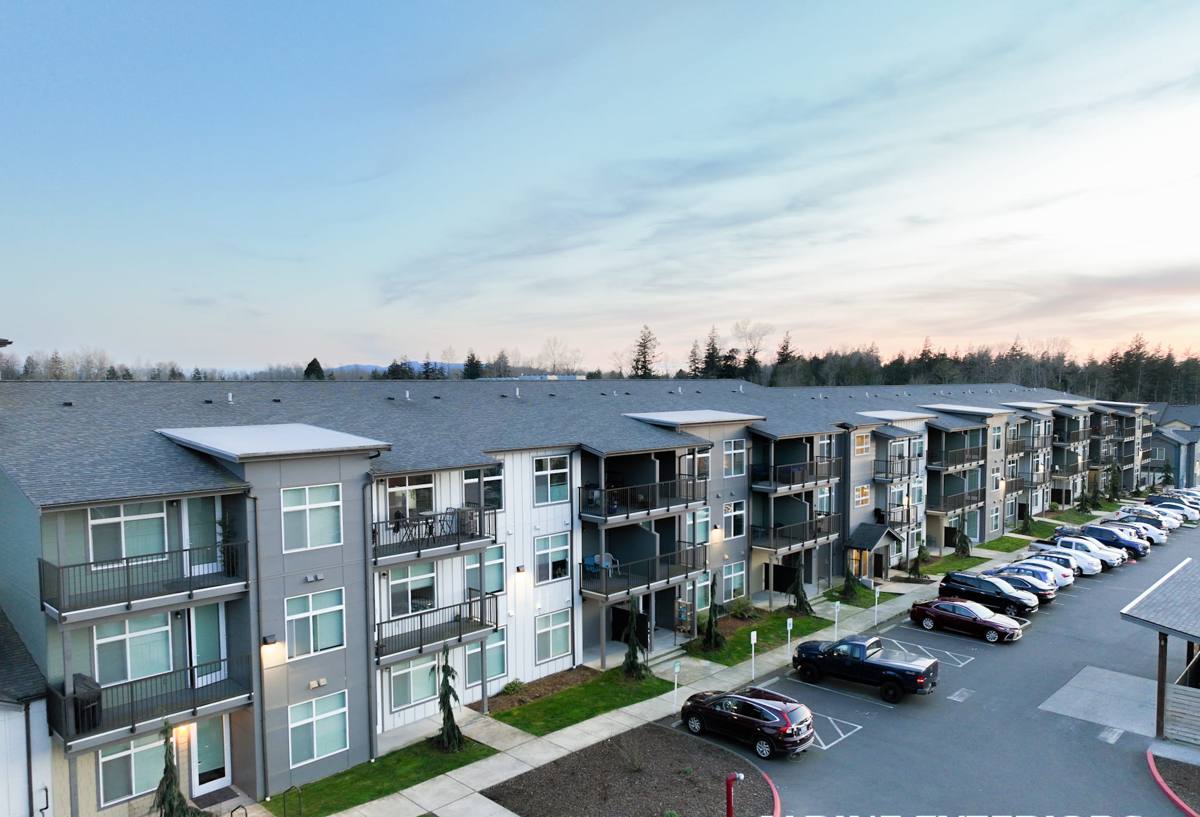
What Constant Moisture Does to the Wrong Siding Choice
Most siding failures we see in this area aren't from one bad storm — they're from years of ordinary Whatcom County weather working on a product that wasn't built to shed it. A few patterns show up over and over on homes with the wrong siding for this climate:
- Wood-based composite siding (like LP SmartSide) uses an engineered wood strand core. Any crack, unsealed cut edge, or failed caulk joint lets moisture into that core, and once it's in, it swells and doesn't fully release even after the wood dries — that's a structural, not cosmetic, problem.
- Vinyl siding doesn't rot, but it isn't fastened tight to the wall, which lets moist air circulate behind it. In a shaded, humid spot like Nooksack, that gap becomes a comfortable place for mold and moss to establish on the sheathing and trim behind the panels, out of sight.
- Primed spruce or cedar is a real wood product, and real wood absorbs water. On a sun-exposed wall it dries out between storms; on a shaded, tree-covered lot in this valley it often doesn't get the chance before the next round of rain, and that's when checking, cupping, and paint failure set in.
- Any siding with unfinished or field-painted surfaces is only as good as the paint job protecting it, and paint is the first thing that fails under repeated wet-dry cycling and moss growth.
None of these products are junk — they all have a place. But none of them were engineered specifically for a climate like this one, and that's the difference that shows up ten or fifteen years down the road.
Why We Install Only James Hardie Fiber Cement
We made a decision as a company to install James Hardie fiber cement siding exclusively — not vinyl, not LP SmartSide, not Cemplank or Allura, not primed wood. That's not a marketing position, it's a standard we hold because of what we've seen wood-based and cavity-prone products do in exactly this kind of climate over time.
James Hardie fiber cement is made from cement, sand, and cellulose fiber, engineered into a rigid, non-combustible board that doesn't have the moisture-absorbing wood core of composite products. It doesn't swell at cut edges the way engineered wood does, it doesn't provide the airspace behind panels that vinyl does, and it doesn't rely on you keeping up with repainting to stay protected the way raw wood does. It's also factory-finished with Hardie's ColorPlus coating system, which is baked on under controlled conditions rather than field-applied — a meaningfully more durable finish than paint rolled on at the jobsite, and one that holds color and resists the streaking and fading that moss-prone, damp environments accelerate.
None of that means Hardie siding is maintenance-free or immune to the local climate. It still needs to be installed correctly, with the right gaps, flashing, and fastening, to perform the way it's designed to. But it starts from a material that's already built for wet, shaded, moss-heavy conditions, instead of one that's fighting them from day one.
The HZ5 Climate Engineering Behind the Product
James Hardie doesn't make one generic siding product — it engineers different formulations for different climate zones, and the Pacific Northwest falls under Hardie's HZ5 category, built specifically for regions with sustained moisture, moderate freeze-thaw activity, and long wet seasons. That matters for a property like a home in Nooksack, where the siding is dealing with rain, humidity, and shade for a large share of the year.
The HZ5 formulation is engineered for moisture and impact resistance appropriate to this region's weather pattern, and it's available across the Hardie product lines most commonly used on homes here:
- HardiePlank lap siding — the traditional horizontal look, available in a range of textures and exposures, the most common choice for full re-sides.
- HardiePanel vertical siding — often used for accent walls, gable ends, or a modern board-and-batten look.
- HardieShingle siding — a shingle-profile option for homes going for a more traditional or craftsman appearance without the moisture liabilities of real wood shingles.
- HardieTrim boards — matching trim material so corners, fascia, and window surrounds are made of the same climate-engineered fiber cement rather than paint-grade wood that will fail on its own schedule.
Choosing the right profile is partly aesthetic and partly practical — a shaded, tree-heavy lot benefits from thinking through how much of the wall stays damp longest and whether trim details create ledges where moss and debris can collect.
What a Correct Installation Actually Involves
Fiber cement siding is only as good as the installation behind it. Hardie's own warranty terms and installation guidelines are specific for a reason — in a climate like this one, small installation shortcuts turn into moisture problems faster than they would somewhere dry. A correct install includes:
| Installation Detail | Why It Matters Here |
|---|---|
| Weather-resistant barrier behind the siding | Provides a secondary drainage plane in case any moisture gets past the siding face — essential in a high-rainfall valley climate |
| Proper flashing at windows, doors, and roof lines | These are the highest-risk water entry points on any home, and Whatcom County's rain volume punishes any flashing shortcut quickly |
| Correct fastener type, placement, and spacing | Wrong fasteners or over-driving them can crack boards or void the manufacturer warranty |
| Manufacturer-specified gaps and clearances | Siding needs clearance from grade, roofing, and decks so it can drain and dry — tight clearances trap moisture against the board |
| Caulking only where Hardie specifies it | Over-caulking traps moisture instead of letting it drain; under-caulking leaves gaps exposed — both are common mistakes |
| Field-cut edge sealing | Cut ends need to be sealed per manufacturer spec so raw edges don't wick moisture over time |
Every one of these details is inspectable, and every one of them is something an installer can get wrong without it being visible until years later. This is the part of the job that separates a siding install that lasts three decades from one that starts showing problems in five years.
Our Process for a Nooksack Project
The process is the same whether we're working on a home right in Ferndale or out toward Nooksack — the details just get adjusted for the property's exposure, tree cover, and existing siding condition:
- On-site assessment. We look at the existing siding, sheathing condition, moisture history, sun/shade exposure, and any areas where past moisture damage or moss buildup point to problem spots.
- Product and profile selection. We walk through HardiePlank, panel, and shingle options, exposure widths, and ColorPlus color choices based on the home's style and how much shade the walls get.
- Removal and inspection. Old siding comes off and we inspect the sheathing underneath — this is often where hidden moisture damage from years of the wrong siding shows up, and it needs to be addressed before new siding goes on, not covered over.
- Weather barrier and flashing installation. This is the layer that does the real water management work, and it's not optional or something to rush.
- Hardie installation to manufacturer spec. Correct fastening, gaps, and sealing, done to Hardie's published installation guidelines so the product performs and the warranty stays valid.
- Final walkthrough. We go over the finished work with the homeowner before considering the job done.
What Affects the Cost of a Hardie Siding Project
Every property is different, and we don't quote a job without seeing it, but these are the main factors that move the price up or down on a Hardie re-side in this area:
| Cost Factor | Typical Impact |
|---|---|
| Home size and wall complexity | Larger homes and more corners, gables, and cutouts increase material and labor |
| Existing siding removal | Removing and disposing of old siding adds labor beyond a straightforward re-side |
| Hidden sheathing or moisture damage | Damaged sheathing found during tear-off needs repair before new siding goes on — this is the most common source of surprise cost |
| Siding profile chosen | Lap, panel, and shingle profiles have different material and labor requirements |
| Trim scope | Full HardieTrim replacement on corners, fascia, and window surrounds adds cost but avoids mismatched materials aging at different rates |
| Access and story height | Multi-story walls, steep lots, or limited equipment access increase labor time |
Signs Nooksack Homeowners Should Watch For
Whether your current siding is wood, vinyl, or an older fiber cement product, these are the signs worth acting on before they turn into a bigger repair:
- Moss or dark streaking that returns quickly after cleaning, especially on shaded walls
- Soft spots, bubbling, or visible swelling at siding seams or cut edges
- Paint that's peeling, chalking, or requiring repainting more often than every several years
- Gaps opening up at trim, corners, or window surrounds
- Any musty smell near exterior walls, which can indicate moisture reaching the sheathing
- Visible warping or cupping on wood-based siding panels
If any of these sound familiar, it's worth having the siding looked at before the next wet season, rather than after a problem has had another year to develop underneath the surface.
Why Hiring a Crew That Knows This Area Matters
A siding installer who mainly works drier, sunnier parts of the state can do a technically fine install and still miss the details that matter in a shaded, moisture-heavy valley property — clearance heights, drainage details, and where moss is likely to establish first. Working regularly in Whatcom County, including areas like Nooksack, means we've seen how this specific climate treats siding over years, not just how it looks on installation day. That experience shapes decisions about flashing details, gap sizing, and trim choices that a generic installation crew might treat as optional.
If you're weighing a siding replacement or new construction siding for a home in the Nooksack area, we're happy to take a look and walk you through what James Hardie fiber cement would involve for your specific property — no pressure, no obligation. Use the form below to request a free estimate.