 Ferndale Siding
 A Peninsula That Tests Siding Harder Than Most of Whatcom County
Point Roberts sits on its own finger of land, with saltwater on three sides and nothing but open water between it and the weather rolling in off the Strait of Georgia and Boundary Bay. That exposure is part of what makes the place special, and it's also exactly why siding fails there faster than it does a few miles inland in Ferndale or Bellingham. Wind-driven salt spray, near-constant marine moisture, and a moss season that barely takes a break are the three things every exterior product on a Point Roberts home has to survive, year after year, without much of a break in between.
We install fiber cement siding on homes across Whatcom County, but Point Roberts projects get evaluated a little differently. The wall facing the water isn't just "the north side" — it's the side taking direct salt-laden wind and driving rain for most of the year. That reality shapes the product we use and how we detail every seam, corner, and penetration.
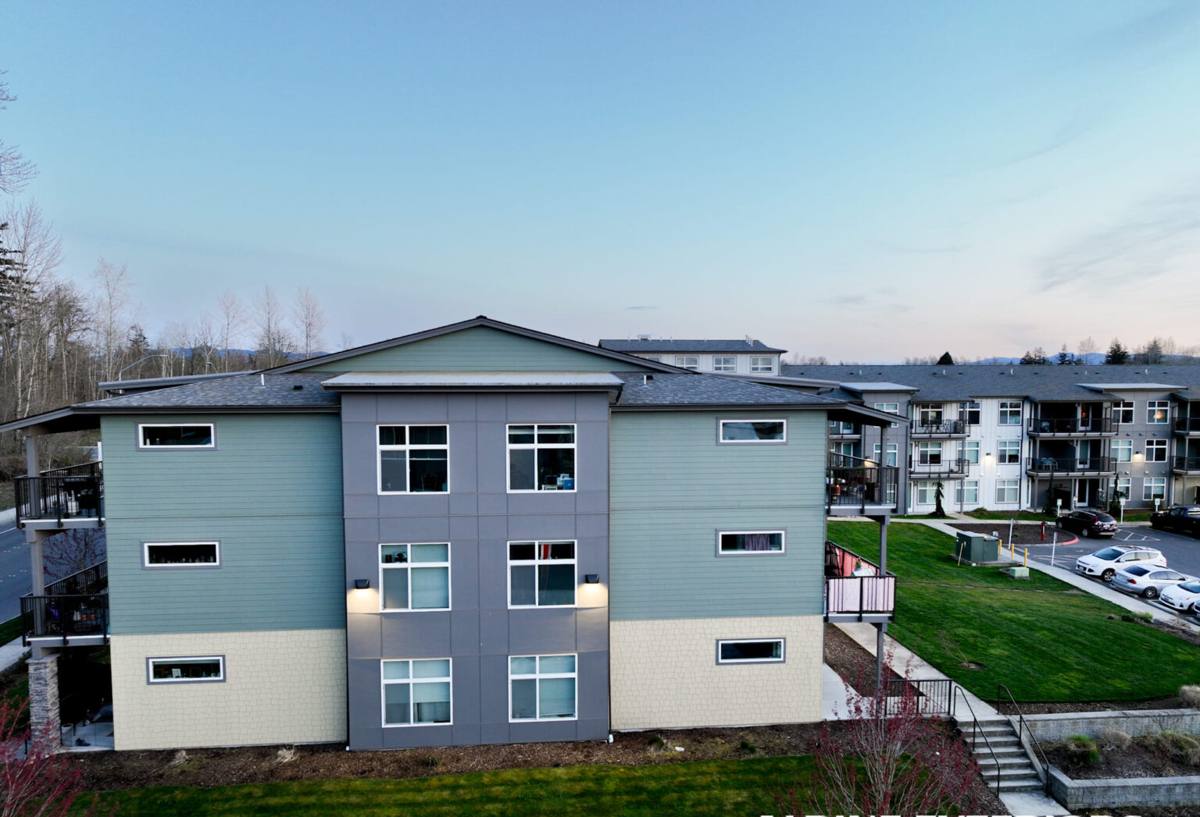
What Salt Air, Driving Rain, and Moss Actually Do to Siding
These three conditions don't act alone — they compound each other. Salt air carries fine mineral particles that settle into any exposed or unsealed surface. Driving rain pushes moisture sideways and upward, finding gaps that vertical rain would never reach. And a long, mild, wet season means moss and algae have months of steady moisture and shade to establish themselves, especially on north- and west-facing walls that dry slowly.
Why This Matters More at the Coast
Inland homes get intermittent rain and dry out between storms. A home on Point Roberts, especially on a lot with direct water exposure, can stay damp for days at a time during the fall and winter. Any siding material that depends on a painted or coated surface to keep water out is being asked to perform under worse conditions than it was likely tested for. Cut edges, fastener heads, and seams are where that failure usually starts — not in the middle of a panel, but at the joints installers touch.
Why We Standardize on James Hardie Fiber Cement Here
We install James Hardie exclusively, on Point Roberts and everywhere else we work. We don't install vinyl, LP SmartSide, Cemplank, Allura, or unfinished wood species like primed spruce or cedar. That's not a marketing preference — it's a standard we hold because of what we've seen these products need to hold up long-term in a coastal Pacific Northwest climate, and what happens when that maintenance gets missed even once.
Climate-Engineered for This Exact Exposure
James Hardie makes region-specific product lines, and the Pacific Northwest — including Whatcom County and Point Roberts — falls into their HZ5 climate zone, engineered for cold, wet, high-moisture conditions rather than the hot, dry HZ10 formulation used in the Southwest. That distinction matters: a fiber cement board engineered for a dry climate behaves differently in a marine one. HZ5 boards are formulated to resist moisture-related damage in exactly the conditions Point Roberts sees most of the year.
ColorPlus Finish vs. Field-Applied Paint
Most of the color failure we see on other siding products comes down to one thing: the finish was applied in the field, on-site, under whatever weather conditions existed that day. Hardie's ColorPlus finish is baked on in a factory-controlled process before the boards ever reach a jobsite, which gives it far better adhesion and UV resistance than a field-applied coat — and in a salt-air environment, a finish that doesn't chalk, peel, or fade unevenly is not a cosmetic detail. It's the first line of defense against moisture getting into the substrate underneath.
Non-Combustible and Backed by a Real Warranty
Fiber cement is non-combustible, which matters everywhere but is a genuine peace-of-mind factor for homeowners on a more remote peninsula where response times can be a real consideration. James Hardie also backs its products with a strong transferable warranty — which only holds up if the installation was done to their published specifications, which is exactly why we're strict about install detail on every job, not just the ones on the water.
What a Correct Fiber Cement Installation Actually Involves
The product is only half the equation. We've re-sided homes where the previous installation used the right material but the wrong details, and moisture still got in. In a climate like Point Roberts', installation mistakes show up faster and cause more damage than they would somewhere drier.
Water Management Behind the Siding
Correct flashing at windows, doors, and every roof-to-wall transition is non-negotiable. A weather-resistant barrier goes on first, and every penetration — vents, hose bibs, light fixtures, electrical — gets properly flashed and sealed before a single board goes up. On a home taking direct salt spray, this hidden layer often matters more than the visible siding itself.
Fastening, Gaps, and Clearances
James Hardie publishes specific fastener spacing, gap requirements at butt joints, and clearance requirements from grade, roofing, and other flashing. Boards need proper clearance from decks, patios, and soil so they're not sitting in standing moisture or splashback — a common problem on lower-lying coastal lots where drainage is already working overtime.
Cut Edges and Field Touch-Up
Every field-cut edge needs to be sealed with a manufacturer-approved touch-up product before installation. Skipping this step is one of the most common shortcuts we see on jobs we're asked to inspect or repair, and it's exactly the kind of gap that salt air and driving rain will find within a season or two.
Comparing How Materials Actually Hold Up on the Point
| Material | Salt Air & Moisture Behavior | Moss/Algae Resistance | Maintenance Reality |
|---|---|---|---|
| James Hardie Fiber Cement | Engineered (HZ5) for wet marine climates; factory finish resists moisture intrusion at the surface | Dense, stable surface; doesn't feed moss growth the way wood fiber can | Occasional rinse; no repainting on a set cycle |
| Vinyl Siding | Can warp or become brittle with temperature swings; seams and laps are common water entry points | Moisture can sit in laps and channels, encouraging growth in shaded areas | Low labor, but panels can't be easily spot-repaired without color mismatch |
| Cedar / Untreated Wood | Absorbs moisture readily; prone to cupping, splitting, and rot without diligent upkeep | Wood fiber is a food source for moss and algae in shaded, damp conditions | Requires regular refinishing and inspection; highest long-term labor |
| LP SmartSide (Engineered Wood) | Wood-strand core is sensitive to sustained moisture exposure at cut edges and seams | Better than raw wood, but still organic-based and dependent on finish integrity | Field-applied finish needs monitoring, especially at joints and edges |
How We Handle Point Roberts Projects
Point Roberts is only reachable by land through Canada, which means every material delivery and every crew mobilization involves a border crossing in both directions. That's not a complaint — it's just a logistical reality we plan around. We schedule Point Roberts jobs to minimize back-and-forth trips, staging materials so we're not making multiple partial deliveries, and we build the crossing time into our timelines up front so homeowners aren't guessing at when work will actually start and finish.
Permitting runs through Whatcom County, and we handle that coordination as part of the job rather than leaving it for the homeowner to sort out. On a peninsula this size, we also pay close attention to which elevation of the house is catching the worst of the water exposure, since it's rarely uniform — a wall facing open water needs different flashing attention than one tucked behind a neighboring structure or tree line.
Why Hiring a Crew That Already Works Point Roberts Matters
Point Roberts' unique geography means not every contractor is willing to take jobs there, and some who do treat it as a one-off trip rather than an area they know. That shows up in small but real ways: underestimating how exposed a particular wall really is, not accounting for border-crossing logistics in the schedule, or being reluctant to come back for a warranty follow-up because of the extra trip involved.
We work Point Roberts regularly enough to know what the exposure actually does to a house over time, and we plan our punch-list and warranty visits the same way we plan the original install — as a normal part of doing business out there, not an inconvenience. That accountability matters more on a remote peninsula than it does on a standard in-town lot, simply because a contractor who disappears is harder to chase down.
What Point Roberts Homeowners Should Watch For After Installation
- Rinse siding periodically to clear accumulated salt residue, especially on walls facing open water
- Check north- and west-facing walls each fall for early moss or algae growth before it establishes
- Keep gutters and downspouts clear so water isn't sheeting down the siding face
- Maintain clearance between siding and grade, decking, or landscaping mulch that traps moisture
- Inspect caulking at trim and penetrations annually — this is the first place a coastal climate finds a gap
- Address any impact damage promptly rather than letting a small crack become a moisture entry point
Cost Factors Specific to a Point Roberts Project
Pricing for any Hardie project depends on square footage, home complexity, trim detail, and whether existing siding needs to be removed. On Point Roberts specifically, a few added factors typically come into play: the logistics of border-crossing material delivery, the amount of exposed elevation directly facing the water requiring extra flashing attention, and site access on some of the peninsula's smaller or more mature-treed lots. We walk through all of this during an on-site estimate rather than quoting blind — every home's exposure and access is different enough that it's worth seeing in person.
If you're weighing a siding project on Point Roberts, we're glad to come out, look at the specific exposure your home is dealing with, and put together a straightforward, no-pressure estimate using the form below.