 Ferndale Siding
 Roof Repair for Kendall Homes
Kendall sits in the part of Whatcom County where big conifers, seasonal downpours, and long stretches of overcast, damp weather do more to a roof than most homeowners realize until a leak shows up on the ceiling. A roof repair out here isn't the same job as a repair on an open, sunny lot closer to town. The tree cover changes how a roof dries, how fast moss and organic debris build up, and where water tends to find its way in. We work on roofs in Kendall and the surrounding Ferndale service area regularly, and we've built our repair process around what actually causes damage in this specific setting, not a generic checklist.
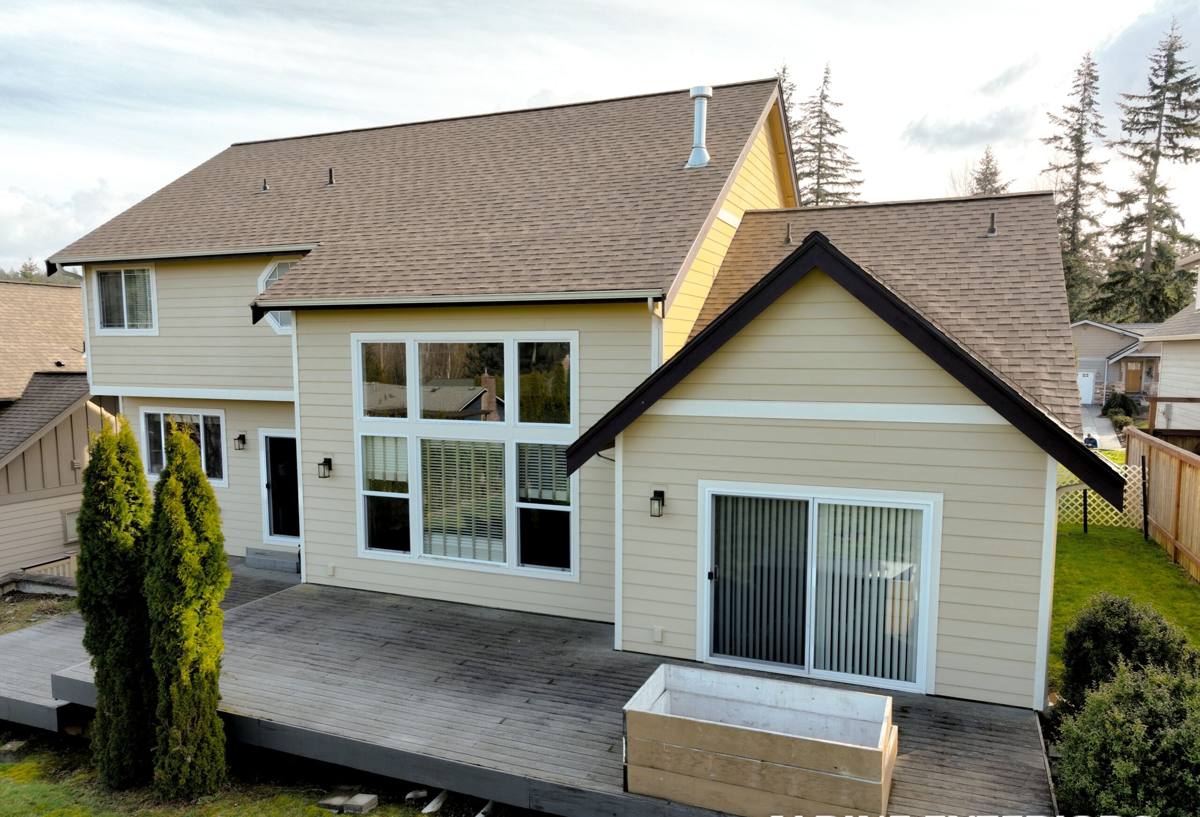
What Kendall's Setting Does to a Roof
Whatcom County as a whole deals with driving rain, salt-influenced coastal air, and a moss season that can stretch for most of the year in shaded spots. Kendall's more wooded, foothill character adds its own layer on top of that. Homes tucked under or near mature trees get less direct sun on the roof plane, which means shingles and shakes stay damp longer after every rain. That extended dampness is exactly what moss, algae, and lichen need to take hold, and once they're established they hold even more moisture against the roofing material.
Tree cover also means more organic debris — needles, cones, leaf litter — collecting in valleys, behind chimneys, and in gutters. That debris dams water instead of letting it run off, and dammed water on a roof almost always finds the weakest seam eventually. None of this means a Kendall roof is doomed to fail early. It means the maintenance and repair approach has to account for shade, debris load, and prolonged moisture, not just wind and rain like a repair job might closer to open water or in a cleared subdivision.
Why This Matters for Repair Timing
A small issue on a well-ventilated, sun-exposed roof might sit stable for a season or two. The same issue on a shaded Kendall roof can progress faster because the area never fully dries out between rain events. That's part of why we push for repair over a wait-and-see approach once we spot early moss growth, lifted shingle tabs, or soft spots — the local climate doesn't give small problems much time to stay small.
Common Roof Repair Issues We See in This Area
- Moss-related shingle lift: Moss roots work under shingle tabs and edges, breaking the seal and letting wind-driven rain get underneath.
- Valley and flashing leaks: Debris collects in valleys and around chimneys, dents flashing performance, and creates standing water that works its way under the roofing material.
- Gutter backup damage: Clogged gutters send water back up under the roof edge instead of off the roof, which shows up as rot along fascia and the first course of shingles.
- Ridge and hip wear: These high points take the most direct weather exposure and are often the first place cap shingles or ridge caps start to fail.
- Nail pops and fastener failure: Freeze-thaw cycles and repeated wet-dry swings work fasteners loose over years, especially on older installs.
- Soft decking under discolored shingles: A sign that moisture has been getting through longer than it looks from the ground.
What a Correct Repair Actually Involves
Diagnosis Before Anything Gets Fixed
A repair that only patches the visible symptom tends to come back. Before we touch a shingle, we trace the leak or damage back to its actual source — that might mean checking flashing, decking, ventilation, and the surrounding roof plane, not just the spot where a stain showed up on the ceiling below.
Matching Materials, Not Guessing
Mismatched shingle profiles, colors, or granule types stand out and can also create uneven wear patterns going forward. Where an exact match isn't available because of age or discontinued product lines, we're upfront about that trade-off before starting the work, rather than leaving a homeowner to discover it after the fact.
Flashing Gets Real Attention
A large share of the leaks we find in this area trace back to flashing — around chimneys, skylights, wall intersections, and valleys — rather than the field shingles themselves. Proper repair means re-bedding or replacing flashing correctly, not just caulking over a gap, which is a short-term fix that fails again within a season or two.
Moss and Debris Removal Done the Right Way
Moss removal has to be done carefully. Aggressive scraping or pressure washing can strip granules and shorten the life of otherwise sound shingles. We use methods intended to clear moss and debris without damaging the roofing material underneath, and we treat the area to slow regrowth where that makes sense for the homeowner.
Documentation and Warranty
Every repair should come with a clear explanation of what was found, what was done, and what to expect going forward — including any workmanship warranty terms — so there are no surprises later.
Repair vs. Replacement: How We Help You Decide
| Factor | Leans Toward Repair | Leans Toward Replacement |
|---|---|---|
| Age of roof | Under roughly 15 years, or well within expected service life for the material | Near or past the material's typical lifespan |
| Extent of damage | Isolated to one area, valley, or flashing point | Widespread across multiple roof planes |
| Decking condition | Solid, no soft spots found during inspection | Soft, delaminated, or water-stained decking in several areas |
| Moss/algae history | Recent growth, shingles otherwise intact | Long-term moss damage with granule loss and shingle brittleness |
| Underlying cause | Fixable with targeted flashing or shingle work | Systemic issue like poor original ventilation or widespread underlayment failure |
We'll walk you through where your roof falls on this table honestly. If repair is the right call, that's what we'll recommend — we don't upsell a full replacement when a targeted repair will hold up.
Our Process, Start to Finish
- Initial inspection: We look at the whole roof, not just the reported problem area, since related issues often hide nearby.
- Written estimate: You get a clear scope of work and price before anything starts, with the reasoning behind the recommendation explained in plain terms.
- Scheduling around weather: Given how much rain this area gets, we plan repair work for windows of dry weather whenever the timeline allows, so materials and adhesives can cure properly.
- The repair itself: Removal of damaged material, decking check and repair if needed, correct flashing work, and matched roofing material installed to manufacturer specifications.
- Cleanup and final check: Site cleared of debris and old material, and a final walkthrough so you can see what was done.
Materials and Methods We Use
For most repairs on asphalt composition roofs — still the most common roofing material in this part of Whatcom County — we match shingle type, weight, and profile as closely as possible to what's already on the roof. For flashing, we use corrosion-resistant metal suited to the moisture load this climate produces rather than the cheapest option available, since flashing failure is one of the most common causes of repeat leaks. Underlayment matters just as much as the visible shingle layer; in valleys and other high-exposure areas we use products designed for the extended wet season this region sees, not a bare-minimum standard.
We don't push specific brand names as a marketing angle. What matters more is correct installation and using a product rated for the actual exposure that spot on your roof gets — a ridge line, a north-facing shaded plane, and a valley under trees each have different real-world demands, even on the same house.
Signs Your Kendall Roof May Need Repair Now
- Visible moss or dark streaking on shingles, especially on shaded roof planes
- Granules collecting in gutters or at the base of downspouts
- Curling, cracked, or missing shingle tabs
- Daylight visible through the attic roof deck
- Water stains on ceilings or attic framing after heavy rain
- Sagging or soft-feeling spots when walked on (leave this to a professional inspection)
- Debris buildup in valleys or around chimney flashing
- Gutters overflowing during normal rain, not just storms
Maintenance Between Repairs
Because of the tree cover common around Kendall, roofs here generally need more frequent gutter and debris clearing than roofs on open lots. Keeping valleys and gutters clear reduces standing water and takes pressure off any repair work already done. Periodic moss treatment on shaded roof sections, done gently, also extends the interval between repairs. None of this replaces a proper inspection, but it's the single most effective thing a homeowner can do between visits from a contractor.
Why a Local Ferndale Crew Matters Here
Roofing crews that mostly work drier, more open parts of the county sometimes underestimate how much shade and debris load change a repair's requirements. Working regularly in and around Kendall and the rest of the Ferndale area means we're used to diagnosing moss-driven damage, debris-clogged valleys, and the extended wet-dry cycling this climate puts roofs through — and we know what actually holds up here versus what looks fine on installation day and fails within a couple of wet seasons.
If you're dealing with a leak, visible moss, or just want an honest read on your roof's condition, we're happy to take a look. Reach out for a free, no-pressure estimate using the form below.