 Ferndale Siding
 Why Bellingham Roofs Wear Out Differently
A roof in Bellingham doesn't fail the same way a roof does in a dry inland climate. Around here, the damage is slow and cumulative: months of low-angle rain driven sideways off Bellingham Bay, long stretches of overcast humidity that never quite dry the shady side of a roof, and salt-laden air drifting in off the water that speeds up corrosion on fasteners, flashing, and metal components. None of these things cause a dramatic failure on their own. They just quietly shorten the life of whatever is up there, one wet season at a time.
Add in Whatcom County's tree cover — big-leaf maples, cedars, firs — and you get roofs that stay damp and shaded for days after a storm, which is exactly what moss and algae need to take hold. A roof that would last 25 years in a drier climate can start showing real trouble a decade earlier here if it isn't built and maintained with that reality in mind.
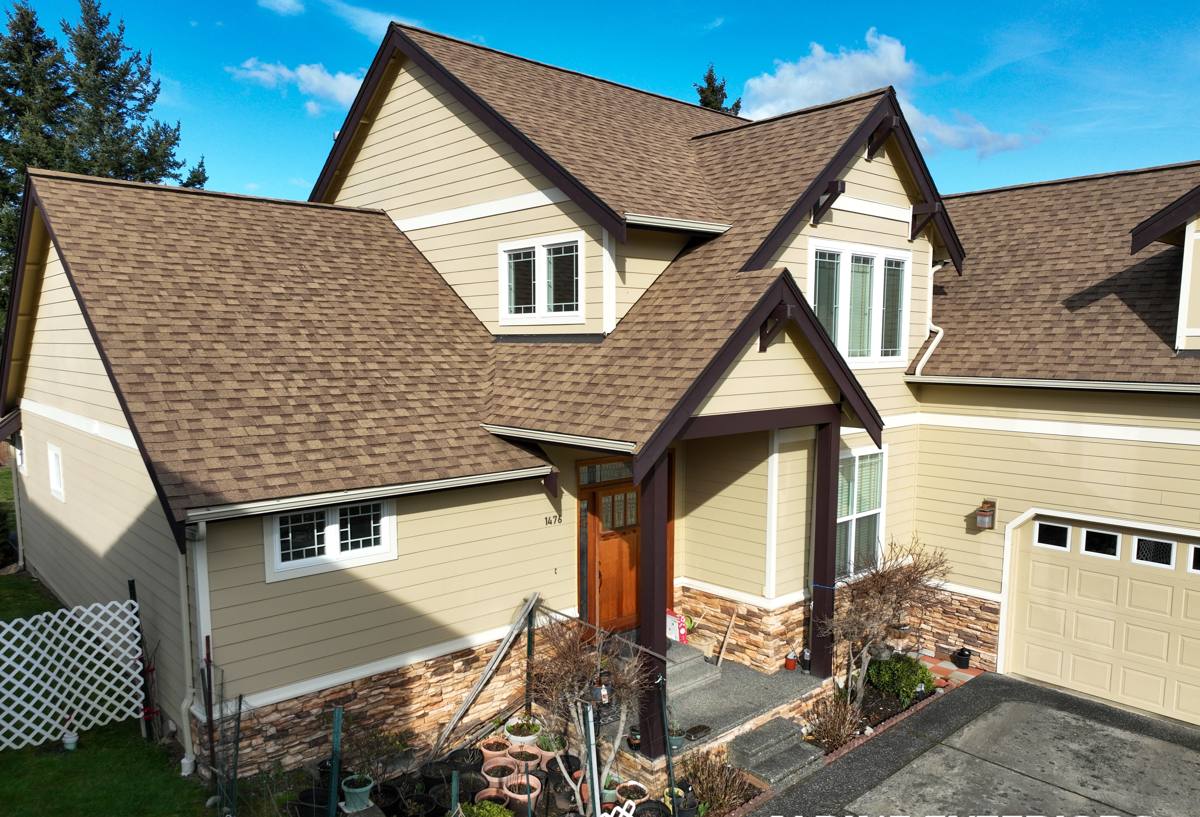
Signs a Bellingham Roof Needs Replacement, Not Another Repair
Homeowners often ask us to patch a leak, and sometimes that's genuinely the right call. But there's a point where repeated repairs are just delaying an inevitable full replacement, and spending money on patches at that stage isn't doing you any favors. Some signs that you're past the repair stage:
- Granule loss heavy enough that you can see bare asphalt on multiple slopes, not just one worn spot
- Shingles that are cupping, curling, or cracking across large sections rather than a few isolated pieces
- Moss that has worked its way under the shingle tabs, not just sitting on the surface
- Soft spots or sagging in the roof deck when walked, which usually means water has already reached the plywood
- Leaks showing up in more than one location, or in a new location each time it rains hard
- A roof that's already 18-20+ years old and has never been fully replaced, only patched
If you're only seeing one or two of these, a repair may still make sense. If you're seeing several at once, it's usually cheaper in the long run to replace than to keep chasing leaks.
What a Correct Roof Replacement Involves Here
A roof replacement is more than pulling off old shingles and nailing down new ones. In a climate like Bellingham's, the parts underneath the shingles matter as much as the shingles themselves.
Tear-off and deck inspection
Every square foot of old roofing comes off so the deck underneath can actually be inspected, not guessed at. Damp climates hide rot well — plywood can look fine from above and still be soft underneath from years of slow moisture intrusion around old flashing or nail penetrations. Any compromised sheathing gets replaced before anything new goes down; installing new roofing over a weak deck just resets the clock on the same problem.
Underlayment built for wind-driven rain
Standard felt underlayment is fine in a lot of the country. In a climate with sustained wind-driven rain off the water, we lean toward synthetic or ice-and-water-shield-grade underlayment at eaves, valleys, and other vulnerable transitions, since those are the spots most likely to see water pushed backward under the shingle line during a real storm.
Flashing and ventilation
Flashing around chimneys, skylights, and wall-to-roof transitions is one of the most common leak sources on older homes, especially once the original metal has corroded from years of salt air exposure. Proper ventilation matters just as much — a roof deck that can't breathe traps moisture from inside the house, which accelerates rot from underneath even if the shingles above are holding up fine.
Material Options for a Whatcom County Roof
There isn't one "right" material for every home — it depends on your budget, roof pitch, tree cover, and how long you plan to stay in the house. Here's how the common options compare for this specific climate:
| Material | Typical Lifespan Here | Moss/Moisture Behavior | Maintenance |
|---|---|---|---|
| 3-tab asphalt shingle | 15-20 years | Prone to granule loss and moss intake in shaded areas | Periodic moss treatment recommended |
| Architectural (dimensional) shingle | 25-30 years | Thicker profile sheds water better, more moss-resistant | Occasional cleaning on shaded slopes |
| Metal (standing seam or panel) | 40-50+ years | Sheds moisture fast, minimal moss growth | Low; watch fastener condition near the coast |
| Cedar shake | 20-30 years with upkeep | Attractive but needs consistent moisture management | Higher; regular treatment and inspection required |
We're honest with homeowners about trade-offs rather than pushing one product. Cedar shake, for example, can look great on the right home, but it demands a level of ongoing moisture management that not every homeowner wants to keep up with in a climate this wet — that's a maintenance conversation, not a knock on the material itself. Metal costs more up front but often makes sense on steep, shaded roofs where moss has been a recurring fight. Architectural shingles remain the most common choice locally because they balance cost, appearance, and durability well for this climate.
How Our Process Works
We keep the process straightforward because homeowners deserve to know what's happening on their own roof:
- Free on-site estimate. We walk the roof (weather permitting) or do a close ground and attic inspection, check the deck condition where accessible, and give you a written scope and price — no pressure to decide on the spot.
- Material selection. We go over the options above based on your roof's pitch, sun/shade exposure, and budget, and help you land on what actually fits your house.
- Scheduling around Bellingham weather. We plan tear-off in weather windows that let us keep the deck protected and dry, and we don't leave a roof open overnight if rain is likely.
- Tear-off, deck repair, and install. Full removal, deck inspection and repair as needed, underlayment, flashing, and the new roofing system installed to manufacturer spec.
- Cleanup and walkthrough. Magnetic sweep for nails, debris hauled off, and a final walkthrough so you can see the finished work before we consider the job done.
Moss, Algae, and Keeping a New Roof Looking Good
A new roof in Ferndale or Bellingham is going to face the same moss pressure the old one did — that doesn't change because the shingles are new. What changes is how well the roof is set up to resist it. Proper ventilation, correctly installed flashing, and (where appropriate) zinc or copper strips near the ridge can meaningfully slow moss regrowth on shaded slopes. We'll talk through what makes sense for your specific roof rather than applying the same recommendation to every house.
After installation, the biggest thing homeowners can do themselves is keep gutters and valleys clear of needles and leaf debris, since trapped organic matter is what gives moss spores somewhere to take hold in the first place. A roof that drains cleanly stays cleaner, longer.
Permits and Local Considerations
Most roof replacements in Whatcom County require a permit, and requirements can vary depending on whether you're inside Ferndale or Bellingham city limits versus unincorporated county land. We handle the permit process as part of the job so you're not stuck figuring out the paperwork yourself. We also pay attention to things like ice dam risk in colder snaps and proper drip edge detailing, since both matter more here than in drier parts of the state.
Why a Crew That Already Works Bellingham Matters
Roofing crews that mostly work drier inland climates sometimes under-detail the things that matter most here — underlayment coverage at eaves, flashing at wall transitions, ventilation balance. A crew that regularly works Bellingham and the surrounding Whatcom County area has already seen how local roofs fail over time, and builds the replacement to hold up against that specific pattern of wear rather than a generic textbook install. That local experience shows up in the small decisions: where to add extra underlayment, which flashing details need extra attention, and which materials genuinely hold up under salt air and moss pressure versus which ones just look good on install day.
Questions to Ask Before You Hire
Whoever you choose to replace your roof, it's worth vetting them the same way you'd vet any major home investment. A short checklist:
- Are they licensed and insured in Washington, and will they show you proof without being asked twice?
- Do they inspect and address the roof deck, or just install over whatever is underneath?
- Is the underlayment and flashing plan specific to your roof, or a one-size-fits-all answer?
- Do they provide a detailed written estimate, not just a total price?
- Can they explain the trade-offs between material options in plain language, without pushing one product?
- Do they have experience working roofs in this specific climate, not just roofing in general?
If a contractor can't answer these clearly, that's worth paying attention to before you sign anything.
If your roof in Bellingham or Ferndale is showing its age, we're happy to take a look and give you an honest read on whether it's a repair situation or time for a full replacement. Fill out the form below for a free, no-pressure estimate.