 Ferndale Siding
 Roofing Near the Water: Why Lummi Nation Homes Wear Out Differently
Homes in the Lummi Nation area sit close enough to Bellingham Bay and the Strait of Georgia that the air itself is part of the roofing equation. Salt-laden moisture rides in on the wind, settles on exposed metal and shingle surfaces, and starts a slow corrosion process that inland Whatcom County roofs simply don't deal with at the same rate. Add in the driving rain that comes through with winter storms off the water, plus heavy tree cover in many yards that keeps roofs shaded and damp longer after every rain, and you get a combination that ages a roof faster than the calendar would suggest.
We've replaced and repaired roofs throughout this stretch of the county long enough to know that a roof spec'd for a dry, sunny climate doesn't hold up here. This page is about what actually works on Lummi Nation homes — the materials, the details, and the process — not a generic rundown of roof replacement in general.
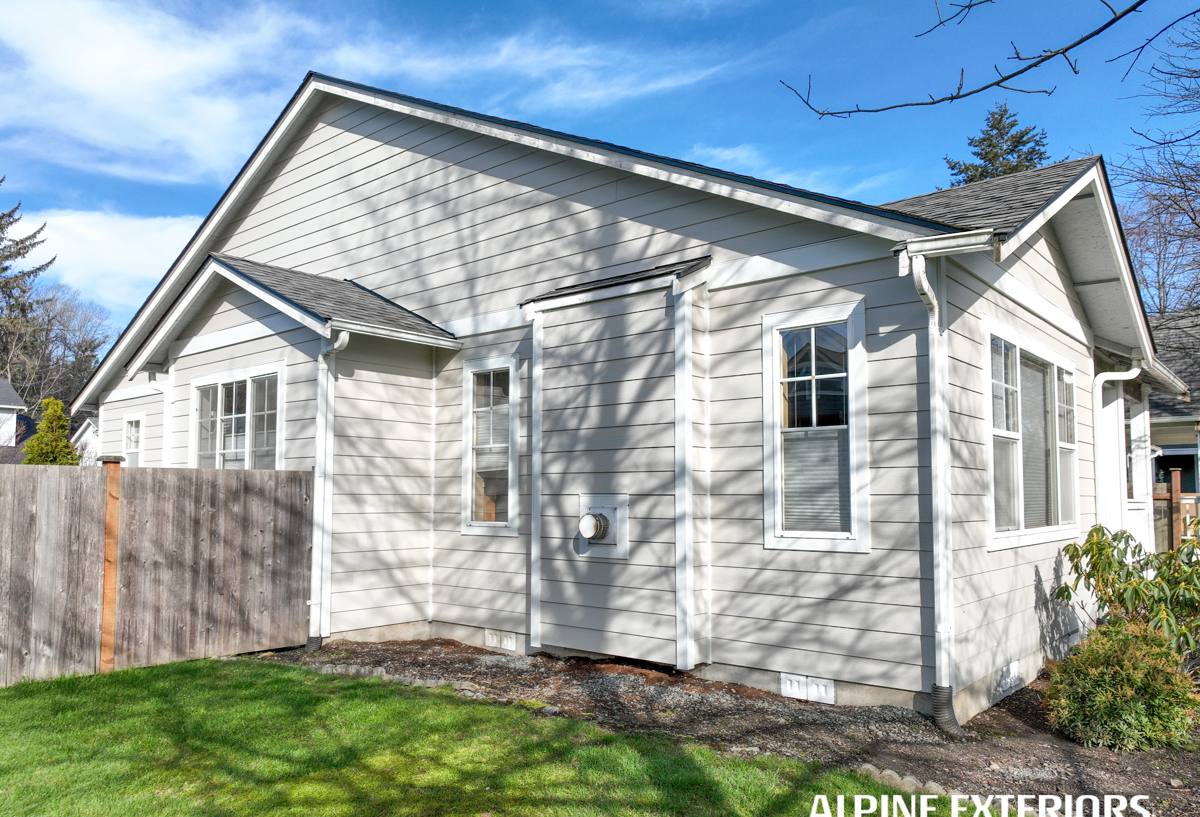
What Salt Air, Wind-Driven Rain, and Moss Actually Do to a Roof
Salt Air and Corrosion
Salt in the air accelerates rust on anything metal — nails, flashing, drip edge, roof vents, and the metal components inside a shingle roof system. Once corrosion starts on a fastener or a flashing seam, it doesn't stay put; it works its way into the surrounding material and creates a path for water. This is why fastener and flashing choice matters more here than it does twenty miles inland.
Wind-Driven Rain and Underlayment
Rain that comes in sideways during a coastal storm doesn't just run off a roof — it gets pushed under shingle edges, around vents, and into any gap in the underlayment. A roof built for light, straight-down rain can look fine for years and still leak the first time a real southwest storm rolls through. The underlayment and flashing details are what actually stop wind-driven rain, not the shingle color or brand name on the wrapper.
Moss and Trapped Moisture
Shade from mature trees, combined with our long wet season, gives moss everything it needs to take hold. Moss doesn't just look bad — it holds moisture directly against the roofing material, works its way under shingle tabs as it grows, and can lift shingles enough to let water underneath. A roof with poor airflow or a lot of shade will grow moss again within a couple of years no matter how many times it's power-washed off, unless the underlying moisture and ventilation problem is addressed.
Signs a Lummi Nation Roof Needs Replacement, Not Another Patch
Repairs make sense when a problem is isolated. Replacement makes sense when the roof's underlying materials — the underlayment, the flashing, the decking — have started to fail broadly. Here's what tells us which situation we're looking at:
- Granule loss heavy enough that you can see bare, shiny patches on multiple shingles, not just one spot
- Moss or algae staining that keeps coming back within a season or two of cleaning
- Soft spots or slight sag when walking the roof, which usually means the decking underneath has taken on moisture
- Curling, cupping, or cracked shingles across large sections rather than a handful near one flashing point
- Rust streaking below metal flashing, vents, or valleys
- Daylight visible through the roof deck from inside the attic, or water stains on attic sheathing
- A roof that's approaching or past the manufacturer's expected lifespan for our climate, even if it looks okay from the ground
If you're only seeing one or two of these in a single area, a repair is often the honest answer. When several show up at once, patching becomes a short-term fix on a roof that's already failing underneath.
What a Correctly Installed Roof Looks Like Here
A roof replacement built for this stretch of coastline isn't just "new shingles." It's a system, and every layer has a job to do against salt air, wind-driven rain, and moss:
| Component | Why It Matters in This Climate |
|---|---|
| Starter strip and drip edge | First line of defense against wind-driven rain at the roof edge; corrosion-resistant metal matters near the water |
| Synthetic or ice-and-water underlayment | Backs up the shingles when rain gets pushed under the surface during a storm |
| Flashing at valleys, walls, and penetrations | The single most common leak point on older roofs; correct metal and installation stop water intrusion at transitions |
| Fasteners | Corrosion-resistant nails matter more here than on an inland roof, where standard fasteners can hold up fine |
| Ventilation (intake and exhaust) | Keeps the roof deck dry from underneath, which slows moss regrowth and prevents rot |
| Shingle or metal roofing material | The visible, weather-facing layer — but only as good as everything installed underneath it |
Skipping or downgrading any one of these doesn't show up as a problem on install day. It shows up two, five, or ten years later as a leak, premature granule loss, or a moss problem that never really goes away.
Materials We Recommend for This Climate
Architectural Asphalt Shingles
For most Lummi Nation homes, a quality architectural (dimensional) asphalt shingle is the practical choice — a good balance of upfront cost, weather performance, and appearance. We steer away from basic 3-tab shingles on coastal jobs; they're thinner, have less wind resistance, and tend to show granule loss and curling sooner in salt air and driving rain. That's a maintenance and longevity trade-off worth knowing about upfront, not a knock on any particular brand.
Metal Roofing
Metal roofing holds up very well against moss and sheds wind-driven rain effectively, and it's a strong option for homeowners planning to stay long-term. It costs more upfront than asphalt shingles, and the fastener and coating quality matters even more near the water — a poorly coated metal roof can actually corrode faster in salt air than a well-installed asphalt system. We only recommend metal when it's specified and installed correctly for a coastal environment.
What We Steer Away From
We're cautious with lower-tier shingle lines and thin, budget underlayment products on any coastal job. It's not that these products are unusable everywhere — it's that our professional standard for a Lummi Nation roof accounts for salt exposure and wind-driven rain, and cutting corners on underlayment or fastener quality is the kind of decision that looks fine at closing and costs the homeowner a callback a few years later.
Typical Cost Factors
Every roof is different, but the price of a replacement in this area is driven by a consistent set of factors:
| Factor | How It Affects Cost |
|---|---|
| Roof size and complexity | More valleys, dormers, and roof planes mean more flashing work and labor time |
| Material choice | Architectural asphalt is generally the mid-range option; metal roofing runs higher upfront |
| Decking condition | Rotted or soft decking found during tear-off adds material and labor to replace it properly |
| Access and tree cover | Tight lots or heavy tree canopy can slow tear-off and material staging |
| Ventilation upgrades | Adding or correcting intake/exhaust venting is a smart add-on, not just an extra expense |
We give straightforward, itemized estimates so you know what you're paying for — material grade, tear-off scope, and any decking repair are broken out separately rather than buried in one lump number.
Our Roof Replacement Process
- On-site inspection and estimate. We walk the roof (weather permitting) or inspect from the attic and exterior, check for soft decking, existing moisture damage, and ventilation issues, and give you an honest read on repair versus replacement.
- Written, itemized proposal. Material options, scope of work, and cost broken down clearly, with no pressure to decide on the spot.
- Scheduling around the weather. Coastal storms don't follow a calendar, so we build in realistic timing and communicate if forecasted wind or rain requires an adjustment.
- Tear-off and decking inspection. Old roofing comes off down to the deck, and any soft or rotted sheathing is identified and replaced before anything new goes down.
- Underlayment, flashing, and ventilation installed correctly. This is where a coastal roof earns its lifespan — proper flashing at every valley, wall, and penetration, and ventilation that actually balances intake and exhaust.
- Final material installation and cleanup. Shingles or metal installed to manufacturer spec, site cleaned of debris and nails, and a final walkthrough with you before we call the job done.
Ventilation and Moisture Control — the Part Homeowners Don't See
A lot of roof problems in this climate aren't really roofing problems — they're ventilation problems. If an attic can't move air properly, moisture from the house and from the humid coastal air gets trapped against the underside of the roof deck. Over time that leads to premature shingle aging from underneath, sheathing rot, and a roof surface that stays damp longer after every rain — which is exactly what moss needs to keep coming back. Correcting intake and exhaust ventilation during a replacement is one of the most overlooked ways to extend the life of a new roof in a climate like ours.
Why Local Experience in Lummi Nation Matters
A roofing crew that mostly works drier, inland jobs will build a roof to a general specification and move on. A crew that regularly works Lummi Nation, Ferndale, and the rest of coastal Whatcom County knows which flashing details fail first in a southwest storm, which shingle lines actually hold their granules in salt air, and where moss tends to establish itself on a given roof pitch and tree line. That familiarity shows up in fewer callbacks and a roof that's still doing its job well past the point a generic installation would be showing problems.
We also know the practical side of working in this area — tide-influenced access considerations near the water, scheduling around the wetter stretches of the year, and the reality that a roof here needs to be built for the climate it's actually in, not the climate on a manufacturer's average spec sheet.
If your roof is showing granule loss, recurring moss, soft spots, or you're just not sure whether it's a repair or a replacement year, we're happy to take a look. Reach out below for a free, no-pressure estimate — we'll give you a straight answer, not a sales pitch.