 Ferndale Siding
 Roof Replacement Built for the Nooksack Climate
Roofs in the Nooksack area of Whatcom County work harder than roofs in most parts of the country. Moist marine air moves in off Puget Sound and settles over the valley for long stretches, driving rain pushes water sideways during fall and winter storms, and the long, overcast stretch between seasons gives moss and algae months of steady moisture to work with. A roof replacement out here is not the same job as a roof replacement in a dry inland climate, and it shouldn't be installed the same way.
If you're weighing a roof replacement for a home in or near Nooksack, this page covers what the regional climate actually does to a roof, what a correct replacement involves, how our process works, and what to look for in a contractor before you sign anything.
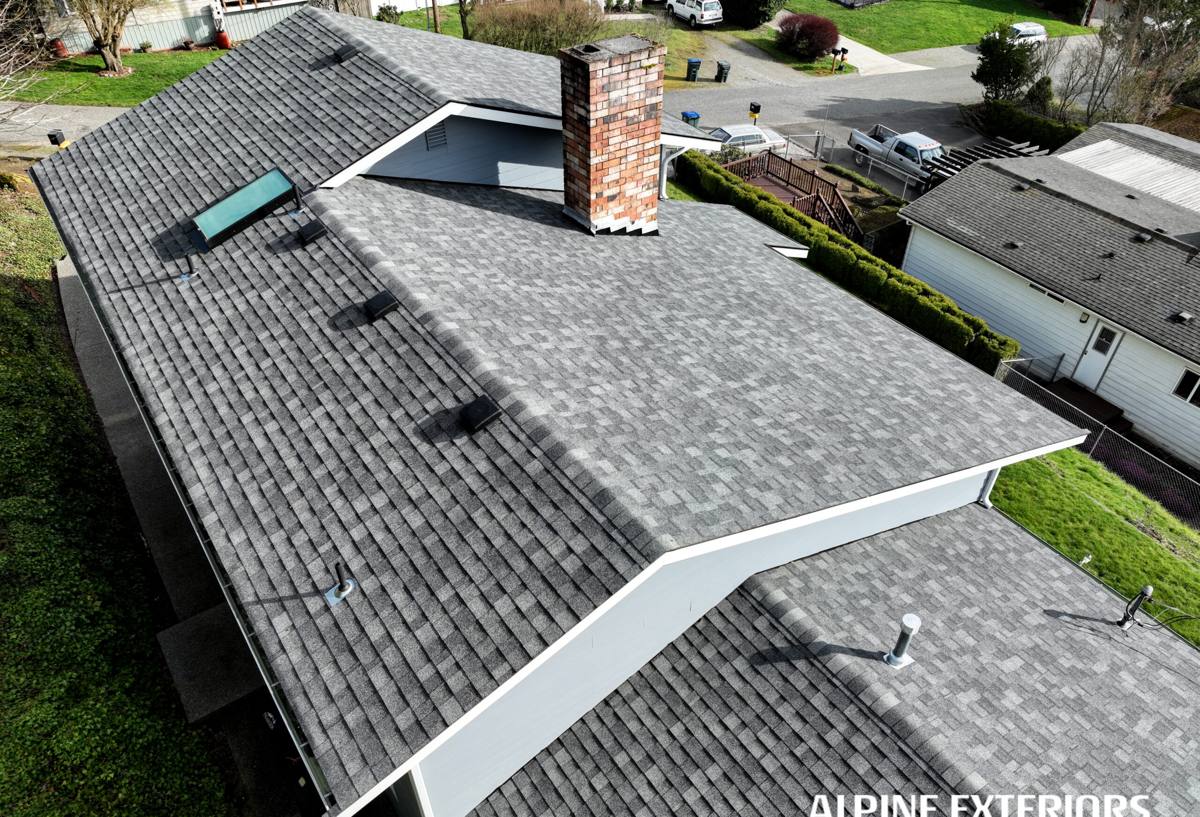
What Whatcom County Weather Does to a Roof
Ferndale and the surrounding Nooksack area see a steady diet of low-intensity rain punctuated by heavier wind-driven storms, along with long stretches of humid, overcast weather that keep roof surfaces damp far longer than a sunnier climate would allow. That combination creates a handful of specific, predictable problems.
Moss and Algae
Shaded slopes, north-facing planes, and roof sections under tree cover stay wet long enough for moss spores to take hold and spread. Moss holds moisture against the roofing material, lifts shingle edges as its root structure grows, and speeds up granule loss on asphalt shingles. Left unmanaged over several seasons, it shortens the working life of a roof no matter how well it was originally installed.
Driving Rain
Wind-driven storms push water sideways and even upward under roof edges and laps, which means flashing details, underlayment overlaps, and fastening patterns matter more here than in a calmer climate. A roofing system that would hold up fine somewhere drier can leak here if those details are done casually.
Salt-Influenced Air
Air moving inland off the Sound carries a mild corrosive element that adds slow, quiet wear to exposed metal — fasteners, flashing, and vent components in particular. It's a smaller factor in a roof's lifespan than moss and rain, but it's a real reason to specify corrosion-resistant hardware rather than whatever is cheapest on the shelf.
None of this means a Nooksack home needs exotic materials or an inflated scope of work. It means the installation details, ventilation design, and material selection have to be chosen for this specific climate rather than copied from a generic spec sheet.
Signs Your Roof Needs Replacement, Not Just Repair
Not every roof problem calls for full replacement, and a contractor who pushes replacement before actually inspecting the roof isn't doing you a favor. Repair is usually the right call when the damage is isolated — a handful of cracked shingles, a single flashing failure, or storm damage confined to one section of an otherwise sound roof.
Replacement becomes the honest recommendation when several of these show up together:
- Heavy granule loss with bare shingle mat showing through in multiple areas
- Soft or spongy decking underfoot, or visible sagging along the roofline
- Daylight visible through the roof deck from inside the attic
- Moss coverage across large sections of the roof rather than a few isolated patches
- Recurring leaks that show up in a different spot each time it rains hard
- A roof that is at or past its material's typical service life and is showing its age in more than one way
Age by itself is a reasonable trigger too. A roof nearing the end of its expected life is a good candidate for planned replacement on your schedule, rather than an emergency replacement after it fails during a winter storm.
What a Correct Roof Replacement Actually Involves
A roof replacement is more than swapping old shingles for new ones. Done right for this climate, it's built in layers, and each layer does a specific job.
Tear-Off and Deck Inspection
Removing the old roofing down to bare decking is the only reliable way to see what's actually underneath — soft spots, rot, or old damage that a re-roof over existing material would simply bury and hide for years. Any damaged sheathing gets identified and replaced before new roofing goes down.
Underlayment
This is the layer most homeowners never think about, and it matters most in a wet climate. A quality synthetic or self-adhering underlayment, with reinforced protection at eaves, valleys, and other water-prone areas, is what keeps the interior dry if wind ever drives water past the primary roofing surface.
Flashing
Most roof leaks start at flashing, not in the open field of shingles or panels. Correct work means new, properly lapped metal flashing at chimneys, skylights, vent pipes, and every roof-to-wall transition — not old flashing reused to save time and cost.
Ventilation
A roof deck that can't breathe traps moisture underneath the roofing material, which speeds up rot and can void manufacturer warranties outright. Balanced intake and exhaust ventilation is a required part of a correct replacement, not an optional upsell added to the bill later.
Fastening and Hardware
The right nail pattern for the specified wind exposure, corrosion-resistant fasteners given the coastal-influenced air in this region, and hardware matched to the roofing material all close out a proper installation.
Comparing Roofing Materials for a Nooksack Home
There's no single "best" material for every roof in this area — the right call depends on your roof's slope, exposure, budget, and how much ongoing maintenance you're willing to take on. Here's an honest look at the options most commonly used in Whatcom County.
| Material | Moss & Moisture Behavior | Maintenance | Typical Trade-Off |
|---|---|---|---|
| Architectural asphalt shingle | Good with proper ventilation; algae-resistant granule options help on shaded slopes | Low to moderate; periodic moss treatment recommended | Best balance of cost and performance for most homes |
| Standing seam metal | Sheds water and moss very well due to smooth, steep-shedding surface | Low | Higher upfront cost; installation sensitivity around seams and fasteners |
| Cedar shake | Attractive but holds moisture in its grain, which invites moss and rot faster in this climate | High; regular treatment and inspection required | We approach cedar carefully here — it demands more upkeep than most homeowners expect in a wet climate |
| Composite / synthetic shingle | Resists moisture absorption well; performs closer to metal than wood | Low to moderate | Mid-to-upper cost range; product warranties vary by manufacturer |
For most homes in and around Nooksack, a quality architectural asphalt shingle with algae-resistant granules offers the best balance of upfront cost, appearance, and real-world performance against moss. Metal is a strong choice for homeowners planning to stay long-term and wanting the lowest possible maintenance. We'll walk through the honest trade-offs for your specific roof rather than pushing one material across every job.
What Drives the Cost of a Roof Replacement Here
Every roof is different, and we won't quote a number without seeing the actual roof, but these are the factors that move the price up or down on most projects in this area.
| Factor | Why It Matters |
|---|---|
| Roof size and number of planes | More squares and more complex geometry mean more material and labor |
| Pitch and access | Steeper roofs and difficult access require more safety equipment and time |
| Decking condition | Rot or soft sheathing found during tear-off adds material and labor to replace it properly |
| Material choice | Asphalt, metal, and composite options carry different material costs per square |
| Layers of existing roofing | Multiple old layers add tear-off time and disposal cost |
| Ventilation and flashing needs | Homes needing upgraded ventilation or extensive new flashing take more labor |
As a very general guide, most full roof replacements on typical single-family homes in this region land somewhere in the low-to-mid five figures, with the exact number swinging based on the factors above. We'll give you a firm, written number after an actual inspection — not a phone estimate.
How Our Roof Replacement Process Works
- Inspection. We walk the roof and attic, check decking condition, ventilation, and flashing, and document what we find.
- Written estimate. You get a clear scope of work and a firm price before anything is scheduled — no surprises added mid-job.
- Material selection. We go over the material options that make sense for your roof's exposure and your budget, including honest trade-offs.
- Tear-off and deck repair. Old roofing comes off, the deck gets inspected, and any damaged sheathing is replaced.
- Underlayment, flashing, and ventilation installation. Each layer goes in correctly before the finish material goes down.
- Final installation and cleanup. New roofing is installed to manufacturer specification, and the property is cleaned of debris and fasteners before we leave.
- Final walk-through. We go over the finished roof with you and answer any questions before closing out the job.
Why Hire a Crew That Already Works in Nooksack
A roofing crew that regularly works this specific pocket of Whatcom County already knows how the local weather behaves — which slopes hold moss the longest, how hard the wind-driven rain hits during a winter storm, and which flashing and ventilation details actually hold up here versus a generic installation spec. That local familiarity shows up in fewer callbacks and a roof that performs the way it's supposed to through its first real wet season, not just on a sunny installation day.
It also matters for the practical side of the job: knowing local permitting requirements, being available quickly if a storm causes unexpected damage mid-project, and standing behind the work because we're not driving in from out of the area for a one-time job.
What to Ask Before You Hire
- Are you licensed and insured to do roofing work in Washington State?
- Will you inspect the decking before quoting a final price, or is the estimate based on a drive-by look?
- What underlayment and ventilation specs are included in the written scope, not just the shingle brand?
- Who handles the work if something goes wrong under warranty a few years from now?
- Can you provide a clear, itemized written estimate before any work begins?
Maintaining a New Roof Through Moss Season
A correctly installed roof still needs some basic upkeep in this climate to reach its full expected lifespan. A little attention each year goes a long way toward protecting the investment.
- Keep gutters and valleys clear of leaves and debris so water has a clear path off the roof
- Trim back overhanging branches to reduce shade and debris buildup on vulnerable slopes
- Have moss growth treated or removed before it spreads across a full slope, not after
- Schedule a visual inspection every year or two, especially after a hard winter
- Address small leaks or flashing issues right away rather than waiting for them to worsen
If you're planning a roof replacement for a home in or around Nooksack, we're happy to come take a look and give you a straightforward, no-pressure estimate — just fill out the form below to get started.