 Ferndale Siding
 Windows in Lynden Face a Specific Kind of Wear
Lynden sits inland from Ferndale, but it doesn't sit outside Whatcom County's weather. The same marine air that rolls in off the coast still reaches Lynden's open farmland and residential streets, carrying moisture that settles into wood sills, vinyl frames, and glazing seals. Add driving rain that comes in sideways during winter storms, and a moss season that stretches from fall through spring, and you get a climate that is genuinely hard on windows — even ones that look fine from the driveway.
Most homeowners don't think about their windows until something obvious happens: a draft you can feel standing near the frame, condensation that won't wipe away because it's between the panes, or a sash that's swollen shut from moisture. By the time those symptoms show up, the window has usually been underperforming for years. Understanding what this climate actually does to a window — not in general, but here — is the first step to knowing when replacement is the right call versus a repair.
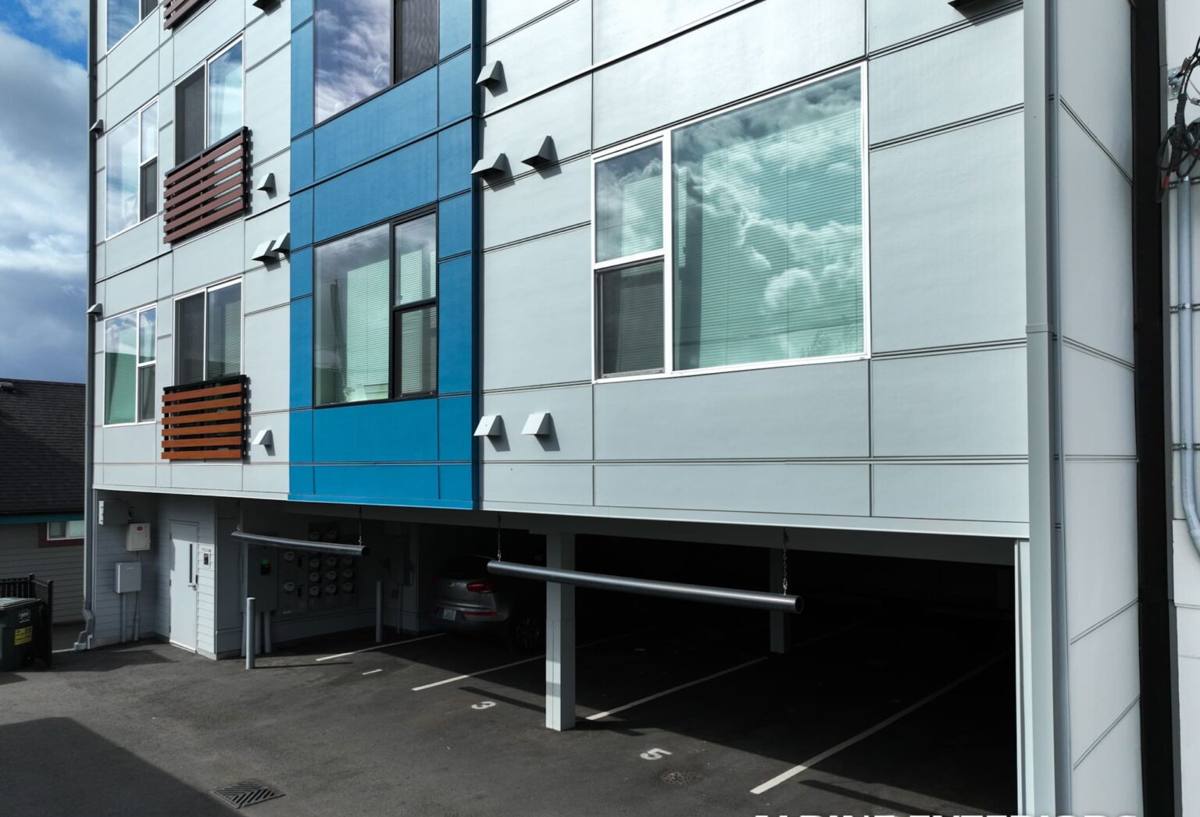
How Whatcom County's Climate Breaks Down a Window
Moisture Intrusion
Wind-driven rain doesn't just hit a window — it gets pushed into any gap in the flashing, sealant, or frame. Over time, water that gets behind the trim or under a sill can rot wood framing and corrode metal hardware long before the visible glass or frame shows damage. This is the single biggest reason a window fails early in this region: not the glass, but what's happening behind it.
Constant Humidity Cycling
Whatcom County rarely gets bone-dry for long stretches. Windows here cycle between damp and less-damp rather than wet and fully dry, which is harder on seals, weatherstripping, and wood components than a drier climate with occasional heavy rain events. Weatherstripping compresses and loses its seal faster; wood sashes and sills that aren't fully sealed or properly primed take on moisture a little at a time.
Moss and Organic Growth
Moss doesn't just grow on roofs. It takes hold in window tracks, on sills, and in corners where debris collects and doesn't dry out for weeks at a stretch. Beyond the cosmetic issue, moss and algae growth holds moisture against the frame material, which accelerates rot in wood and can degrade some vinyl and composite finishes over years of exposure.
Signs a Lynden Home Actually Needs Replacement
Not every window problem means full replacement. But these are the signs worth taking seriously before they turn into a bigger repair:
- Condensation or fogging trapped between the panes — this means the seal has failed and can't be fixed, only replaced
- Visible gaps, drafts, or a noticeable temperature difference near the window compared to the rest of the room
- Wood that's soft, discolored, or spongy at the sill or lower frame corners
- Windows that are difficult to open, close, or lock, especially after seasonal humidity swings
- Paint or finish that's peeling or bubbling on the interior or exterior frame
- Rising heating bills without any other explanation, especially in older single-pane or early double-pane homes
- Visible mold or persistent moisture staining on drywall or trim surrounding the window
If you're seeing one or two of these, it's worth an honest look before assuming the worst. If you're seeing several at once, especially soft wood or trapped condensation, replacement is usually the more cost-effective path over patching the same window again in a year or two.
What a Correct Window Replacement Actually Involves
Window replacement done right is not just popping out an old unit and setting in a new one. In a climate that pushes rain and moisture into every gap, the details around the window matter as much as the window itself.
Removal and Inspection
Once the old window comes out, the surrounding framing gets inspected for rot, moisture damage, or compromised structural wood. This step matters more here than in drier climates — a window that looked fine from outside can be sitting in a frame that's been slowly failing behind the trim.
Flashing and Water Management
Proper flashing directs any water that gets past the exterior surface back out, rather than letting it pool against the framing. This is the step most likely to get rushed on a lower-quality install, and it's the one that causes the most expensive problems down the road when it's done wrong.
Air Sealing and Insulation
The gap between the new window frame and the rough opening needs to be sealed and insulated correctly — not overpacked, not left loose. Too little insulation leaves drafts; overpacked insulation can bow the frame and affect how the window operates.
Interior and Exterior Finish Work
Trim, caulking, and paint or stain get restored to match the surrounding wall, and every exterior seam gets checked for a weathertight seal before the job is called done.
Window Materials: What Holds Up in This Climate
There isn't one "best" window material for every home — it depends on the house, the budget, and how much upkeep the homeowner wants to take on. Here's how the common options compare for a climate like Lynden's:
| Material | Moisture Resistance | Maintenance | Typical Lifespan |
|---|---|---|---|
| Vinyl | Good — won't rot, minimal sealing needed | Low — occasional cleaning | 20–30 years |
| Fiberglass | Very good — dimensionally stable in wet/cold swings | Low | 30+ years |
| Wood | Requires diligent upkeep to prevent rot in this climate | High — repainting, resealing on a schedule | Varies widely with maintenance |
| Wood-clad (wood interior, clad exterior) | Good exterior protection, interior still needs some care | Moderate | 25–35 years with upkeep |
| Aluminum | Prone to condensation without thermal breaks | Low | 20–25 years |
For most Lynden homes, we steer people toward vinyl or fiberglass because they hold up against the moisture cycling this region sees without demanding a repainting schedule. That's not a knock on wood-frame windows — they can look great and perform well — it's just an honest trade-off: they need real upkeep here, and if that upkeep slips for even a season or two, moisture finds the gaps.
Full-Frame vs. Insert Replacement
There are two general approaches to replacing a window, and which one fits depends on the condition of the existing frame.
Insert (Pocket) Replacement
The new window goes into the existing frame, which stays in place. This is faster and less invasive, and it's a reasonable option when the existing frame is solid, dry, and free of rot. It's not the right call if there's any hidden moisture damage — sealing a new window into a compromised frame just traps the problem.
Full-Frame Replacement
The entire window unit, including the frame, comes out down to the rough opening. This is more involved but it's the only real option when there's rot, when the flashing needs to be redone, or when the opening itself needs correction. Given how often we find moisture damage behind older frames in this area, we don't recommend an insert replacement without confirming the frame is actually sound first — guessing on that point is how homeowners end up paying for the same job twice.
Our Process, Start to Finish
- On-site assessment. We look at each window individually — not every window in a home needs replacing on the same timeline, and we'll tell you honestly which ones do.
- Frame and moisture check. Before recommending insert or full-frame replacement, we check for hidden rot or water damage around the opening.
- Straightforward quote. You get a written estimate broken down by window, material, and installation type — no vague lump sum.
- Scheduled installation. We work efficiently to minimize the time your home has an open wall or window cavity exposed to weather.
- Flashing and sealing done to hold up here. This is where we don't cut corners, because it's the step that determines whether the job lasts.
- Final walkthrough. We check operation, sealing, and finish work with you before we consider the job done.
Cost Factors Worth Understanding
Window replacement pricing varies by window size, material, number of windows, and whether the job is insert or full-frame. Rather than quote a number that won't match your situation, here's what actually drives the cost:
| Factor | Why It Matters |
|---|---|
| Insert vs. full-frame | Full-frame replacement involves more labor and materials, but is necessary when there's frame damage |
| Material choice | Vinyl is generally the most budget-friendly; fiberglass and wood-clad cost more upfront but may cost less in upkeep |
| Window size and count | Larger openings and whole-house jobs have more material and labor cost, though per-window pricing usually improves with volume |
| Hidden damage | Rot discovered during removal adds repair work — this is why an honest inspection upfront matters |
| Access and site conditions | Second-story windows or difficult access can add labor time |
We'd rather walk your specific windows and give you real numbers than throw out a broad range that doesn't mean much once we're standing in front of your house.
Why a Crew That Already Works Lynden Makes a Difference
We're based in Ferndale, and Lynden is regular territory for us — not a place we occasionally drive out to. That matters for a few practical reasons. We already know what this region's rain and humidity do to a window installation over the first few winters, so we're not guessing at flashing details or sealing methods that work here versus somewhere drier. We're also close enough that if something needs a follow-up look after installation, it's not a half-day trip for us to come back.
A crew that treats window replacement as a one-time transaction has less reason to get the water management details exactly right, because they won't be the ones dealing with the callback. We will. That's the honest reason local, ongoing presence in a community like Lynden tends to produce better installation habits — not because of a slogan, but because the incentives line up that way.
After Installation: Keeping New Windows Performing
New windows still need some basic upkeep in this climate to get their full expected lifespan:
- Clear debris and moss buildup from tracks and sills, especially heading into fall and winter
- Check exterior caulking annually for cracking or gaps and have it touched up before it fails
- Keep gutters and downspouts clear so runoff isn't sheeting down over window openings
- Wipe down interior sills periodically to catch condensation before it sits against wood trim
- Test operation each season — a window that's suddenly hard to open can be an early sign of frame movement or moisture
None of this is heavy maintenance, but skipping it is how even a well-installed window ends up with an avoidable problem five or ten years down the line.
Get a Straightforward Look at Your Windows
If you're in Lynden and dealing with drafty, foggy, or hard-to-operate windows, it's worth getting an honest, no-pressure assessment before deciding what to do. We'll look at what's actually going on with your windows and frames, tell you plainly what needs replacing and what doesn't, and give you real numbers to work from. Use the form below to request a free estimate.