 Ferndale Siding
 Why Sandy Point's Waterfront Setting Changes the Siding Equation
Sandy Point sits right up against the water, and that changes what a siding job has to survive. Homes a few miles inland in Ferndale deal with plenty of rain, but they don't get the constant salt-laden air coming off the water, and they aren't catching the full force of wind gusts with nothing to break them up before they hit a wall. On Sandy Point, siding is fighting three things at once, year-round: salt air that accelerates corrosion on anything metal, driving rain that gets pushed sideways into seams and laps by open water wind, and a long, damp moss season that keeps north- and water-facing walls wet for weeks at a stretch. Any siding product can look fine in a showroom. What matters here is how it performs after ten winters of that combination.
Board and batten siding isn't immune to any of this just because of its style. If anything, the seams between boards and the fasteners running through the battens are exactly the spots that fail first when a product or an installation wasn't built for a marine exposure. Getting board and batten right in Sandy Point is less about the look and more about what's happening behind the boards.
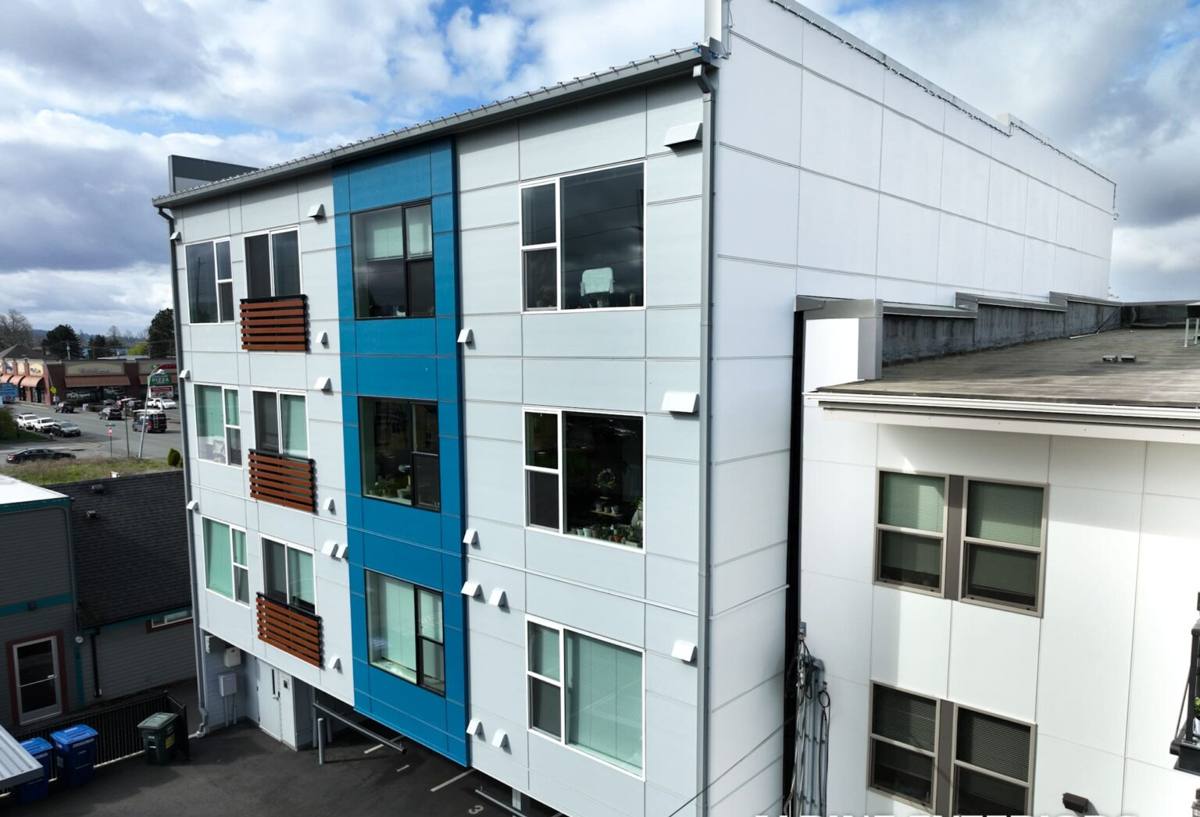
What Board and Batten Siding Actually Is — and Why It Suits This Stretch of Coast
Board and batten is a vertical siding pattern: wide flat panels installed side by side, with narrower strips — the battens — covering each seam. The result is a clean, rhythmic vertical line that reads as classic Pacific Northwest farmhouse or modern coastal, depending on the trim and color choices around it. It works as a full-house siding or as an accent on gables, dormers, and entry walls paired with horizontal lap siding elsewhere on the same house.
The vertical lines are part of why it fits waterfront homes so well — it sheds water down the face of the board rather than pooling on a horizontal ledge, and it has a strong visual pairing with the kind of simple, durable trim details that hold up in a salt-air environment. But the style choice and the performance question are two separate things. A beautiful board and batten elevation with the wrong panel material or the wrong installation behind it will show problems within a few seasons on a site like Sandy Point — cupping boards, rust streaks below fasteners, and soft spots at the bottom edge where moisture sits.
The Parts of a Board and Batten Job That Matter Most in a Salt-Air Climate
A Real Drainage Gap Behind the Panels
Board and batten panels need a way for any moisture that gets past the outer surface to drain and dry out instead of sitting against the wall sheathing. A proper rainscreen gap — a drainage plane between the weather-resistive barrier and the back of the siding — lets bulk water and vapor escape instead of feeding rot and mold. This matters more on a waterfront lot than almost anywhere else in Whatcom County, because the humidity load on the wall assembly is simply higher, more often.
Fastener Choice and Placement
Every board and batten job has hundreds of fastener penetrations — through the field panels and again through every batten. In a salt-air environment, the wrong fastener corrodes, and a corroding fastener doesn't just look bad with a rust streak bleeding down the face of the siding — it loses holding strength over time. Corrosion-resistant, siding-manufacturer-approved fasteners, driven to the correct depth and pattern, are non-negotiable this close to the water.
Flashing and Seam Detailing
Every horizontal seam, every window and door opening, and every point where board and batten meets trim or a roofline needs flashing that actually directs water back out and down, not into the wall. Wind-driven rain off the water finds any shortcut, and it finds it faster on an exposed lot than on a sheltered inland one.
Caulking and Sealant at the Battens
Board and batten relies more on sealant at vertical seams than a horizontal lap profile does. That sealant has to be the right product, applied correctly, and it's one of the few maintenance items that genuinely benefits from a periodic check — more on that below.
Why We Install James Hardie Board and Batten — Not Vinyl or LP — on Sandy Point Homes
We install James Hardie fiber cement exclusively, and a waterfront community like Sandy Point is exactly why. James Hardie's board and batten systems — HardiePanel vertical siding with HardieTrim battens — are fiber cement, which means they don't rust, don't rot, and don't feed the moss and mildew growth that a damp, shaded, salt-air wall practically invites. The factory-applied ColorPlus finish is baked on under controlled conditions and holds color and adhesion far better on a weather-exposed elevation than field-applied paint does, which matters because repainting a full board and batten elevation is a real expense homeowners would rather not repeat every several years.
Hardie also builds its HZ5 product line specifically engineered for wetter, harsher climate zones — which covers Whatcom County and, in particular, a directly waterfront site like Sandy Point better than a general-purpose product does. We don't install vinyl board and batten because it expands, contracts, and can distort in temperature swings and doesn't hold up structurally the way fiber cement does under wind load at an exposed site. We don't install LP SmartSide because it's an engineered wood product — even with resin treatment, wood-based siding is more sensitive to sustained moisture exposure than fiber cement, and sustained moisture is the default condition on this stretch of coast for much of the year. Fiber cement is also non-combustible, which is a real consideration as wildfire-season smoke and ember exposure has become a more regular late-summer issue across Western Washington.
Board and Batten Material Comparison for a Waterfront Site
| Material | Salt-air / corrosion behavior | Moisture behavior | Typical maintenance |
|---|---|---|---|
| James Hardie fiber cement (HZ5) | Non-combustible, doesn't rust or corrode | Engineered for wet climates; resists moisture-driven damage when installed to spec | Occasional wash; ColorPlus finish holds color without repainting |
| Vinyl board & batten | No rust, but can distort/warp in temperature and wind stress | Doesn't rot, but seams can allow water intrusion behind panels | Low, but replacement panels can be hard to color-match years later |
| LP SmartSide (engineered wood) | Fasteners can corrode; wood substrate is moisture-sensitive | Resin-treated but still wood-based; sustained wet exposure is its weak point | Requires more attentive caulk and paint upkeep over time |
| Cedar board & batten | No rust, but fasteners and hardware need careful selection | Natural wood movement; needs consistent finish maintenance to resist rot | Highest maintenance — refinishing on a recurring cycle |
Our Process for a Sandy Point Board and Batten Install
We start with a site walk that pays specific attention to how exposed the house is to prevailing wind and water spray, where the wall assembly is already showing moss or moisture staining, and what condition the sheathing is in once the old siding comes off — that's the point where hidden problems from years of moisture exposure actually show themselves, and it's not something you can assess accurately from a drive-by estimate.
From there: a proper weather-resistive barrier goes on, a drainage gap is built in behind the panels, and the HardiePanel and HardieTrim battens go up following James Hardie's fastening and clearance specifications — not a generic install pattern, but the spacing and fastener schedule appropriate for a directly waterfront exposure. Seams, penetrations, and trim transitions get flashed and sealed correctly the first time, because redoing flashing after the siding is up costs everyone more than doing it right at the outset. We finish with a walk-through so you know exactly what was done and what to watch for going forward.
Why Hiring a Crew That Already Works Sandy Point Matters
A crew that's worked on Sandy Point homes before has already seen what a few years of this exposure does to a siding job that wasn't detailed correctly — the corroded fastener heads, the moss line at the bottom courses, the cupped panel on the water-facing wall. That's useful knowledge going into a new install, because it tells us exactly where to be more careful than a standard spec sheet would require. It also means we're not learning the permitting process, the wind exposure considerations, or the general moisture patterns of the area for the first time on your house. Whatcom County and the City of Ferndale both have permitting requirements for exterior work, and a crew already familiar with local jobs moves through that process without it becoming your problem to manage.
Maintenance Checklist for Board and Batten Near the Water
- Rinse salt residue and airborne grime off the siding a couple of times a year with a garden hose — no pressure washer directly into seams.
- Walk the exterior after major windstorms and check for any loose or displaced trim, especially around window and door openings.
- Look at north-facing and shaded walls each fall for early moss or algae growth and clean it before it spreads.
- Check caulking at vertical batten seams every couple of years — it's the one maintenance item board and batten needs more attention on than lap siding.
- Keep gutters clear and downspouts directed away from the foundation so runoff isn't running down the siding face repeatedly.
- Trim back vegetation that's holding moisture against any wall section.
What a Correct Estimate Should Cover
A serious estimate for a Sandy Point board and batten job should account for the condition of the sheathing underneath the existing siding, not just the square footage of new panels. It should specify the drainage plane approach, the fastener type, and which James Hardie panel and trim products are being used — not just "fiber cement siding" as a generic line item. If an estimate doesn't mention any of that, it's worth asking why before signing anything.
If you're weighing board and batten for a home on Sandy Point or elsewhere near Ferndale, we're happy to walk the property, look at what your walls are actually dealing with, and put together a straightforward, no-pressure estimate — just fill out the form below to get started.