 Ferndale Siding
 Sandy Point Sits in a Different Climate Zone Than Most of Whatcom County
Sandy Point is a waterfront community, and that changes what a roof has to deal with year-round. Homes just a few miles inland in Ferndale get plenty of Pacific Northwest rain and moss, but they don't get the constant salt-laden air coming off the water. That salt air is corrosive, it's persistent, and it doesn't take a day off. Add in driving rain that gets pushed sideways by wind off the water, and a long, damp moss season that runs longer here than in drier parts of the county, and you've got a roofing environment that punishes weak materials and sloppy installation work faster than almost anywhere else in Whatcom County.
We're not telling you this to scare you into a bigger project than you need. We're telling you because it matters for the decisions you'll make about roofing material, panel coating, fastener choice, and even how often you have someone check the roof. A roof spec'd for a typical Ferndale lot inland won't necessarily hold up the same way a few miles closer to the water.
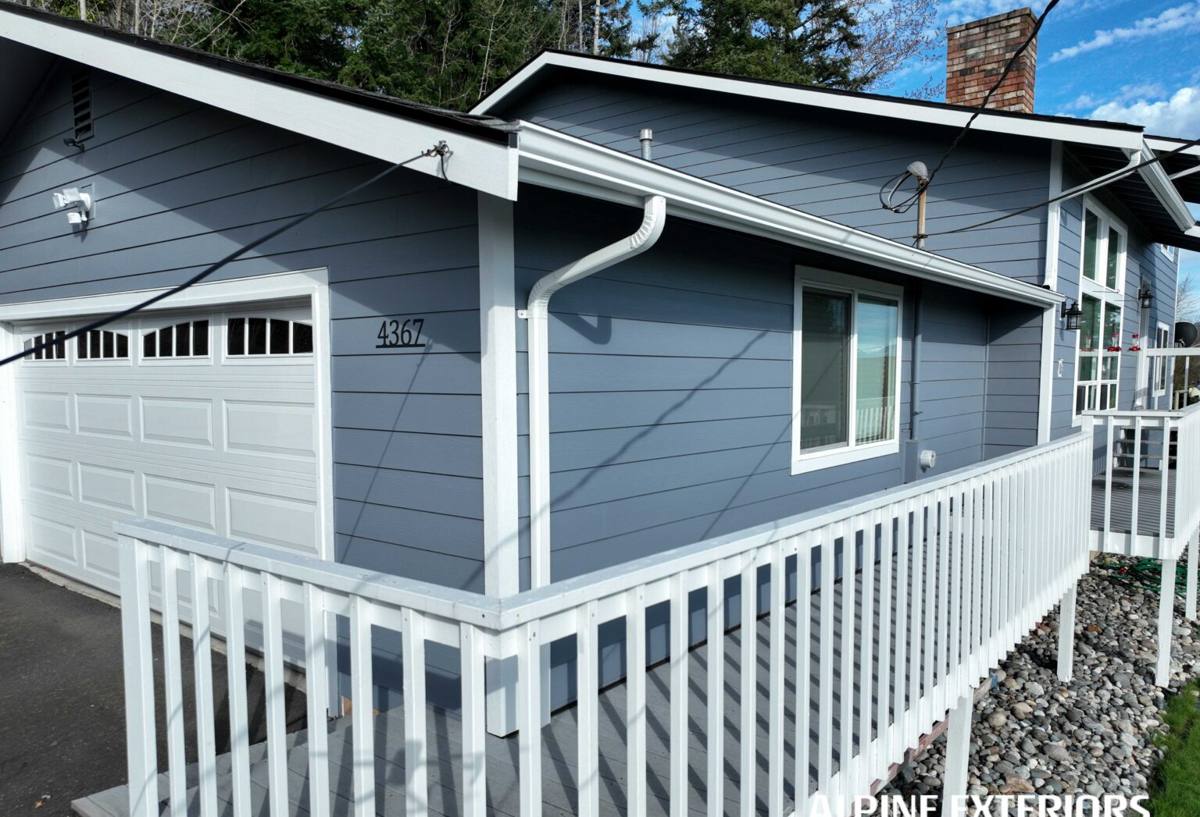
What Salt Air, Driving Rain, and Moss Actually Do to a Roof
Salt Air
Airborne salt is a slow, steady corrosive. It settles on exposed metal — fasteners, flashing, panel edges, exposed cut edges — and accelerates rust and coating breakdown over time. This is why not every "metal roof" product is a good fit for a waterfront lot. Coating quality, fastener material, and even how cut edges are treated during installation all affect how a roof performs in salt exposure over 20-30 years.
Driving Rain
Wind-driven rain doesn't just fall straight down — it gets pushed under lap joints, around penetrations, and into any gap that a calmer climate might get away with. That means underlayment, flashing detail, and panel overlap have to be done correctly, not just adequately. A roof that would be fine in a low-wind inland yard can leak at Sandy Point if those details were rushed.
Moss and Sustained Moisture
Whatcom County's moss season is long, and near-water humidity keeps roof surfaces damp longer after a storm passes. Moss and organic growth thrive on surfaces that stay wet and hold debris. On traditional roofing materials, moss roots into the surface and holds moisture against it. Metal doesn't give moss the same foothold, but a metal roof still needs the right slope, ventilation, and debris management to keep growth from taking hold in valleys and against transitions.
Why Metal Roofing Is a Strong Fit for Sandy Point Homes
Metal roofing isn't the right choice for every home or every budget, and we'll tell you honestly if we think another material makes more sense for your situation. But for homes exposed to salt air and driving rain, metal has real advantages:
- A hard, non-porous surface that doesn't give moss and algae the organic material to root into
- Steep runoff on most panel profiles, which sheds wind-driven rain faster than it can pool
- Long service life when the coating system and fasteners are matched correctly to a salt-air environment
- No granule loss or surface degradation from UV and moisture cycling the way some other materials experience
- Panel seams that, when installed correctly, give wind-driven rain fewer places to work its way in
The trade-off is that metal roofing is less forgiving of installation mistakes than some other materials. A poorly flashed penetration or a fastener pattern that doesn't account for wind uplift will show up as a problem sooner on a metal roof than it might elsewhere. That's exactly why the installation details below matter as much as the material choice itself.
Choosing the Right Metal Roofing System
Not all metal roofing is built the same way, and the differences matter more in a salt-air environment than they would inland. Here's how the common options compare for a Sandy Point application:
| System | How It's Fastened | Salt Air Performance | Best Fit |
|---|---|---|---|
| Standing seam | Concealed clips, no exposed fasteners on the field | Strong — fewer exposed metal points for salt to attack | Full waterfront exposure, long-term ownership |
| Exposed-fastener panel | Screws driven through the panel face | Depends heavily on fastener material and gasket quality; more maintenance | Secondary structures, budget-conscious projects |
| Metal shingle/shake profile | Interlocking panels, concealed fasteners | Good, with attention to cut-edge treatment | Homeowners who want a traditional look with metal's durability |
For most primary residences at Sandy Point, we lean toward standing seam or a quality interlocking profile because they minimize the number of exposed fastener points where salt corrosion typically starts first. If budget or roof design calls for an exposed-fastener system, we'll spec fasteners and gaskets rated for coastal exposure rather than the standard-grade hardware that's fine for an inland roof.
What a Correct Installation Actually Involves
A metal roof is only as good as the details underneath and around it. On a Sandy Point job, we pay particular attention to:
Underlayment
A high-quality synthetic or self-adhering underlayment goes down first, with extra attention at eaves, valleys, and any low-slope transitions where wind-driven rain is most likely to test the system.
Flashing
Every penetration — chimneys, vents, skylights — and every roof-to-wall transition gets flashed to shed water outward, not just laid on top and caulked. Caulk is a backup, never the primary defense against water intrusion.
Fastener Selection
We match fasteners and any exposed hardware to the coating system on the panels, and we account for the salt exposure at Sandy Point specifically. Mismatched metals in a coastal environment can accelerate corrosion through galvanic reaction, so consistency matters.
Ventilation
Proper intake and exhaust ventilation keeps moisture from condensing on the underside of the roof deck, which matters even more in a humid, near-water climate. Poor ventilation can cause problems from the inside out, independent of how well the exterior is installed.
Edge and Cut Treatment
Cut panel edges expose bare metal. In a salt-air environment, those edges need proper edge banding, sealant, or factory-finished trim rather than being left exposed to accelerate rust.
How Our Process Works
- On-site assessment — we look at your existing roof, slope, penetrations, and exposure to prevailing wind and rain direction off the water.
- System recommendation — we walk you through panel profile, coating, and fastener options suited to your home and budget, and explain the trade-offs honestly.
- Written estimate — a clear scope of work and cost breakdown before anything is scheduled.
- Tear-off and deck inspection — we check the roof deck for any moisture damage before new material goes down, since covering a compromised deck defeats the purpose of a durable roof.
- Underlayment, flashing, and panel installation — done to the standards described above, not the minimum code standard.
- Final walkthrough — we go over the finished roof with you, including what routine maintenance will look like going forward.
Maintenance: What a Sandy Point Metal Roof Actually Needs
Metal roofing is lower-maintenance than most alternatives, but "lower-maintenance" isn't "no maintenance," especially this close to the water. A simple seasonal routine goes a long way:
- Clear debris from valleys and gutters at least twice a year, more often under overhanging trees
- Rinse accumulated salt residue off the roof surface periodically if your lot gets heavy wind-driven spray
- Check sealant at penetrations annually — sealant is a maintenance item even on a well-flashed roof
- Watch for any early rust spots at cut edges or fasteners and address them before they spread
- Keep gutters and downspouts flowing freely so water isn't backing up under the roof edge during heavy rain
- Have a professional check flashing and seams every few years, even if nothing looks obviously wrong
Cost Factors to Understand Before You Budget
We don't post fixed prices because every roof is different, but these are the main variables that move the number for a Sandy Point metal roofing project:
| Factor | Why It Matters |
|---|---|
| Panel profile and gauge | Standing seam with concealed fasteners costs more upfront than exposed-fastener panel, but typically needs less long-term maintenance in salt air |
| Roof complexity | Valleys, dormers, and multiple penetrations add labor and flashing work regardless of material |
| Deck condition | Any rot or moisture damage found during tear-off needs repair before new roofing goes on |
| Coating and fastener grade | Coastal-rated coatings and hardware cost more than standard-grade but reduce corrosion risk substantially |
| Access and site conditions | Waterfront lots can have tighter access, steeper grades, or setup challenges that affect labor time |
The honest answer is that a correctly specified metal roof for a salt-air environment usually costs more upfront than the cheapest option on the market — and it should, because the cheaper option is often cutting corners exactly where Sandy Point's climate will find them first.
Why Hiring a Crew That Already Works Sandy Point Matters
Roofing crews that mostly work inland lots don't always think about salt exposure, wind-driven rain angles, or coastal-rated hardware by default — because most of their jobs don't require it. A crew that regularly works waterfront properties in this part of Whatcom County builds those considerations into the spec from the start, rather than treating them as an upsell or an afterthought.
We also know that access, staging, and weather timing can look different on a waterfront lot than on a typical in-town Ferndale property, and we plan around that rather than being surprised by it mid-project. That familiarity translates into fewer callbacks and a roof that's actually built for the conditions it's going to face, not just the conditions most roofs in the county face.
Let's Talk About Your Roof
If you're weighing a metal roof for your Sandy Point home, we're happy to take a look and give you a straight, no-pressure assessment of what your roof actually needs. Fill out the form below for a free estimate — we'll walk the roof, talk through your options honestly, and give you a clear, written price before anything is scheduled.