 Ferndale Siding
 Siding Repair for a Waterfront Whatcom County Community
Sandy Point sits right on the water, and that changes what "normal wear" looks like on a house. Homes a few miles inland in Ferndale can go years between siding issues. Homes on Sandy Point's shoreline see problems show up faster and in different places — around fasteners, at butt joints, low on the wall, and anywhere caulk has started to let go. Repairing siding out here isn't just patching a hole; it's understanding why that spot failed first and making sure the fix doesn't just move the problem somewhere else on the wall.
This page covers what siding repair actually involves for a Sandy Point property, how we decide between a repair and a full replacement, and why a crew that already understands this stretch of Whatcom County coastline tends to get it right the first time.
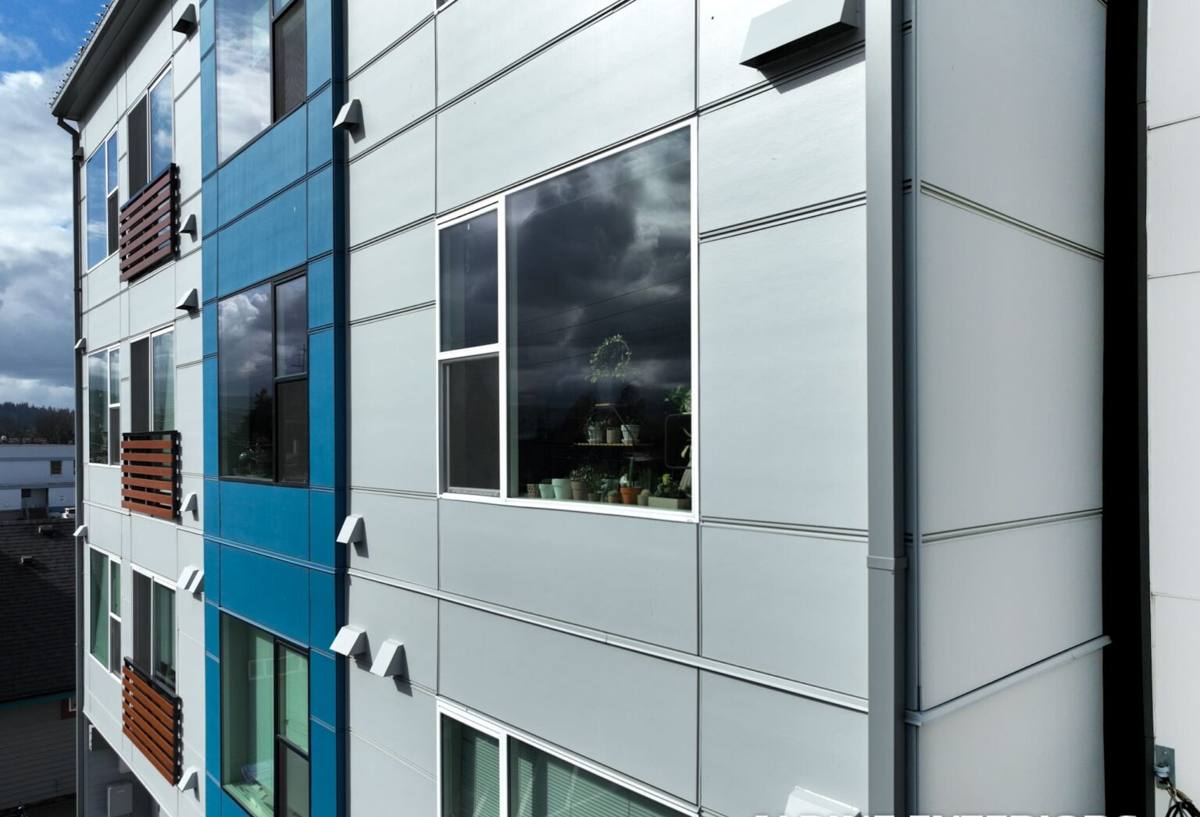
Why Sandy Point Homes Take More Punishment
Three things drive most of the repair calls we get from this area, and they compound each other.
Salt Air
Airborne salt off the water settles on siding, trim, and fasteners. It doesn't rot wood by itself, but it accelerates corrosion in metal fasteners and flashing, and it holds moisture against the wall surface longer than plain rain does. Once a fastener starts to corrode, the hole it sits in enlarges slightly, and that's an opening for water — which is how a small maintenance issue turns into a repair call.
Wind-Driven Rain
A waterfront lot with open exposure gets rain pushed sideways into the wall, not just dropped straight down onto the roof. Sideways-driven rain finds every gap in caulking, every lifted panel edge, and every place where flashing was cut a little short. Siding that would shed a normal rainstorm without issue can still take on water when the wind is blowing it horizontally.
An Extended Moss Season
Whatcom County's marine climate keeps surfaces damp for much of the year, and shaded or low-sun sides of a house on Sandy Point can stay wet longer than similar walls further inland. That extended dampness is exactly what moss and algae need to establish. Beyond the cosmetic issue, moss holds water against the siding surface and, on materials that aren't built to handle sustained moisture, that constant dampness is often what starts the underlying damage a repair crew eventually gets called out for.
Signs Your Siding Needs Repair, Not Just Cleaning
Homeowners often assume a stained or streaky wall just needs a wash. Sometimes that's true. But some symptoms mean the siding or the water management behind it has actually failed. Worth checking for:
- Soft or spongy spots when you press on the siding, especially near the bottom of walls or below windows
- Visible gaps, cracks, or separation at panel seams and corner boards
- Paint that's bubbling, peeling, or failing in a localized patch rather than evenly across the wall
- Dark staining that reappears quickly after cleaning, which often points to moisture coming from behind the panel, not just surface growth
- Nail heads that are rust-streaked, popped, or backing out
- Warping, bowing, or panels that no longer sit flat against the wall
- Soft trim or fascia near siding transitions, which often means water has been tracking behind the siding for a while
- Interior signs — a musty smell, a soft spot on interior drywall, or a stain near an exterior wall — that suggest the problem has already gotten past the siding
Any one of these on its own might be minor. Several together, especially on the side of the house that faces the water or prevailing wind, usually means it's time for someone to actually open up the area and look, not just recaulk the surface.
What a Correct Repair Actually Involves
Diagnosing the Cause, Not Just the Symptom
The single biggest mistake in siding repair is treating the visible damage as the whole problem. A cracked panel or a soft spot is usually a symptom of something upstream — a flashing detail that was never installed correctly, a caulk joint that failed years ago, or a fastener pattern that let water track behind the wall. Replacing the damaged piece without addressing what let water in means the same repair call comes back in a year or two, often worse.
Matching Material and Finish
A repair should blend in, not stand out as an obvious patch. That means matching board profile, exposure, and — where the siding is James Hardie with a factory ColorPlus finish — matching color and sheen as closely as the product line allows. On older siding, exact matches aren't always possible, and we'll tell you that up front rather than promise a seamless result we can't deliver.
Flashing, Fasteners, and Water Management
Every repair is an opportunity to correct the water-management details that likely caused the failure in the first place: proper flashing at butt joints and penetrations, correct fastener type and placement, and drainage gaps where they belong. On a waterfront lot like Sandy Point, we tend to be more conservative with these details than a repair on a sheltered inland home would call for, because the exposure here doesn't forgive shortcuts.
Repair or Replace? How We Help You Decide
Not every problem area needs a full re-side, and not every repair is worth doing. The honest answer depends on the extent of the damage, the age and condition of the rest of the siding, and what's actually installed on the house. Here's roughly how we think through it:
| Factor | Repair Usually Makes Sense | Replacement Usually Makes Sense |
|---|---|---|
| Extent of damage | Isolated to one or two sections | Recurring damage across multiple walls |
| Cause of failure | A single identifiable flashing or caulk defect | Systemic issue (widespread moisture, aging material, failed installation) |
| Siding age and material | Newer siding, or Hardie in otherwise sound condition | Original material nearing or past its practical service life |
| Cosmetic match | Replacement material closely matches existing panels | No reasonable match exists, or patchwork would look worse than a full re-side |
| Underlying sheathing | Sheathing and framing behind the siding are sound | Rot or damage has spread to the wall assembly itself |
We'll walk the affected areas with you, explain what we're seeing, and give you a straight recommendation — including telling you when a repair is the right, less expensive call, not just pushing toward a bigger job.
Why What's Already on Your House Matters
Repair calls in this area turn up a real mix of siding: older cedar, vinyl, hardboard, LP SmartSide, and increasingly James Hardie fiber cement. What's on the wall changes what a repair can realistically accomplish.
We install James Hardie fiber cement exclusively — it's the only siding product we put on a house — because it's non-combustible, holds its factory-applied ColorPlus finish for years without repainting, and James Hardie engineers regional formulations built for wetter coastal climates like ours. When we're called to repair Hardie siding, the fix is usually straightforward: address the water source, replace the damaged panel section, match the finish.
When we're called to repair other materials, we'll still do honest work on what's there. But we'll also tell you plainly if a material is reaching the point where repairs are becoming a pattern rather than a one-time fix — cedar that's cycling through repeated rot repair, hardboard that's swelling at seams, or vinyl that's become brittle and is cracking in more places each year. At that point, patching becomes money spent delaying a decision rather than solving the underlying problem, and we'd rather tell you that than keep billing small repairs on a wall that needs to be re-sided.
Our Process for Sandy Point Repair Requests
- A walk-around inspection of the affected area, and a check of adjacent sections that face similar wind and moisture exposure
- An honest diagnosis of the cause, not just the visible symptom
- A written recommendation — repair or replace — with the reasoning explained, not just a price
- For repairs, correction of the underlying flashing, fastener, or sealant issue alongside the cosmetic fix
- Cleanup and a final look with you before we call the job done
Because we already work regularly along this part of the Whatcom County coastline, we're familiar with how exposure varies from lot to lot even within a small community like Sandy Point — which sides of a house typically take the worst of the weather, and which repair details actually hold up out here versus what works fine a few miles inland in Ferndale.
Keeping Repaired Siding From Failing Again
A good repair should outlast the conditions that caused the original problem. A few things help on a Sandy Point property specifically:
- Rinse salt residue off siding a few times a year, especially after storms with onshore wind
- Keep gutters and downspouts clear so roof runoff isn't adding to the wind-driven rain already hitting the walls
- Trim back vegetation that keeps a wall shaded and damp, which shortens the time between moss cleanings
- Have caulk joints and flashing checked periodically rather than waiting for a visible failure
- Address small issues — a lifted panel edge, a cracked bead of caulk — while they're still small
None of this eliminates the exposure that comes with living on the water. It just keeps small, cheap fixes from turning into bigger ones.
If you're seeing any of the warning signs above, or just want a second, honest opinion on whether a section of siding needs repair or replacement, we're glad to take a look. Estimates are free, there's no pressure, and you'll get a straight answer either way — use the form below to get started.