 Ferndale Siding
 Asphalt Shingle Roofing Built for the Semiahmoo Climate
Homes in and around Semiahmoo sit in one of the more demanding microclimates a roof can face in Whatcom County. The proximity to open water means salt-laden air moves across the roof deck almost constantly, wind-driven rain arrives sideways instead of straight down, and shaded, north-facing slopes stay damp long enough each winter to grow a genuine moss carpet. Asphalt shingle roofing can hold up extremely well here — it's still the most common and most cost-effective roofing material for a reason — but only when the product, the installation details, and the fastening choices are matched to what this specific stretch of coastline actually does to a roof over the years.
This page focuses specifically on asphalt shingle roofing for Semiahmoo-area homes: what the climate demands, what a correctly installed roof looks like under the shingles where you can't see it, and how we approach these jobs differently than a crew that only works drier, inland conditions.
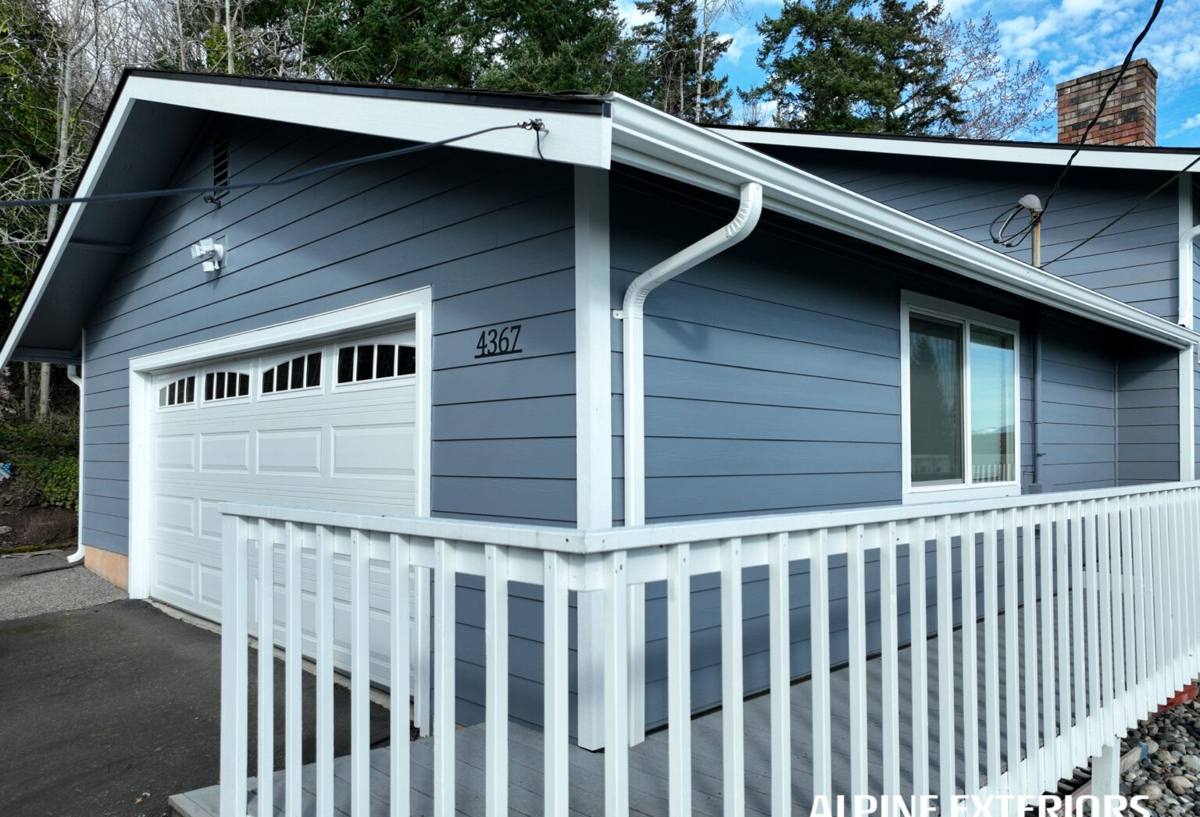
What Salt Air, Driving Rain, and Moss Actually Do to a Shingle Roof
Salt Air and Corrosion
Airborne salt doesn't just sit on the surface of a shingle — it settles into every metal component on the roof: nail heads, flashing, drip edge, vent stacks, and gutter fasteners. Standard electro-galvanized nails and thin flashing stock corrode noticeably faster this close to the water than they would even a few miles inland. Once a fastener starts to corrode, it loses holding power long before it looks obviously bad from the ground, which is how a roof can look fine for years right up until a windstorm shows the fastening was already compromised.
Wind-Driven Rain
Rain that comes in sideways off open water behaves differently than a straight vertical downpour. It gets pushed up and under shingle tabs, into exposed nail lines, and along valleys and eaves where a lesser installation relies on the shingle surface alone to shed water. A roof built for this needs a water barrier system underneath the shingles that doesn't depend on gravity alone.
Moss and Prolonged Dampness
Whatcom County's wet season is long, and shaded or north-facing slopes near Semiahmoo can stay damp for weeks at a stretch. Moss doesn't just look bad — as it grows, its root structure lifts shingle edges, holds moisture directly against the granule surface, and accelerates the shingle's aging process well ahead of its rated lifespan. Roofs with poor airflow or heavy tree cover are affected earliest and worst.
Signs a Semiahmoo Roof Needs a Closer Look
Because the damage from salt exposure and moss often starts underneath the visible shingle surface, it's worth knowing what to watch for before a small problem becomes a leak.
- Moss buildup along shaded slopes, ridges, or anywhere debris collects and holds moisture
- Granules collecting in gutters or at the base of downspouts, a sign shingles are losing their protective surface
- Rust staining below metal flashing, vent stacks, or nail heads visible in the attic
- Shingle edges that look lifted, curled, or cupped, especially on rain-facing slopes
- Dark streaking across the shingle field, often algae rather than dirt
- Any daylight, staining, or damp insulation visible from inside the attic
- Soft or spongy spots when walking the roof, which can indicate deck moisture underneath
None of these on their own always mean a full replacement is needed. But each one is worth a real inspection rather than a guess, since the fix is far cheaper caught early than after it reaches the decking.
What a Correctly Installed Shingle Roof Includes Here
An asphalt shingle roof is really a system, not a single product, and every layer matters more in a salt-air, high-rain environment than it would somewhere drier.
Underlayment and Water Barrier
We use synthetic or self-adhered underlayment rather than older felt products, because it holds up better to the wet install conditions common here and resists wind-driven moisture far longer over the life of the roof. Ice-and-water shield membrane at eaves, valleys, and around every roof penetration gives a sealed backup layer exactly where wind-driven rain is most likely to get pushed underneath the shingle surface.
Fasteners and Flashing
Given the corrosion rate this close to open water, we don't rely on standard electro-galvanized fasteners where a better option exists. Hot-dip galvanized or stainless fasteners and flashing hold up substantially longer against salt exposure, and that difference shows up as fewer loose shingles and fewer flashing leaks a decade down the road, not right away.
Ventilation
Balanced intake and exhaust ventilation keeps the underside of the roof deck dry, which matters for two reasons here specifically: it slows moss growth that can start from trapped moisture below, and it prevents the kind of attic condensation that rots decking from the inside, a failure mode that's easy to miss until it's advanced.
Flashing Detail Work
Valleys, chimney step flashing, skylight curbs, and wall intersections are where the large majority of shingle roof leaks actually start, not in the open field of the roof. These details take more time to do correctly, and it's the single biggest quality gap between a rushed installation and one built to last through repeated wind-driven rain events.
Choosing a Shingle for This Climate
Not every asphalt shingle product is built with the same priorities, and for a Semiahmoo home, algae resistance and wind rating matter more than they would in a drier, more sheltered location.
| Shingle Feature | What It Does | Why It Matters Near Semiahmoo |
|---|---|---|
| Algae-resistant granules | Copper or zinc-infused granules that inhibit algae and moss growth on the surface | Directly addresses the long moss season on shaded, damp slopes common here |
| Higher wind rating | Reinforced nailing zones and stronger adhesive sealant strips | Open exposure near the water means higher sustained wind loads during winter storms |
| Architectural (dimensional) profile | Thicker, layered construction versus flat 3-tab shingles | Generally sheds wind-driven rain better and holds up longer under repeated wetting and drying |
| Manufacturer warranty tier | Ranges from prorated standard coverage to enhanced, non-prorated coverage | Enhanced tiers often require certified installation, which affects which contractors can legitimately offer them |
We'll walk through the realistic options for your roof and budget rather than pushing the most expensive tier by default — the right choice depends on the slope, shading, and exposure of your specific roof, not a one-size answer.
Our Process for a Semiahmoo Roofing Project
- In-person inspection: We walk the roof and check the attic, not just look from the ground, so we can see moss patterns, flashing condition, and any deck moisture before quoting.
- Written estimate: A clear breakdown of tear-off scope, underlayment, fastener type, flashing work, and shingle product, so you know exactly what you're paying for.
- Full tear-off: Old roofing is removed down to the deck so we can actually see and address any rot or moisture damage, rather than covering it up under a layover.
- Deck repair as needed: Any soft or damaged decking is replaced before new roofing goes down — this is the step a rushed job skips.
- Water barrier and underlayment installation: Ice-and-water shield at eaves, valleys, and penetrations, followed by synthetic underlayment across the field.
- Shingle installation: Installed to manufacturer spec with corrosion-resistant fasteners and properly lapped flashing at every valley, chimney, and wall intersection.
- Cleanup and final walkthrough: Full site cleanup including a magnetic nail sweep, followed by a walkthrough so you can see the finished work and ask questions before we consider the job done.
Maintenance That Actually Extends Roof Life Here
A correctly installed roof still benefits from basic upkeep in this climate, and the maintenance that matters here is different from what a drier region needs.
- Keep gutters and downspouts clear so water doesn't back up under the eave edge during heavy rain
- Have moss treated or gently removed before it establishes a heavy root mat, rather than waiting until it's thick
- Trim back overhanging branches on shaded slopes to reduce the damp conditions moss needs to take hold
- Schedule a roof and attic check every couple of years, or after any major windstorm, to catch loosened flashing or fasteners early
- Avoid pressure washing shingles directly, which can strip protective granules and shorten shingle life
Why Hiring a Crew That Already Works This Area Matters
A roofing crew that works Semiahmoo and the surrounding Ferndale area regularly has already seen which fastener grades hold up, which flashing details tend to fail first under sustained wind-driven rain, and which roof slopes here hold moss longest through the winter. That's knowledge that shows up in the small decisions made throughout a job — the ones you won't see from the ground but that determine whether a roof is still performing well in fifteen years or needs early repairs. It's also worth knowing your contractor will still be a phone call away if a warranty question comes up years after the job is finished, rather than a crew that was only in the area for a single storm season.
If you're weighing a repair against a full replacement, or just want a straight answer on what your current roof actually needs, we're glad to take a look. Reach out for a free, no-pressure estimate using the form below.