 Ferndale Siding
 Building a Deck That Actually Holds Up in Semiahmoo
Semiahmoo sits close enough to the water that every deck built here has to answer to conditions most inland builders never think twice about. Salt-laden air off the water, driving rain that comes in sideways more often than straight down, and a moss season that can stretch from fall through spring all put real stress on outdoor structures. A deck that would hold up fine in a drier, inland part of Whatcom County can fail early here if it wasn't built with this specific environment in mind.
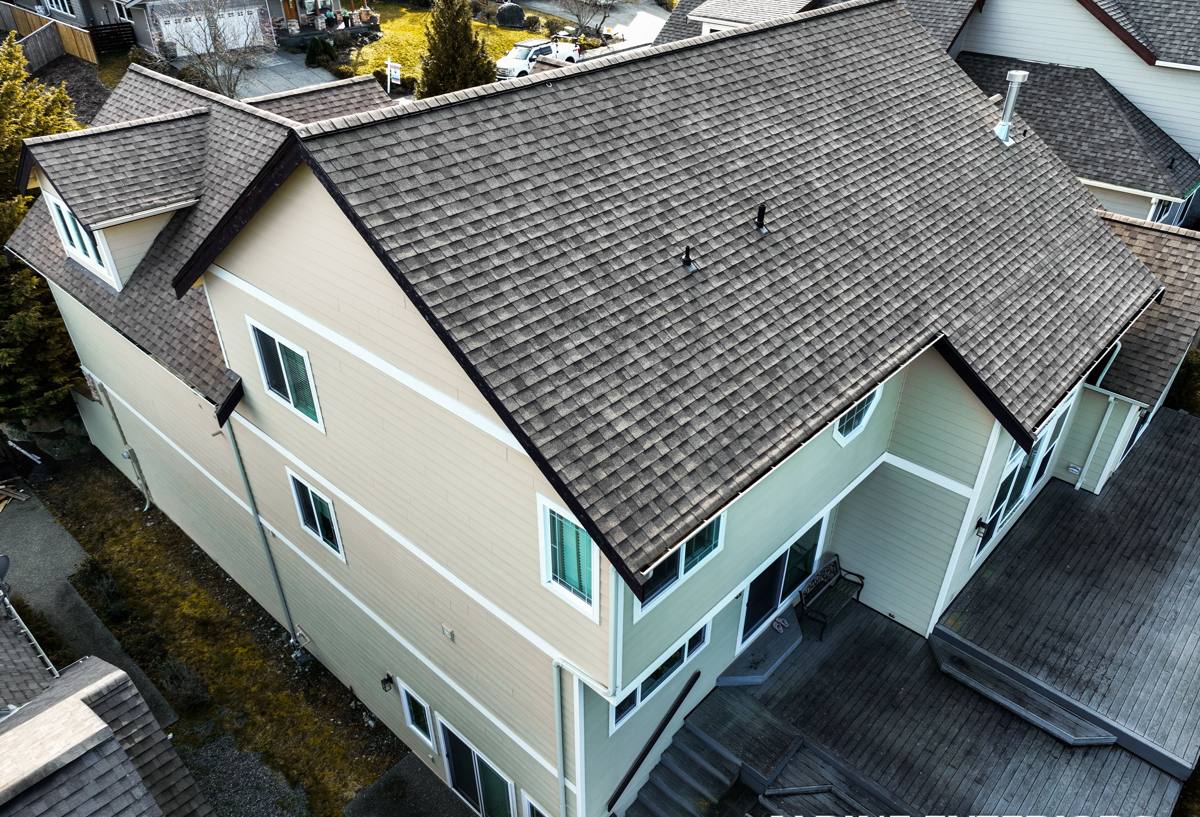
This page is about one thing: custom deck construction for homes in the Semiahmoo area, and what it actually takes to get a deck that stays solid, safe, and good-looking for decades instead of years.
What Makes Semiahmoo Conditions Tough on Decks
Salt Air and Metal Fasteners
Homes near the water deal with airborne salt that settles on every exposed surface, including deck hardware. Standard fasteners and connectors that aren't rated for coastal exposure will corrode faster here than they would even a few miles inland. Once a fastener starts rusting, it weakens, stains the surrounding wood or decking, and eventually needs to be replaced — which usually means partially disassembling the deck to get at it.
Driving Rain and Ledger Board Rot
The ledger board — the piece that attaches the deck to the house — is the single most common failure point on Pacific Northwest decks, and wind-driven rain makes it worse. Water gets pushed up and under flashing that wasn't detailed correctly, then sits against the house framing where it can't dry out. This is a slow, hidden problem; by the time it's visible, there's usually already structural damage.
Moss, Algae, and Slippery Surfaces
Long wet seasons with limited sun exposure mean moss and algae growth is a near-constant issue on decks that don't get proper airflow or drainage underneath. Beyond the cosmetic issue, a mossy deck surface is a genuine slip hazard, especially on stairs and near entry points.
Choosing the Right Decking Material for This Area
There's no single "best" decking material for every home — it depends on your budget, how much maintenance you're willing to do, and how close your home sits to the water. Here's how the common options actually compare in a coastal, high-moisture climate like Semiahmoo's.
| Material | Moisture & Salt Behavior | Maintenance | Typical Lifespan |
|---|---|---|---|
| Pressure-treated wood | Prone to checking and splintering with repeated wet/dry cycles; needs sealing | Annual cleaning and re-sealing recommended | 10-15 years before major repairs |
| Cedar | Naturally decay-resistant but still needs finish maintenance in salt air | Regular staining/sealing to prevent graying and moss | 15-20 years with upkeep |
| Composite decking | Doesn't absorb water or rot; resists salt exposure well | Occasional washing to prevent surface mildew or algae | 25-30+ years |
| Capped/PVC decking | Fully sealed surface, best resistance to moisture and staining | Low — periodic rinsing | 30+ years |
Wood costs less upfront and has a natural look many homeowners want, but it demands consistent upkeep to hold up against this climate. Composite and capped decking cost more initially but shed water and resist the salt-air staining and rot that shorten a wood deck's life near Semiahmoo Bay.
Framing and Structure Done Right
Ground-Contact Rated Lumber
Framing lumber matters as much as the surface material, and it's the part homeowners see the least. We use lumber rated for ground contact where it's exposed to moisture, even on framing that technically sits above grade, because splash-back and condensation under a deck create ground-contact-like conditions over time.
Joist Protection and Flashing
Every joist top and the ledger board connection gets proper flashing and joist tape before decking goes down. This is a small material cost that prevents the single most common cause of early deck failure — water sitting in end grain and fastener holes where it can't evaporate.
Footings on Sloped or Waterfront-Adjacent Lots
Several properties in and around Semiahmoo sit on sloped or grade-changed lots leading toward the water. Footings on these sites need to be sized and placed for the actual soil and drainage conditions, not just a standard spacing pattern — undersized or shallow footings on wet, shifting soil are a recurring source of deck settling and railing movement over time.
Railings, Fasteners, and Hardware for Salt Air Exposure
Railings take a lot of direct weather exposure and a lot of hand contact, so both durability and finish matter. For hardware, we use stainless steel or coated, corrosion-rated fasteners and structural connectors throughout — not just at the visible surface, but at every hidden structural connection, since that's where corrosion does the most damage before anyone notices it.
For rail systems, homeowners near the water often want an unobstructed view, which is where cable or glass panel railing gets considered alongside traditional wood or metal baluster designs. Whatever the style, the same rule applies: every fastener and bracket needs to be rated for the exposure it's actually going to see, not just what's standard elsewhere.
Drainage and Under-Deck Considerations
How water moves off and under a deck is just as important as what the deck is built from. Decking boards need consistent gapping so water sheds through rather than pooling, and the ground or under-deck space needs a way to drain and dry out between rain events — which, in this climate, isn't a rare occurrence. For decks with usable space underneath, an under-deck drainage system can keep that area dry and usable instead of becoming a permanently damp, moss-prone space.
Grading around deck footings also matters. If water is left to pool against posts or footings instead of draining away, it accelerates both wood decay and moss growth right at ground level.
Permits and Whatcom County Considerations
Most new decks and significant deck rebuilds in Whatcom County require a building permit, and requirements can shift depending on deck height, size, and proximity to property lines or shoreline areas. Properties closer to the water may also fall under additional shoreline setback rules. We handle the permit process as part of the job so homeowners aren't left trying to interpret code requirements on their own — and so the finished deck is actually built to what's approved, not just what looks right.
Our Process for a Semiahmoo Deck Build
A correctly built deck follows the same core sequence every time, even though every property is different. Here's what that looks like:
- On-site assessment of grade, drainage, existing structure, and sun/wind exposure
- Design and material selection based on your budget and how much maintenance you want to take on
- Permit drawings and submission to Whatcom County where required
- Ledger board removal, inspection, and correct flashing installation at the house connection
- Footings sized and placed for your actual soil conditions, not a generic spec
- Framing with ground-contact rated lumber and joist protection at every exposed connection
- Decking, railing, and hardware installation using corrosion-rated fasteners throughout
- Final walkthrough covering drainage, maintenance expectations, and what to watch for over time
We don't skip steps to save time, because on a coastal property, the steps that get skipped are usually the ones that cause problems two or three years down the line.
What Actually Drives the Cost of a Custom Deck
Every deck is priced around the specifics of the property and the design, so there's no single number that applies across the board. That said, a few factors consistently move the price up or down more than anything else.
| Cost Factor | Why It Matters |
|---|---|
| Decking material | Wood costs less upfront; composite and capped materials cost more but reduce long-term maintenance |
| Deck height and footing depth | Elevated decks and sloped sites need more substantial footings and structural framing |
| Railing style | Cable and glass rail systems generally cost more than standard wood or metal baluster railing |
| Site access | Tight or sloped lots can increase labor time for material handling and equipment access |
| Under-deck drainage system | Adds cost but creates usable, dry space beneath an elevated deck |
We'll walk through these trade-offs with you directly rather than handing over a generic quote, so you understand exactly what you're paying for and why.
Maintenance: Keeping Moss and Algae From Taking Over
Even a well-built deck needs some seasonal attention in this climate. A simple annual routine goes a long way toward protecting the investment:
- Sweep debris and organic buildup off the surface and out of board gaps regularly through fall
- Rinse or gently wash the deck surface at least once or twice a year to slow moss and algae growth
- Check railings and stair connections annually for movement or corrosion at hardware points
- Keep gutters and downspouts near the deck clear so runoff isn't draining directly onto or under it
- Reseal wood decking on the manufacturer's recommended schedule if you chose a wood surface
Composite and capped decking cut down on this list considerably, which is part of why many homeowners in wetter, salt-exposed areas choose it even at a higher upfront cost.
Why Local Experience on This Specific Coastline Matters
A deck built to a generic, inland spec will often look fine on day one and start showing problems within a few wet seasons near the water. Building correctly for Semiahmoo means treating salt air, driving rain, and moss exposure as design constraints from the start — in the fastener choices, the flashing details, the footing depth, and the material selection — not as afterthoughts to deal with later. That's the standard we hold every deck we build here to.
If you're planning a new deck or need to replace one that's showing its age, we're happy to take a look and put together a straightforward, no-pressure estimate. Use the form below to get started.